
Home Blog Page 530

FG $190m JICA Loan to Expand Renewable Energy and Power Grid

0

Nigeria is advancing a $190 million renewable energy loan facility supported by the Japan International Cooperation Agency (JICA), aimed at expanding distributed renewable energy solutions across underserved communities.

The announcement was made by the Minister of Power, Adebayo Adelabu, during the Ninth Tokyo International Conference on African Development (TICAD 9) in Yokohama, Japan.

Adelabu explained that the government is determined to use this loan to scale renewable energy projects that will directly impact rural and urban households. “This facility is designed to provide clean energy access to communities that have remained underserved for years,” he said.

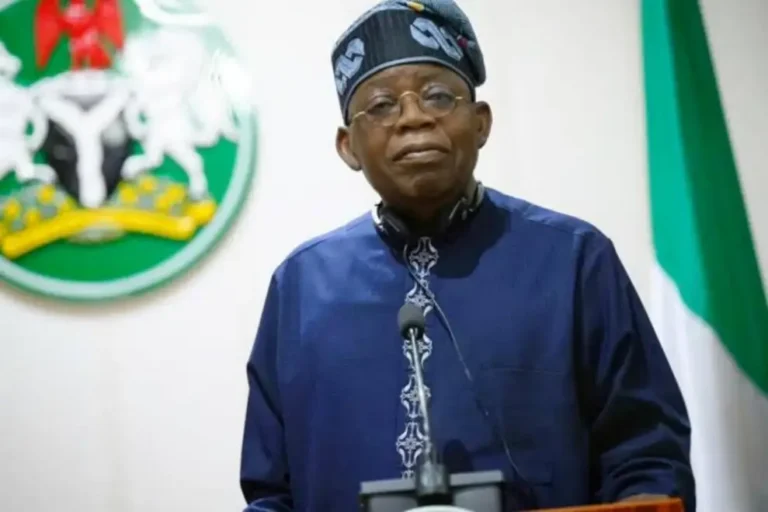
The Nigerian delegation at TICAD 9 was led by President Bola Ahmed Tinubu, who participated in a series of high-level meetings focused on power, infrastructure, and industrial transformation.

Tinubu stated that Nigeria’s presence at the summit was not for trade exhibitions but to build strategic partnerships that can drive real change. “We are deliberately shifting from planning to implementation, from agreements to delivery, and from promises to measurable results,” the President said.

At the summit, Adelabu also held talks with leading Japanese energy corporations such as Toshiba, Hitachi, Japan’s Transmission & Distribution Corporation, and Energy Exchange companies. These discussions centered on strengthening Nigeria’s transmission infrastructure, improving operational efficiency, and reducing system losses.

The Minister revealed that the loan builds on the recent Federal Executive Council approvals for counterpart funding of ₦19,083,192,805.30 to unlock $238 million in additional financing from JICA.

This funding will be used to expand the national grid through projects that include 102.95 kilometers of new 330kV double circuit lines, 104.59 kilometers of 132kV double circuit lines, four 330/132/33kV substations, two 132/33kV substations, two 330kV line bay extensions, two 132kV line bay extensions, and one 132kV substation.

In addition, Adelabu confirmed that the government had earlier launched a $750 million World Bank Distributed Access through Renewable Energy Scale-up (DARES) programme under the Mission 300 Compact. This initiative is expected to deliver reliable and clean electricity to more than 17 million Nigerians.

At the same time, three new substations funded by JICA through a $32 million grant are set for commissioning in Apo (FCT), Keffi (Nasarawa State), and Apapa (Lagos State). These substations will improve power supply to homes, businesses, industrial clusters, and key facilities such as the Lagos Port.

Partnerships with JICA also extend to human capacity development. The National Power Training Institute of Nigeria (NAPTIN) has commissioned new training equipment in Abuja with JICA’s support. This facility is targeted at building the skills of engineers who manage electricity distribution networks. According to Adelabu, the training institute is critical for long-term sustainability in Nigeria’s power sector.

Speaking during a panel session titled “HICKARE Africa: Harnessing Innovation, Co-creation, and Knowledge for Accessible and Resilient Energy for Africa,” Adelabu highlighted the country’s energy challenges. He noted that only 55 to 60 percent of Nigeria’s population of over 200 million people currently have access to electricity, and much of it is unreliable.

He stressed that the government is tackling this issue by expanding the national grid in cities while also promoting off-grid solutions like solar mini-grids and standalone systems for rural communities.

The Minister pointed out that despite the opportunities, there are obstacles such as limited access to affordable capital, high costs for rural households, and under-utilisation of renewable energy equipment.

However, he reassured that the government remains committed to overcoming these challenges by encouraging private sector investment, implementing supportive policies, and promoting local manufacturing of renewable energy components.

Adelabu praised JICA and the Government of Japan for their long-standing partnership with Nigeria. He acknowledged their contributions to infrastructure projects, renewable energy financing, technical studies, and workforce training. “We recognise JICA as a reliable partner in advancing Nigeria’s energy transition and expanding access to sustainable electricity,” he said.

Through these agreements and ongoing projects, Nigeria aims to strengthen energy security, reduce reliance on fossil fuels, and expand access to affordable electricity for millions of citizens. The partnerships struck at TICAD 9 underline Nigeria’s commitment to building an energy sector that supports industrial growth, job creation, and sustainable economic development.
Advertisement

Bank of Industry Notifies TISSF Loan Applicants to Verify KYC

0

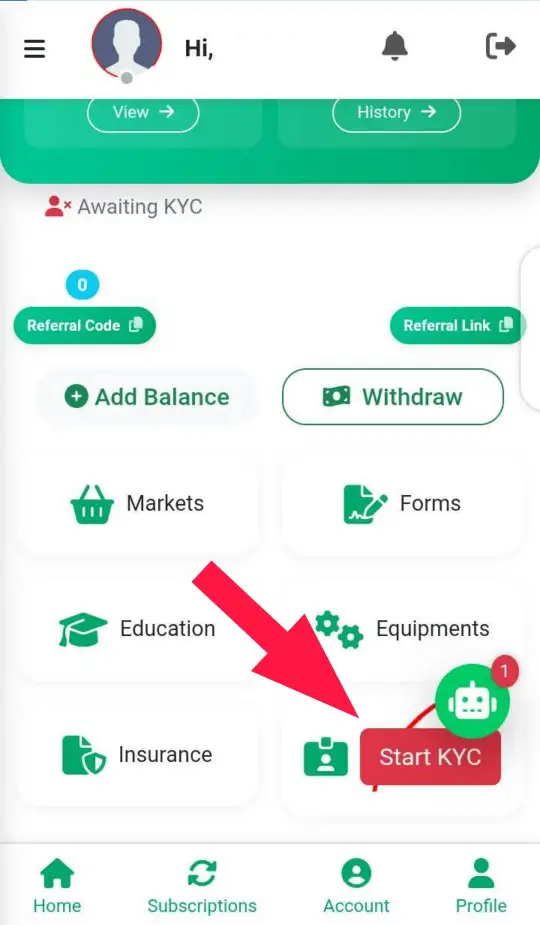
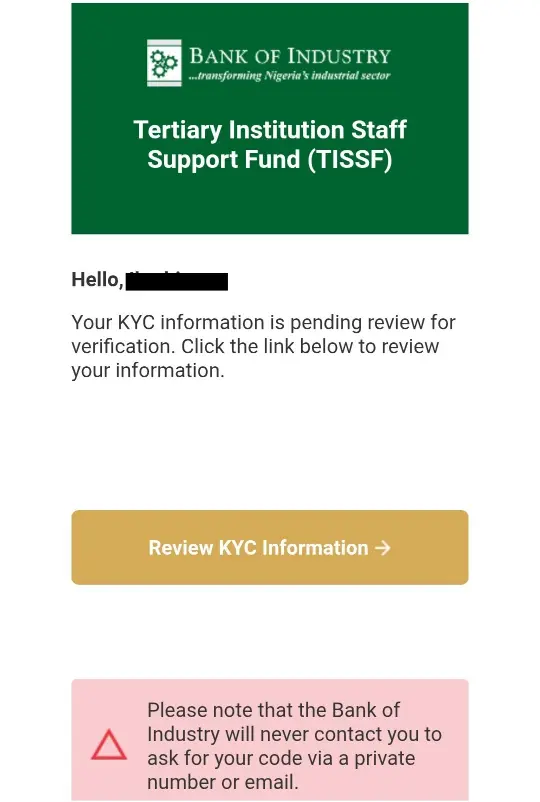
The Bank of Industry (BOI) has announced that staff who applied for the Federal Government Tertiary Institution Staff Support Fund (TISSF) loan should check their email for an important update. Both academic and non-academic staff are receiving a KYC verification message linked to their account details.

According to multiple reports, disbursement of funds is expected to begin by the end of this year, making it essential for applicants to confirm their details on time.

The email sent to applicants states, “Hello, Applicant. Your KYC information is pending review for verification. Click the link below to review your information. Review KYC Information.”

It further added, “Please note that the Bank of Industry will never contact you to ask for your code via a private number or email.”

Applicants are directed to use the official submission portal tissf.boi.ng to complete the process.

Remember that TISSF loans are to be repaid over five years with a 12-month (one-year) moratorium before repayments.

Below is the KYC email:

Kebbi State Publishes List of Over 19,000 Teacher Applicants

0

August 22, 2025 – The Kebbi State Ministry of Basic and Secondary Education has announced that last year’s teachers’ recruitment exercise recorded over 19,000 applicants.

In a statement, the Ministry explained that this figure is the official number of qualified individuals who submitted applications for the recruitment.

The clarification was issued to counter misinformation and speculations circulating about the process.

According to the Ministry, “This is the official figure, and we find it necessary to set the record straight.” The statement stressed that the exercise was conducted to ensure transparency and fairness in the selection of qualified teachers for schools across Kebbi State.

In response to questions raised by the public regarding pictures circulating online, the Ministry confirmed that the images represent the official applicant lists.

These lists have been released in batches on the Ministry’s official Facebook page. The published batches cover applicants from 1–80, 80–120, 120–200, 200–280, 280–320, 320–400, and 400–480.

The lists can be accessed directly through the Ministry’s social media posts via the following links:
www.facebook.com/share/p/1BUeNJcpUk
www.facebook.com/share/p/16wqTnQvna
www.facebook.com/share/p/1NaysZbaHz
www.facebook.com/share/p/19d9gyqsdw
www.facebook.com/share/p/14HwHqCyAFa
www.facebook.com/share/p/1BewQB92Lv

The Ministry emphasized that the publication is part of its commitment to transparency, accountability, and merit-based recruitment.

It also reaffirmed the vision of His Excellency, Comrade Dr. Nasir Idris, Kauran Gwandu, to uplift education standards in Kebbi State through fair recruitment and improved teacher quality.

NigeriaStartupAct.ng’ concern

We are worried about the method used to release the names as it violates the privacy of applicants.

Public release of emails and phone numbers exposes applicants to spammers and scammers. We urge the Ministry to withdraw the list and adopt safer methods that protect candidate information.

Abia Civil Service Sets Date for Health Workers CBT Exam

0

August 22, 2025 – The Abia State Civil Service Commission has announced that preparations have been finalized for the Computer-Based Test (CBT) for the recruitment of health professionals in the state.

The examination will be conducted from August 26 to 28, 2025, at the XYZ CBT Center, Ogurube Layout, Umuahia.

Speaking during a stakeholders’ engagement meeting with members of the commission and senior officials of the Ministry of Health, the Chairman of the Civil Service Commission, Pst Eno Jerry Eze, explained the significance of integrity in the process.

She said, “We want all participants to exhibit a spirit of sportsmanship and uphold honesty, because this recruitment is designed to promote excellence in the state’s health sector.”

Eze further noted that the exercise aligns with Governor Dr. Alex Chioma Otti’s transformational agenda to improve healthcare delivery. According to her, the recruitment is aimed at identifying highly qualified medical professionals who will contribute to optimal health services in Abia State.

The Commissioner for Health, Prof. Enoch Ogbonnaya, who was represented by the Permanent Secretary, Dr. Ifeyinwa B. Uma-Kalu, assured the commission of full cooperation from the Ministry of Health.

She said, “The remunerations for 771 medical workers have already been provided for in the 2025 budget. There are also plans to make additional requests for more personnel to meet the growing healthcare needs of residents.”

Also present at the meeting were the Chief Medical Director of Abia State University Teaching Hospital (ABSUTH), Prof. Ijeoma Nduka, and Dr. Kalu U. Kalu from the Abia State Primary Health Care agency, among others.

The recruitment exercise is expected to bring new opportunities for health workers while strengthening the state’s healthcare system, making quality healthcare delivery more accessible for the people of Abia.

WFP Says It Supports 750,000 Nigerians Daily with Food and Cash

0

The Nigeria Data Protection Commission (NDPC) has emphasized the importance of data protection in humanitarian work during a visit to the World Food Programme (WFP) office in Abuja.

The National Commissioner and CEO of the NDPC, Dr Vincent Olatunji, paid a courtesy visit to the Acting Country Director of the WFP, Mr Christophe Boutonnier, to discuss data privacy and compliance.

Speaking during the visit, Dr Olatunji said the Commission was at the WFP office to enlighten the organisation, as a data controller and processor of major importance, on the need to protect the personal data of its beneficiaries and personnel.

He noted that while the WFP is a United Nations agency, data protection and privacy remain global responsibilities for every entity that handles personal data. According to him, “compliance with data protection laws enhances credibility, and fosters trust and confidence among beneficiaries and stakeholders.”

Mr Boutonnier commended Dr Olatunji for the engagement and highlighted the scale of WFP operations in Nigeria.

He explained that the agency supports about 750,000 vulnerable Nigerians daily with food and cash assistance.

He added that the WFP fully recognizes the importance of data protection and privacy, stressing that the organisation has mechanisms in place to safeguard personal information in its database.

Mr Boutonnier also invited the NDPC to participate in WFP’s staff capacity-building workshops. Dr Olatunji accepted the invitation on behalf of the Commission, noting that it aligns with efforts to strengthen awareness and compliance. Both parties also explored other potential areas of collaboration.

PTDF, NUC Partner to Advance Energy Education and Research

0

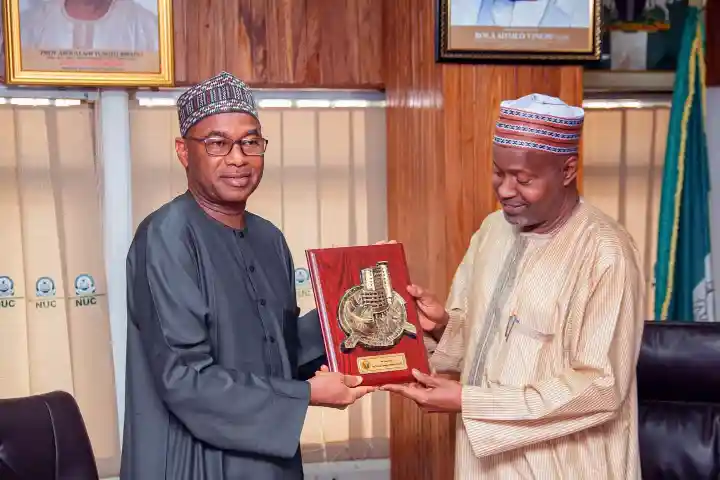
The Petroleum Technology Development Fund (PTDF) has renewed its commitment to advancing research, training, and education in Nigeria’s energy sector through stronger collaboration with the National Universities Commission (NUC).

During a courtesy visit to the NUC headquarters in Abuja, the Executive Secretary of PTDF, Ahmed Galadima Aminu, led a delegation of the Fund’s management team to meet with the NUC Executive Secretary, Prof. Abdullahi Yusufu Ribadu.

Speaking at the meeting, Mr. Aminu explained that PTDF’s mandate is focused on building human and institutional capacity for the oil, gas, and energy sectors. He emphasized the importance of training, research, and institutional development, while noting that the newly established College of Petroleum and Energy Studies, Kaduna (CPESK) represents a key part of this mission.

According to him, “The College sits on 86 hectares of land and is fully equipped with modern academic, residential, research, and digital learning facilities, making it a world-class postgraduate institution.”

He commended the NUC for licensing CPESK to operate as a private postgraduate university with 19 programmes across six departments and three faculties. Aminu also highlighted the Commission’s role in ensuring that the institution’s academic framework aligns with international standards.

The PTDF Secretary further announced ongoing partnerships with three leading UK universities — University of Strathclyde, Robert Gordon University, and University of Portsmouth — for split-site PhD programmes. He disclosed that collaboration with NNPC Limited will also support professional and vocational training. “The first cohort of PhD students will be admitted in September 2025,” he added.

In his remarks, Prof. Ribadu praised PTDF’s contribution to the oil and gas industry, describing CPESK as a landmark achievement. He noted, “This College provides foreign standard education locally at a more affordable cost.” He also reaffirmed that NUC had been part of the project from the early planning stages and pledged continued support to maintain global academic and research standards.

Prof. Ribadu stressed the importance of research in sustaining growth in the energy sector and assured that NUC would remain a strong partner in PTDF’s drive for excellence.

The visit highlighted PTDF and NUC’s shared vision for strengthening Nigeria’s energy education and research framework.

Ogun Partners National Cash Transfer Office to Expand NASSP-SU for Vulnerable Households

0

The National Cash Transfer Office has announced a collaboration with the Ogun State Government to strengthen the implementation of the National Social Safety Nets Programme Scale-Up (NASSP-SU).

At a stakeholders’ forum held in Abeokuta on Thursday, the Ogun Head of Service, Kehinde Onasanya, emphasized the need to ensure that conditional cash transfers reach the rightful beneficiaries.

Represented by Jola Oyeneye, Permanent Secretary of the Public Transformation Office, Mr Onasanya stated that many countries around the world implement similar social protection measures to reduce the effects of economic hardship on citizens, especially the most vulnerable.

He urged programme managers to ensure that the government’s initiative is not hijacked by unscrupulous elements. Onasanya added that the Ogun State Government, under the leadership of Governor Dapo Abiodun, remains fully committed to a transparent implementation of the cash transfer programme.

Also speaking at the forum, the Commissioner for Special Duties, Funmi Efuwape, described the initiative as a “lifeline for the poor and vulnerable.” She said the programme represents a clear commitment to poverty alleviation but highlighted the importance of spreading more awareness among potential beneficiaries.

“This programme is a way of giving back to the people. It is meant for those at the very bottom who are struggling to feed themselves,” she said.

“However, I think more awareness is needed because some beneficiaries are not even aware of their eligibility. This time, we will involve ward chairmen at the grassroots level to drive the process.”

Funmi Baker, Programme Manager for Cash Transfer in Ogun, explained that the initiative is designed to support 15 million poor and vulnerable households identified from the national social register. She pointed out that even small amounts of money can make a big difference in rural areas.

“Some people may think the money is too small, but what N1,000 means to you is different from what it means to rural dwellers,” she noted. “Initially, the federal government gave N5,000 monthly to poor and vulnerable households, and we have seen families that started small businesses with it. Since 2023, under President Bola Tinubu, the amount has been increased to N25,000, to be disbursed three times, making a total of N75,000 per household.”

One of the participants, community leader Adedamola Fatai from Abeokuta South Local Government, praised the programme, describing it as “well-organised.” He commended the arrangements put in place to ensure Community Development Associations (CDAs) are included in the process.

AgriTrust Resumes KYC Screening, Issues Refund Guidelines

AgriTrust has officially resumed its KYC Screening after a temporary suspension that left many applicants waiting. In a public statement shared with users, the company said, “We sincerely apologize for the suspension of our KYC Screening exercise earlier.

The issue has now been resolved, and we are glad to announce that the KYC Screening is officially back.”

Applicants are advised to log in to their dashboard at www.agritrust.ng to continue the verification process.

The platform stressed that users must generate their wallet account number first before moving forward with the KYC Screening. This requirement helps ensure that transactions are properly tracked within the AgriTrust system.

The company further explained that if registrants have already completed their KYC registration but are facing challenges, there are steps to follow. According to the update, “If you’ve experienced issues with your transaction, please send your transaction details and wallet account link to our email for a refund.”

In cases where users funded their wallet for testing but the balance did not reflect, they are also required to send their transaction details for a refund.

In an additional notice, AgriTrust confirmed that early registrants should be aware of changes to account details. Users are asked to generate a new account and submit their transaction details through email to process refunds. The statement emphasized, “Every user must have at least ₦1000 in their wallet to submit the KYC form.”

The company assured applicants that refunds will be handled for those whose wallets or balances are not visible once evidence and wallet details are provided. All communication is to be directed to the official email: riyawacontractors@gmail.com.

AgriTrust expressed appreciation to applicants, stating, “We truly appreciate your patience and understanding during the suspension period.”

Only 36% Households Benefited from FG Cash Transfer Since 2023 – PwC, Punch

0

Only 36 per cent of households targeted by the Federal Government’s conditional cash transfer programme since October 2023 have benefited, according to a mid-year economic report released by PwC and earlier reported by Punch.

The initiative was relaunched in 2023 to ease the burden on vulnerable Nigerians following the removal of petrol subsidy and the unification of the foreign exchange market under the Bola Tinubu administration.

PwC noted that while millions of households were included, the pace of payment has been slow. “Official figures showed that while 5.6 million households benefited from at least one transfer, just 2.4 million received a second and fewer than 1.3 million progressed to a third payment after biometric verification, raising questions about the pace and reach of the initiative,” the firm said.

The conditional cash transfer is designed to provide direct financial support to households in the lowest poverty bracket. However, the PwC report suggests that delays in verification and other administrative bottlenecks have limited its reach.

In April, the Federal Government launched a National Identity Number enrolment campaign as part of efforts to improve transparency and strengthen the Social Register used for the programme. Under this policy, at least one adult in each eligible household is required to be verified with a NIN or Bank Verification Number before accessing support. PwC explained that this process, though challenging in rural areas, may improve the accuracy of targeting and ensure that support reaches the most vulnerable Nigerians.

By May, the government confirmed that 2.3 million households had been cleared for payment under the renewed scheme. The World Bank is providing major backing for the project. Out of an $800 million loan approved for the initiative, $530 million had been disbursed as of April 30, 2025.

In its Nigeria Development Update titled ‘Building Momentum for Inclusive Growth,’ the World Bank observed that “Only 5.6 million households, around 37 per cent, have received at least one tranche of direct transfers,” while urging the government to expand coverage.

The Bank added that “the programme remains dependent on biometrically verifying at least one adult member of the household with a foundational digital identity. Also, efforts to urgently provide support to the poorest and most economically at-risk households should be redoubled and expanded.”

PwC also provided an update on oil price trends and their implications for Nigeria’s economy. According to the report, global geopolitical risks in the first half of 2025, including U.S.–China tensions, the Middle East conflict, and cyber threats, had a limited effect on oil markets. “Oil prices fell from $79.21 per barrel to $71.21 per barrel between January and June 2025. The decline was driven by the increase in output of nearly one million barrels per day in April and June by OPEC+, which reinforced downward pressure amid uncertain demand,” PwC stated.

The report added that sustained escalation of geopolitical tensions, particularly in the Middle East, could still impact oil markets in the medium term. “Such an outcome may prove favourable to Nigeria, given its reliance on crude oil exports (the benchmark oil price for 2025 was set at US$75 per barrel) as a major source of foreign exchange revenue,” PwC said.

Looking ahead, PwC projected that Nigeria’s gross domestic product will expand “modestly by 3.4 per cent in 2025, supported by higher crude oil production and stronger performance in the finance and insurance, construction, ICT and real estate sectors.” This projection comes as investors and policymakers closely monitor the nation’s energy sector and fiscal reforms.

On inflation, PwC estimated that headline inflation will moderate to 21.46 per cent in 2025 due to hawkish monetary policy and greater stability in the foreign exchange market. The report noted that with the recent decline in inflation, the Central Bank of Nigeria may begin to gradually ease its tight monetary stance in the second half of 2025.

Analysts say these projections, combined with government reforms and international financing support, highlight both opportunities and challenges for Nigeria’s economy.

The success of the conditional cash transfer programme, backed by the World Bank’s $800 million loan, remains central to the government’s strategy to cushion the effects of subsidy removal and protect the most vulnerable households.

Ogun State Trains 30,000 Women and Youths in Vocational Skills

The empowerment of women and youths in Ogun State has taken a new turn as more than 30,000 people have already benefited from a large-scale vocational training programme.

The initiative is being facilitated by the Alliance for Kamosky, a coalition of friends and supporters of Alhaji Kamardeen Yusuf, who serves as the Personal Assistant to the President on Special Duties.

A statement released on Thursday explained that the project is focused on improving the lives of underprivileged communities by providing practical skills that can lead to self-reliance and income generation.

The training covers soap making, tie-and-dye, hairdressing, and shoemaking, with the aim of creating opportunities for small businesses and reducing unemployment.

Beneficiary communities include:
1. Ado-Odo
2. Agbara
3. Igbesa
4. Lusada
5. Ketu
6. Ayetoro
7. Idiroko
8. Odogbolu
9. Odeda
10. Ilaro
11. Obafemi Owode
12. Ikene
13. Imasayi
14. Owode Yewa

Others are Ijebu-Ode, Ijebu East, Ijebu North, Ogun Waterside, Remo North, Sagamu, Abeokuta North and South, Ota, Imeko, Oja Odan, Ipokia, Ewekoro, and Ifo.

Speaking on the programme, Abimbola Odunlami, who represented the group, praised Yusuf and Dr. Abdul-Lateef Sulaiman, describing them as champions of grassroots empowerment and economic growth.

“Alhaji Kamardeen has performed excellently well in securing jobs for youths and providing soft loans to traders, thereby endearing himself to the people,” Odunlami said.

She explained further, “On our own part, as beneficiaries of Alhaji Kamardeen’s efforts, we thought about what we could do to complement his work. That is why we initiated this programme to enable our people to acquire vocational skills such as soap making, tie-and-dye, hairdressing, shoemaking and others. When women are empowered, it goes a long way toward creating a positive impact in our society.”

Organisers emphasized that this scheme is part of a larger plan to address unemployment, encourage entrepreneurship, and promote economic inclusion across Ogun State.