Home Blog Page 54

FG Reaffirms TVET Reform After UNESCO National Assessment of 320 Colleges

0

The Federal Government has reaffirmed its commitment to transforming Technical and Vocational Education and Training (TVET) into a major driver of economic renewal following the presentation of a National Needs Assessment Report conducted by UNESCO in partnership with GIZ and the World Bank.

The nationwide assessment, carried out in July 2025, evaluated 320 Federal and State Technical Colleges across all states and the FCT. The review covered infrastructure, staffing, curriculum relevance, digital readiness, industry linkages, and institutional capacity.

Receiving the report, the Honourable Minister of Education, Dr. Maruf Tunji Alausa, CON, described it as “a roadmap for reform” under the Nigeria Education Sector Renewal Initiative. He acknowledged existing challenges, including infrastructure deficits, shortages of qualified instructors, weak industry partnerships, and limited digital connectivity.

However, he emphasized that reforms are already underway. According to him, Federal Technical Colleges are now tuition-free, while trade offerings have been streamlined to align with labour market demand. He added that workshop rehabilitation is ongoing across institutions.

The minister also disclosed that over 100,000 students are currently enrolled in national skills programmes supported with stipends.

The report outlined six key reform pillars: infrastructure modernization, workforce strengthening, curriculum updates, industry collaboration, digital transformation, and sustainable financing. The Federal Government reiterated its resolve to rebuild TVET into a modern, industry-aligned, and digitally enabled system to drive youth employment and national development.

Advertisement

Governor Radda Unveils First CNG Station in Katsina

0

Katsina State Governor, Malam Dikko Umaru Radda, has unveiled the first Compressed Natural Gas (CNG) station in the state, describing the project as a historic step toward energy security, economic growth, and environmental sustainability.

Governor Radda made the declaration during the inauguration of the Greenville LNG–CNG Hub Station, noting that the project reflects the fulfillment of campaign promises and demonstrates governance focused on impact, accountability, and visible results.

“Today’s event is historic for our state. The commissioning of the first CNG station in Katsina is a clear demonstration that our promises to the people are being translated into real projects that will improve their lives,” the Governor said.

He explained that his administration’s agenda is built on key priorities, including security, economic revitalisation, human capital development, and sustainable growth, with energy placed at the centre of these objectives.

“Energy is the backbone of security, productivity, and economic growth. Reliable power is essential for businesses, public services, and communities. That is why power and energy remain central to our development agenda,” he stated.

Governor Radda noted that the Greenville gas hub forms part of the state’s broader energy diversification strategy, combining clean fuels with renewable energy solutions in a balanced approach that promotes affordability, reliability, and environmental responsibility.

“This project supports our energy transition agenda and positions Katsina as a forward-looking state that embraces cleaner and more efficient energy solutions,” he added.

He highlighted several major power and energy interventions undertaken by his administration, including the hybridisation of the state wind farm with solar photovoltaic systems and battery energy storage, as well as the deployment of solar mini-grids and stand-alone solar systems in rural communities, markets, and public institutions.

The Governor also disclosed investments in battery energy storage to improve grid stability, alongside the procurement and installation of transformers to strengthen electricity distribution, reduce outages, and support industrial and commercial growth.

“These projects are designed to unlock economic opportunities, empower small and medium-scale enterprises, and improve the quality of life of our people,” he said.

Governor Radda stressed that the administration’s energy initiatives are people-centred, with strong emphasis on job creation, skills development, and local content participation, particularly for youths.

He further assured investors that the state government is positioning Katsina as an attractive destination for responsible investment, with strong commitments to transparency, safety, and accountability.

“Our goal is to build a secure, productive, and climate-conscious state where both citizens and investors can thrive,” he said.

Earlier, the Chairman of Greenville LNG, Mr. Eddy Van den Broeke, represented by Mr. Joseph Adewale Oyadoyin, a Director in Greenville LNG Co. Ltd., congratulated Governor Radda and his team on the successful delivery of the project.

He described the commissioning of the Greenville LNG–CNG Hub Station as evidence of the governor’s commitment to lasting development, noting that the project originated from the governor’s visit to the company’s facility in Kaduna on 6 January 2024.

“The state government provided the land promptly, demonstrating a strong ease-of-doing-business environment. As a result, the station was completed and delivered in record time,” he said.

He noted that the facility is the first LNG–CNG station in Katsina and will supply affordable CNG and LNG to citizens, transporters, institutions, and businesses, while also creating employment opportunities for residents.

The Greenville representative added that the project aligns with the Federal Government’s Presidential Initiative on CNG, which aims to provide cleaner, safer, and more affordable fuel across the country, while enhancing energy security and reducing carbon emissions.

He thanked Katsina State ministries and agencies, as well as regulators and partners, including the Nigerian Midstream and Downstream Petroleum Regulatory Authority, the Federal Ministry of Industries, NARTO, NURTW, and various tricycle associations for their support.

Also speaking, the Special Adviser to the Governor on Power and Energy, Hafiz Ahmed, described the commissioning as proof that vision can be translated into reality through commitment and strong public–private partnerships.

He noted that Nigeria holds about 206 trillion cubic feet of proven gas reserves, the largest in Africa and the eighth largest globally, adding that the Federal Government has declared 2030 as the “Year of Gas” to maximise the resource for national development.

Hafiz explained that most of the country’s gas reserves are located in the southern region, but the state government is committed to ensuring that the benefits of gas development reach all parts of the country.

“Our focus is on using gas for power generation, transportation, and industrialisation, because gas development will drive multi-sector economic growth,” he said.

The event attracted government officials, including the Speaker of the Katsina State House of Assembly, Hon. Nasir Yahaya Daura; Chief of Staff to the Governor, Hon. Abdulkadir Mamman Nasir; local government chairmen; members of the Katsina State Executive Council; industry stakeholders; transport unions; regulators; community leaders; and business representatives.

Cross River State, NITDA Launch Digital Learning Centres

0

The Cross River State Microfinance and Enterprise Development Agency (CRSMEDA) has secured a strategic partnership with the National Information Technology Development Agency (NITDA) to deploy Digital Learning Centres (DLC) at Bendi Technical College in Obanliku LGA and Government Secondary School in Adiabo, Odukpani LGA.

The initiative marks a major milestone in CRSMEDA’s mission to integrate ICT into the state’s enterprise framework and connect remote communities to the global digital marketplace.

According to the agency, the DLCs are designed as comprehensive strategic interventions aimed at bridging the digital divide. The centres will provide modern computing hardware, high-speed internet, and Local Area Networks (LAN). They will also feature smart boards and sustainable solar-powered energy systems to ensure uninterrupted innovation.

CRSMEDA said the infrastructure will lay the foundation for a strong tech ecosystem across the Northern and Southern Senatorial Districts of the state.

The Director-General of CRSMEDA, Great Ogban, emphasized that the digital hubs represent a new phase of economic growth for Cross River State. He said the centres are designed as “vibrant incubators where students, artisans, and small business owners can master high-demand tech skills and scale their enterprises through e-commerce.”

He added that the agency is committed to transforming the state into a leading destination for digital services and tech-driven entrepreneurship.

Implementation of the project is already underway, with a specialized team in place and NITDA’s Project Management Department overseeing execution. The beneficiary institutions are working closely with the agency and have appointed liaison officers to manage project-related correspondence.

CRSMEDA noted that the collaboration between federal and state institutions reflects the administration’s “People First” agenda. The agency stated that the DLCs demonstrate progress in digital empowerment and encouraged stakeholders to monitor developments as the hubs prepare to deliver connectivity tools that will position Cross River State enterprises for global opportunities.

BOI disburses record N636bn to 7,000 businesses in 2025

The Bank of Industry (BOI) says it disbursed a record N636 billion to businesses across Nigeria in 2025, marking the highest annual financing volume in its history.

In its 2025 impact report released on Wednesday, the development finance institution said the funds were deployed to more than 7,000 businesses operating in manufacturing, agribusiness, micro small and medium enterprises (MSMEs), infrastructure, power, ICT and the creative sector.

President Bola Tinubu commended the bank for the milestone, describing it as clear evidence that ongoing macroeconomic reforms are strengthening development finance and expanding access to long-term capital.

In a statement issued by Bayo Onanuga, his special adviser on information and strategy, the president said the performance reflects reform-driven credibility and institutional discipline.

“The N636 billion disbursed by the Bank of Industry in 2025 translates directly into productive capacity across Nigeria,” Tinubu said.

“At a time of global financing constraints, Nigeria expanded access to long-term capital for its businesses. That is a direct outcome of reform, credibility and institutional discipline.”

BOI said the milestone reflects its transition “from strategy to scale” under its 2025–2027 transformation agenda, which prioritised balance sheet strengthening, access to long-term capital, operational efficiency and financing aligned with national economic and industrial priorities.

The bank stated that the performance was achieved despite global macroeconomic pressures that widened financing gaps and increased strain on development finance institutions. It added that demand for its funding rose during the year due to relatively cheaper and longer-tenured financing options offered to businesses.

According to the report, sectoral allocations included N202 billion to agro-allied enterprises, N100 billion to infrastructure, N79 billion to manufacturing, N77 billion to extractive industries and N55 billion to services.

The disbursements were partly supported by a €2 billion syndicated facility secured at the end of 2024, the federal government’s N200 billion MSME loans and grants scheme and an additional €210 million mobilised in 2025 from international partners. BOI also deployed N73 billion in managed and matching funds on behalf of states and institutional partners.

The bank maintained asset quality during the period, recording a non-performing loan ratio of less than 1.5 percent.

Under the federal government’s N200 billion intervention programme, BOI said it achieved over 95 percent performance as the disbursing entity, while the presidential conditional grant scheme reached 957,400 beneficiaries in 2025.

A breakdown of disbursements by business size shows N51 billion went to nano enterprises, N32 billion to micro businesses, N178 billion to SMEs and N375 billion to large enterprises.

BOI said its interventions led to the creation and retention of 1.6 million jobs, supported over 7,000 new MSMEs and 570 startups.

“Inclusive finance remained a priority,” the bank said, highlighting its N10 billion Guaranteed Loans for Women (GLOW) programme, which provides up to N50 million in affordable financing per beneficiary. Youth-owned enterprises received N12 billion in funding, while the Rural Area Programme on Investment for Development (RAPID) supported 880 rural enterprises with over N6.5 billion across the 36 states and the FCT.

The bank said strategic interventions during the year included upgrading a tomato processing facility from 3.1 metric tonnes to 10 metric tonnes per hour, linking 47,508 smallholder farmers to processing facilities and deploying 100 mini-grids in partnership with development finance institutions (DFIs), connecting 11,777 new customers to electricity.

It added that N100 billion was disbursed to critical national infrastructure spanning broadband, power, aviation and transportation, while BOI-financed projects contributed to an estimated annual reduction of over 20,000 tonnes of carbon emissions.

Through the Investment in Digital and Creative Enterprises (iDICE) programme, BOI said it prepared 500 founders for investment, funded 100 tech ventures and trained 400 youths through innovation programmes. The initiative targets over 300,000 Nigerians.

Commenting on the performance, Olasupo Olusi, BOI’s managing director (MD) and chief executive officer (CEO), said the milestone aligns with the federal government’s drive for industrialisation and inclusive growth.

“Achieving over N600 billion in loan disbursements to our customers in 2025 is a significant milestone for the Bank of Industry, which aligns with the vision of President Bola Ahmed Tinubu to drive industrialisation, economic diversification, and inclusive growth across Nigeria,” Olusi said.

“Beyond this milestone, our performance this year demonstrates BoI’s continued commitment to supporting enterprises, creating jobs, and strengthening the nation’s industrial base.”

BOI also said it strengthened its institutional standing in 2025, becoming Nigeria’s first national implementing entity to the United Nations Adaptation Fund and the first development finance institution in the country to achieve privacy information management system certification.

The bank added that it received multiple recognitions during the year, including Best Bank for Sustainable Finance in Nigeria 2025, Best Company in Financial Inclusion and Best Company in Infrastructure Development at the SERAS awards.

FG to Connect 20 Million More Nigerians to the Internet

The Minister of Communications, Innovation, and Digital Economy, Dr Bosun Tijani, says an additional 20 million Nigerians will gain access to the Internet as the Federal Government expands rural connectivity across the country.

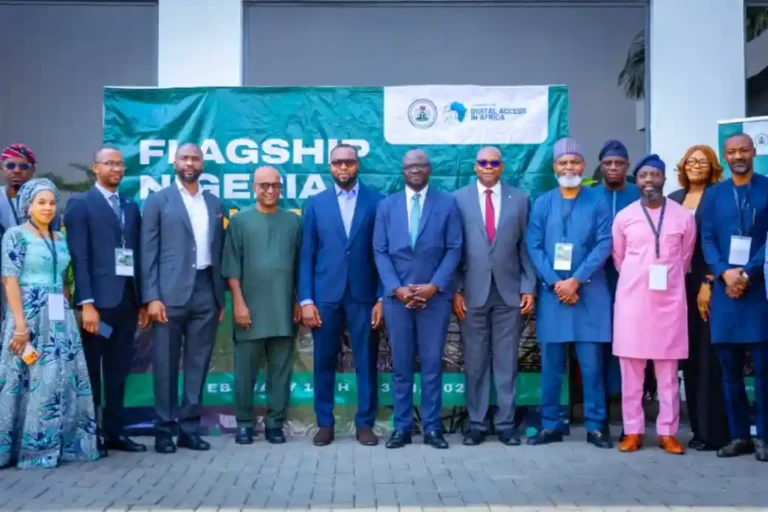
Tijani made this known on Wednesday in Abuja at the Flagship Nigeria Convening programme organised in partnership with the Partnership for Digital Access in Africa (PDA). The three-day programme is themed, “Closing Nigeria’s Usage Gap Through Affordable Devices and Digital Skills’’.

Nigeria Startup News reports that the event brought together stakeholders to address barriers to digital access and explore solutions for inclusive connectivity.

Speaking at the event, Tijani said Nigeria was currently making bold investments in digital infrastructure to drive economic transformation. According to him, Nigeria is the only country in Africa investing in an additional 3,700 towers to strengthen rural connectivity.

“The only country that is also investing in additional 3,700 towers for rural areas, which means we can now bring online about 20 million Nigerians that are currently unconnected at all,” he said.

He added that Nigeria was also investing in 90,000 kilometers of fiber-optic network, led by the World Bank.

“Nigeria is the only country that is investing in 90,000 kilometers of fiber-optic network which is led by the World Bank.

“We are the only country in Africa that is currently doing that but also investing in two communication satellites,” he said.

The minister explained that the Federal Government remained committed to deepening digital access and building the backbone of Nigeria’s digital economy. He noted that tariff adjustments and reviews in the telecoms sector had helped restore profitability and encouraged private investments exceeding $1 billion.

Tijani stressed that infrastructure alone would not solve the digital gap without skills and literacy. He said the government had clearly separated advanced technical skills from basic digital literacy needs.

He referenced the Three Million Technical Talent (3MTT) programme launched in 2023, which has already trained over 150,000 young Nigerians. He also disclosed plans to roll out a nationwide digital literacy programme using mobile technology and local languages.

According to him, Nigeria has developed the first government-backed large language model in Africa that enables artificial intelligence to communicate in Hausa, Igbo, Yoruba, and accented English. He said the innovation would form the foundation for delivering digital literacy training to Nigerians of all ages.

Providing updates on satellite expansion, Tijani said Nigeria’s existing communication satellite had become outdated and that President Bola Tinubu had approved the procurement of new satellites. He stated that the new satellites would help connect hard-to-reach areas and strengthen national security.

He added that fiber deployment is expected to begin between the second and third quarters of this year, while the new satellites are projected to become operational by next year.

In his remarks, Chief Executive Officer of PDA, Ibrahima Guimba-Saidou, said the programme aligns with Africa’s goal of connecting one billion people to the Internet by 2030. He commended Nigeria for its clear strategy and significant investments in connectivity, devices, and digital skills, but noted that electricity remains a major challenge.

“This is about making connectivity relevant to the people who need it the most, not just those in major cities,” he said.

He explained that PDA’s Mission 300 initiative focuses on expanding electricity access to remote areas so that communities, schools, health centers, and markets can benefit fully from digital services. He called for stronger collaboration between public and private sectors to close the digital divide quickly.

Earlier, the World Bank Country Director for Nigeria, Mathew Verghis, said Nigeria faces serious deficits in electricity access and backbone infrastructure but has strong growth potential due to its population.

“There is no digital inclusion without power, and no inclusive growth from electrification without connectivity,” he said.

Verghis added that digital inclusion requires reliable power, broadband connectivity, and affordable devices working together. He said the World Bank is ready to support both public and private sector partners in coordinating planning, construction, and financing of power and fiber infrastructure to accelerate universal access.

FMN Opens 2026 Prize for Innovation on Cassava Processing

0

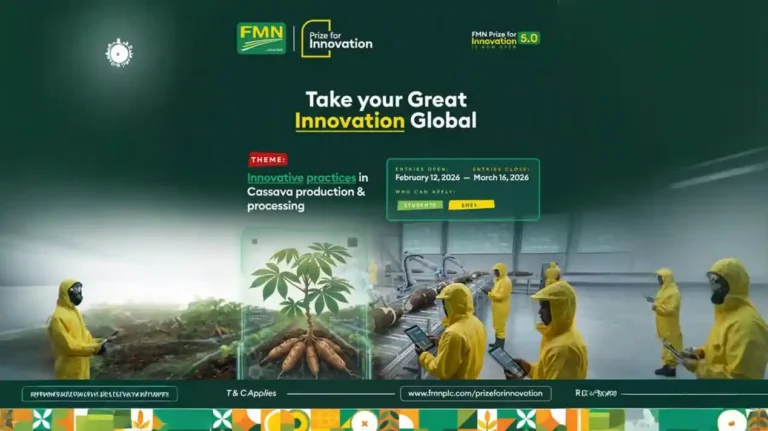
Flour Mills of Nigeria Plc has opened entries for the fifth edition of its annual Prize for Innovation, with this year’s focus placed on cassava production and processing as part of efforts to boost local industrial capacity.

The 2026 edition is themed “Innovative Practices in Cassava Production and Processing.” It is designed to encourage practical solutions that can strengthen Nigeria’s cassava value chain and reduce reliance on imported derivatives.

Although Nigeria remains the world’s largest producer of cassava, the country continues to import significant quantities of cassava-based industrial inputs. This has highlighted gaps in local processing capacity and value addition, despite the crop’s wide availability.

The Prize for Innovation is open to registered Nigerian small and medium-scale enterprises in the food and agro-allied sector, as well as student innovators. Under the SME category, winners will receive ₦5 million for first place, ₦3 million for second place and ₦2 million for third place. In the student category, prizes of ₦300,000, ₦200,000 and ₦100,000 will be awarded to the top three entrants.

Beyond the financial rewards, selected participants will receive mentorship and access to industry networks aimed at supporting the commercial viability of their ideas.

Speaking on the initiative, the Group Chief Executive Officer of Flour Mills of Nigeria, Boye Olusanya, described the fifth edition as strategically aligned with Nigeria’s industrial development priorities.

He said the company’s renewed focus on cassava reflects its potential to support industrial self-sufficiency within the food and agro-allied sector, especially at a time when local production capacity is under renewed scrutiny.

According to Olusanya, the innovation prize has, over the past five years, supported the development of practical solutions within Nigeria’s food system and contributed to ongoing efforts to reduce dependence on imported raw materials.

Since its launch in 2021, the initiative has supported 24 innovators across four editions, disbursing more than ₦42 million in direct funding. The company also stated that additional structured support valued at over ₦200 million has been provided to help past winners scale their solutions and improve market readiness.

Earlier editions of the prize addressed themes such as food loss and waste reduction, local content development, precision agriculture and livestock farming, reflecting changing priorities within the agricultural sector.

Sadiq Usman, Managing Director of FMN Agro and Group Director of Strategic Stakeholder Relations, said the programme is structured to move ideas beyond the conceptual stage.

He explained that the initiative combines funding with industry guidance and mentorship to ensure that selected projects can transition into viable commercial ventures.

Entries for the fifth edition are open until March 16, 2026, and applications are to be submitted through the initiative’s official website.

Founded in 1960, Flour Mills of Nigeria operates across several value chains, including grains, sugar, cassava starch, feeds and protein, and edible oils and fats. The company has maintained a significant presence in Nigeria’s food production sector for more than six decades.

The renewed focus on cassava industrialisation aligns with broader national conversations around food security, import substitution and agricultural value chain development.

FG begins distribution of food, nutritional items to vulnerable Kebbi people

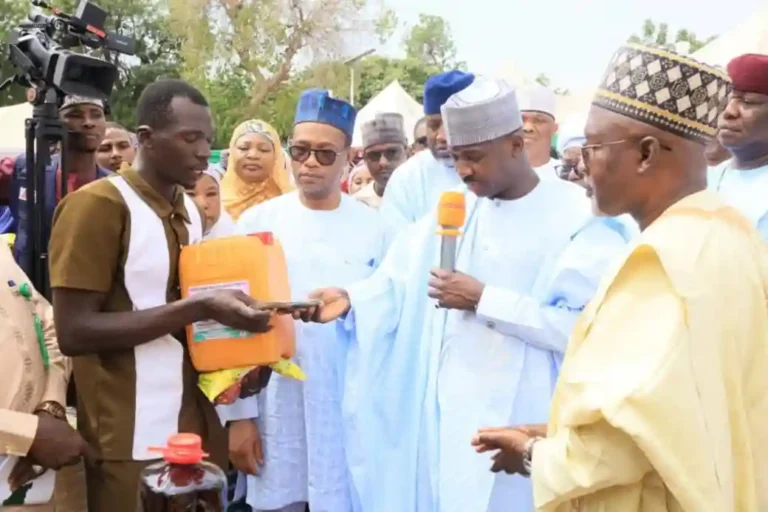
The Federal Government has commenced the distribution of food and nutritional items to thousands of vulnerable and physically challenged people in Kebbi State.

The Minister for State of Humanitarian Affairs and Poverty Reduction, Alhaji Yusuf Tanko Sununu, flagged off the exercise in Birnin Kebbi, stating that the initiative is aimed at supporting communities affected by humanitarian crises in the state.

Sununu said the intervention covers the distribution of food items as well as nutritional supplies and medicines to hospitals, children’s care centres, and other vulnerable groups. He added that there are plans to extend the support to other senatorial zones across Kebbi State.

According to him, the programme aligns with President Bola Ahmed Tinubu’s Renewed Hope Agenda, which is designed to cushion the effects of humanitarian crises across the country. The food items provided include rice, millet, beans, maize, cooking oil, and other nutrition-supporting commodities.

Speaking at the event, Governor Nasiru Idris of Kebbi State commended the Federal Government for the intervention. He stressed that the distribution would significantly alleviate the plight of vulnerable residents in the state.

The governor assured that his administration would continue to support federal efforts aimed at reducing poverty, hunger, and disease. He also urged beneficiaries to make judicious use of the items provided and promised further support for the people of the state.

Idris encouraged residents to reciprocate the gesture by supporting President Bola Ahmed Tinubu’s bid for a second term.

Radio Nigeria reports that beneficiaries expressed appreciation to both the federal and state governments, noting that the assistance arrived at a critical time.

The distribution exercise was officially flagged off by the Governor and assisted by the State Minister of Humanitarian Affairs and Poverty Reduction, alongside senior federal and state officials.

FG to Equip 37 Polytechnics Under Skills-G Phase Two

0

The Ministry of Education has announced that about 37 polytechnics across Nigeria will receive modern industry-grade equipment under the second phase of its Skills-G programme.

In a statement shared via X on Wednesday, the ministry said the federal government has inaugurated a ministerial implementation and monitoring committee to oversee engineering and laboratory upgrades in the country’s polytechnics as part of the programme.

“Priority areas include mechatronics, robotics, renewable energy, telecommunications, electronics, and automobile engineering to align training with labour market demands,” the statement reads.

The ministry explained that the committee will be chaired by the Executive Secretary of the National Board for Technical Education (NBTE). It added that the committee is expected to monitor implementation to ensure accountability and also recommend institutions that will benefit from the third phase of the programme in 2026.

According to the statement, the federal government, through the support of the Tertiary Education Trust Fund (TETFund), remains committed to closing skills gaps and delivering globally competitive, industry-relevant technical education.

The Skills-G Programme is described as a long-standing federal government initiative focused on upgrading science, engineering, and technical equipment in Nigerian tertiary institutions, especially polytechnics.

Supported by TETFund, the programme is part of Nigeria’s broader push toward skills-based education and complements the Technical and Vocational Education and Training (TVET) initiative launched in October 2025 to produce entrepreneurs rather than job seekers.

Ekiti sponsors 12,000 students with free JAMB forms, scholarships since 2022

0

No fewer than 12,000 students have benefited from the Ekiti State Government’s free Joint Admissions and Matriculation Board (JAMB) Unified Tertiary Matriculation Examination (UTME) forms programme since Governor Biodun Oyebanji assumed office in October 2022.

The Governor’s Senior Special Assistant on Student Affairs, Modupe Adetiba, disclosed that 3,400 students are benefiting from the scheme this year alone.

She explained that the initiative is part of the administration’s effort to improve access to higher education and help students achieve their academic goals.

Speaking on Ekiti Loni, Ekiti Today, a live radio programme in Ado Ekiti, Ms Adetiba said the governor has prioritised students’ welfare through policies designed to transform their lives.

She added that the state government has paid over N600 million in West African Examinations I Council (WAEC) fees for 17,859 public school students who sat for the 2025 West African Senior School Certificate Examination.

According to her, more than N25 million was also paid for the National Business and Technical Examinations Board (NABTEB) examinations for 800 students in government technical colleges across the state.

Ms Adetiba said free Information and Communication Technology (ICT) training and coaching classes are being organised for beneficiaries of the free JAMB programme. The training is coordinated through the State Agency for Adult and Non-Formal Education in each of the 16 local government areas to prepare students adequately for the examination.

She noted that the programme is open to all residents of the state, not only indigenes. However, to qualify for the free UTME forms, students must have obtained at least seven credits in their WAEC examinations. She said this requirement is to ensure proper monitoring and prevent wastage.

The governor’s aide also highlighted increases in bursaries and scholarships under the current administration.

She said the bursary for undergraduates has been increased from N20,000 to N40,000, while undergraduate scholarships were raised from N80,000 to N100,000, with over 6,000 beneficiaries recorded since the governor assumed office.

She further stated that more than 2,000 undergraduate and postgraduate students, including PhD candidates, have received scholarships of N100,000, N250,000 and N750,000 respectively.

Law School scholarships were also increased in January from N150,000 to N300,000, with 754 students benefiting since the governor took office.

Ms Adetiba added that students living with disabilities have been given special consideration, with their scholarship awards increased to N120,000, compared to N100,000 for other undergraduate students.

She also announced that the Ekiti State Scholarship Board has opened a three-week window for online applications for scholarship and bursary support, urging eligible students to apply through the board’s website.

NDPC, NYSC to train 100 Corps Members per dtate as Data Protection Officers

0

The Nigerian Data Protection Commission (NDPC) has expressed interest in partnering with the National Youth Service Corps (NYSC) to provide training on data privacy and protection for Nigerians.

The National Commissioner and Chief Executive Officer of NDPC, Dr. Vincent Olatunji, disclosed this during a courtesy visit to the NYSC National Directorate Headquarters in Maitama, Abuja.

Olatunji explained that the proposed partnership would strengthen digital skills acquisition among Corps Members and prepare them for opportunities in the growing digital economy. According to him, the commission has identified about 500,000 data processors and controllers across the country who would require the services of trained data protection officers.

He said the data protection sector offers strong employment prospects and supports the Federal Government’s job creation drive.

Under the proposed collaboration, Olatunji said the NDPC would train NYSC staff free of charge and also grant them access to its Virtual Privacy Academy (VPA). He added that 100 Corps Members in each state of the Federation and the Federal Capital Territory would be trained and certified as Data Protection Officers.

“By law, it is mandatory for all Ministries, Department and Agencies of the Federal Government to process data in accordance with the provisions of the Nigerian Telecommunications Act of year 2023,” he said.

Olatunji commended the NYSC for being the best compliant Federal Government Agency on data protection in the country and praised the Scheme’s contributions to Nigeria’s socio-economic advancement since inception.

He stressed the need to put adequate measures in place to protect information shared online by internet users and advocated the appointment of data processing officers in all NYSC formations nationwide.

In his response, the NYSC Director-General, Brigadier General Olakunle Nafiu, described data protection and security as essential for building confidence in the digital economy.

He welcomed the proposal and pledged to integrate the training into the Scheme’s Skill Acquisition and Entrepreneurship Development (SAED) programme.

Nafiu noted that Corps Members are active on social media but acknowledged an existing gap in data protection knowledge, adding that the partnership would empower them to serve as strong advocates of data protection.

Both agencies agreed to establish a committee to fast track a Memorandum of Understanding for nationwide implementation of the partnership.