Home Blog Page 552

FG Launches Initiative to Support 10,000 Women-Owned Businesses by 2030

The Federal Government has introduced a new initiative aimed at empowering 10,000 women-owned export-ready businesses in Nigeria by 2030, while also creating international market access for 3,000 women-led small and medium-sized enterprises by 2027.

The announcement was made during the official launch of the Women in Export Development Initiative in Abuja, where First Lady Senator Remi Tinubu, represented by the wife of the Vice President, Hajiya Nana Shettima, addressed participants.

In her keynote speech, the First Lady described the event as more than just a programme launch, saying, “We are igniting a beacon that will illuminate the path for thousands of Nigerian women entrepreneurs determined to take their rightful place on the global trade stage.”

She explained that the initiative, launched in collaboration with the World Trade Organisation, the International Trade Centre, the Nigerian Export Promotion Council, and the Federal Ministry of Industry, Trade and Investment, will focus on boosting women’s participation in global markets through capacity building, export literacy, and linkages to international value chains.

She noted that grassroots export literacy will be delivered through cluster hubs in all 36 states and the Federal Capital Territory, with global connections supported by platforms such as the African Continental Free Trade Area, ECOWAS Trade Hub, ITC SheTrades, and UN Women partnerships.

Emphasising the economic importance of women’s participation, she said, “Closing gender gaps in economic participation could grow Nigeria’s GDP by up to 23 per cent. Women own 41 per cent of micro-businesses and contribute close to 29 per cent of our GDP, yet only 15 per cent participate in formal export trade.”

Highlighting the population statistics, she added, “Women represent 49.3 per cent, or 115.01 million, of the country’s population. That is a compelling call to action. Women are half the power, half the potential, and more than half the promise of this great nation.”

She praised Nigerian women for their impact in sectors such as agribusiness and technology and commended the NEPC for hosting the SheTrades Nigeria Hub for over eight years, connecting more than 4,000 women entrepreneurs to global markets.

She also acknowledged the Minister of Industry, Trade and Investment, Dr Jumoke Oduwole, referring to her as “the SheTrades Champion.”

The First Lady listed other federal initiatives to support women, including the Nigeria for Women Programme, a national women e-market portal, digital skills training for over 20,000 women, and the Naija Save Nigeria financial literacy scheme.

“When a woman exports, she does more than earn. She empowers. Studies show that women reinvest up to 90 per cent of their earnings into their families, healthcare, and education. That is not just business growth.

That is nation-building,” she said. Quoting former UN Secretary-General Kofi Annan, she added, “There is no tool for development more effective than the empowerment of women.” She urged government bodies, the private sector, development partners, and civil society to ensure that the initiative becomes a lasting turning point.

Speaking at the event, the Director-General of the World Trade Organisation, Dr Ngozi Okonjo-Iweala, announced the rollout of the Women Exporters in the Digital Economy Fund in Nigeria, a $50 million initiative jointly established by the WTO and the International Trade Centre to create opportunities for women in digital trade.

According to her, 146 women entrepreneurs have been selected to benefit from the scheme. Sixteen entrepreneurs in the Booster Track will receive up to $30,000 each along with 18 months of technical assistance, while 130 in the Discovery Track will receive up to $5,000 each and one year of business support.

Minister Oduwole praised the WTO and ITC for their partnership, stressing that digital trade offers Nigerian women opportunities to reach international customers, integrate into global value chains, and promote their products and services worldwide.

She reaffirmed the Federal Government’s commitment to aligning the programme with national digital economy and trade strategies, improving export processes, reducing trade barriers, and expanding financing options for women-led businesses.

She also linked the initiative to President Bola Tinubu’s eight-point agenda and the goal of building a $1 trillion economy by 2030, saying, “We want Nigerian women to export not just products, but also ideas, culture, and innovation. Let today mark the beginning of a new era where our women rise, export, and lead on the global stage.”

The Managing Director and Chief Executive Officer of the Nigerian Export Promotion Council, Nonye Ayeni, described the launch as a major milestone for women entrepreneurs and a recognition of their resilience and capacity to compete globally.

She expressed appreciation to the First Lady for her commitment to women’s progress, to the WTO Director-General for initiating the WEIDE Fund, and to Pamela Coke-Hamilton, Executive Director of the International Trade Centre, for her consistent advocacy for women in trade.

Ayeni revealed that the application process received 68,000 entries from all six geopolitical zones, showing the strong entrepreneurial spirit of Nigerian women.

The 146 beneficiaries will gain not only financial support but also training in digital trade, capacity building, access to finance, and digital skills to compete in international markets. “The WEIDE Fund is not just about grants. It is about unlocking the immense potential of our SMEs, particularly women-led businesses,” she stated. She stressed that women remain central to driving digital trade and economic growth.

The launch highlighted the combined efforts of global organisations, the Nigerian government, and trade agencies to enhance women’s capacity in export trade and digital entrepreneurship.

The event also underscored the role of high-level collaboration in promoting economic development, gender equality, and inclusive growth. This initiative is seen as a strategic move to increase Nigeria’s competitiveness in global trade while ensuring that women are at the forefront of economic transformation.

By linking local women entrepreneurs to platforms like AfCFTA, ECOWAS Trade Hub, ITC SheTrades, and UN Women, the programme seeks to position Nigerian women as major contributors to international trade.

The speeches at the event reflected a strong consensus that empowering women in trade is not just an economic necessity but a social imperative. The First Lady’s message, along with remarks from the WTO, ITC, NEPC, and the Ministry of Industry, Trade and Investment, set a tone of determination to close gender gaps and create sustainable opportunities for women in business.

The integration of high-value keywords such as women entrepreneurs, export trade, digital economy, and global markets throughout the event’s discussions further underlined the economic significance of the launch.

By 2030, the government expects the programme to have created a strong base of export-ready women entrepreneurs, positioned Nigeria as a hub for women-led trade in Africa, and contributed significantly to national GDP growth.

The launch of the Women in Export Development Initiative and the Women Exporters in the Digital Economy Fund represents a coordinated approach to tackling existing barriers to women’s participation in international markets and the digital economy.

The programme’s emphasis on capacity building, access to finance, and integration into global trade systems is aimed at creating a lasting impact on Nigeria’s economic landscape.
Advertisement

Delta Gov to Launch Widows Welfare Scheme for 10,000 Beneficiaries

August 14, 2025 – Delta State Governor, Rt. Hon. Sheriff Oborevwori, will on Monday, August 18, 2025, officially launch the Delta State Widows Welfare Scheme. The event, set for 10:00 a.m. at the Dome Event Centre in Asaba, is expected to attract top government officials, social welfare stakeholders, and representatives of women’s groups from across the state.

According to the state government, 10,000 widows will benefit from the programme, which will provide financial support and empowerment packages to improve their livelihoods. The initiative is part of the administration’s efforts to boost economic development and promote social inclusion.

Executive Assistant to the Governor on Social Investment and Coordinator of the scheme, Chief Isioma Okonta, confirmed the development in a statement on Wednesday.

He explained that the programme reflects the governor’s focus on addressing the needs of vulnerable groups in the state.

“This initiative is a strong statement of our commitment to the welfare of widows in Delta State,” Okonta said. “Through financial support and empowerment opportunities, we aim to enhance their ability to sustain themselves and contribute to economic growth.”

The Widows Welfare Scheme is a key part of Delta State’s broader social investment agenda aimed at cushioning economic hardship and fostering inclusive growth across communities.

Adamawa, NEPC Campaign to Boost Trader Exports and Business

0

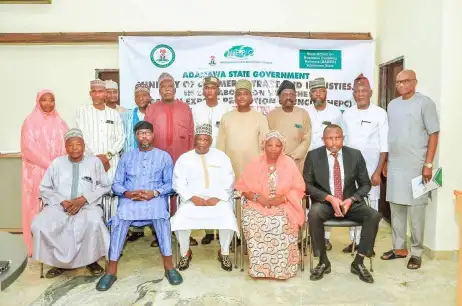
Adamawa State Government has reaffirmed its commitment to creating a better environment for traders to package and export their products for higher profits.

This was disclosed by the Commissioner for Commerce, Trade and Industries, Hon. Dr. Ishaya John Dabari, during a town hall meeting at the Deputy Governor’s Conference Hall for traders from Yola North, Yola South, Fufore, and Girei local government areas.

The initiative, carried out in collaboration with the Nigerian Export Promotion Council (NEPC) and the State Action on Business Enabling Reforms (SABER), is part of an awareness campaign covering all 21 local government areas in Adamawa State. Dr. Dabari said the programme aligns with Governor Ahmadu Umaru Fintiri’s directive to sensitize traders on export procedures and improve the ease of doing business.

“We have visited the southern and northern zones, and this town hall meeting concludes our engagement with traders in the central zone. All of this is to raise awareness on the importance of proper export procedures and compliance,” the Commissioner said.

He explained that the state government has introduced reforms to eliminate trade barriers. These include the harmonization of taxes, the creation of special courts to resolve trade disputes, and the use of ICT in business transactions. According to him, these steps are aimed at making Adamawa more competitive in the national and international markets.

Dr. Dabari also raised concerns over the low usage of the ₦2 billion NEXIM Bank fund available for traders in the state.

He urged business owners to take advantage of the financial support to access international markets and increase foreign exchange earnings through exportation.

Permanent Secretary in the Ministry and Chairperson of the State Committee on Export Promotion (SCEP), Mrs. Saso Benson Ali, said Adamawa has significant agricultural and industrial export potential but remains underrepresented in national export statistics.

She stressed the importance of following export standards, particularly in the use of agrochemicals, to avoid rejection of goods abroad.

“Certification and registration for export are affordable. We encourage traders to avoid practices that may hinder the acceptance of their goods abroad,” she stated.

Regional Coordinator of NEPC, Dr. Ben Anani, assured traders of the Council’s continued support through training, funding, and guidance on standardization and packaging requirements. “Our aim is to support indigenous businesses and manufacturers in reaching foreign markets. We are especially concerned about the low participation of women in export activities and are working to address this,” he said.

Chairman of Yola South LGA, Barr. Jibril Ibrahim Jimeta, commended the campaign, describing it as a timely intervention for economic growth. Chairman of the Gamzaki Traders Union in Yola South, Ali Kachalla, thanked Governor Fintiri for his support and promised to share the knowledge gained with other traders.

The meeting ended with an interactive session where traders asked questions about export packaging, certification processes, and funding access, reflecting growing interest in tapping into the state’s export opportunities.

Plateau SDGs and LoveBack Project Unveil Youth Innovation Hub in Jos

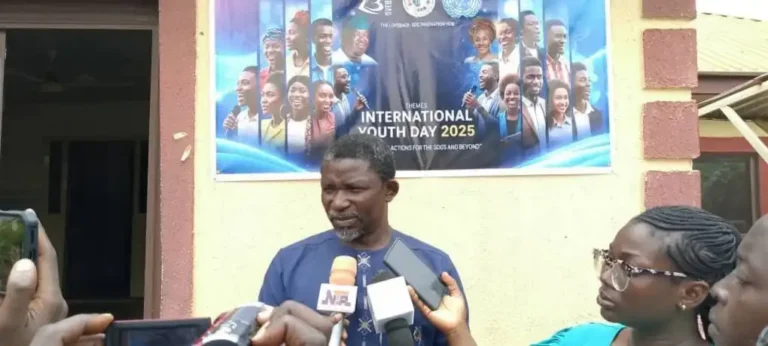
Plateau State Sustainable Development Goals (SDGs), in partnership with the LoveBack Project, joined other non-governmental organizations to officially unveil the Youth Innovation Hub in Jos. The launch was part of the 2025 International Youth Day celebration, focusing on youth empowerment and sustainable development.

Representing the Secretary to the Government of the State, Architect Samuel Jatau, Hon. Dakwom Verengzak commended Governor Caleb Mutfwang’s administration for “unwavering support to youth-led initiatives, providing resources and platforms for young people to thrive.”

Speaking through the Director of Administration, David Pam Dusu, the SDGs Project Coordinator, Mrs. Nanbam Danjuma (Lot), described the Hub as “a symbol of youth empowerment in action,” aligning with SDG 4 on Quality Education, SDG 8 on Decent Work and Economic Growth, SDG 9 on Industry, Innovation and Infrastructure, and SDGs 16 and 17 on Peace, Partnerships and Strong Institutions.

LoveBack Team Lead, Alfred William, announced that the Hub is equipped with a professional photo studio, podcast studio, and collaborative workspace to promote creativity, entrepreneurship, and tech-driven solutions.

The event also featured goodwill messages from Fatima Suleiman of ICIN, Apostle Babatunde Adewumi, and Toyin Wiggins of the Wiggins Foundation, highlighting how grassroots youth are driving change.

Experts led thematic sessions, including Pharmacist Judith Sambo on Mental Health and Youth Resilience (SDG 3), David Nshe Velnoe on Climate Action and Environmental Leadership (SDG 13), and Rhema Ikokwu on Youth Innovation and Entrepreneurship (SDG 8). Ikokwu also addressed Youth and Education for the Future (SDG 4).

A major highlight was the testimony of Dorathy Agada, a pioneer trainee of the SDGs–LoveBack Innovation Hub, who shared how the program shaped her career goals.

The unveiling brought together notable figures from NGOs, government, and community organizations, marking a step forward in promoting sustainable development and youth inclusion in Plateau State.

FG Pledges Stronger Policies and Funding to Boost Creative Industry

0

August 14, 2025 – The Presidency has reaffirmed President Bola Tinubu’s dedication to advancing Nigeria’s creative industry through sustained policy support, increased investment, and a business-friendly environment.

Speaking at the inaugural Creative Powerhouse Summit (QED-NG) held at the Radisson Blu, Ikeja GRA, Lagos, Senior Special Assistant to the President on Media and Publicity, Temitope Ajayi, described the sector’s progress over the past decade as remarkable in promoting Nigeria’s cultural heritage and positioning the country as a global creative hub.

The summit, themed “Financing as a Catalyst for a Thriving Creative Economy,” brought together stakeholders from film, music, fashion, arts, and technology to discuss sustainable funding models and strengthen links between industry players and investors.

“President Tinubu has demonstrated his commitment to the creative sector by dedicating a full ministry to its development,” Ajayi stated. “The government will continue to support the industry with policies to ensure it grows in leaps and bounds.”

Ajayi encouraged creative professionals to embrace partnerships and seek investors capable of scaling innovative ideas into commercially viable ventures.

“The graveyard is full of ideas that died with their creators, never seeing the light of day,” he warned. “Without testing market viability and scalability, you cannot be sure your idea will change the world. It’s better to own 10% of something than 100% of nothing.”

Convener of the summit, Olumide Iyanda, explained that the event was designed to connect creative entrepreneurs with financiers and policymakers to unlock the sector’s full potential. “The creative industry is one of Nigeria’s strongest export assets,” Iyanda said.

“Our goal is to bridge the funding gap and create the right environment for local talent to compete globally.”

Ajayi commended the organisers for fostering dialogue between industry leaders and investors, adding that the combination of government policy, private capital, and collaborative innovation would boost job creation, enhance Nigeria’s soft power, and consolidate the country’s position as Africa’s cultural capital.

He stressed that access to creative industry financing remains crucial for sustainable growth, noting that sectors like film production, music distribution, fashion exports, and digital arts could contribute significantly to Nigeria’s GDP if adequately funded and strategically promoted.

Bauchi, Chairmor Cuts & Designs to Train 50 Youth in Embroidery, Tailoring

14th August 2025 – Bauchi – The Office of the Special Adviser to the Governor on Youth and Entrepreneurship in Bauchi State today hosted a courtesy visit from Chairmor Cuts & Designs, a leading embroidery company known for its innovation and high-quality craftsmanship.

The delegation, led by the company’s founder, Shahruzzaman Nuhu Zaki, congratulated Hon. Muhammad Atiku Isah on his appointment as Special Adviser.

They also expressed appreciation to Governor Senator Bala Abdulkadir Mohammed for creating opportunities for young people to serve and contribute to governance.

During the visit, Chairmor Cuts & Designs proposed a partnership to train 50 youth in embroidery, tailoring, and creative design. According to the team, the initiative aims to boost economic empowerment, enhance entrepreneurship skills, and create sustainable jobs in the creative industry.

The company plans to formalize this through a Memorandum of Understanding with the state.

Hon. Atiku Isah welcomed the proposal, stating it is “a powerful example of how the creative industry can be a driver of economic empowerment, job creation, and innovation for our young people.” Discussions are ongoing to ensure the program delivers maximum impact, supports skill acquisition, and strengthens youth entrepreneurship in Bauchi State.

Apply: Katsina State Science and Technical Education Board Recruitment

0

August 14, 2025 – Katsina State Science and Technical Education Board (STEB) has announced the recruitment of qualified graduates to serve as classroom teachers and instructors in key subject areas.

The notice, dated 14th August 2025, invites applications from candidates with the required qualifications.

The management is calling on interested and suitable graduates to apply for positions in the following subjects:

a. English Language
b. Mathematics
c. Physics
d. Technical and
e. Commercial

Eligibility requirements:

The statement also outlined the qualification requirements as: the candidates must possess Good Honours Degree or Higher National Diploma from a recognized University or Polytechnic.

The deadline is two weeks from the date of the notice.

How to apply:
Applicants are expected to submit their Curriculum Vitae and credentials to the Director Admin and Supplies, Science and Technical Education Board (STEB), old Dialogue Computers, Bayajidda Road, G.R.A Katsina.

The management further explained, “Only shortlisted applicants will be invited for written examination and oral interview.” This teacher recruitment offers career opportunities in education for qualified candidates in Katsina State.

FG Targets 7% GDP Growth with Private Sector-Led Investment

0

August 14, 2025 – The Federal Government has unveiled its plan for renewed stability and faster economic growth, placing emphasis on private sector-led investment, job creation, and improved public services.

Speaking during a media briefing in Abuja, the Honourable Minister of Finance and Coordinating Minister of the Economy, Mr. Wale Edun, outlined the administration’s vision for a more prosperous Nigeria.

He explained that the strategy is anchored on two key objectives: achieving a stable macroeconomic environment to support private sector growth and building stronger government savings alongside public investment in vital sectors like education, health, and infrastructure.

“Our task is to translate this into tangible improvements in the lives of Nigerians, through principally more jobs, and quality jobs that give higher incomes, and of course better public services,” Edun said.

Despite challenges from the global economy, the Minister highlighted that Nigeria’s economy is becoming more diversified, with growth coming from sectors such as trade, communications, and construction. He revealed that GDP growth stood at 3.13% in the first quarter of 2025, up from 2.3% in the same period last year.

Inflation moderated to 22.22% as of June 2025, while foreign exchange reserves were at approximately $39 billion in July 2025.

Edun noted that the government has settled outstanding capital budget obligations and is focusing spending on critical sectors. The administration is targeting 7% annual GDP growth, supported by private investment, infrastructure development, energy security, and increased food production.

He added that key initiatives include implementing policies to boost private sector growth, improving infrastructure, and promoting agricultural development.

“Our fiscal discipline and structural reforms are designed to build investor confidence and position Nigeria for sustainable, inclusive growth,” Edun stated.

The Minister emphasized the importance of coordinated fiscal and monetary policies aimed at reducing inflation in a substantial and sustainable manner. “This will enable cheaper capital for businesses so they can invest, and of course, greater purchasing power for households,” he explained.

Edun stressed the government’s commitment to building an economy that works for everyone, anchored on transparency, resilience, and purpose. “Nigeria’s future growth depends on effective, honest, and targeted spending. We must ensure that public resources work harder for our people and our economy,” he said.

The government believes that with these reforms, the economy will continue to grow and diversify. Private sector-led investment, job creation, and improved public services remain central to its approach.

By driving growth through critical sectors, maintaining fiscal discipline, and strengthening investor confidence, the Federal Government is confident that the country will achieve renewed stability and accelerated growth.

This vision, according to the Minister, will improve the lives of Nigerians and position the nation for a brighter future.

FG Highlights Reforms, N200bn Business Funds, Other South-East Projects

August 14, 2025 – The Honourable Minister of Information and National Orientation, Mohammed Idris fnipr, has reaffirmed the Federal Government’s commitment to strengthening communication between the government and citizens while ensuring inclusive national development.

Speaking during the #HMINOTour Town Hall Meeting held on Thursday, August 14, 2025, at the Government House, Enugu State, Idris said the engagement was part of the Federal Ministry of Information and National Orientation’s efforts, in collaboration with the National Communication Team, to directly connect with Nigerians on President Bola Ahmed Tinubu’s Renewed Hope Agenda.

“I am delighted to be in Enugu, the historic heart of the South-East, for this important town hall meeting. I thank His Excellency, Governor Peter Mbah, and his cabinet for their warm hospitality,” he said.

According to the Minister, the goal is to bridge the communication gap between government and citizens, block the spread of misinformation, and strengthen participatory democracy through open dialogue.

He outlined the eight pillars of the Renewed Hope Agenda, which include economic reform, national security, agricultural development to achieve food security, unlocking energy and natural resources for sustainable development, improving infrastructure and transportation, focusing on education, health, and social investment, accelerating diversification through industrialization, digitization, creative arts, manufacturing and innovation, and improving governance for effective service delivery.

Idris explained that from the outset, President Tinubu took bold steps such as removing fuel subsidy to end decades of cronyism and unifying exchange rates for transparency.

While acknowledging that these reforms brought initial hardship, he said targeted interventions like wage awards, higher minimum wage, cash transfers, food security programmes, and cheaper Compressed Natural Gas for transport are already cushioning the impact.

“More funds are now available to states and LGs for infrastructure and human capital development,” Idris noted, highlighting that in the South-East, these funds are delivering tangible results through projects inspected earlier in Enugu State.

He commended Governor Peter Mbah for promoting harmony between state and federal governments, adding that “the Eastern Railway Corridor from Port Harcourt through Aba and Enugu to Maiduguri is a presidential priority, with $3bn recently sought for modernization.”

The Minister revealed that over 1,000 primary healthcare centres have been rehabilitated nationwide, including in the South-East, and that a world-class oncology and cancer centre was recently commissioned in Enugu.

In a move to ensure equity, he said President Tinubu had established new development commissions for all previously uncovered zones. “His inclusive governance style is evident in balanced appointments and equitable distribution of benefits,” Idris added.

On security, he said the administration has invested in modern equipment, more personnel, and better intelligence gathering, which have weakened criminal networks.

The Minister also highlighted unprecedented opportunities for the youth, stating that there are now more young people in the Federal Executive Council and agency leadership than ever before. Through the Nigeria Education Loan Fund, about 450,000 students have accessed loans, while nearly 90,000 Nigerians have benefited from the Consumer Credit Scheme.

Recognizing the South-East’s industrial capacity, Idris announced that the federal government has created three key business funds worth ₦200bn: the Presidential Conditional Grant Scheme, the FGN MSME Intervention Fund, and the FGN Manufacturing Sector Fund. He urged entrepreneurs to take advantage of these funds and support the “Nigeria First” policy that promotes patronage of locally made products.

He further noted that Enugu and Imo states are among the 11 states granted regulatory autonomy to oversee their electricity markets, thanks to the Electricity Act signed by President Tinubu at the inception of the administration. “We expect other states of the region to key into this policy as soon as possible,” he said.

According to the Minister, signs of economic stability are becoming evident, with food prices easing, forex markets stabilizing, and global rating agencies expressing optimism about Nigeria’s trajectory toward becoming a $1 trillion economy by 2030.

“While challenges remain, the progress is real,” Idris affirmed, adding that by the end of President Tinubu’s first term, the benefits of these reforms will be clearer. He assured that the federal government remains committed to transparency, accountability, and delivering the dividends of democracy to all Nigerians.

“The South-East is at the heart of this vision, not its periphery. We look forward to a frank and genial engagement with the good citizens of Ebonyi State,” he said.

The event in Enugu formed part of a nationwide town hall series aimed at engaging citizens directly on government policies, projects, and reforms. Idris concluded by expressing gratitude for the warm reception and reaffirmed the government’s dedication to inclusive growth and national unity.

“May God bless Ebonyi State. May God bless the Federal Republic of Nigeria,” he concluded.

Nigeria, Indonesia to Partner on INSPIRE Scholarship for STEM

0

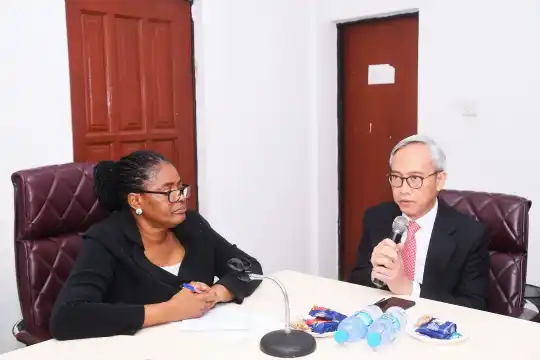
August 14, 2025 – Federal Ministry of Innovation, Science and Technology has announced plans to partner with the University of Indonesia for Nigerian staff to participate in the Internship in Research (INSPIRE) scholarship program in Indonesia.

The Permanent Secretary, Mrs. Esuabana Nko-Asanye, made this known when she received the new Indonesian Ambassador to Nigeria, His Excellency Bambang Suharto, and his delegation during a courtesy visit in Abuja on Wednesday, August 14, 2025.

Mrs. Esuabana highlighted that Nigeria and Indonesia have enjoyed a long-standing mutual relationship, which has contributed to the socio-economic development of both nations.

She stressed the importance of collaborating to digitalize government systems and enhance the training of ministry staff. According to her, this will improve productivity and positively impact Nigeria’s Gross Domestic Product (GDP).

She further emphasized the need for greater investment in Science, Technology, Engineering, and Mathematics (STEM) to develop skilled manpower capable of competing globally.

“There is a need for Indonesia and Nigeria to collaborate in order to digitalize our system and train staff to improve productivity that will contribute to the GDP of the country,” she said.

The Permanent Secretary also commended Ambassador Suharto for his commitment to strengthening the bilateral relationship, noting that such partnerships can drive technological advancements in both countries.

In his remarks, Ambassador Bambang Suharto stated that his visit aimed to consolidate the existing relationship between Nigeria and Indonesia.

He expressed a desire to focus on areas such as science and technology, pointing out that the two nations share common characteristics, including population size and agriculture.

“With these similar characteristics, the two nations can work together in science by applying technology to boost the blue economy, move from waste to wealth, and create opportunities for individuals to become entrepreneurs that will contribute to the growth and development of the country,” Ambassador Suharto explained.

The planned collaboration under the INSPIRE initiative is expected to not only strengthen educational and research ties between both countries but also encourage innovation, promote economic growth, and expand opportunities for Nigerian professionals in the global market.