
Home Blog Page 63

World Bank Cuts CBN Grant to $6.80m

0

The World Bank has reduced the size of a planned grant to the Central Bank of Nigeria from $10.50m to $6.80m, with board consideration for the project now scheduled for March 27, according to updated project information.

The funding, which remains a grant and not a loan, is for the CBN Technical Assistance Facility, a project designed to strengthen the apex bank’s technology-enabled, data-driven supervision of the banking sector and improve oversight of domestic payment and remittance systems.

Nigeria Startup News gathered that updated information published on the World Bank website shows the project has reached the decision meeting stage, described as the final internal stage before approval by the World Bank Group’s board.

This development marks a clear progression from the earlier concept review stage, when The PUNCH first reported the proposed facility in April 2025, indicating that the initiative has advanced within the Bank’s internal processes.

Project details now list the approval date as March 27, 2026, representing a shift from the earlier June 12, 2025 timeline that was linked to the initial $10.50m grant proposal before the recent adjustment.

Under the revised plan, the commitment amount of $6.80m will be financed entirely through the Finance for Development Multi-Donor Trust Fund, with no involvement of the International Development Association or the International Bank for Reconstruction and Development, confirming that the project will not add to Nigeria’s external debt profile.

The Central Bank of Nigeria is identified as the implementing agency. According to the project overview, the facility is intended to integrate advanced tools and data science into the CBN’s regulatory and supervisory processes, helping to address long-standing and emerging risks in Nigeria’s financial system.

The stated development objective is “to strengthen CBN’s technology-enabled and data-driven oversight of the banking sector and deepen understanding of payment and remittance systems in Nigeria,” the World Bank noted on its website.

The project carries a moderate environmental and social risk rating and is expected to close on February 28, 2029. Although the updated information does not explain why the grant size was reduced, the movement from concept review to decision meeting suggests that the project design has been refined while its financing envelope has been adjusted.

Commenting on the reduction and other changes reflected on the project page, a senior source at the World Bank office in Nigeria told The PUNCH that revisions at this stage were not unusual.

“Please note that projects or operations under preparation, as indicated on the World Bank website, can be subject to changes,” the source said. “Until the World Bank Board approves them, elements such as design, components, and financing envelopes may be revised or adjusted. This is normal for projects in the preparation stage.”

If approved next month, the grant will formalise a partnership focused on strengthening the CBN’s supervisory capacity through technology, data analytics, and improved oversight of domestic payment systems.

The World Bank Group remains Nigeria’s largest creditor, accounting for $19.39bn of the country’s external debt, made up of $18.04bn from the IDA and $1.35bn from the IBRD.
Advertisement

FG Begins 40 Percent Academic Allowance Payment for ASUU Members

0

The Federal Government has commenced the implementation of key welfare provisions contained in its renegotiated agreement with the Academic Staff Union of Universities, including salary-related allowances, in a move aimed at improving staff welfare and stabilising the public university system.

This was disclosed in a statement issued on Monday by the Director of Press and Public Relations of the Federal Ministry of Education, Boriowo Folasade.

According to the statement, the step reflects President Bola Tinubu’s commitment to honouring agreements reached with stakeholders in the education sector and sustaining industrial harmony across federal universities.

The Minister of Education, Dr Maruf Alausa, announced that the government has begun implementing a 40 per cent increase in the Consolidated Academic Allowance for ASUU members, with effect from January 1, 2026.

The ministry confirmed that some federal universities have already reflected the approved increase in salary payments, while measures are underway to ensure uniform implementation nationwide.

“The Honourable Minister of Education, Dr Maruf Alausa, has announced that the Federal Government has fulfilled its obligation to implement the 40 per cent increase in the Consolidated Academic Allowance for ASUU members, with effect from 1st January 2026, in line with the agreement reached with the union.

“Some federal universities have already begun reflecting the approved increase in their salary payments.

“To ensure uniform implementation nationwide, all federal universities are being formally notified to fully cascade the approved increment across their institutions and integrate it into their payroll structures so that all eligible academic staff benefit accordingly,” the statement said.

Alausa also directed vice-chancellors to ensure strict compliance with the framework for implementing the Consolidated Academic Tools Allowance, urging them “to make judicious use of available resources to ensure the successful rollout of the allowance.”

He further clarified that “the payment has already been captured and circularised by the National Salaries, Incomes and Wages Commission, and that its inclusion in the 2026 budget is a formal statutory process.”

The minister called on university managements to take proactive steps to facilitate prompt payment of the allowances in line with NSIWC guidelines, noting that “timely implementation of both the CAA increase and CATA will strengthen the academic environment, enhance staff morale, and support improved outcomes in teaching, research and learning across Nigerian universities.”

The Federal Government reiterated its resolve to honour agreements with education sector stakeholders and reaffirmed its commitment to constructive engagement, transparency and continuous improvement in the quality of education nationwide.

Last month, the Federal Government and ASUU unveiled a renegotiated agreement aimed at resolving long-standing disputes in the tertiary education sector.

The 2025 agreement concluded a renegotiation process that began in 2017 to review the 2009 FG–ASUU pact, which was due for revision in 2012.

Previous renegotiation efforts under committees chaired by Wale Babalakin, Munzali Jibrin and Nimi Briggs failed to yield a final agreement.

The breakthrough came under the current administration, which inaugurated a renegotiation committee led by Yayale Ahmed in October 2024.

An agreement was reached about 14 months later, focusing on improved conditions of service, funding, university autonomy, academic freedom and reforms to address sectoral decline and brain drain.

A major provision of the agreement is the upward review of academic staff remuneration in federal universities by 40 per cent, effective January 1, 2026.

Under the new structure, salaries comprise the Consolidated University Academic Staff Salary and the Consolidated Academic Tools Allowance.

The tools allowance is intended to support research, journal publications, conference participation, internet access, learned society membership and book procurement, with the objective of boosting productivity and retaining academic talent.

The agreement also restructures nine earned academic allowances to promote transparency by linking payments strictly to duties performed, including postgraduate supervision, fieldwork, clinical duties, examination responsibilities and leadership roles.

In addition, the Federal Government approved a Professorial Cadre Allowance for the first time, under which full Professors will receive N1.74m annually, while Readers will earn N840,000 per annum, an intervention described as a structural measure to recognise experience and strengthen the academic profession. Across the federal system.

FAO, Nasarawa Govt Launch TCP to Boost Community Rice Seed Production

0

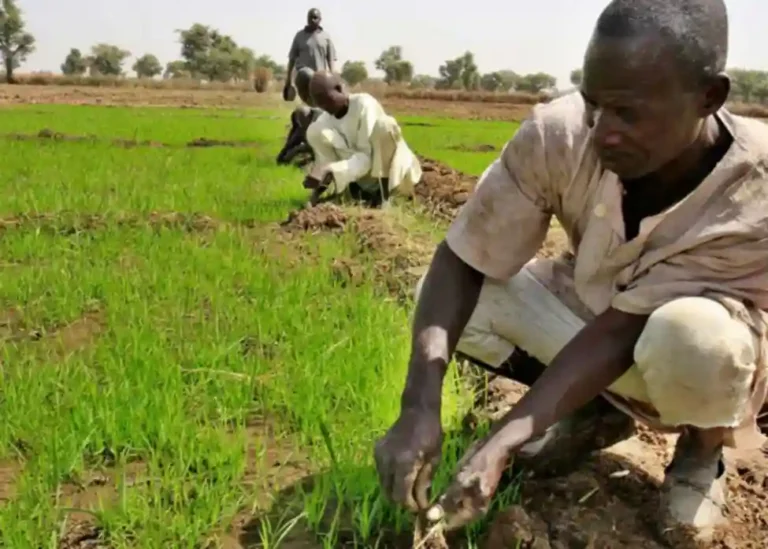
The Food and Agriculture Organization of the United Nations (FAO) has officially launched a Technical Cooperation Programme (TCP) in partnership with the Nasarawa State Government to strengthen community-based rice seed production in the state, as part of efforts to improve food security and farmer livelihoods.

The official launch took place during a project inception workshop held in Lafia on 27 January 2026, bringing together stakeholders from federal and state governments, research institutions, seed regulatory bodies, development partners, farmer groups, and the private sector. Participants met to align on project objectives, implementation strategies, and clearly define roles and responsibilities for effective delivery.

The initiative comes at a time when sustainable food systems are increasingly viewed as central to government action aimed at achieving a better life for all. Nasarawa State is recognised as one of Nigeria’s major rice-producing hubs, but productivity has remained below potential due to limited access to quality and affordable seeds. High seed costs, weak last-mile distribution systems, and the widespread reuse of paddy from previous harvests have led to yield losses of up to 50 percent among smallholder farmers.

The FAO-supported project is designed to address these challenges by promoting a sustainable, community-based rice seed production system. The approach focuses on improving farmers’ access to certified rice seeds while enhancing overall productivity and strengthening local seed enterprises across selected communities in the state.

Speaking at the workshop, the FAO Representative in Nigeria and to ECOWAS, Dr Hussein Gadain, said the initiative aligns with FAO’s broader support to Nigeria’s agricultural productivity and food security agenda. He explained that strengthening community-level seed systems is key to improving farmer livelihoods and boosting domestic rice production.

“Access to quality seeds is fundamental to increasing agricultural productivity and building resilient food systems. Through this Technical Cooperation Programme, FAO is supporting Nasarawa State to strengthen community-based rice seed production, ensuring that smallholder farmers can access affordable, certified seeds at the right time and in the right place. This initiative reflects FAO’s commitment to working with government and partners to close yield gaps, enhance farmer incomes, and contribute to Nigeria’s food security goals,” Gadain said.

In his opening remarks, the Commissioner of Agriculture in Nasarawa State, Alhaji Umaru Tanko, reaffirmed the state government’s commitment to close collaboration with FAO to ensure effective project implementation and long-term sustainability. He described rice as a strategic crop for the state’s economy and food supply.

“Rice remains a strategic crop for Nasarawa State, and improving access to quality seeds is critical to unlocking its full production potential. We welcome FAO’s technical support and partnership in promoting a community-based seed system that empowers our farmers, strengthens local capacity, and supports sustainable agricultural development. The State Government remains fully committed to ensuring the successful implementation of this project,” Tanko stated.

For local farmers, the initiative is already raising expectations. Ibrahim Husseni, a farmer who participated in the workshop, said the programme offers hope for increased productivity and income. “With this partnership between the state government and FAO, we hope to learn how to expand our capacity, produce more bags of rice using improved seeds, and ultimately earn more income,” he said.

The inception workshop also allowed stakeholders to review and update the project workplan in line with the 2026 wet season production calendar. Implementation roles were clarified, and partners were introduced to the three selected intervention sites for rice seed multiplication. Technical teams carried out field assessments within the proposed clusters to guide varietal selection and confirm site suitability, in line with FAO quality assurance standards and global best practices.

Implementation of the project will be carried out in partnership with key national institutions, including the National Agricultural Seeds Council (NASC), the National Cereals Research Institute (NCRI), and HarvestPlus of the International Institute for Tropical Agriculture (IITA), alongside farmer organisations and local production clusters.

At the end of the workshop, stakeholders agreed on follow-up actions and timelines to support the full rollout of the workplan. Once implemented, the project is expected to improve access to quality rice seeds, increase yields, and enhance food security in Nasarawa State, while contributing to Nigeria’s broader goal of building inclusive, resilient, and sustainable agrifood systems that leave no farmer behind.

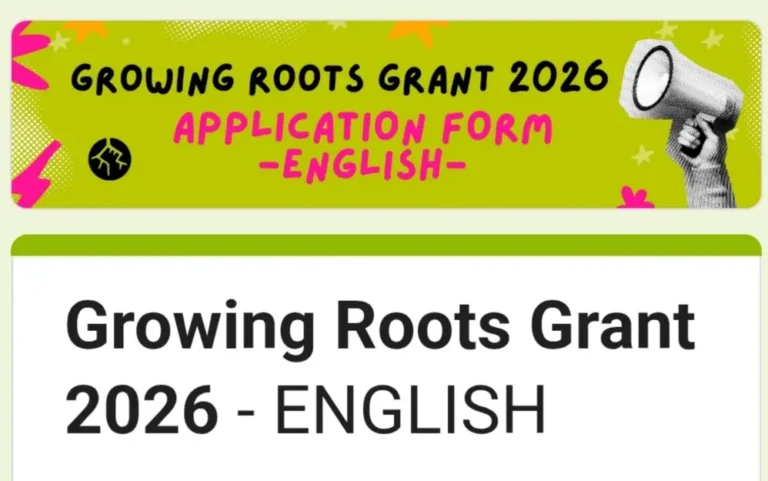
2026 Growing Roots Grant Opens in Nigeria With $10,000 Funding

0

Applications have opened for the 2026 Growing Roots Grant for Nigeria, offering funding of up to $10,000 USD per group for new and emerging projects and ideas that aim to improve the lives of communities on the frontlines of climate change. The grant targets early-stage initiatives and is accompanied by ongoing mentorship to support project growth and delivery.

The Micro-grants program is led by Roots and made possible through the financial backing and support of the Urban Movement Innovation Fund. The grant is seeking new and emerging projects that are no older than one year and that create meaningful impact in three key focus areas linked to community resilience and social change.

One focus area is strategic dialogue and narrative building. This includes projects that create spaces for dialogue and shared understanding in divided or polarised contexts, counter misinformation or disinformation, strengthen relationships within communities, and build bridges between communities, authorities, institutions, or coalitions in ways that shift narratives and support local organising.

Another priority area is advocacy-oriented initiatives. These are projects that seek to influence concrete public policy or legislation, or contribute to changes in local or municipal policies through advocacy work, research, or civic engagement activities that encourage participation and accountability.

The third area is community autonomy initiatives. These projects are expected to build or strengthen infrastructure, systems, or resources that are owned and managed by the community itself, while also strengthening long-term community power and sustainable local structures.

Successful applicants will also benefit from structured support. This includes a coaching program where coaches support projects from inception to implementation, with a six-monthly reporting cycle. Grantees will also receive capacity-building support through access to Roots training and workshops across core programmes such as organising, creative storytelling, resilience and wellbeing, and counter-disinformation, alongside affiliated communities of practice.

Media and social media support will also be provided, with grantees amplified through Roots social media channels using storytelling opportunities, videos, and posts to increase visibility and reach.

Grants will be offered to between eight and ten grassroots youth-led initiatives from Global South regions, including Sub-Saharan Africa. Applications are also accepted from diaspora and BIPOC communities located in Global North countries. Eligible initiatives must be led by people aged between 18 and 35 years, with most group members and decision-makers within this age range. Groups do not need to be legally registered to apply, and video submissions are required to help present projects clearly.

Applications are open from February 8 to February 28, 2026, with notifications expected by mid-April 2026.

To apply for Growing Roots Grant, interested applicants should visit https://forms.gle/W8d2F9auTCbngMz9A and apply.

Karim Adeyemi Foundation launches 2026 IDSDP Essay Competition in Oyo

0

The Karim Adeyemi Foundation (KAF) has launched the 2026 edition of its International Day of Sport for Development and Peace (IDSDP) Essay Competition for students in public secondary schools across Oyo State.

The foundation, in a statement issued on Monday in Ibadan, said the initiative, now in its fourth year, was established in 2023 to commemorate the globally recognised day while promoting education and sports as tools for youth empowerment.

KAF noted that the annual essay competition reflects its core values of educational advancement and sports development, which it described as central to the vision of its founder, international footballer Karim Adeyemi, whose work focuses on inspiring young people through learning and organised sports.

According to the organisers, this year’s competition aligns with the global IDSDP theme, “Sport: Building Bridges, Breaking Barriers,” with participating students expected to write on the topic, “More Than Just a Street Kid: How Sports Can Rebuild the Reputation of Communities.”

The foundation explained that the theme was designed to challenge prevailing stereotypes about disadvantaged communities.

“Sport is more than a game. It is a catalyst that unites people, eradicates stigma, connects communities to opportunities, and builds greatness. Many communities are burdened by negative labels that limit the aspirations of young people. Through sport, these barriers can be broken,” the statement read.

KAF added that the competition provides a platform for students to project the strengths, resilience, and creativity within their communities while reshaping public perception through research-driven essays.

The organisers disclosed that the competition would run in two phases between February and April 2026, followed by an award ceremony on a date to be announced later.

Submissions opened on Monday, February 9, 2026, via the foundation’s official website, where interested students are expected to submit essays and creative entries as an indication of participation.

Shortlisted candidates will advance to the second stage, a Computer-Based Test essay examination scheduled to hold at the Distance Learning Centre, University of Ibadan, in March.

At the grand finale, twelve finalists will emerge, including two runners-up and one overall winner.

KAF revealed that a total prize sum of ₦1 million would be distributed among the finalists to support payment for WASSCE, NECO, and UTME examinations, as well as assist with tertiary education expenses.

All participants will receive certificates and gift items courtesy of the Karim Adeyemi Foundation and Polaris Bank, while also gaining access to mentorship and personal development opportunities.

The foundation stated that since inception, no fewer than 25 students have benefited from the programme. It listed previous awardees to include Esuola Timothy of Government College, Ibadan (2025); Adeniyi Joseph of Celestial Church of Christ High School (2025); and Orukotan Emmanuel of Oladipo Alayande School of Science, Ibadan (2024), now a medical student at Obafemi Awolowo University.

Other beneficiaries include Akinade Priscilla (2024); Adeyemo BrightWonders (2024), currently studying Computer Science at the Federal University of Technology, Akure; and Ogundele Damilare Emmanuel of Ikolaba Grammar School (2023), now studying Forestry and Wildlife Management at the University of Ilorin.

KAF added that the 2026 edition of the competition is being held in partnership with the Nigerian Union of Teachers (NUT), Oyo State Wing, and Polaris Bank.

RHA Inaugurates LGA Coordinators in Oyo to Boost Grassroots

0

The Renewed Hope Ambassadors (RHA), Oyo State Chapter, has inaugurated its Local Government Area (LGA) Coordinators across the state as part of efforts to strengthen grassroots mobilisation, enhance coordination, and deepen political engagement. The inauguration ceremony held on Monday, February 9, 2026, at the APC State Secretariat, Oke-Ado, Ibadan, and was described as a strategic step toward consolidating grassroots structures ahead of the next electoral cycle.

Speaking at the event, the Oyo State Ambassador, Renewed Hope Agenda, Senator Teslim Kolawole Folarin, charged the newly inaugurated Coordinators to mobilise, organise, and energise party members, supporters, and voters across wards and polling units in support of President Bola Ahmed Tinubu’s re-election and the victory of the All Progressives Congress (APC) in Oyo State. According to him, the collective mandate of the Renewed Hope Ambassadors includes delivering at least a 35 percent improvement on the 2023 presidential election results in 2027.

Folarin, a former Senate Leader, stressed that the Coordinators must work in full synergy with APC structures and party leaders at all levels, respect party hierarchy, and strengthen internal cohesion. He said the inauguration was more than a ceremonial exercise, but a clear call to service, responsibility, and measurable action.

“You have been entrusted with the Renewed Hope mandate at the grassroots—the level where structures are consolidated, confidence is earned, and victories are delivered,” he said.

“The Renewed Hope Agenda is about people-centred governance, disciplined mobilisation, and purposeful leadership, and you are now its frontline custodians in your respective Local Government Areas.

“You are expected to communicate the Renewed Hope message effectively at the grassroots, translating policies, programmes, and achievements into language the people understand and trust. You must also serve as the bridge between the people and the leadership by providing accurate grassroots intelligence, identifying local challenges, and sustaining public confidence.

“This is not a slogan; it is a measurable target that requires disciplined mobilisation, sustained engagement, inclusive participation, and unwavering commitment. Achieving this goal demands unity, consistency, data-driven organisation, and continuous presence among the people.

“Leadership at this level demands visibility, humility, integrity, and consistency. Your conduct must inspire confidence, command respect, and at all times reflect the values of the Renewed Hope Agenda and the All Progressives Congress. This assignment is not about titles, but about service, performance, and results,” Folarin added.

In his remarks, the South-West Zonal Coordinator of the Renewed Hope Ambassadors, Senator Dayo Adeyeye, expressed confidence that President Tinubu would record a landslide victory in 2027. Adeyeye, who is also the Chairman of the Nigerian Ports Authority (NPA), urged the LGA Coordinators to take the Renewed Hope message to the grassroots, noting that they represent the President in their respective local governments.

“You are representing the President in your various local governments. Represent him well and canvass votes for him,” he said.

Also speaking, the Minister of Power, Adebayo Adelabu, clarified that the role of the Coordinators was not to rival existing party executives at the local level, but to complement and strengthen party structures. According to him, the core assignment of the Coordinators is to project the achievements of President Tinubu’s administration in order to secure massive votes for the President and all APC candidates in Oyo State. He urged them to conduct themselves with discipline, remain focused, and “weaponise themselves with facts and performance records of the Tinubu administration.”

In their separate remarks, Senator Abdulfatai Buhari, Senator Sharafadeen Alli, Senator Ayo Adeseun, former Oyo State APC Chairman, Chief Akin Oke, and the current State Chairman of the party, Pharm. Olayide Abass advised the newly inaugurated Coordinators to strictly abide by the rules guiding their engagement and to project the good image of President Bola Ahmed Tinubu and the party. Earlier, in his welcome address, Alhaji Fatai Ibikunle congratulated the Coordinators and described their appointment as a significant responsibility, urging them to approach their assignment with commitment and a strong sense of duty. The event was well attended by APC executives, party leaders, stakeholders, and members from across the state. Observers said the exercise reinforced coordination, clarity, discipline, unity statewide.

FG TVET Programme May Cost N79bn for First Batch Trainees

0

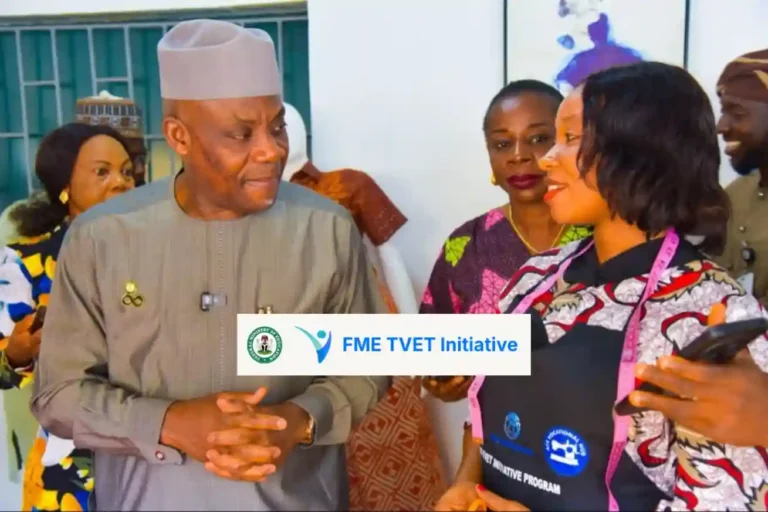
The federal government may spend about N79 billion on the first batch of 250,000 Technical and Vocational Education and Training (TVET) trainees, based on approved stipend rates, training support and other programme costs tied to the rollout. The estimate was highlighted during an inspection tour of the AFS Vocational Hub in Garki, Abuja.

Tunji Alausa, minister of education, said the programme is designed to reach one million youths nationwide in phases, with more than 250,000 already enrolled in the first cohort across 2,600 training centres spread across the country. He explained that the initiative is aimed at equipping young Nigerians with practical skills that align with current economic needs.

According to the minister, the education ministry streamlined the skill areas offered under the programme from 86 trades to 28 priority sectors considered critical to the Nigerian economy. He listed approved trades to include fashion, livestock production, mobile phone repair, plumbing, tiling and modern farming, among others.

Alausa said the TVET curriculum is structured to be 90 percent practical and 10 percent theoretical, noting that the approach is intended to ensure hands-on experience and accountability for participants.

The minister disclosed that the national portal for the programme received over 1.3 million applications, out of which 960,000 were successfully verified using the National Identification Number (NIN) and Bank Verification Number (BVN) as of October 2025. He said the verification process was put in place to enhance transparency and reduce abuse.

He further said training centres involved in the programme are funded directly by the federal government to eliminate fraud and ensure accountability. According to information from the ministry, each participant is entitled to a monthly stipend of N22,500, broken down into N17,500 for upkeep and N5,000 for transportation, while training centres receive N45,000 per trainee for instructional support.

With training durations ranging from six to 12 months depending on the trade, stipends alone for the first batch of trainees could amount to about N67.5 billion. In addition, payments to more than 600 participating training centres, alongside other operational and administrative expenses, are expected to push the total estimated cost of the first batch to roughly N79 billion.

Official records show that the first tranche of the programme, which covered more than 42,000 trainees, cost about N4.7 billion, inclusive of stipends and training centre support. The TVET programme is structured in phased cohorts, with the current batch forming the first phase of a broader plan to train one million youths over a two-year period.

Alausa said funding for the initiative is being sourced from incremental federal allocations, a five percent share of the Tertiary Education Trust Fund (TETFund) earmarked for technical and vocational education, and post-training support mechanisms. These include starter packs and low-interest loans to be provided through the Bank of Industry (BoI).

At an estimated cost of N79 billion for 250,000 trainees, the programme translates to an average expenditure of about N316,000 per participant for the first batch. If scaled to the government’s target of one million trainees, total costs could rise to approximately N316 billion, excluding inflationary pressures, administrative expansion and additional post-training support.

Taiwo Owoeye, a professor of economics at the Federal University, Oye-Ekiti, warned that sustaining such spending levels would require predictable multi-year funding and tighter cost controls. He said that with competing fiscal demands and rising recurrent expenditure, it is important that the programme delivers value for money and does not become a budgetary strain.

With Nigeria’s youth unemployment rate estimated at 5.1 percent by the World Bank, Debo Adeniran, national director of the Centre for Anti-Corruption and Open Leadership, said the success of the TVET initiative could help bridge skills gaps, reduce pressure on the job market and boost small-scale enterprise creation. He, however, noted that sustained funding, quality control and post-training support would be critical to achieving impact.

The TVET initiative was launched in October 2025 as part of the federal government’s strategy to create entrepreneurs rather than job seekers.

Kwara Govt Begins Fertiliser Distribution for Dry Season Farmers

0

The Kwara State Government has commenced the distribution of fertilisers to farmers engaged in dry season farming across the state as part of efforts to promote year-round agricultural production and boost food security.

The initiative was flagged off in Ilorin on Friday by the Commissioner for Agriculture and Rural Development, Afees Abolore Alabi.

In a statement issued on Saturday by the Press Secretary of the ministry, Ashaolu Omotola, Alabi said the intervention was designed to cushion the impact of rising agricultural input costs on farmers and ensure sustained productivity.

He explained that the fertiliser distribution was deliberately structured to support farmers despite prevailing market challenges, stressing that sustaining continuous cultivation was critical to stabilising food availability and strengthening farmers’ resilience across the state.

However, the commissioner warned beneficiaries against selling or diverting the fertilisers, vowing that offenders would be prosecuted.

“I want to sound a note of warning that these inputs are not for sale, and anyone found wanting will be prosecuted in line with the laws of the land,” Alabi cautioned.

He reaffirmed the commitment of the present administration to farmer-centred policies that promote continuous farming, expand production capacity, and position agriculture as a key pillar of economic recovery and inclusive growth in Kwara State.

Alabi also reiterated the state government’s resolve to sustain agricultural interventions that support rural development, economic stability, and a resilient food system.

Speaking at the event, the State FADAMA Programme Project Coordinator, Isiaka Toyin Busari, represented by the Head of Technical, Abdulmalik Zubairu, commended the state government for its leadership and effective collaboration.

“The timely intervention reflects the state’s dedication to impactful programme implementation and service delivery to farmers,” he said.

One of the beneficiaries, Soliu Yahaya, expressed appreciation to the state government for its sustained support to the agricultural sector.

He described the fertiliser distribution as a major boost for off-season farming, noting that improved access to inputs would enhance productivity and help sustain farmers’ livelihoods.

Our correspondent reports that farmers from all 16 local government areas of the state benefited from the distribution, which is expected to support the cultivation of key crops and improve food availability across Kwara State statewide today.

Nigerian Army list of shortlisted candidates for DSSC 29/2026

0

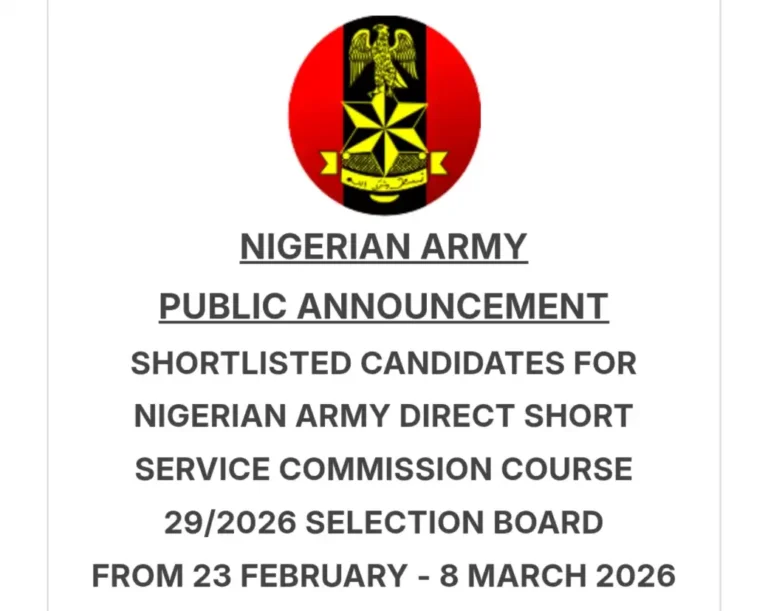
The Nigerian Army (NA) has released the list of shortlisted candidates for the Direct Short Service Commission (DSSC) Course 29/2026.

Successful candidates are to report to the Nigerian Army School of Infantry (NASI), Jaji, Kaduna State by 9 am on 22 February 2026. Any shortlisted DSSC 29/2026 candidate who fails to arrive at the selection venue by 6 pm on the same day will be disqualified.

Candidates are to report with essential items, including writing materials, four copies of passport photographs, and four copies of coloured photographs taken in a standing position while wearing a suit. The photographs must have details written at the back, including surname, first name, other name, date of birth, service number for serving personnel, and current unit for serving personnel only.

Other required items include scratch cards for online confirmation of WAEC and or NECO results, three plain white short sleeve vests, three pairs of blue shorts, a pair of canvas shoes or trainers with three pairs of white socks, a bucket and toiletries, a set of cutleries, beddings such as blankets, bedspreads, mosquito net and pillow cases.

The selection exercise will involve physical, medical and aptitude tests, as well as an oral interview.

Shortlisted candidates are also expected to present original copies and photocopies of academic and professional certificates, including testimonials, primary and secondary school certificates, and NYSC discharge or valid exemption certificate where applicable. Other documents include a valid birth certificate or age declaration, valid state of origin certificate, and a printed Bank Verification Number (BVN) certificate authenticated by the bank.

Completed printouts from the recruitment portal, including referee forms, must be submitted. In addition, the coded AHQ MS Data Form for DSSC 29/2026 and Indemnity Clause will be sent to individual candidates’ email addresses and are to be printed, completed, and submitted on arrival.

For serving personnel, additional requirements include an official leave pass, military identity card, letter of sponsorship to tertiary academic institution, and letter of recommendation by commanding officers.

Candidates who violate any instruction during the Selection Board will be disqualified.

To check the PDF list of Nigerian Army shortlisted candidates for DSSC 29/2026, candidates should visit https://recruitment.army.mil.ng/military-secretary, download the PDF and check for their names.

Congratulations to shortlisted candidates.

FG worried ₦2.72bn 2026 capital budget may slow jobs, exports

0

The Minister of Industry, Trade and Investment, Mrs Jumoke Oduwole, on Monday disclosed that special economic zones generated over $500 million in export revenue and created more than 20,000 direct jobs in 2025, as she raised serious concerns over the Federal Ministry’s proposed ₦2.72 billion capital allocation for 2026.

Oduwole warned that the proposed sum was inadequate to deliver the scale of programmes required to drive Nigeria’s industrialisation, trade expansion, and investment attraction agenda.

She spoke during the defence of the ministry’s 2026 budget proposal before the joint Senate Committees on Trade and Investment and Industry, where she appealed to the National Assembly for a targeted increase in capital funding.

The minister stressed that without adequate resources, the ministry’s ability to support President Bola Tinubu’s Renewed Hope Agenda and the push for a trillion-dollar economy would be severely constrained.

“The proposed capital allocation of ₦2.72bn will be a stretch in meeting the full demands of our programmes and capital projects,” Oduwole told lawmakers.

“Given the scope of our responsibilities, we respectfully seek the committee’s support for targeted enhancement of our capital allocation to enable us to effectively deliver on our mandate,” she added.

Oduwole described the Ministry of Industry, Trade and Investment as central to Nigeria’s economic transformation, particularly in diversifying the economy away from oil, growing non-oil exports, stimulating domestic production, and attracting both local and foreign investment.

Chairman of the Senate Committee on Trade and Investment, Senator Umar Sadiq, acknowledged the ministry’s strategic importance to the administration’s economic vision.

“We are all aware of the renewal agenda of Mr President, which is essentially to ensure that we have a trillion-dollar economy. The Ministry of Industry, Trade and Investment is a major partner in achieving this objective outside the oil sector,” Sadiq said.

However, he stressed that National Assembly support would hinge on transparency, accountability, and measurable impact.

Also speaking, Chairman of the Senate Committee on Industry, Senator Francis Fadahunsi, urged the ministry to clearly demonstrate the impact of its agencies on the lives of Nigerians, particularly regarding job creation, export growth, and industrial development.

In her presentation, Oduwole highlighted the ministry’s achievements over the past two years.

The minister disclosed that Nigeria recorded about $21 billion in capital importation in the first ten months of 2025, compared to $12 billion in 2024 and under $4 billion in 2023.

She attributed the improvement to deliberate ministry interventions, including the development of over $5 billion in bankable investment projects, sector-focused deal rooms, and Nigeria’s first Domestic Investor Summit.

Oduwole added that the ministry resolved more than 50 major investor bottlenecks and conducted over 100 bilateral investment engagements with countries such as the United Kingdom, the United States, the United Arab Emirates, Brazil, and Japan.

According to her, sustained engagement under the Nigeria–UK Economic and Trade Partnership led to UK investors accounting for about 65 per cent of Nigeria’s foreign capital inflows in 2025.

On trade performance, Oduwole revealed that Nigeria recorded a trade surplus in 2025, with total trade value estimated at ₦113tn in the first three quarters.

She said exports grew by 11 per cent year-on-year to approximately $6.1bn.

The minister credited export facilitation measures, expansion of export warehouses, new air cargo corridors to Africa, and improved implementation of the African Continental Free Trade Area for a 14 per cent growth in Nigeria’s intra-African trade.

In the industrial sector, Oduwole disclosed that special economic zones generated over $500 million in export revenue and created more than 20,000 direct jobs in 2025.

She also highlighted the Federal Executive Council’s approval of the National Industrial Policy and Nigeria’s successful bids to host CANEX 2026 and the Intra-Africa Trade Fair 2027.

Oduwole warned that despite these achievements, funding constraints were already limiting the ministry’s effectiveness.

She disclosed that while personnel and overhead allocations were fully utilised in both 2024 and 2025, capital releases had been inconsistent, noting that no capital funds had been released to the ministry in 2025 at the time of the budget defence.

Lawmakers expressed concern that the 2026 budget proposal was largely a rollover of the 2025 budget, in line with federal budget guidelines.

Responding, the minister acknowledged the rollover framework but maintained that enhanced capital funding was critical.

“Our ministry is programme-led and service-oriented. We are not a revenue-generating ministry in the conventional sense,” she said.

“We facilitate investment, solve regulatory bottlenecks, open markets for Nigerian products, and support domestic investors. To do this effectively, we need capital resources,” Oduwole added.

She said the ministry planned to intensify non-oil export promotion, deepen AfCFTA implementation, roll out digital investor and trade facilitation platforms, and extend trade and investment support to sub-national levels across all geopolitical zones in 2026.

Members of the committees said the concerns raised would be carefully considered as the National Assembly continues scrutiny of the 2026 budget proposals.

They noted that the budget review process was ongoing and assured the ministry that submissions and explanations provided during the defence would inform final decisions on funding priorities for the 2026 fiscal year. The lawmakers said their focus remained on ensuring economic growth, job creation, and diversification outcomes that directly improve livelihoods across the country nationwide efforts.