Home Blog Page 7

XLCreativeHub opens entries for 2026 screenwriting competition and creator residency

XLCreativeHub has officially opened entries for its Screenwriting Competition and Creator Residency, inviting Nigerian storytellers and filmmakers to submit synopses of their original feature-length film scripts.

According to the organisers, submissions will close on March 16, after which judges will review entries from March 17 to 20. Six finalists will be selected and announced during a live-streamed event on the platform’s YouTube channel on March 20.

The judging panel includes respected industry professionals Halima Odiegwu, Emil Guruba, and Kehinde Joseph, who will assess the originality, structure, and cinematic potential of submitted stories.

In a statement announcing the call for entries, the organisers said, “We are pleased to invite screenwriters and storytellers to submit a synopsis of their original feature-length film script for consideration in the prestigious XLCreativeHub Screenwriting Competition and Creator Residency. If you have a powerful story and the vision to bring it to life on screen, this is your chance to be discovered, developed, and celebrated.”

The six shortlisted finalists will participate in a one-week Screenwriting Residency in Abuja from March 22 to 28. During the residency, they will receive mentorship and professional support to further develop their scripts.

Describing the opportunity, the organisers added, “This highly competitive programme offers a rare opportunity to turn your script into a produced film while competing for a professional film writing contract, a chance to win a film production deal and shared royalties.”

At the end of the residency, each finalist will produce a completed script, from which a trailer will be created. The trailers will be presented to the public for voting from March 28 to April 6, with the overall winner announced on April 7, 2026.

Advertisement

Edo State University Indigent Scholarship 2025/2026: Up to 100 Tuition Awards

Edo State University, Iyamho, has opened applications for the 2025/2026 Indigent Students Scholarship Award (ISSA) for candidates of Edo State origin who scored a minimum of 180 in the Unified Tertiary Matriculation Examination (UTME). The initiative is designed to support academically qualified but financially disadvantaged students in gaining access to quality higher education.

The Edo State Government has approved up to 100 indigent scholarships. The award covers tuition fees only and runs for the full duration of the beneficiary’s chosen programme. However, the scholarship does not apply to courses such as Medicine, Nursing, Law, Medical Laboratory Science, and Engineering. The scheme forms part of the university’s Corporate Social Responsibility, aimed at expanding access to education and reducing financial barriers for deserving students.

To be eligible, applicants must be of Edo State origin and must have scored at least 180 in the 2025/2026 UTME. Candidates are also required to demonstrate strong written and spoken English proficiency through a Computer-Based Test (CBT). In addition, applicants must provide verifiable evidence of indigency and meet the admission requirements for their chosen course of study at the university.

The deadline for submission of applications is 10th March 2026, while the CBT screening and interview are scheduled for 19th March 2026. Applicants should note that the university is not under any obligation to award the scholarship to any candidate.

Interested candidates should visit https://edouniversity.edu.ng/scholarship to apply.

Mikano Motors, Autochek Africa launch showroom to buy cars on loan

Mikano Motors and Autochek Africa have entered into a strategic partnership aimed at making it significantly easier for Nigerians to buy brand-new cars. At the centre of the collaboration is a digital platform that combines an online showroom with built-in loan access, allowing customers to browse vehicles and secure financing in one seamless process.

The initiative directly tackles two long-standing barriers in Nigeria’s automotive market: limited physical access to dealerships and the difficulty of obtaining structured vehicle loans. By integrating retail and finance into a single digital experience, both companies say they are simplifying the path to ownership for individuals and businesses alike.

Unveiled at a press conference in Lagos, the platform enables users to explore available models online, compare specifications side-by-side, and evaluate affordability before making a commitment. More importantly, prospective buyers can apply for financing directly through the system without needing to visit multiple banks or negotiate separate arrangements.

Group Executive Director of Mikano Motors, Joelle Haykal, described the platform as a step toward democratising access to brand-new vehicles across the country.

“We currently operate showrooms in Abuja, Kano and Port Harcourt,” she said. “But Nigeria is a large country, and not everyone can easily reach those locations. The virtual showroom ensures that any Nigerian with internet access can explore our vehicles and assess their options regardless of where they are.”

According to Haykal, the platform is not just about convenience but also about improving purchasing confidence. She noted that many vehicles imported informally into Nigeria are not built to suit local fuel standards or road conditions and often come without proper warranty or after-sales support.

“Buying a car should be viewed as a long-term investment,” she said. “Reliability, service history and warranty protection are just as important as price. Through our network, customers are assured of vehicles engineered for Nigerian operating conditions, with full after-sales backing.”

Vehicles supplied through Mikano’s distribution channels are adapted for local realities, including engines compatible with domestic fuel quality and reinforced suspension systems designed for rougher roads. Haykal explained that these technical modifications help safeguard performance and reduce long-term maintenance risks.

Chief Executive Officer of Autochek Africa, Etop Ikpe, framed the partnership as a structural solution to Nigeria’s financing gap. While the country records an estimated 1.2 million vehicle transactions annually, only about 20,000 of those are brand-new cars. He attributed the disparity largely to restricted access to affordable credit.

“The challenge has never been demand alone,” Ikpe said. “It has been the ability of customers to access transparent, structured financing that makes new cars attainable.”

Through the integrated system, buyers are connected to multiple financial institutions capable of offering vehicle loans with clearly disclosed terms. Fees typically range between 1.5 and 2.5 per cent of the loan value, depending on agreements with lenders. Ikpe emphasised that all charges are presented upfront.

“Transparency is essential to building trust,” he said. “Customers can see exactly what they are signing up for, compare offers and choose what works best for them.”

Data from Autochek indicates that the majority of financed-vehicle customers fall within the 35-to-55 age bracket, reflecting the income stability often required for loan qualification. Around 80 per cent of applicants are small and medium-scale enterprises, including logistics operators, retailers and service providers, while roughly 15 per cent are salaried employees. Many combine formal employment income with side businesses to strengthen their credit profiles.

Geographically, demand mirrors Nigeria’s economic concentration. Between 60 and 70 per cent of applications originate from Lagos, approximately 20 per cent from Abuja, with the remainder spread across other commercial hubs. Ikpe noted that this trend aligns with broader purchasing power patterns nationwide.

A distinctive feature of the partnership is a buy-back programme embedded within the broader ownership ecosystem. Vehicles purchased through the platform can later be revalued, serviced and resold as certified pre-owned cars. The structure is designed to protect residual value while maintaining clear service records.

“This is about creating a lifecycle approach to vehicle ownership,” Ikpe said. “When service standards and inspection records are maintained, everyone benefits — the buyer, the lender and even the next owner.”

Industry participants say the buy-back arrangement may also strengthen lender confidence by reducing depreciation risk. For consumers, particularly those targeting vehicles within the N10 million to N15 million range in the secondary market, the availability of certified options with verifiable histories could improve safety and reliability standards.

The partnership brings together complementary capabilities. Mikano contributes its established distribution network, technical expertise and after-sales infrastructure. Autochek provides the digital backbone and relationships with financial institutions, enabling real-time loan processing and structured repayments.

The online showroom currently features global brands represented by Mikano, including Changan, Maxus and Deepal. Customers can compare models, review technical specifications and evaluate financing scenarios before initiating applications.

Executives from both firms said the alliance was developed through deliberate planning to ensure product selection, financing structures and customer experience were aligned before launch. They characterised the relationship as one built on mutual respect and shared objectives rather than a short-term commercial arrangement.

For Mikano, which operates under the umbrella of Mikano International, the move represents an expansion of its traditional dealership model into a more digitally integrated format. For Autochek Africa, it reinforces its ambition to connect buyers, dealers and lenders within a unified marketplace across the continent.

As Haykal stated during the briefing, “Our goal is not merely to sell cars, but to sell trust and integrity alongside mobility.”

Ikpe echoed that sentiment, stressing that the platform is designed to reshape how Nigerians approach vehicle ownership. “When retail and finance are seamlessly connected, the process becomes simpler, more transparent and more accessible,” he said.


UNICEF Venture Fund opens $100,000 equity-free Blockchain funding

Applications are now open for $100,000 equity-free funding for blockchain solutions under the UNICEF Venture Fund’s Blockchain Ventures cohort. The Fund is inviting startups developing blockchain-based technologies for social good, particularly those focused on improving accountability and innovative financing systems that benefit children and their communities.

The UNICEF Venture Fund invests in open-source, frontier technology solutions from emerging markets. For this call, the focus is on ready-to-deploy blockchain solutions with clear potential to deliver measurable social impact. Startups must already have an existing, functional product with real-world use cases. Purely conceptual ideas or products still in early development will not be considered.

Eligible companies must be registered in one of UNICEF’s programme countries and demonstrate strong proof points, including user traction or tested pilots. A clear commitment to open-source licensing and open innovation practices is required. The Fund strongly encourages applications from women-led startups and young founders building impactful solutions in emerging economies.

Startups selected for the Blockchain Ventures cohort will receive up to US$100,000 in equity-free funding, disbursed in ETH, BTC, or USDC. In addition to financial support, selected teams will receive tailored technical mentorship throughout the 12 to 18-month investment period. This support will focus on piloting solutions, strengthening implementation, refining impact measurement frameworks, and preparing for scale.

With only five years left to achieve the Sustainable Development Goals (SDGs), the Venture Fund is intensifying its investment in frontier technologies that can accelerate social progress. Blockchain and distributed ledger technologies are seen as critical tools for improving transparency, expanding financial inclusion, and strengthening governance systems globally.

The Fund is particularly interested in three key areas. The first is accountability and transparency. This includes solutions that improve how services and payments are tracked and managed, reduce operational costs, automate reporting, shorten transaction times, and prevent fund diversion. Relevant innovations may support secure digital aid delivery, verify measurable impact results, enable trusted digital payments, use real-time data such as climate or social indicators, and simplify due diligence processes like automated KYC.

The second focus area is new financing and governance models. The Fund seeks projects leveraging web3 tools such as staking, crowdfunding, and tokenization to finance social impact initiatives. Examples include impact marketplaces, crypto or stablecoin donation systems, community-driven funding structures, and platforms that validate and monetize verified real-world outcomes.

The third area is Digital Public Goods. This includes open-source and community-driven platforms that strengthen ecosystem collaboration. Solutions may involve decentralized contribution platforms, DAO-based governance systems, impact valuation tools, and sustainable fundraising infrastructure for digital public goods.

Applications must be submitted in English. Women-led and youth-led startups, particularly those led by individuals under 35 years old, are encouraged to apply. The application deadline is 10 March 2026. Interested applicants can submit their applications through the official online form provided by the Fund.

NASRDA, Agric Stakeholders Push Satellite Data for Irrigation Reform

Nigeria’s space agency and key stakeholders in the agricultural sector are pushing for the expanded use of satellite data to improve irrigation systems and tackle food insecurity across the country.

At a three-day workshop organised by National Space Research and Development Agency (NASRDA), experts outlined a coordinated plan to deploy Earth observation technologies for smarter agricultural planning. The workshop, themed “Advancing Satellite-Based Tools to Map Irrigated Cropland in Nigeria,” focused on integrating space-based tools into national irrigation and food production strategies.

Director-General of NASRDA, Dr. Matthew Adepoju, described irrigation as central to achieving year-round food production, stressing that reliable data is critical for expansion efforts. According to him, satellite-based tools now provide Nigeria with the capacity to plan more effectively.

“Through satellite based tools, we are now able to map irrigated cropland at the national scale, monitor seasonal dynamics, assess cropping intensity and generate early warning insight to support informed decision-making for our farmers,” Adepoju said. He added that these capabilities would “enhance water resource management, improve agricultural productivity, guide infrastructure investment for government and private sector, and strengthen national food security.”

Also speaking, NASRDA’s Director of Strategic Space Applications, Dr. Godstime James, said the initiative represents a practical step toward implementing an irrigation Earth observation project tailored to Nigeria’s needs. He explained that the project would combine high-resolution satellite imagery with advanced analytics to deliver reliable data products.

“Through the irrigation Earth observation project, high-resolution satellite imagery, Sentinel-1 as well as Landsat datasets, with advanced machine learning techniques and field validation, will be integrated to produce reliable irrigated crop maps,” he said. These outputs, he noted, would support River Basin Development Authorities, ministries, departments and agencies at both federal and state levels in making informed decisions on irrigation expansion, monitoring and resource allocation.

International collaborators also emphasised the importance of credible data systems. Representatives from the University of Manchester and the University of Delaware highlighted that strengthening analytical tools would significantly improve agricultural productivity and bolster food security for farmers.

Other stakeholders, including the Managing Director of Space in Africa, Temidayo Oniosun, and the Kabiyesi of Eti-Ori, Oba Oladikun Thompson, stressed the need to democratise access to satellite data to ensure inclusive economic growth.

The irrigated Earth Observation project is being implemented by NASRDA in partnership with the University of Manchester, the University of Delaware, the Bill & Melinda Gates Foundation and Airbus, reflecting a multi-sector effort to harness space technology in addressing Nigeria’s food security challenges.

Tech4Dev Shares Remote Jobs, Internships and 2026 Fellowships

0

Tech4Dev has shared fresh job, internship, and fellowship opportunities — and you might be just one application away from your next big move.

If you’ve been waiting for the right role to apply for, this could be it. From data roles to engineering, internships, and international fellowships, there’s something across different experience levels.

Open roles include:

  1. Junior Data Analyst
    Proqura | Remote
    Send CV to contact@proqura.in
  2. Senior Data Analyst (Marketing Analytics)
    Montu UK | Remote (UK)
    Apply here: https://jobs.ashbyhq.com/montu-uk/d964ad25-9d60-4fee-a8b7-3a4973bea1b5
  3. Junior QA/SQA
    Lovorise | Remote | Part-Time
    Send CV to mazharul@lovorise.com
  4. Backend/Frontend Engineer
    Advancly | Remote
    Apply here: https://docs.google.com/forms/d/e/1FAIpQLSc4H4PpQ0n-IYEHCTgCQNSoIZHXYal2ZLbpgKItg40HSN4VFw/viewform?pli=1

INTERNSHIP OPPORTUNITIES

  1. Data Analyst Intern
    Proqura | Remote
    Send CV to contact@proqura.in
  2. Product Intern
    Advancly | Remote
    Apply here: https://docs.google.com/forms/d/e/1FAIpQLSc4H4PpQ0n-IYEHCTgCQNSoIZHXYal2ZLbpgKItg40HSN4VFw/viewform?pli=1
  3. Technical Support Engineer Intern
    Advancly | Remote
    Apply here: https://docs.google.com/forms/d/e/1FAIpQLSc4H4PpQ0n-IYEHCTgCQNSoIZHXYal2ZLbpgKItg40HSN4VFw/viewform?pli=1

CAREER & FELLOWSHIP OPPORTUNITIES

  1. 2026 Future Leaders Program
    One Acre Fund | Nigeria, Malawi, Uganda, Tanzania, Zambia, Ethiopia, Burundi
    Apply here: https://job-boards.greenhouse.io/oneacrefundglobal/jobs/7611221
  2. AFRIKA KOMMT! Fellowship 2026
    AFRIKA KOMMT!
    Apply here: https://afrika-kommt.de/15th-apply/
    Deadline: March 22, 2026

A single application can change your month. A single share can change someone else’s week.

Repost, tag someone who needs this, and follow Tech4Dev for consistent updates on jobs, internships, and growth opportunities.

Disclaimer: These opportunities are shared for informational purposes. Please verify eligibility and details directly with the respective organizations listed.

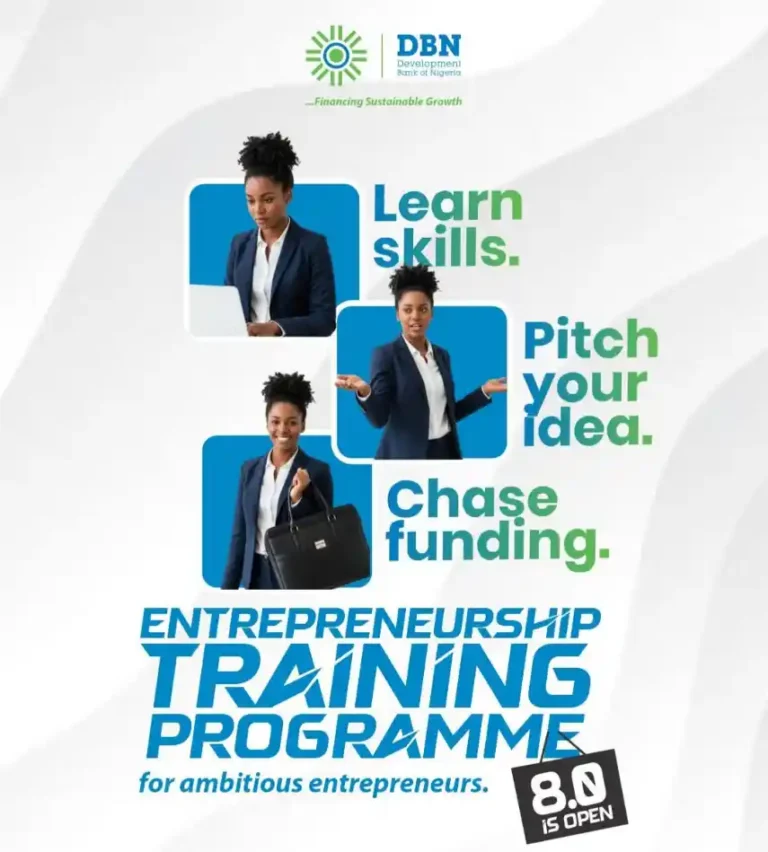
DBN Opens Applications for Entrepreneurship Training Programme 8.0

The Development Bank of Nigeria (DBN) has opened applications for its Entrepreneurship Training Programme 8.0, designed to equip ambitious entrepreneurs with practical skills to build and grow sustainable businesses. The programme focuses on real-world business knowledge without unnecessary theory, and participation is completely free.

The DBN Entrepreneurship Training Programme provides entrepreneurs with the tools to improve daily operations, manage finances effectively, access new market opportunities, and strengthen long-term business sustainability. It is part of DBN’s broader mission to address financing constraints that hinder the growth of domestic production and commerce, particularly within the Micro, Small and Medium Enterprises (MSME) segment.

MSMEs play a critical role in Nigeria’s economic development by driving growth, reducing poverty, creating employment, and promoting shared prosperity. DBN supports this sector by providing targeted wholesale funding and risk-sharing facilities to financial institutions, especially deposit money banks and microfinance banks. By strengthening these institutions and expanding their lending capacity, DBN helps ensure that smaller businesses can access the funding they need to thrive.

In addition to the training programme, entrepreneurs can explore a range of online courses for professionals and businesses through the DBN Academy. Participants benefit from structured learning, instructor support, and an official certificate upon completion. More courses will also be introduced to expand learning opportunities.

Applications are now open. Interested applicants can apply for the DBN Entrepreneurship Training Programme by visiting https://learning.devbankng.com/.

FG, World Bank Launch IDEAS-TVET Skills Initiative in Ibadan

0

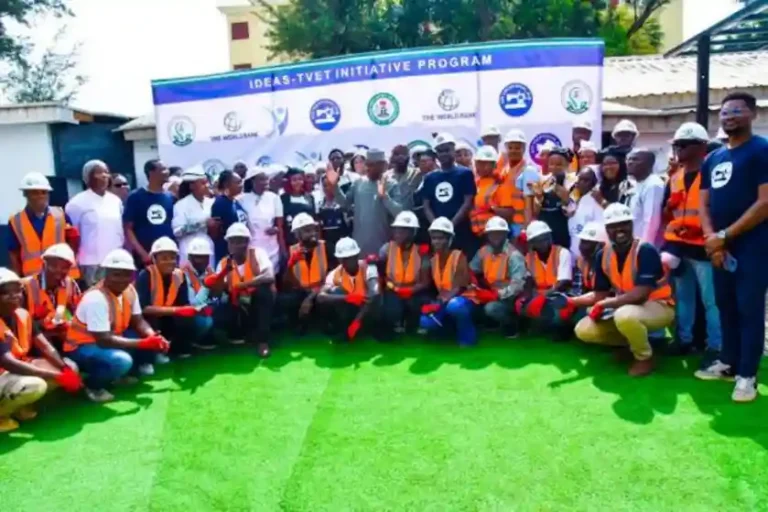
The Federal Government, in partnership with the World Bank, has officially launched the Innovation Development and Effectiveness in the Acquisition of Skills (IDEAS) – Technical and Vocational Education and Training (TVET) initiative to strengthen skills acquisition and tackle youth unemployment across Nigeria.

The flag-off ceremony, held in Ibadan, marked the formal commencement of the programme, beginning with Oyo State as one of the take-off points. The initiative is designed to improve the quality, relevance and effectiveness of technical and vocational education, ensuring that young Nigerians acquire industry-aligned, practical skills required in today’s labour market.

Speaking at the event, the Minister of Education, Maruf Tunji Alausa, who was represented by Mrs. Gbemisola Olaniyan, described the launch as a significant milestone in the government’s drive to empower young people with employable competencies.

“The crux of this initiative is to have youth in Oyo State and across Nigeria trained to have hands-on skills to ensure that none of them is roaming about the street,” the minister stated. He explained that the programme is a deliberate intervention aimed at equipping participants with practical knowledge that translates directly into employment and entrepreneurship opportunities.

According to him, the IDEAS-TVET initiative under the World Bank-funded programme focuses largely on the informal sector, while complementary efforts are ongoing within the formal education system. He noted that technical colleges are also being repositioned to fully implement TVET reforms, with government support covering students’ needs from TVET 1 (equivalent to SS1) through SS3.

“This is not being done only in the informal sector,” he said. “There is also a programme going on through the formal sector to ensure all our technical colleges are handling this TVET initiative whereby students come to school and the government takes care of all their needs.”

The minister further disclosed that trainees would be linked directly with industries for practical exposure through structured industrial training. “They will be trained and they will be connected to industries in order to have industrial training,” he added, stressing that the goal is to produce graduates who are better equipped than previous cohorts.

Highlighting the broader vision behind the reform, he remarked, “The nation and other countries of the world are shifting from certificate to ‘sabiticate’ which simply means it is what you know that matters.”

Rayyan Microfinance Bank Opens MSMEs Finance Application

0

Rayyan MSMEs Finance has opened applications to support small businesses through ethical financing. From market stalls to growing enterprises, every successful business begins with a small step. At Rayyan Microfinance Bank, financing goes beyond access to funds. The bank provides structured, ethical solutions designed to help businesses grow sustainably and strengthen the local economy.

Rayyan MSMEs Finance offers asset and stock financing tailored to active small businesses. It is specifically designed for traders, artisans, shop owners, and other small business operators who are already running their ventures. The facility supports the purchase of business stock, equipment, tools, and other income-generating assets. Funds are not disbursed in cash; instead, financing is provided directly for approved business needs.

All terms are fully disclosed upfront in line with Shari’ah principles. Financing is structured through Murabaha (cost-plus sale) and, where applicable, Ijara (leasing), ensuring transparency and fairness throughout the process.

To qualify, applicants should have an operating business, preferably for three to six months, a verifiable business location or trade route, and a community reference.

If you are a trader, artisan, or shop owner with an active business, this opportunity is for you. Visit the bank’s website or the nearest branch to apply.

NOUN Approves N13.78m NELFUND Disbursement to 90 Students

0

The National Open University of Nigeria (NOUN) has approved the disbursement of funds under the Nigerian Education Loan Fund (NELFUND) to the e-wallets of students who applied for the loan scheme.

The approval, granted by the Vice-Chancellor, Prof. Uduma Oji Uduma, covers a total of 90 beneficiaries. According to an internal memo dated February 27, 2026, and signed by the Registrar, Mr. Oladipo Ajayi, a total of N13,780,250.00 has been cleared for release.

The memo stated: “In view of the foregoing, the Vice-Chancellor is respectfully requested to grant approval and direct the Bursar to disburse the stated amount to the respective e-wallets of the attached list of 90 students who applied for the loan.”

Following this request, the Vice-Chancellor approved the disbursement, paving the way for the funds to be credited directly to the students’ e-wallet accounts under the NELFUND scheme.