Home Blog Page 72

NUJ, Ajayi Crowther University to train students in Practical Journalism

The Nigeria Union of Journalists (NUJ), Oyo State Council, has partnered with Ajayi Crowther University, Oyo, to provide practical journalism training for students of the institution’s Mass Communication Department.

The initiative is designed to expose students to real newsroom activities and strengthen their professional skills beyond classroom learning.

Under the arrangement, 300-level and final-year Mass Communication students will participate in practical sessions that introduce them to newsroom operations, field reporting, and the realities of journalism practice.

The mentorship programme will involve members of the NUJ leadership from both Oyo and Ogun State Councils and is expected to commence in May.

Speaking on the partnership, the Vice-Chancellor of Ajayi Crowther University, Professor Ebunoluwa Oduwole, said the collaboration aligns with the institution’s commitment to producing graduates who are prepared for the modern labour market.

She explained that practical exposure is essential for students studying communication and media-related courses.

According to her, “The university deliberately designs its academic programmes to align with the realities of the modern labour market. This partnership will help bridge the gap between theoretical teaching and practical training for our Mass Communication students.”

Oduwole noted that the programme would help students understand the practical demands of journalism and prepare them for professional careers in the media industry.

Earlier, the Chairman of NUJ, Oyo State Council, Mr Akeem Abas, said the partnership was aimed at strengthening the competence and performance of graduates from the university.

Abas explained that the training would allow students to gain first-hand knowledge of newsroom practices and develop practical reporting skills.

He said, “This professional and academic partnership will enhance the competence of graduates from the institution and equip them with practical newsroom skills.”

Abas also commended the management of Ajayi Crowther University for maintaining a strong working relationship with the union over the years.

He noted that the institution has continued to grow in reputation since its establishment and has sustained productive engagement with professional organisations.

Officials present during the meeting included the Deputy Vice-Chancellor, Professor Olumuyiwa Popoola, the university’s Public Relations Officer, Mr Olufemi Atoyebi, and executive members of the NUJ Oyo State Council.

Advertisement

UNICEF launches Yes! Girl Podcast platform for Nigerian girls

The United Nations Children’s Fund (UNICEF) has launched the “Yes! Girl” Podcast, a digital platform created by teenage girls in Nigeria to allow girls openly discuss issues affecting their lives.

The youth-driven podcast is designed as a safe space where adolescent girls can share their experiences, perspectives, and ideas about challenges they face while growing up in Nigeria.

According to UNICEF, the platform focuses on giving girls a stronger voice on topics that directly affect them, including education, mental health, menstrual health, gender equality, leadership, climate action, and access to accurate health information.

The podcast was officially introduced during an event held at Nile Cinema in Enugu as part of activities marking the 2026 International Women’s Day celebrated globally on March 8.

UNICEF said the initiative reflects a broader effort to move beyond discussions about girls and instead create opportunities for girls to speak for themselves.

Ngozi Songu, Adolescent Development Specialist at UNICEF’s Enugu Area Office, said the podcast was created specifically for girls aged nine to 19 years, enabling them to talk freely about the issues shaping their lives.

She explained that the initiative was intentionally designed to give girls ownership of the conversation.

“The Yes! Girl Podcast provides a safe and empowering space for girls aged 9–19 years to speak openly about issues affecting their lives,” Songu said.

She noted that many adolescent girls across Nigeria continue to face serious barriers that limit their ability to express themselves or participate in decisions that affect them.

Such challenges, she said, include school dropout, harmful gender norms, early marriage, limited access to health information, and the absence of safe spaces where girls can discuss their experiences.

Songu said the podcast represents a shift in approach by placing girls at the centre of conversations about their future.

“This event is significant because it shifts the narrative from speaking about girls to listening to girls,” she said.

According to her, the platform allows girls to share their stories directly while also proposing solutions to problems they experience in their communities.

“The Yes! Girl Podcast places girls at the centre of the conversation not as beneficiaries, but as leaders, storytellers, and advocates for change,” Songu said.

She added that digital storytelling is becoming an important tool for expanding access to dialogue spaces, especially in communities where open conversations about issues affecting girls are often limited.

“It also demonstrates how digital storytelling can expand access to safe dialogue spaces, especially for girls in communities where such conversations are often limited,” she said.

Through the podcast, UNICEF hopes that girls’ voices will influence policies, programmes, and investments that affect their future.

Songu said the initiative aligns with the theme of the 2026 International Women’s Day, which is “Rights. Justice. Action. For All Women and Girls.”

She explained that the organisation is focusing on key priorities aimed at empowering girls across Nigeria.

One of these priorities involves amplifying girls’ voices through platforms such as the Yes! Girl Podcast and U-Report so that girls can directly speak about their challenges and the solutions they believe can improve their lives.

Another priority is expanding access to information and services that support adolescent girls, including education opportunities, menstrual health support, HPV prevention awareness, mental health assistance, and safe learning environments.

UNICEF is also working to strengthen girls’ leadership and participation by supporting youth networks and encouraging girls to actively take part in decision-making spaces.

This includes involvement in community dialogues as well as participation in advocacy discussions at national level.

Songu said empowering girls produces wider benefits for society.

“Girls are not just beneficiaries of development — they are powerful leaders, innovators, and advocates for change,” she said.

“When we create spaces for girls to speak, we unlock solutions that transform communities.”

She said platforms such as the Yes! Girl Podcast ensure that girls’ experiences are recognised and that their ideas contribute to shaping a more equal future.

“The Yes! Girl Podcast is about ensuring that every girl’s voice counts — and that her ideas help shape a more equal and just future for Nigeria,” she said.

Mrs Esther Mbah, who represented the Enugu State Ministry of Children, Gender Affairs and Social Development at the event, expressed support for initiatives focused on empowering the girl child.

She said the state government welcomed programmes that provide opportunities for girls to grow, speak, and develop leadership skills.

Also speaking at the event, the Enugu State Chairperson of the International Federation of Women Lawyers (FIDA), Annie Enweani, emphasised that women and girls have the right to occupy leadership positions just like men.

She described the initiative as a meaningful way to mark the 2026 International Women’s Day.

Female students from several secondary schools across the state participated in the launch event and engaged in discussions around the issues addressed by the podcast.

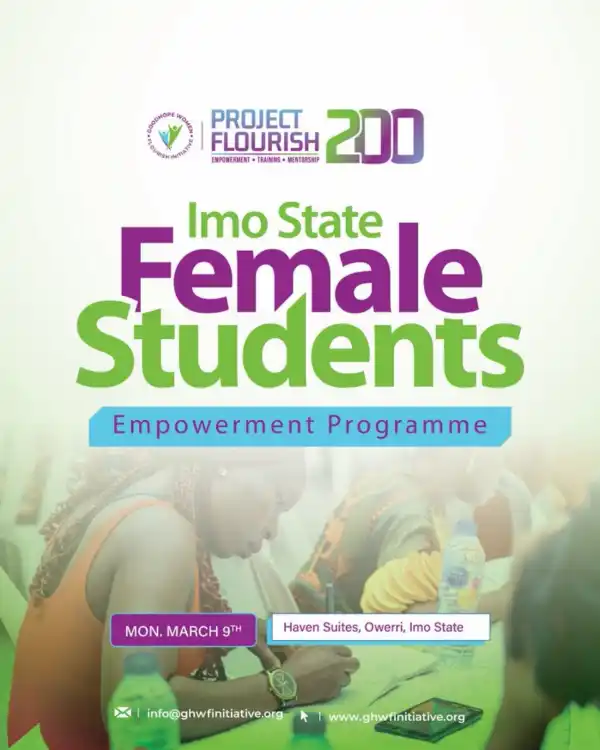
GoodHope Women Flourish Initiative Announces Project Flourish 200 Training

The GoodHope Women Flourish Initiative has announced Project Flourish 200, a programme that will train and mentor 200 female students while supporting their livelihoods to mark International Women’s Day 2026.

The initiative will bring together participants from all 27 local government areas of Imo State for skills acquisition, mentorship and empowerment training.

According to the Wife of the Executive Governor, Imo State, Chioma Uzodimma, the programme is designed to help young women build confidence and practical abilities.

“Project Flourish 200 is about unlocking the potential of young women and preparing them to lead and thrive in their communities,” she concluded.

The programme is scheduled to take place on Monday, 9 March 2026, by 8:30 a.m. at Haven Suites in Owerri, Imo State, where the selected female students will gather for the training, mentorship sessions and livelihood support activities.

FirstBank launches ₦1tn Mortgage Scheme to help Nigerians buy homes

0

FirstBank, in partnership with the Federal Government-backed Ministry of Finance Incorporated Real Estate Investment Fund (MREIF), has launched a ₦1 trillion mortgage scheme aimed at making home ownership easier for Nigerians.

The initiative is designed to expand access to long-term housing finance at a time when high property prices, inflation and expensive commercial loans have made it difficult for many Nigerians to buy homes.

According to FirstBank, the programme provides affordable mortgage financing that allows qualified Nigerians to purchase houses with manageable repayment plans.

A senior official involved in the programme explained that the intervention is meant to address Nigeria’s housing finance gap and make mortgages accessible to more people.

“This initiative is about opening the doors of home ownership to millions of Nigerians who previously could not access affordable housing finance,” the official said.

Under the scheme, eligible Nigerians can access mortgage loans of up to ₦100 million with repayment periods of up to 20 years.

The mortgages are priced at about 9.75 per cent per annum, which is significantly lower than the double-digit lending rates typically offered by commercial banks in Nigeria.

Industry experts say the lower interest rate could help reduce monthly repayment pressure for borrowers and make mortgages more realistic for middle-income earners.

The facility is open to salary earners, entrepreneurs and Nigerians in the diaspora who want to invest in property at home.

A representative familiar with the structure of the fund noted that the programme was deliberately designed to be inclusive.

“We want working Nigerians, business owners and even diaspora investors to have a clear path to owning property through structured mortgage financing,” the representative said.

The ₦1 trillion mortgage scheme is expected to support thousands of home buyers while also stimulating growth in Nigeria’s housing and construction sectors.

Visit www.firstbanknigeria.com/personal/loans/mreif-home-loan to become the latest homeowner in town.

FG: Nigeria’s social support beneficiaries rise to 9.4 million in 2026

The Federal Government has disclosed that Nigeria’s social support programmes have expanded significantly, growing from fewer than one million households in 2015 to more than 9.4 million households in 2026.

The Minister of Women Affairs and Social Development, Imaan Sulaiman-Ibrahim, made the disclosure during the 2026 International Women’s Day press briefing and the pre-session of the 70th Session of the Commission on the Status of Women (CSW70) held on Friday in Abuja.

According to the minister, the expansion represents a major milestone in the country’s social protection system and reflects the government’s commitment to supporting vulnerable families across Nigeria.

“In 2015, fewer than one million households were enrolled in any formal social protection programme. By 2026, national social safety net interventions have reached over 9.4 million households, with women accounting for more than 70 percent of the primary beneficiaries,” she said.

Sulaiman-Ibrahim explained that the rapid growth of these programmes highlights the government’s increasing focus on protecting vulnerable citizens, particularly women and families who face economic challenges.

She described the development as one of the most significant transformations in Nigeria’s social protection system since independence.

According to her, strengthening social support structures is critical to ensuring that families remain stable and productive contributors to national development.

The minister also linked the expansion of the programmes to the Federal Government’s broader social development strategy.

She commended President Bola Ahmed Tinubu for declaring 2026 the “Year of Families and Social Development,” describing the move as a major policy step toward prioritising the welfare of Nigerian families.

Sulaiman-Ibrahim noted that the declaration aligns with the administration’s Renewed Hope Agenda, which focuses on improving the living conditions of citizens through social and economic reforms.

“Families are the foundation of national productivity and social stability,” she said.

She explained that social protection initiatives are designed to help vulnerable households cope with economic shocks, reduce poverty, and improve overall well-being.

The minister emphasised that women have been the primary beneficiaries of many of the programmes, accounting for more than 70 percent of recipients.

According to her, empowering women through social support systems often leads to better outcomes for families and communities.

She noted that women play central roles in managing households, caring for children, and supporting community development.

By targeting women in social intervention programmes, the government aims to ensure that support reaches the most vulnerable members of society.

The minister further stated that Nigeria’s social protection landscape has evolved significantly over the past decade, with stronger systems and policies being developed to support families.

She explained that the ministry has also expanded its focus in recent years to address broader social development issues beyond traditional women-centred programmes.

Sulaiman-Ibrahim revealed that the ministry’s mandate has been widened to include programmes that support children, families, and national social development systems.

She said new institutional structures have been created to strengthen the implementation of these initiatives.

“One of the key reforms we have introduced is the establishment of a dedicated Nutrition Department within the ministry to improve coordination of national nutrition programmes,” she said.

According to her, the department will help strengthen evidence-based interventions aimed at improving child survival and overall family welfare.

The minister explained that improving nutrition and family welfare is an essential part of strengthening Nigeria’s human capital development.

She said addressing malnutrition remains a major priority, particularly for vulnerable families who often face challenges accessing adequate nutrition and healthcare.

Sulaiman-Ibrahim also highlighted the importance of legal and policy frameworks that protect women and children across the country.

She pointed to the Violence Against Persons (Prohibition) Act and the Child Rights Act as key instruments that strengthen protection for vulnerable groups.

According to her, significant progress has been made in expanding the adoption of the Violence Against Persons Prohibition law across the country.

“While only 15 states had adopted the Violence Against Persons Prohibition law as of 2015, all 36 states and the Federal Capital Territory have now enacted the law or equivalent legislation,” she said.

The minister said the progress followed sustained advocacy from the Federal Government, civil society organisations, and state authorities working together to strengthen protections for women and children.

She also acknowledged the role of the media in promoting issues affecting women and vulnerable populations.

Sulaiman-Ibrahim urged journalists to continue supporting responsible and gender-sensitive reporting that highlights social development challenges and progress across the country.

She noted that gender-focused reporting in Nigeria has improved in recent years, with more media organisations paying attention to issues affecting women and families.

The minister added that sustained media engagement remains essential for building awareness and ensuring continued support for policies that strengthen Nigeria’s social protection systems.

Tinubu approves salary increase for Nigerian armed forces personnel

President Bola Tinubu has approved an upward review of salaries and allowances for members of the Nigerian Armed Forces as part of efforts to improve their welfare and strengthen the country’s security operations.

The approval was revealed during an interfaith breaking of fast with members of the Armed Forces held at the Presidential Villa in Abuja on Friday.

Speaking at the event, the Chief of Defence Staff, represented by the Chief of Army Staff, acknowledged the president’s recent approvals, which include salary increases, improved allowances, better equipment procurement, and the provision of decent accommodation for personnel.

“I want to most sincerely thank our indefatigable President for the various approvals for the upward review of salaries of members of the Armed Forces of Nigeria, as well as the upward review of allowances of the Brigade of Guards,” the defence chief said.

He explained that the new approvals are expected to boost the morale of soldiers who continue to face security threats across the country.

“These various approvals also extend to the areas of equipment procurement as well as the provision of decent accommodations for the members of the armed forces,” he added.

According to him, the improved welfare package will enhance the operational efficiency of the military and support troops currently deployed to combat terrorism, banditry, and other security challenges.

“These laudable approvals will go a long way in enhancing our operational efficiency, and I assure you that they are well received by all members of the armed forces,” he said.

President Tinubu, while addressing the soldiers, expressed appreciation for their sacrifices and commitment to defending Nigeria’s sovereignty.

He acknowledged that many service members spend long periods away from their families while confronting armed groups and other security threats.

“My duty is to thank all of you on behalf of a grateful nation, knowing fully well that many times you are without your families and that you stay away from them,” the president said.

“Some of you are facing attacks by bandits and terrorists. I commend your courage, sacrifice, and professionalism as you put your lives on the line in defence of Nigeria’s sovereignty and the safety of its citizens.”

The president also assured the armed forces that his administration remains committed to strengthening the military through continuous investment in modern equipment, intelligence capabilities, and operational logistics.

“You have been working to serve the country deeply and protect our sovereignty. This nation will always be grateful to you, and your sacrifices will not be in vain, I assure you,” he stated.

Tinubu noted that the security forces have made progress in weakening terrorist and bandit groups across several parts of the country through sustained military operations.

He also thanked Nigerians for their patience during ongoing economic reforms, saying the sacrifices being made by both citizens and security personnel are necessary for national progress.

“I am happy to inform you that your sacrifices and that of fellow citizens, all the sacrifices are not in vain. We are now out of the dark tunnel,” the president said.

During the event, Tinubu also expressed sympathy to the government and people of Borno State over a recent terrorist attack in the state.

NextGen Innovation Challenge 2026 Portal Opens for Nigerian Innovators

The NextGen Innovation Challenge 2026 portal is now open, offering a new opportunity to empower Nigerian innovators and support the development of bold ideas that can shape the country’s technological future.

The NextGen Innovation Challenge 2026 is organised by the National Board for Technology Incubation (NBTI), a Federal Government agency led by Dr. Kazeem Kolawole Raji, in partnership with UKALD, a United Kingdom–based consultancy firm.

The challenge serves as one of Nigeria’s leading innovation platforms, connecting visionary entrepreneurs, researchers, and young talents with global investors, government institutions, and development partners. Its goal is to accelerate the growth of transformative ideas and technologies that can address real-world problems and create sustainable opportunities.

The 2026 edition will further strengthen collaboration between academia, government, and private investors. This partnership aims to drive innovation that aligns with Nigeria’s national development priorities and the United Nations Sustainable Development Goals (SDGs).

NEXTGEN 2026 also seeks to strengthen Nigeria’s innovation ecosystem by creating opportunities for the commercialisation of indigenous technologies. Through this platform, innovators can present solutions that have the potential to scale and position Nigeria as a regional hub for science, technology, and innovation excellence.

Participants are encouraged to showcase bold ideas and breakthrough solutions in key sectors such as Artificial Intelligence (AI), 6G Technology, Sustainable and Green Solutions, and other emerging technologies.

The programme is open to innovators, startup founders, researchers, and technology enthusiasts who are ready to transform ideas into impactful solutions. It provides a platform for individuals and teams to present innovative concepts that can contribute to Nigeria’s innovation-driven future.

Selected innovators will be invited for screening and mentorship and will also participate in the NEXTGEN 2026 Boot Camp and Grand Finale, where outstanding solutions will be showcased.

The deadline for submission is April 17, 2026.

To apply for the NextGen Innovation Challenge, interested innovators should visit https://nextgeninnovation.ng/nextgen-2026-portal/.

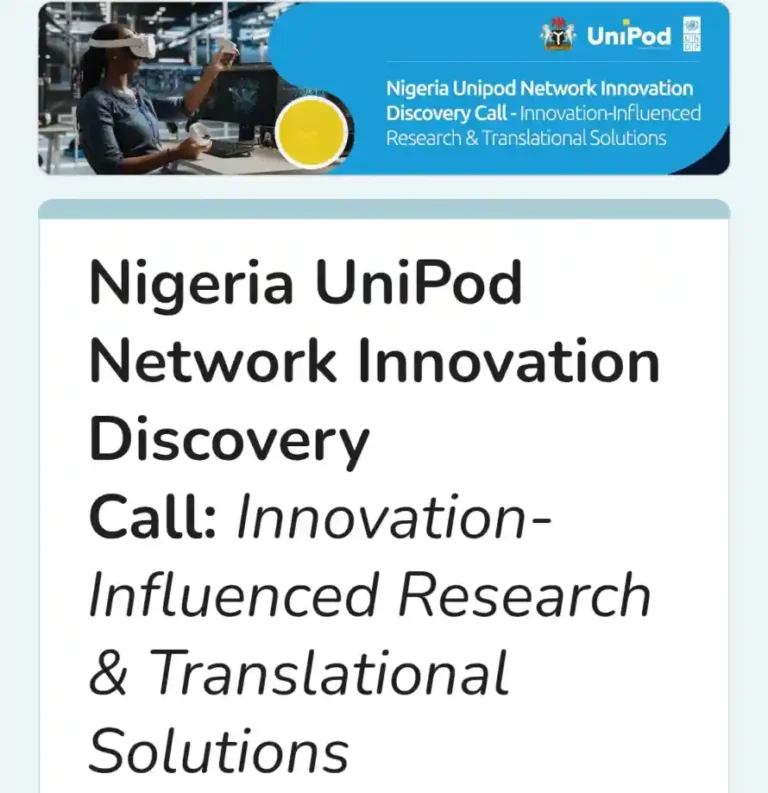
Nigeria UniPod opens innovation discovery for university researchers

The Nigeria UniPod Network has launched an Innovation Discovery Call focused on innovation-influenced research and translational solutions. The initiative is inviting faculty members, researchers, PhD candidates, postgraduates, and final-year students who are developing prototypes, tools, datasets, platforms, or models with real commercial value. If the research addresses real-world problems and has the potential to scale, it is strongly encouraged for submission.

The Innovation Discovery Exercise will run on a rolling basis. However, the first cohort of research projects will be onboarded during the official launch of the UniPods. The goal of this call is to identify applied research emerging from universities that can move beyond academic work and be translated into practical solutions with measurable impact.

This discovery call specifically targets research outputs with clear practical applications and commercialisation potential. Eligible submissions may include prototypes, research tools, models, datasets, digital platforms, or innovative methods that can be transformed into real-world solutions. The programme aims to support ideas that can move from research into implementation.

Selected submissions will be included in the UniPod Innovation Registry. These projects may also be considered for research translation support, prototype development, commercialisation pathways, strategic partnerships, and pilot opportunities designed to help bring innovations to market.

Applications are open to individuals from the following UniPod universities: University of Maiduguri (UNIMAID), Benue State University (BSU), Nasarawa State University, Keffi (NSUK), Michael Okpara University of Agriculture, Umudike (MOUAU), University of Lagos (UNILAG), and University of Uyo (UNIUYO).

The deadline for Cohort 1 applications is 27 March 2026.

To apply, interested applicants should visit https://forms.gle/tAwptVbXJndjsiFDA.

Lagos tests Android devices, trains officers for biometric resident registration

0

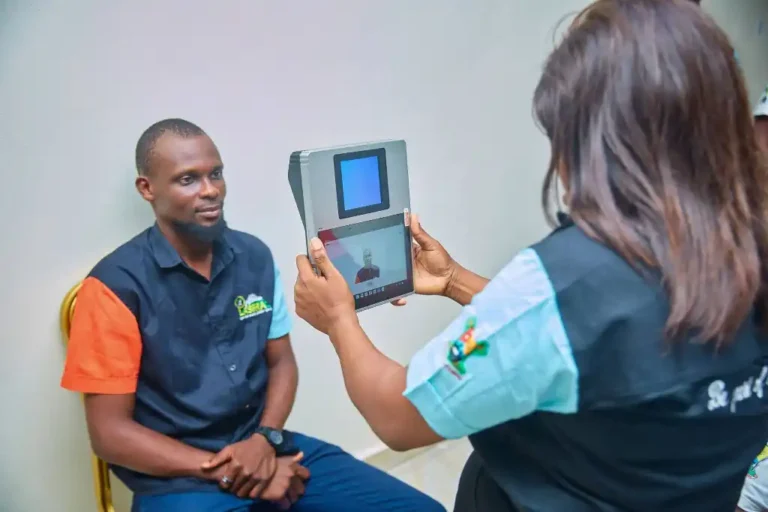
The Lagos State Government has tested new Android-based devices that will be used to register residents across the state, while also training registration officers on how to operate the technology for biometric capture, data entry, and document verification.

The pilot test was carried out by the Lagos State Residents Registration Agency (LASRRA) in partnership with Identiko Integrated Solutions. The exercise took place at the Identiko Integrated Solutions facility located at 16 Otunba Jobi Fele Way, CBD, Alausa Ikeja.

The test was organised to assess how well the Android devices perform in real registration situations before they are deployed across the state. Registration officers and field operatives were trained on how to use the devices to capture biometric information, enter residents’ personal data, verify documents, and synchronise information with the central registration system.

The training session gave the selected officers practical experience with the devices, allowing them to understand how the system works and how it can improve the efficiency of the resident registration process.

During the session, the Chief Executive Officer of Identiko Integrated Solutions, Mr. Jide Agbaje, who was represented by the Head of Training and Field Operations, Mr. Abiodun Shabi, explained that the pilot phase was important for testing how the devices would function during actual field operations.

“The pilot phase is designed to assess the performance, durability, and efficiency of the devices under real field conditions,” he said.

He also explained that feedback from the officers participating in the pilot would help determine how easy the devices are to use and how quickly they can capture residents’ data.

“There will be another review based on the participants’ feedback on ease of use, speed of data capture, device stability, and connectivity performance,” Shabi stated.

Participants in the pilot exercise included LASRRA enrollment officers and supervisors from the five divisions of Lagos State. They were tasked with using the Android devices in simulated registration scenarios designed to mirror real-life resident enrollment activities.

The exercise allowed the officers to practise important registration tasks such as biometric data capture, document verification, and accurate data entry. They were also trained on device configuration, troubleshooting procedures, and data synchronisation protocols.

According to the Project Manager at Identiko Integrated Solutions, Mr. Enitan Samson, the pilot phase was necessary to ensure that the devices would function properly once they are deployed across the state.

“The pilot phase is critical to ensuring that the Android enrollment device performs reliably in real registration environments,” Samson said.

Officers who participated in the exercise will also deploy the devices in selected locations and document their experiences while using them. Their observations will help identify any technical challenges or operational issues that may arise during field use.

The feedback gathered from the exercise will guide further improvements to the devices and the registration workflow. It will also help determine if additional training will be required for registration officers before the devices are rolled out statewide.

Identiko Integrated Solutions explained that the pilot exercise is an important step in refining the system before full deployment.

Once the evaluation is completed and any necessary adjustments are made, the Android devices will be deployed to LASRRA registration stations across Lagos State to support faster and more efficient resident enrollment.

Fidelity Bank launches HerFidelity Apprenticeship Programme 2.0 to empower women

Fidelity Bank Plc has launched the HerFidelity Apprenticeship Programme 2.0 (HAP 2.0), an initiative designed to train and empower women with practical business and vocational skills, as part of activities marking the 2026 International Women’s Day.

The programme was unveiled on Thursday, March 5, 2026, at Fidelity Place in Victoria Island, Lagos, bringing together government officials, business leaders, female entrepreneurs, and other stakeholders committed to advancing women’s economic empowerment.

Speaking at the event, the Managing Director and Chief Executive Officer of Fidelity Bank Plc, Dr. Nneka Onyeali-Ikpe, said the initiative reflects the bank’s commitment to supporting women with the tools and opportunities needed to succeed in business and entrepreneurship.

She explained that the programme is structured to provide hands-on apprenticeship opportunities, mentorship, and networking platforms that will help women develop practical skills and build sustainable businesses.

“Empowering women remains a key pathway to sustainable economic growth. Through the HerFidelity Apprenticeship Programme 2.0, we aim to equip women with practical skills, build strong networks, and create opportunities that will promote entrepreneurship and long-term economic prosperity,” Onyeali-Ikpe said.

According to her, the programme forms part of Fidelity Bank’s broader strategy to promote financial inclusion and expand economic opportunities for women across Nigeria.

Also speaking at the event, the Lagos State Commissioner for Women Affairs and Poverty Alleviation, Hon. (Mrs.) Bolaji Cecilia Dada, commended Fidelity Bank for initiating a programme that directly targets women’s economic advancement.

She noted that partnerships between the government and private sector institutions remain essential in creating meaningful opportunities for women.

“Programmes like the HerFidelity Apprenticeship Programme provide women with access to skills, resources, and mentorship that can transform their economic prospects and strengthen communities,” Dada stated.

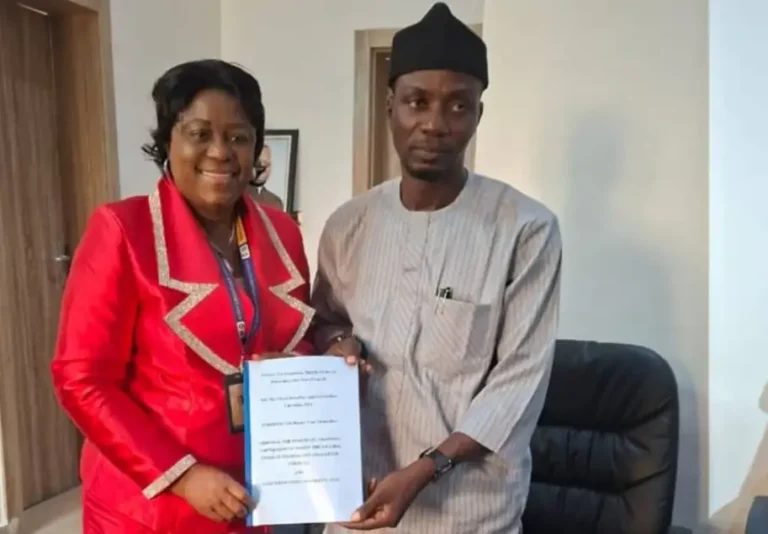
The event also featured the signing of a Memorandum of Understanding (MoU) to strengthen collaboration between stakeholders involved in the programme.

Among dignitaries present at the launch was the Lagos State Commissioner for Commerce, Trade and Investment, Mrs. Folashade Ambrose-Medebem, alongside female industry leaders and entrepreneurs who gathered to support the initiative aimed at expanding women’s participation in business and enterprise.