Home Blog Page 79

CcHUB, Mastercard EdTech Fellowship cohort 4 with free $100,000

Applications are now open for Cohort 4 of CcHUB’s EdTech Fellowship, a programme designed to support innovative education technology startups in Nigeria. The initiative, delivered by Co-creation HUB (CcHUB) in partnership with the Mastercard Foundation, will provide $100,000 in equity-free funding to selected startups developing solutions that expand access to education and improve learning outcomes for underserved learners.

CcHUB is committed to advancing Africa’s economic prosperity by encouraging the use of social capital and technology to solve pressing challenges. Founded in 2010 as Nigeria’s first innovation centre, the organization has grown to become the largest technology innovation centre in Africa, supporting startups, entrepreneurs, and innovators across the continent.

The Mastercard Foundation, a registered Canadian charity and one of the world’s largest philanthropic organizations, works with visionary partners to expand access to education and financial inclusion. Its mission focuses on enabling young people in Africa and Indigenous youth in Canada to secure dignified and fulfilling work.

The Mastercard Foundation EdTech Fellowship is an incubation programme that supports promising African EdTech companies. Through the fellowship, selected startups will take part in a 12-month structured incubation programme that provides mentorship, technical assistance, access to ecosystem partners, and $100,000 in equity-free funding. The programme is designed to help startups refine their solutions, strengthen implementation readiness, and prepare for long-term growth.

Cohort 4 will focus on solutions that support learners living with disabilities, refugees and displaced persons (RDPs), and underserved or rural communities. The programme also prioritizes innovations that empower young girls and women, as well as education data systems that improve decision-making and align with real learning environments.

Participating startups will receive support in key areas such as product development, distribution, funding access, and talent development.

The fellowship is open to Nigerian EdTech startups that expand access to quality education, enhance teacher effectiveness, foster learner engagement through innovation, and create scalable solutions that improve learning outcomes.

Applications are open from 27 February 2026 to 10 April 2026. Interested applicants can apply by visiting: https://form.typeform.com/to/x0DHDTGb?typeform-source.

Advertisement

Katsina disburses ₦27.85m grants to entrepreneurs under NG-CARES

0

The Katsina State Government has disbursed a total of ₦27.85 million in February 2026 as Nano Grants to support 557 small-scale entrepreneurs across 361 wards in the state under the NG-CARES Programme.

The disbursement was carried out through the Katsina State Enterprise Development Agency (KASEDA) under Result Area 3 of the NG-CARES Programme, with each beneficiary receiving ₦50,000 to support and stabilize their small businesses.

According to the state government, the initiative is designed to strengthen grassroots economic activity by providing direct financial support to nano and small-scale entrepreneurs who form the backbone of local economies.

Governor Dikko Umaru Radda emphasized that the programme is part of his administration’s broader strategy to expand opportunities for small businesses and stimulate economic growth across communities.

“Our goal is to ensure that entrepreneurs at the grassroots level receive the support they need to grow their businesses and improve their livelihoods,” the governor stated.

KASEDA officials also noted that women and youths formed the majority of beneficiaries, accounting for about 60 percent of those who received the nano grants under the programme.

Ekiti State Shortlisted for ATASP-II Agricultural Programme

Ekiti State has been shortlisted to participate in the Agricultural Transformation Agenda Support Programme Phase Two (ATASP-II) following Governor Biodun Oyebanji’s expression of interest in the programme, a development expected to support agricultural expansion and create thousands of jobs across the state.

The inclusion of Ekiti in the second phase of the initiative was disclosed by the State Commissioner for Information, Rt. Hon. Taiwo Olatunbosun, who said the update was communicated through an official letter dated February 27, 2026 and signed by the Honourable Minister of State for Agriculture and Food Security, Senator Aliyu Sabi Abdullahi.

According to Olatunbosun, the selection reflects growing recognition of Ekiti State’s commitment to agricultural development and its readiness to participate in large-scale programmes aimed at transforming the sector.

“Ekiti State has been shortlisted to participate in the Agricultural Transformation Agenda Support Programme Phase Two (ATASP-II) following Governor Biodun Oyebanji’s expression of interest in the programme,” Olatunbosun said in the statement made available to journalists in Ado-Ekiti.

He explained that ATASP-II is a major agricultural development initiative designed to drive productivity, improve food and nutrition security, reduce poverty, and create employment opportunities in participating states.

The programme, which is funded by the African Development Bank in partnership with the Federal Government of Nigeria, is also structured to strengthen rural economies by improving access to markets, expanding financial services for farmers, and enhancing rural infrastructure that supports agricultural production.

Olatunbosun noted that the Oyebanji administration has consistently positioned agriculture as a key driver of economic development, describing the governor’s expression of interest in ATASP-II as part of a broader strategy to attract investment and expand opportunities in the agricultural sector.

According to him, “Governor Biodun Oyebanji is focused on transforming agriculture in Ekiti State into a modern, business-driven sector that boosts food security, creates jobs, and drives economic growth.”

He added that the administration views agriculture not only as a traditional occupation but also as a viable economic engine capable of generating employment for young people and strengthening rural livelihoods.

The commissioner also emphasized that the state government remains committed to leveraging partnerships with federal institutions and international development organisations to accelerate agricultural transformation.

“Ekiti State remains determined to leverage federal partnerships and international development support to deepen agricultural transformation and improve livelihoods across the state,” he stated.

Olatunbosun further recalled that Ekiti State had earlier been selected to participate in Phase Two of the Nigeria Special Agro-Industrial Processing Zones (SAPZ) programme, another major initiative backed by the African Development Bank and the Federal Government.

He explained that the SAPZ project is designed to strengthen agricultural value chains by promoting industrial processing of key crops such as cocoa, cassava, and palm oil.

“The SAPZ project is expected to create thousands of jobs, stimulate industrial growth, and attract significant private sector investment,” he said.

He also referenced the impact of the first phase of the Agricultural Transformation Agenda Support Programme (ATASP-I), which focused on improving agricultural productivity at the smallholder farmer level through irrigation development, rural road construction, improved access to farm inputs, and strengthening farmer cooperatives.

While ATASP-I concentrated on boosting food production and increasing farmers’ incomes at the grassroots level, complementary initiatives such as the Special Agro-Industrial Processing Zones are designed to build processing capacity and expand value addition across different stages of the agricultural value chain.

Edo SSEB to launch Monday Okpebholo education talent hunt competition

The Edo State Senior Secondary Education Board (SSEB) will on Friday, March 6, 2026, officially flag off the maiden edition of the Senator Monday Okpebholo Education Talent Hunt Competition (Season One), an initiative aimed at identifying and rewarding academically outstanding secondary school students across the state.

The competition, which will involve SS3 students in public secondary schools across the 18 Local Government Areas of Edo State, is designed to spotlight excellence in Science, Social Science, and Arts while encouraging stronger academic performance ahead of external examinations.

Executive Chairman of SSEB, Dr. Rita Otibho Erewele, described the programme as a major step toward strengthening academic culture in the state.

“This competition is designed to unlock the hidden academic potentials of our students and reward excellence. It also serves as motivation for students to intensify their preparations as they approach their external examinations,” she said.

According to the Board, shortlisted students will participate in a scholarship examination that will determine the most outstanding candidates across the three academic categories.

The best-performing students will receive fully funded scholarships to attend state-owned tertiary institutions, including Ambrose Alli University, Edo State Polytechnic, and the Edo State College of Education.

Dr. Erewele noted that the initiative reflects the education-focused vision of Edo State Governor, Senator Monday Okpebholo.

“The administration of Governor Monday Okpebholo is strongly committed to promoting quality education and creating opportunities for young people to develop their talents. This programme is one of the ways the government is investing in the future of Edo State,” she stated.

The talent hunt competition is themed “Unlocking Potentials, Building a Better Edo,” a slogan the Board says highlights the government’s commitment to nurturing intellectual development and strengthening reading culture among students in public schools across the state.

FG Opens YEIDEP Batch B Recruitment March 9

0

The Federal Government has announced the opening of the Youth Economic Intervention and De-Radicalization Programme (YEIDEP) Batch B recruitment portal for beneficiaries nationwide on Monday, March 9, 2026, as part of efforts to empower up to 20 million Nigerian youths with a N500,000 startup grant.

The announcement was made in a statement released on Thursday by the Coordinator-General of the programme, Comrade Kennedy Iyere, who urged eligible Nigerians between the ages of 18 and 50 to take part in the recruitment exercise.

According to the statement, the initiative is designed to provide financial support and structured empowerment opportunities to young Nigerians, with the aim of promoting entrepreneurship and reducing the risks associated with widespread youth unemployment across the country.

The programme organisers explained that YEIDEP seeks to stimulate economic participation among youths by providing startup capital alongside support mechanisms that encourage self-employment and sustainable business development.

Iyere noted that the initiative forms part of broader national efforts to address the growing challenges linked to youth poverty, unemployment and vulnerability to social instability.

“YEIDEP aims to empower 20 million youths with startup capital as a way of promoting entrepreneurship and self-employment among young people, which is the surest means of generating mass employment for youths,” he said.

He added that expanding economic opportunities for young Nigerians remains critical to tackling the underlying social pressures caused by unemployment and economic exclusion.

“YEIDEP’s core mandate is to tackle Nigeria’s chronic youth unemployment, youth poverty and youth hopelessness, and also their imposed threats of youth radicalization, socio-political instability, national insecurity and economic unproductivity,” Iyere stated.

The organisers explained that the Batch B recruitment process will follow a different registration approach compared to the earlier Batch A phase.

Unlike the first phase, which relied largely on online registration and digital data capture, applicants in Batch B will be required to visit designated partner banks physically to open a YEIDEP bank account as part of the official registration process.

The statement emphasised that opening a YEIDEP bank account is the only recognised method of becoming a verified participant in the programme and a potential beneficiary of the empowerment grant.

Participants were also reminded that the registration process is completely free and that applicants should report any attempt by bank officials or intermediaries to demand payment during the process.

The recruitment exercise will take place nationwide, with the exception of Kano State, where the process will be handled separately by the state government through a newly established Kano State YEIDEP Steering Committee under the leadership of Governor Abba Kabir Yusuf.

Programme officials also clarified that individuals who successfully registered during the Batch A recruitment phase and already possess confirmed YEIDEP bank accounts will not be eligible to participate in the new recruitment process.

However, applicants who registered during Batch A but did not receive confirmed YEIDEP bank accounts have been encouraged to take part in the Batch B exercise.

The statement further warned applicants against submitting multiple registrations, stressing that anyone found engaging in duplicate applications would be automatically disqualified from the programme.

“We also strictly want to warn against double or multiple registration, as anyone found guilty of such shall be disqualified automatically,” Iyere cautioned.

Authorised partner banks for the recruitment exercise include Fidelity Bank, Keystone Bank, Alpha Morgan Bank, Wema Bank, Union Bank, Guaranty Trust Bank, Zenith Bank, Access Bank, United Bank for Africa, Ecobank and Lotus Bank.

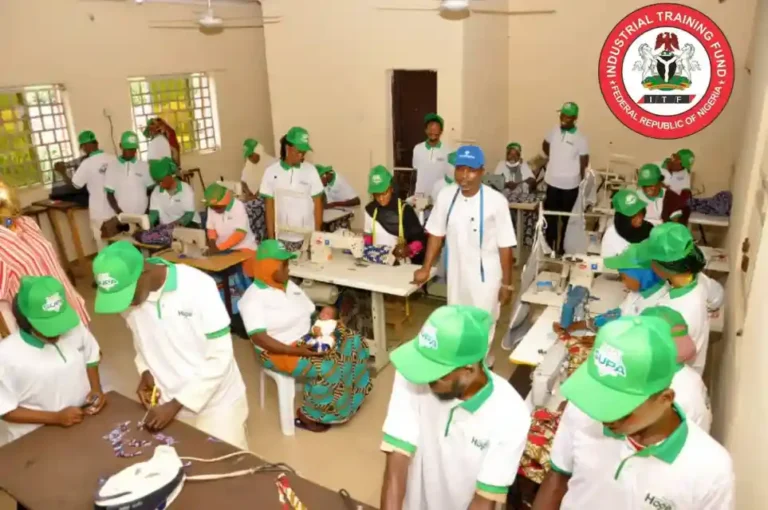
ITF to clear training reimbursement payments owed to employers

0

The Industrial Training Fund (ITF) has announced plans to address outstanding training reimbursement payments owed to employers who trained their staff under its programmes.

This was disclosed during the 12th Stakeholders’ Interactive Forum hosted by the ITF Lekki Area Office on February 12, 2026, at the Lagos Oriental Hotel, where employers, HR leaders, learning and development professionals, and industry stakeholders gathered to discuss skills development and workforce productivity.

Speaking at the event, the Area Manager of the Lekki Area Office, Kemi Abayeh, acknowledged concerns raised by employers regarding delays in training reimbursement and assured stakeholders that the issue is already receiving attention.

She said, “We appreciate the feedback from employers and stakeholders. Efforts are underway to address outstanding reimbursements, and we remain committed to improving service delivery and strengthening collaboration with industry.”

Several stakeholders at the forum emphasized the importance of timely reimbursement, noting that many organizations invest heavily in staff training under ITF programmes with the expectation that approved claims will be processed promptly.

Chairman of the occasion and MD/CEO of Computer Warehouse Group, Adewale Adeyipo, also highlighted the growing importance of workforce development in today’s competitive economy.

According to him, “Organizations are increasingly seeing learning as an investment rather than an expense. When training is aligned with industry needs, it strengthens productivity and long-term competitiveness.”

Stakeholders also used the forum to commend the quality and impact of ITF training programmes while calling for continued improvements in collaboration between the Fund and employers who contribute to the scheme.

Boeing, FASESA launch space training program for African students, Nigeria

Boeing and the Future African Space Explorers STEM Academy have launched the third edition of the Pathways to Space program to train more than 2,000 African high school students, including those in Nigeria, in space science and aerospace-related skills.

The initiative targets students aged 13 to 18 and will run across four African countries — Nigeria, Ethiopia, Kenya, and South Africa — with South Africa participating for the first time since the program was introduced.

The program is designed to expose students to real-world applications of space science, aerospace engineering, and related technology fields, helping young Africans build early interest and technical foundations in the fast-growing global space sector.

According to Henok Teferra Shawl, the initiative is delivered in collaboration with local educational institutions and government agencies. Participating schools are selected by national Ministries of Education and Ministries of Science and Technology in the participating countries.

Shawl explained that the program aims to broaden young people’s understanding of career opportunities within the global space industry.

“Almost every child dreams of becoming an astronaut, but the space industry offers far broader opportunities — from building satellites and spacecraft and designing hardware and software to supporting mission control, launch operations, life-support systems and on-orbit research,” he said.

He added that Africa’s youthful population represents a major opportunity for the continent’s participation in the future of the global space economy.

“With its young and fast-growing population, Africa holds immense untapped potential. Through Pathways to Space, we try to connect that potential with real-world skills and future opportunities in the growing space ecosystem across the continent.”

A key feature of the 2026 program will be a student design challenge themed “The First African Spacesuit.” The challenge will introduce participants to spacesuit engineering, human-centered design and materials science through hands-on activities and guided workshops.

Students will also participate in virtual sessions with former astronauts and aerospace professionals connected to institutions such as NASA Johnson Space Center, Final Frontier Design and several leading U.S. universities.

Another component of the program will involve a high-altitude balloon mission, where students will gain practical experience in payload design, atmospheric science and data analysis.

Executive Director of FASESA, Sean Jacobs, said the initiative has become one of the continent’s most influential space education platforms.

“Pathways to Space has grown into one of Africa’s most impactful space education initiatives,” Jacobs said.

He noted that the 2026 edition reflects the organization’s commitment to expanding access to advanced STEM learning opportunities and equipping young Africans with the knowledge and confidence needed to participate in Africa’s emerging space sector.

Since its launch in 2024, the program has already reached more than 1,200 students across Ethiopia, Kenya, Nigeria and Tanzania.

Young Africa to Train 200 Edo Youths in TVET Skills Programme

0

Young Africa Nigeria is set to commence Phase One of its technical skills training programme this March in Edo State, targeting 200 youths for hands-on vocational education aimed at boosting employability and self-reliance.

The training will take place at Benin Technical College and is part of ongoing efforts to strengthen technical and vocational education and training (TVET) across the state.

During a strategic engagement at the Education Hub in Iyaro, Benin City, the Executive Chairman of the Edo State Board for Technical and Vocational Education and Training (BTVET), Barr. (Mrs.) Onomen Briggs, welcomed the Young Africa Nigeria delegation and emphasized the importance of practical skills development.

“This collaboration is important in ensuring that our young people gain industry-relevant skills that will improve their employability and productivity,” Briggs said.

The Young Africa team, led by Project Coordinator Mr. Adedotun Esan and Grants Coordinator Mr. Wellington Muchechetere, expressed readiness to partner closely with the Board to expand opportunities for youth training in the state.

“Our goal is to equip young people with practical technical skills that will enable them secure employment or start their own ventures,” Esan noted.

The delegation also paid a courtesy visit to the Edo State Commissioner for Education, Dr. Paddy Iyamu, who reaffirmed the government’s commitment to partnerships that strengthen skills development initiatives.

MTN trains 5,980 Nigerians in ICT and business skills, 600 to get grants

0

The MTN Foundation has trained 5,980 young Nigerians in ICT and business skills through its youth empowerment programme, with the top 600 participants set to receive equipment grants from a ₦300 million fund to help them start or expand their businesses.

Participants in the programme were drawn from several states including Plateau, Bayelsa, Bauchi, Enugu, Ondo, Sokoto, Taraba, and the Federal Capital Territory (FCT). The initiative focuses on equipping young people with practical digital and entrepreneurial skills needed to build sustainable businesses in Nigeria’s evolving economy.

Speaking during the graduation ceremony, Chairperson of the MTN Foundation, Mosun Bello-Olusoga, represented by Sura Judddeen Yakubu, described the programme as a platform that empowers young Nigerians to innovate and build solutions for the future.

“Today is more than a graduation ceremony. It is a celebration of resilience, courage and possibility. As I look across this hall, I don’t just see graduates; I see builders, innovators and architects of Nigeria’s tomorrow,” she said.

The five-week programme attracted about 6,000 young entrepreneurs across the country, with 5,980 successfully completing the training after participating in intensive sessions focused on digital literacy, entrepreneurship, and practical business development.

According to Bello-Olusoga, the best-performing 600 participants will benefit from equipment grants funded through a ₦300 million support package, designed to help them launch new ventures or strengthen existing businesses.

“This grant is not just financial support; it is an investment in your future and in the future of our nation,” she said, encouraging the graduates to apply their newly acquired knowledge to create opportunities within their communities.

The ICT and business skills programme forms part of the MTN Foundation’s broader strategy to empower Nigerian youths with the tools needed to succeed in a technology-driven economy. Since the initiative began eight years ago, the foundation has trained thousands of young Nigerians and supported them in developing sustainable enterprises.

Executive Director of the MTN Foundation, Odunayo Sanya, said the programme reflects the organisation’s long-standing commitment to youth empowerment and community development.

“At MTN, we believe that a business is only as good as the people it serves. Our commitment has always been about connecting with Nigerians and helping them achieve their dreams,” she said.

Sanya disclosed that the MTN Foundation is funded through one per cent of MTN Nigeria’s annual profit after tax, enabling the organisation to support a wide range of social intervention programmes across the country.

According to her, the foundation has invested about ₦33 billion in social development initiatives over the past 22 years, reaching nearly 4,000 communities across Nigeria and impacting approximately 520 local government areas.

She added that the ICT and business skills training programme, launched in 2018, has already trained 15,362 young Nigerians, with investments in the initiative exceeding ₦1 billion.

Sanya also explained that the programme initially operated as a physical training initiative before it transitioned to an online format in 2020 following the COVID-19 pandemic. The shift to digital delivery allowed the foundation to expand its reach and accommodate more participants from different parts of the country.

According to her, the latest training cycle attracted hundreds of thousands of applications, highlighting the strong demand among Nigerian youths for digital and entrepreneurial skills that can improve their economic opportunities.

“You were selected from thousands of applicants, and you stayed the course. That alone shows that success may be difficult, but it is achievable,” she told the graduates.

Ominira Initiative opens applications for 2026 Free Trade Fellowship Program

The Free Trade Fellowship Program 2026, organized by the Ominira Initiative, is now open for applications. The fellowship is designed for Nigerian journalists, academics, and researchers who want to deepen their understanding of economic development and free trade.

During the program, fellows will advocate for and promote free trade concepts mainly through writing, research, and media engagements. The goal is to encourage informed public conversations and policy awareness around economic development and open trade in Nigeria.

The fellowship will run virtually for six months, from April to September 2026. Participants will also receive incentives for activities they undertake throughout the duration of the program.

Interested applicants are encouraged to apply and become part of this year’s cohort of Free Trade Fellows. The application deadline is March 20, 2026.

To apply for the Free Trade Fellowship Program, interested applicants should visit
https://docs.google.com/forms/d/e/1FAIpQLSevWVBHbn7lr_3ByBRA_4yoIJhkjpUWC7CaLPyLnGM8DNom1w/viewform.