Home Blog Page 82

FG begins Presidential Emergency food distribution for 6,000 Katsina households

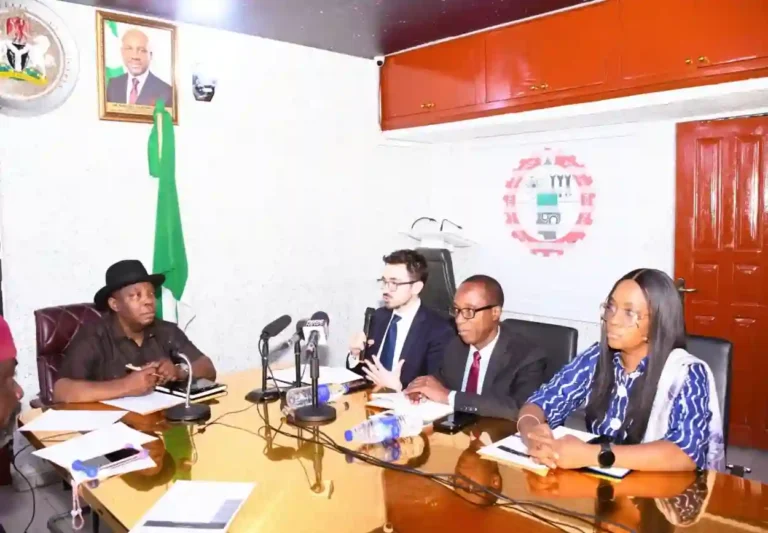
The Federal Government has commenced the distribution of Presidential Emergency Food and Nutrition Items in Katsina State, targeting vulnerable households across the state as part of ongoing efforts to tackle food insecurity and rising hardship.

The flag-off ceremony took place at the People’s Square, New Government House, Katsina, where officials confirmed that the intervention is designed to provide immediate relief to thousands of struggling families. The initiative forms part of a broader national response to economic pressures, climate challenges, and displacement affecting communities in different parts of the country.

Leading the exercise on behalf of the Federal Ministry of Humanitarian Affairs and Poverty Reduction was the Federal Commissioner of the National Commission for Refugees, Migrants and Internally Displaced Persons (NCFRMI), Hon. Tijani Aliyu Ahmed. He explained that the distribution reflects the Federal Government’s resolve to protect vulnerable Nigerians and ensure that critical food and nutrition support reaches those who need it most.

According to him, the intervention goes beyond short-term food assistance. It is also structured to serve as a bridge toward recovery, stability, and improved livelihoods for affected households. He noted that continued collaboration with state governments, humanitarian partners, and community leaders remains key to achieving sustainable outcomes.

Representatives of the Ministry emphasized that the programme responds to increasing food insecurity driven by conflict, displacement, climate pressures, and economic shocks. They added that providing food items and nutrition support is a necessary step in strengthening social protection systems while longer-term recovery strategies are being implemented.

The initiative, approved by President Bola Ahmed Tinubu, underscores the administration’s commitment to supporting citizens during difficult periods. In Katsina State alone, over 6,000 beneficiaries are expected to receive assistance. These include internally displaced persons, migrants, and other vulnerable households identified through established verification processes.

The distributed items include essential food supplies, nutritional materials, and medical support, particularly targeted at malnourished children and families facing severe hardship. Public health institutions in the state are also receiving medical supplies to enhance service delivery at the community level.

The Deputy Governor of Katsina State, Faruk Lawal Jobe, who represented Governor Dikko Umar Radda, expressed appreciation for the intervention. He described the distribution as timely and important in supporting residents affected by economic and environmental challenges.

Traditional and community leaders present at the ceremony commended the initiative and called for transparency and fairness in the distribution process to ensure that only verified vulnerable households benefit.

With the commencement of the Presidential Emergency Food and Nutrition Items distribution in Katsina State, the Federal Government has taken a concrete step toward addressing urgent food needs while reinforcing broader efforts aimed at long-term resilience and social stability.

Advertisement

Abia Launches Abia Connect Card for Green Shuttle Cashless Payments

The Abia State Government has officially introduced the Abia Connect Card, a smart and cashless payment system for all Abia Green Shuttle Services across the state.

The initiative is driven by the reform agenda of His Excellency, the People’s Governor of Abia State, Dr. Alex C. Otti, OFR. It is designed to modernise public transportation, eliminate cash handling, and ensure a seamless commuter experience for residents and visitors who rely on the Green Shuttle network.

According to the government, the Abia Connect Card, also known as the “Abia State Card,” is the approved Transport Card to be used on all Green Shuttle Services across Abia State. Commuters are required to tap their card on the payment device when boarding and wait for the “Welcome” confirmation sound to validate successful payment.

The first card is currently free for residents. However, a ₦50 charge applies to every top-up. Authorities also confirmed that the card does not expire, and funds loaded on the card do not expire. Each card is valid for one person per trip and can be used across all approved Green Shuttle routes in the state. Commuters can check their available balance with an agent at the Central Bus Terminal at any time.

Residents can obtain the card at any designated Central Bus Terminal. Available locations include Ariaria Junction, MCC, Osisioma Flyover, Tonimas, PH Road Aba First Bus Stop (Cemetery), Ala Oji Flyover, Ebem Park, Abiriba Junction, Akara Junction and Uzuakoli. The government noted that an ABSSIN is required for registration before a card can be issued.

Officials described the rollout as “another bold step towards a structured, technology-driven and transparent transport system in Abia State.” They added that the cashless system will help improve accountability, reduce delays linked to cash payments, and provide a more organised transport environment for commuters.

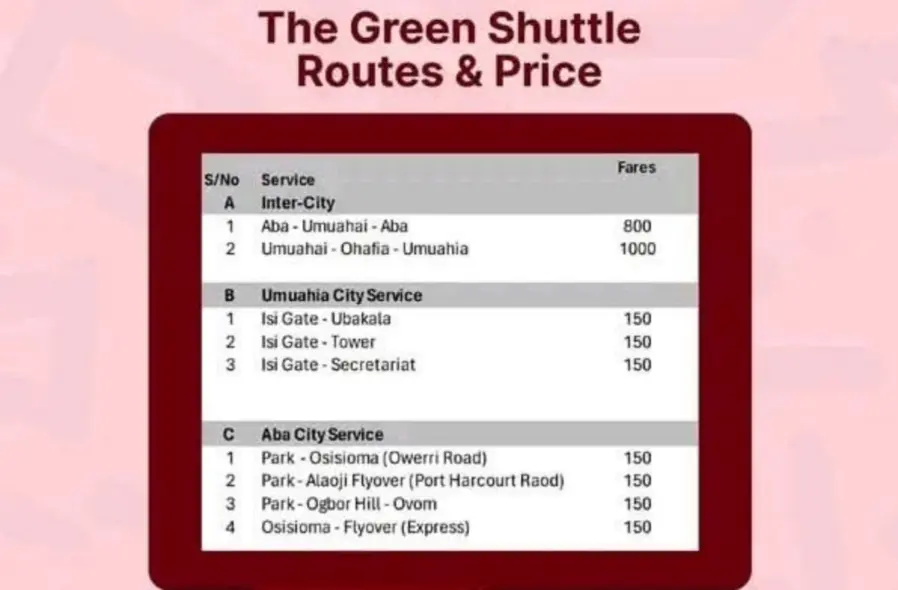
The Green Shuttle Routes and Price list will be provided below for public reference.

YEIDEP February 2026 disbursement, training fail; website goes offline

0

False claims that YEIDEP disbursement has started are currently spreading across the internet, even though no official payment has been confirmed. At the same time, the February 2026 training earlier promised to Batch A beneficiaries did not take place. Many young Nigerians who registered for the programme say they now feel confused and used, as there has been no clear statement from the Federal Government explaining the delay.

The Youth Economic Intervention and De-Radicalisation Programme (YEIDEP) was earlier presented as a structured empowerment plan that would begin with training before any financial support, including the reported ₦500,000 grant. Officials had repeatedly said preparation would come first, while cash support would only follow after proper training.

The Minister of Youth Development, , had explained that 2025 was used for planning, registration, and verification of beneficiaries. According to him, February 2026 would mark the move from planning to real action, starting with training and empowerment activities.

Also, Sani Musa Denja, Special Adviser to the Kano State Governor on Youth and Sports Development, had stated that the first phase of empowerment would be completed by February 2026, with training expected to begin within that period. He said banks had already captured large numbers of youths and were ready to support the process before disbursement.

However, February has passed without any confirmed training programme for YEIDEP beneficiaries. No official training timetable was released, and no clear update has been provided on when activities will begin.

Instead, during the same February period, the YEIDEP Coordinator-General, Kennedy Iyere, posted personal videos on Facebook criticizing . This development has raised more questions among beneficiaries who expected programme activities, not political exchanges.

Another worrying development is that the official YEIDEP website, yeidep.org, is currently not accessible. Many beneficiaries say this has increased their doubts about the programme’s direction.

Apart from meetings and stakeholder gatherings in different states, there has been no clear progress. The most recent public update was the inauguration of a YEIDEP committee in Kano, but no specific date for training or disbursement was announced.

Beneficiaries say the situation now looks like repeated announcements meant to keep hope alive, while nothing concrete is happening. With rumors of ₦500,000 grants circulating online and no official clarification, many young Nigerians are demanding transparency.

For now, YEIDEP remains in uncertainty, with registered beneficiaries still waiting for the training and empowerment activities that were promised to begin in February 2026.

FG Moves Clean Tech Ideas from Research to Full Production

The Federal Ministry of Innovation, Science and Technology (FMIST) has positioned the Global Cleantech Innovation Programme (GCIP) as a major step toward moving clean technology ideas from research and prototypes into full production and real businesses across Nigeria.

At a high-level meeting in Abuja with the United Nations Industrial Development Organization (UNIDO), the Ministry explained that the focus of GCIP Phase II is practical impact. Rather than stopping at ideas or pilot stages, the programme is designed to help innovators turn concepts into manufacturable products, scalable solutions, and sustainable companies.

Representing the Honourable Minister, Dr. Kingsley Tochukwu Udeh, SAN, the Permanent Secretary, Mr. Philip Ndiomu Ebiogeh, said Nigeria’s commitment includes co-financing GCIP Phase II to ensure that clean tech innovations do not remain in laboratories. The goal is to move solutions from prototypes to production lines, and from small start-ups to competitive enterprises capable of attracting both local and international investment.

The programme will support key sectors such as energy transition initiatives, clean cooking solutions, and sustainable mobility projects. These focus areas are expected to reduce carbon emissions, strengthen energy security, and expand access to cleaner and more reliable energy options. At the same time, they are structured to create innovation-led jobs and open up new industrial opportunities.

UNIDO’s Associate Technical Officer, Mr. Luca Longo, acknowledged the progress made under GCIP Phase I and reaffirmed continued collaboration as Phase II begins. He noted that deeper partnership with government and the private sector will help unlock Nigeria’s industrial potential and accelerate sustainable economic growth.

Also speaking, the Director of Environmental Science and Technology (EST), Mrs. Bernadette Ogwuche, described GCIP as a bridge that connects research to industry. She said the objective is clear: support innovators through the stages of development, production, and full commercialisation so they can build strong, market-ready companies.

With GCIP Phase II underway, FMIST is focusing on helping startups and innovators grow into competitive businesses that can scale, industrialise clean technologies, and contribute meaningfully to Nigeria’s economic development.

NITDA, Nkenne AI partner for a smarter Nigeria through AI innovation

The National Information Technology Development Agency (NITDA) has begun a strategic partnership with Nkenne AI aimed at building a smarter Nigeria powered by Artificial Intelligence.

During a high-level engagement, representatives of NITDA and Nkenne AI aligned their visions around using AI to improve communication, public services, and digital access across the country. Speaking on behalf of the Director-General of NITDA, Kashifu Inuwa, Dr. Bunmi Ajala, National Director of the National Centre for Artificial Intelligence and Robotics (NCAIR), highlighted the agency’s goal of achieving 70 percent digital literacy by 2027. He explained that smarter systems, skilled talent, and stronger infrastructure are key to reaching that target.

The partnership focuses on deploying AI-driven language translation tools that can support sectors such as healthcare, fintech, and governance. By breaking language barriers, more Nigerians will be able to access digital platforms and government services in ways that are clear and inclusive.

NITDA also stressed the importance of advanced infrastructure, including GPUs, TPUs, and the GovNet initiative, to strengthen Nigeria’s innovation ecosystem.

Nkenne AI’s CEO, Michael Odokara-Okigbo, reaffirmed the company’s commitment to building local solutions that reflect Nigeria’s diversity. Together, both organisations are positioning technology as a practical tool for national development, innovation, and smarter public service delivery.

Anambra wins Google award for digitising 1.5m properties for tax collection

0

Anambra State has secured an international award from Google for using advanced technology to improve how it collects property tax. The state emerged winner in the Top Fan Vote category at the prestigious Google Maps Platform Awards after standing out among more than 4,000 global entries.

The recognition centres on how the Anambra State Internal Revenue Service (AiRS) deployed Google Maps and Earth Engine technologies to modernise property tax administration. Through a large-scale digital mapping initiative known as the APLUC project, the state has identified about 1.5 million properties across Anambra.

Out of this figure, over 553,000 properties have already been digitally clustered and prepared for taxation. This process improves property enumeration, reduces manual errors, and enhances transparency in internally generated revenue (IGR) collection.

The award places Anambra on the global innovation map for leveraging geospatial technology in public finance management. By integrating satellite mapping and digital tools into land and property records, the state is building a more reliable and data-driven tax system.

Receiving the award in Silicon Valley, the Executive Chairman of AiRS, Greg Ezeilo, described the recognition as validation of deliberate, technology-driven reforms. He noted that once harmonisation of the property database is completed, Anambra will unlock stronger and more dependable revenue streams to support development.

The digitisation effort is part of the state’s broader “Everything Technology, Technology Everywhere” programme, which focuses on modernising governance processes through digital tools. A key component of this strategy is the implementation of the Anambra State Geographic Information System (ANAMGIS), designed to update land records and improve property administration across the state.

By identifying 1.5 million properties and clustering more than 553,000 for taxation, Anambra has significantly expanded its property database. This expansion is expected to strengthen compliance, reduce revenue leakages, and promote fairness in tax assessment.

Beyond revenue gains, the project demonstrates how subnational governments can adopt global technologies to solve local challenges. The use of mapping and earth observation tools ensures that property identification is accurate, verifiable, and transparent.

With this international recognition from Google, Anambra State reinforces its commitment to digital governance and technology-led reforms, using innovation to build a more efficient and accountable property tax system.

UNIZIK Trains Staff in ICT Skills for Academic Administration

0

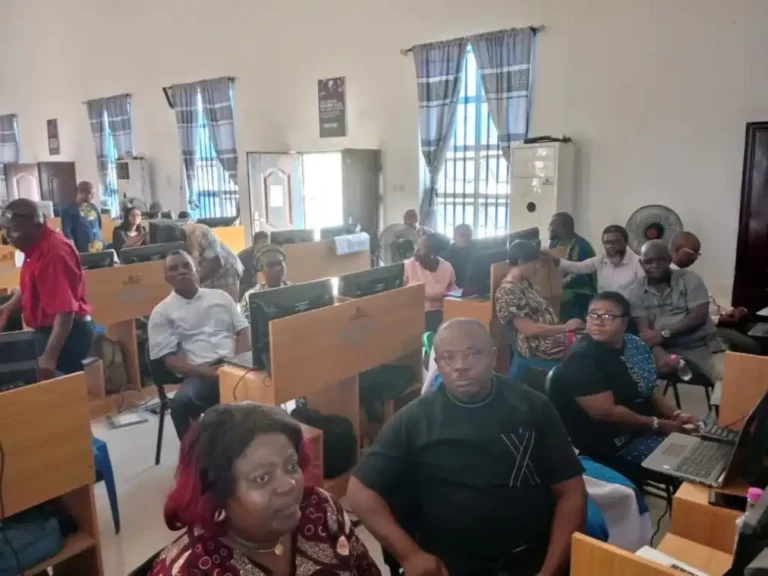
Nnamdi Azikiwe University (UNIZIK) has trained its staff through a two-day Mandatory ICT Skills Enhancement Workshop aimed at improving digital competence across the institution.

The workshop, held on Thursday, 26th and Friday, 27th February, 2026, brought together Departmental ICT Officers, Examination Officers, Heads of Departments (HODs), and Deans of Faculties. It was designed to strengthen their capacity to effectively use the University’s digital platforms and improve academic administration.

The training focused on practical, hands-on skills. Participants were guided on how to upload academic publications to boost the University’s institutional visibility. They were also trained on managing result uploads and moderation processes to ensure accurate student records. Another key area covered was seamless transcript generation, an essential service for graduates and external institutions.

Staff members were further trained on navigating the University portal and the Central Information Referencing and Management System (CIRMS). These systems are critical for handling student and staff data efficiently. The goal was to reduce errors, improve speed, and ensure smoother academic processes.

Declaring the workshop open on behalf of the Vice-Chancellor, Prof. Ugochukwu Bond Stanley Anyaehie, the Director of the Management, Information and Communication Technology Unit (MICTU Software) and Special Adviser to the Vice-Chancellor on ICT, Prof. Ike Onyenwe, explained that the initiative would deepen users’ understanding of the portal and CIRMS. He noted that it would enhance efficiency in uploading results, assigning Examination Officers and ICT Officers, and managing other key academic responsibilities.

Speaking for participants, Prof. Nwachukwu Obiakor commended the initiative and recommended that such training be made periodic. Attendees also praised the interactive sessions and the quick resolution of portal-related concerns.

The successful workshop highlights UNIZIK’s commitment to strengthening staff capacity and leveraging technology to improve academic excellence.

Kebbi to distribute free grains, farm inputs to over 1 million residents

0

Over one million people in Kebbi State are set to benefit from the free distribution of assorted grains and agricultural inputs announced by Governor as part of measures to support residents during the holy month of Ramadan and strengthen food production across the state.

The governor made this known while hosting special advisers and chairmen of boards and parastatals at a Ramadan Iftar held at the Government House in Birnin Kebbi. He disclosed that the distribution exercise would commence immediately and would cover beneficiaries across the state.

According to him, the items earmarked for distribution include rice, maize and millet, alongside key agricultural inputs such as fertilisers, herbicides, power tillers, solar pumps and CNG water pumps. He explained that these items are targeted at supporting both household consumption during Ramadan and boosting farming activities in the dry and wet seasons.

Governor Idris said the initiative reflects his administration’s people-centred approach to governance, especially at a time when many families are facing economic challenges. He stressed that leadership must directly impact the lives of ordinary citizens and ensure that government policies translate into real support for the population.

He noted that each beneficiary would receive at least one item, adding that the programme is structured to cushion the effects of hardship during Ramadan while also accelerating agricultural productivity and strengthening food security in Kebbi State. By combining food distribution with farm inputs, the administration aims to provide immediate relief and promote longer-term sustainability in the agricultural sector.

The governor reiterated his commitment to fulfilling campaign promises and implementing policies that positively affect the majority of residents. He appreciated the support and cooperation of political appointees and other stakeholders, commending them for their loyalty and contributions to the smooth running of government.

During the event, welfare concerns were also raised by the Chairman of the Kebbi State Advisers’ Forum, Alhaji Zayyanu Shehu Sanka, particularly regarding outstanding furniture allowances for some advisers. In response, Governor Idris directed the Secretary to the State Government to ensure that all affected advisers and chairmen of boards and parastatals who are yet to receive their approved furniture allowances are paid promptly.

He further assured that his administration would continue consultations and consolidation efforts to promote inclusive development, pledging that no community would be left behind in the ongoing drive to improve livelihoods and strengthen economic resilience across Kebbi State.

FG to Launch 10,000 Electric Tricycles for Women

The Federal Government has announced plans to launch 10,000 electric tricycles to empower women across Nigeria through sustainable mobility and economic inclusion.

The initiative is being driven by the Federal Ministry of Women Affairs and Social Development under the Green Economy Empowerment 774 (GEE774) programme. It is designed to cover all 774 Local Government Areas (LGAs) in the country, ensuring that women in both urban and rural communities can benefit.

According to the Minister of Women Affairs, Hajiya Imaan Sulaiman-Ibrahim, the programme goes beyond transportation support. She explained that the goal is to create economic opportunities for women while promoting environmentally friendly solutions. “We are not just providing transportation; we are opening doors to economic opportunities. This initiative will create green jobs, foster entrepreneurship, and empower women to fully engage in the economy, leading to greater stability and growth in line with President Bola Ahmed Tinubu’s GCFR Renewed Hope Agenda,” she said.

The tricycles will include 3-wheeler 8-seater electric vehicles for passenger transport and 3-wheeler tricycles with carriage designed to support rice mill and farm-to-market logistics. This means women can use them for commercial transport services or agricultural value chain activities, helping to boost income and productivity at the grassroots level.

The Minister also highlighted the environmental impact of the transport sector, noting that it contributes significantly to carbon emissions. She stated that transitioning to electric mobility is a practical step toward reducing greenhouse gas emissions, improving air quality, and promoting better public health outcomes. By supporting electric transport, the government aims to align economic empowerment with climate action.

A Memorandum of Understanding (MoU) has already been signed to support the rollout of the programme. The Permanent Secretary of the Ministry, Mrs. Nko Asanye Esuabana, signed on behalf of the Ministry, while Sparrow Mobility Limited was represented by Mr. Adeniyi Ologunleko.

The Ministry said the initiative aligns with Nigeria’s Nationally Determined Contributions (NDCs) under the Paris Agreement and supports the country’s target of achieving NetZero emissions by 2060. Officials added that strong partnerships, sustained investment, and community engagement will be key to ensuring long-term impact.

Through the launch of 10,000 electric tricycles, the Federal Government says it is combining women’s empowerment, green innovation, and inclusive growth into one nationwide programme aimed at strengthening local economies and building a more resilient future.

Nigeria, Czech Republic deepen partnership on women empowerment and youth leadership

The Federal Government of Nigeria and the Czech Republic are set to deepen structured cooperation aimed at advancing women’s empowerment, youth leadership, and civil society development.

This direction was highlighted during a meeting between the Minister of Women Affairs and Social Development, Imaan Sulaiman-Ibrahim, and the Czech Ambassador to Nigeria, Tomáš Výprachtický, in Abuja.

The engagement, described as a step forward in bilateral relations, focused on building long-term partnerships that will create more opportunities for Nigerian women and young leaders. Both sides expressed a shared commitment to structured collaboration that goes beyond symbolic engagement to measurable impact.

According to the Minister, discussions explored practical areas of cooperation, including documenting the stories of Nigerian women and girls and elevating the visibility of women in football. She noted that the engagement reflects a common interest in using storytelling, culture, and sports as tools to amplify women’s experiences locally and internationally.

Ambassador Výprachtický, accompanied by Commercial Counsellor Marie Nwanyanwu, presented a portfolio of Czech-supported initiatives across Nigeria. These include leadership mentoring programmes in the Niger Delta, girls’ education projects in Abuja, intergenerational dialogue among women leaders, and the Government’s Cool Czechia programme.

The Czech delegation also included internationally acclaimed documentary photographer Jarmila Štuková, currently in Nigeria working on a documentary cycle focused on resilience and women’s strength.

Both countries reaffirmed their commitment to structured cooperation that advances women’s empowerment, strengthens youth leadership, and supports sustainable civil society development.