Home Blog Page 89

Fidelity Bank launches HerFidelity Apprenticeship Programme 2.0 for women

Fidelity Bank Plc has launched the second edition of its flagship women-empowerment initiative, the HerFidelity Apprenticeship Programme 2.0, designed to equip women with practical, income-generating skills and structured pathways to entrepreneurship.

The lender said on Monday that HAP 2.0 builds on the success of its inaugural edition held in 2023, with improvements aimed at delivering greater impact.

Speaking with journalists at a media chat ahead of the launch, the Divisional Head, Product Development, Fidelity Bank Plc, Osita Ede, explained that the initiative has been strengthened after reviewing feedback from the first edition.

“HerFidelity Apprenticeship Programme 2.0 reflects our commitment to continuous improvement. Having evaluated feedback from the first edition, we have returned with stronger partnerships and deeper mentorship programmes to ensure that women acquire not just skills, but sustainable economic opportunities.

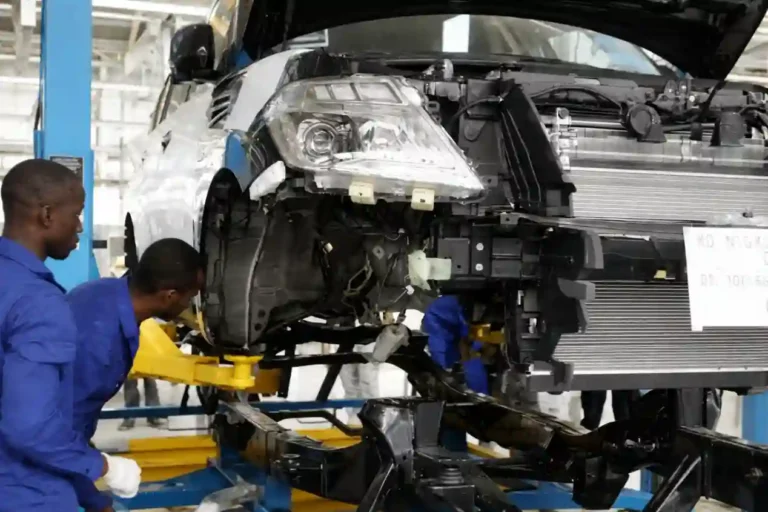
“At the heart of the programme is guided, real-world learning. Participants will undergo intensive apprenticeship training under reputable institutions and industry experts across select fields such as hair styling, shoemaking, auto mechatronics, and interior decoration,” Ede said.

He noted that HerFidelity Apprenticeship Programme 2.0 goes beyond skills acquisition by offering a wide range of business advisory services. These include business and financial literacy training, mentorship support throughout the apprenticeship journey, access to Fidelity Bank’s women-focused and SME financial solutions, as well as guidance on business formalisation and growth strategies.

Further emphasising the bank’s vision, Ede said, “By integrating structured mentorship with entrepreneurial development, Fidelity Bank is positioning women not just as trainees, but as future employers, innovators, and economic contributors within their communities. This aligns with our mandate to help individuals grow, businesses thrive, and economies prosper.”

Fidelity Bank Plc is a full-fledged commercial deposit money bank serving over 10 million customers through digital banking channels, its 255 business offices in Nigeria and its United Kingdom subsidiary, FidBank UK Limited.

Advertisement

Taxpayers Report Seamless Experience on New National Tax ID Portal

Taxpayers across the country have commended the new national Tax ID portal as fiscal reforms continue to gather momentum.

A cross-section of taxpayers who retrieved their new Tax IDs through the portal described the platform as user-friendly and efficient, noting that it allows quick access without complications.

The Tax ID portal, jointly managed by the Joint Revenue Board (JRB) and the Nigeria Revenue Service (NRS), was officially launched on January 1, 2026, as Nigeria’s centralised taxpayer database. The platform enables individuals to obtain a unique 13-digit number using their National Identity Number, while businesses can retrieve theirs using registration numbers issued by the Corporate Affairs Commission and other designated government agencies.

The initiative emerged from efforts to harmonise fragmented taxpayer data across national and subnational systems into a single database. The objective is to improve coordination, strengthen revenue administration, and enhance data security nationwide.

The project forms part of ongoing fiscal and tax reforms implemented by the administration of President Bola Ahmed Tinubu, aimed at modernising Nigeria’s tax system and improving transparency.

Feedback from taxpayers was obtained through a structured questionnaire shared across digital platforms such as Facebook, X, Instagram, and WhatsApp, as well as through telephone interviews. The survey targeted users who had attempted retrieval of their Tax IDs and requested details of their experience using the portal.

According to the JRB Help Desk team that conducted the poll, respondents answered four questions, three closed-ended and one open-ended. Responses were subsequently compiled and analysed to assess overall user satisfaction.

The Head of the Help Desk team, Mr. Effiong Abasifreke, explained the process. He said, “we asked the taxpayers four questions. The questions were, ‘how fast was your tax ID retrieval process?’, ‘was the portal simple and easy to navigate?’, ‘did you find the process convenient?’, and ‘how would you rate the portal from your personal experience?’”

He added, “At the end of the poll, we collated all the responses and analysed them. More than 98 percent of the respondents said they had a seamless experience retrieving their Tax ID.”

Participants included both individual and corporate taxpayers from different parts of the country. Amina Yahaya from Abuja shared her experience, saying, “the process was very seamless. It didn’t take up to 10 seconds after I inputted my NIN details when my Tax ID popped up on the screen. I want to commend JRB because this is seamless. I will tell my friends and colleagues to retrieve their Tax ID.”

Another respondent on X, Adedapo (@_aaadedapo), described the process as “seamless for me.” A taxpayer from Lagos State, Oyedemi Jide, said the portal was “simple and easy to use,” while Tonai R., who completed the questionnaire on WhatsApp, stated, “it was so quick to use, very easy, no inconveniences, awesome”.

Corporate respondents also reported positive feedback. Trinity Music Academy indicated that the retrieval process was very fast and convenient, noting that the experience “was amazing.” Succinct Shortlet stated that “the platform was convenient and had a fast-loading time.”

Speaking on the nationwide rollout of Tax ID retrieval, the Executive Secretary of the JRB, Olusegun Adesokan, urged taxpayers who have not yet retrieved their Tax IDs to do so through the official portal.

He stated that the platform was designed as a self-service system to ensure seamless usage, adding that it possesses strong data protection safeguards in compliance with regulations of the Nigerian Data Protection Commission.

Mr. Adesokan also addressed concerns that had circulated before the portal’s launch. He commended taxpayers who had already obtained their Tax IDs and dismissed initial erroneous claims suggesting that financial institutions would enable arbitrary deductions from bank accounts.

He said, “I commend patriotic taxpayers who stood in solidarity with the government on this tax reforms. I thank every taxpayer who was not swayed by the negative propaganda against the reform and the Tax ID.”

He continued, “Now, it is obvious that the speculations that monies will be deducted arbitrarily from people’s bank account from 1st January 2026, was unfounded. It is also obvious that the rumour about automatic taxation of people’s money once they get a Tax ID is also false.”

“Let me reiterate that the tax reforms were well-conceived and they are pro-poor and pro-growth. The reforms have provided a lot of incentives for low-income earners and all categories of taxpayers and businesses”, he stated.

He further noted that implementation of the reforms has begun at both national and subnational levels. According to him, the JRB, alongside partner agencies, remains optimistic about smooth execution and called for continued public cooperation as the reforms progress nationwide.

Grant Writing Training for NGOs and CSOs in Delta State

0

Applications are now open for a Grant Funding Workshop designed for founders of NGOs and representatives of CSOs in Delta State. This practical masterclass will equip participants with the resource mobilization skills needed to access foreign grants, strengthen their fundraising strategy, and expand their impact. It also offers guidance on attending fully funded international conferences where organizations can initiate multilateral partnerships and contribute to meaningful policy reforms.

If you are ready to unlock international funding opportunities for your NGO or CBO, this training is for you. Participants will learn how to apply successfully for grants, gain clarity in fundraising processes, and position their organizations to attract foreign support.

The Grant Writing Masterclass for NGOs and CBOs will hold on March 18th and 26th, 2026. Participation is 100 percent free.

Do not miss this opportunity to scale your mission and strengthen your organization’s impact.

Register here: https://docs.google.com/forms/d/e/1FAIpQLSdZ96awildjrbkMUbwgFvA0vjVHqXYJ3XYOdo70f0I0H2Qrpg/viewform

FarmerMoni Opens ₦300,000 Interest-Free Loan Applications for Farmers

0

Applications are now open for Farmer Moni, a Federal Government initiative designed to support smallholder farmers in all States. Farmers who want to expand their agribusiness now have the opportunity to apply through the official portal recently launched by the Federal Ministry of Humanitarian Affairs and Poverty Reduction in partnership with the National Social Investment Programme Agency.

FarmerMoni offers interest-free loans of up to ₦300,000 to eligible smallholder farmers. The loan is aimed at helping farmers purchase essential inputs such as seeds, fertilizers, farm equipment, and other materials needed to improve productivity. The programme is structured to strengthen small-scale farmers, boost food production, and support long-term growth in the agricultural sector.

The scheme operates under the Government Enterprise and Empowerment Programme (GEEP), a flagship initiative of the National Social Investment Programme Agency (NSIPA). GEEP promotes financial inclusion and economic empowerment by providing zero-interest, collateral-free loans to farmers, petty traders, artisans, and market women across Nigeria.

Successful applicants will benefit from access to loans of up to ₦300,000, a three-month moratorium before repayment begins, and no collateral requirements. The programme also gives special consideration to women, youth, and vulnerable groups.

Farmers interested in applying can submit their applications at https://geep.nsipa.gov.ng/.

Bauchi Civil Service Shortlisted Candidates to Receive Batch Notifications

0

The Bauchi State Government, through the Office of the Head of Civil Service, has issued an update on the ongoing State Civil Service Recruitment exercise.

Applicants are advised to regularly check their email inboxes and SMS messages for important information regarding the next stage of the recruitment process. Notifications will be sent in batches, so candidates should remain patient as updates are rolled out gradually.

Not all applicants will be contacted at the same time. Only shortlisted candidates will receive official communication with details and instructions for the next phase of the recruitment exercise.

NADDC: Nigeria Spends N1tn Annually on Vehicle Imports

0

The Director-General of the National Automotive Design and Development Council, NADDC, Joseph Osanipin, has revealed that Nigeria spends over N1 trillion annually on vehicle imports, describing the figure as a major drain on the nation’s economy.

Osanipin disclosed this in Abuja during a one-day capacity-building training for journalists. He said the country could unlock greater economic benefits through the local assembly and production of vehicles, noting that Nigeria has all the resources required to build a strong and viable automotive industry.

Speaking on the theme, “Strengthening Sectoral Communication and Legislative Reporting in Nigeria’s Automotive Industry Development,” the NADDC Director-General urged the media to focus on reports that promote the patronage of Made-in-Nigeria products. He called for knowledge-based and accurate reporting, stressing that the Council is taking deliberate steps to promote the indigenous automotive sector.

He stated: “We want the media to change the narrative of negative stories about Nigeria.”

Osanipin reaffirmed NADDC’s commitment to not only developing the automotive industry but also facilitating technology transfer. According to him, this will help strengthen Nigeria’s foreign exchange position and improve its global competitiveness. He also called for collective action among Nigerians to enable the country dominate the African automotive market, adding that synergy among stakeholders and sustained economic reforms remain critical to achieving that goal.

Also speaking at the workshop, the Spokesperson of the House of Representatives, Hon. Akin Rotimi, emphasised the readiness of the 10th House of Representatives to strengthen the economy through progressive reforms and effective legislative oversight. He expressed the determination of the House, under the leadership of Speaker Abbas, to promote capacity building among relevant stakeholders for national development.

Rotimi assured journalists of continued legislative support in the discharge of their duties. He described media practitioners as critical partners in nation-building and stressed the urgent need to equip them with up-to-date knowledge to enhance professional reporting.

Earlier in his welcome address, the Chief Executive Officer of Tattito Leadership and Professional Development Academy, TLPDA, Sheni Kasamito, said the programme was designed to equip journalists with essential knowledge of the automotive sector to ensure accurate reportage. He noted that accuracy in reporting is vital to promoting economic and political stability, especially on issues relating to automotive design and development.

In her address, the Chairperson of the Nigeria Union of Journalists, NUJ, FCT Council, Grace Ike, explained that the workshop was aimed at strengthening accurate reporting in order to foster integrity and transparency. She commended the leadership of the 10th House of Representatives for organising the capacity-building workshop for media practitioners.

In his remarks, the Chairman of the House of Representatives Press Corps, Gboyega Onadiran, called for the promotion of Nigerian content as a catalyst for economic growth and financial stability.

Responding to questions from journalists, Director of Media and Publicity, Susan Bisong Taiwo, urged the media to support and promote the Bill passed by the National Assembly and currently awaiting presidential assent. She stated that once assented to by President Bola Ahmed Tinubu, the proposed legislation would make it compulsory for Nigeria to halt the importation of certain categories of vehicles in order to stimulate local production.

NADDC Trains 15,000 Technicians to Boost Nigeria’s Automotive Industry

0

The National Automotive Design and Development Council (NADDC) has trained more than 15,000 technicians across Nigeria to strengthen technical capacity, improve after-sales services and promote long-term sustainability in the country’s automotive industry.

Director-General of the Council, Joseph Osanipin, disclosed this in Abuja during a capacity-building programme for members of the House of Representatives Press Corps. The programme was organised in collaboration with the House Committee on Media and Public Affairs.

Osanipin said the large-scale training initiative forms a central part of Nigeria’s automotive development strategy. According to him, the focus is on building the skilled workforce required to support local vehicle assembly, component production and maintenance services nationwide.

He explained that while policy frameworks such as the Nigeria Automotive Industry Development Plan provide strategic direction, industrial sustainability depends largely on human capital development.

“The sustainability of any automotive ecosystem depends not only on assembly plants but also on the availability of skilled technicians who can maintain and service vehicles efficiently,” he said.

Osanipin noted that strengthening local technical expertise would reduce reliance on foreign support services, boost consumer confidence and improve the competitiveness of locally assembled vehicles.

He added that the Council’s broader localisation programme is designed to reduce Nigeria’s dependence on imported vehicles and spare parts by encouraging domestic production of selected components.

Chairman of the House Committee on Media and Public Affairs, Akintunde Rotimi, said the automotive training engagement reflects the House of Representatives’ wider reform agenda to promote professionalism within its parliamentary media ecosystem.

Rotimi conveyed the goodwill of the Speaker of the House of Representatives, Tajudeen Abbas, and members of the 10th Assembly. He stated that effective legislative work must be supported by informed public communication.

“Our legislative responsibility does not end with lawmaking. It is completed when citizens understand the purpose, impact and long-term benefits of policy decisions,” he said.

He stressed that industrial policies, including those guiding the automotive sector, require clear interpretation and contextual reporting to ensure public understanding and support.

Rotimi described the automotive sector as sitting at the intersection of industrialisation, job creation, local content development, technology transfer and economic diversification. He said these priorities align closely with the House’s broader economic growth agenda.

Similarly, Chairman of the Nigeria Union of Journalists (NUJ), FCT Council, Grace Ike, described the engagement as a strategic step toward strengthening policy-focused journalism.

“Informed journalism is vital to accountability, investment attraction and national development,” she said.

Ike urged legislative reporters to translate complex automotive policies into accessible stories that can shape public discourse and attract investment. She also encouraged participants to deepen investigative reporting and scrutinise sectoral policy frameworks more rigorously.

Chairman of the House of Representatives Press Corps, Gboyega Onadiran, described local automotive production as an economic necessity rather than a policy aspiration.

He warned that continued reliance on imported vehicles exerts pressure on foreign exchange reserves and weakens domestic value chains.

According to him, strengthening local assembly and component manufacturing would help conserve foreign exchange, create technical and engineering jobs, and stimulate growth in supporting industries such as steel, rubber, plastics and glass production.

Onadiran urged Nigerians to consciously patronise locally assembled vehicles, noting that consumer choices directly affect industrial growth and economic stability.

Osanipin reaffirmed that sustained investment in skills development, including the training of over 15,000 technicians, would position Nigeria as a competitive automotive hub in Africa, especially under continental trade frameworks that reward strong local content.

The event highlighted a shared view among regulators, lawmakers and media stakeholders that technical capacity development, informed legislative reporting and consistent policy implementation remain essential to expanding Nigeria’s automotive footprint and achieving long-term industrial resilience.

FG Backs 200,000-Teacher 2026 Let There Be Teachers Conference

0

The Federal Government has pledged full support for Guinness World Record holder, Oluwaseyi Anifowoshle, in his bid to convene 200,000 teachers across the country for the 2026 “Let There Be Teachers” Conference.

Minister of Education, Olatunji Alausa, gave the assurance during a courtesy visit and presentation of plaques ahead of the 2026 conference. He described the initiative as a positive spotlight on Nigeria and a bold step towards repositioning the teaching profession.

Alausa congratulated Anifowoshle for projecting Nigeria in a positive light through his record-breaking teachers’ conference. He said citizens must learn to speak well of their country.

“When you devalue your country, you devalue yourself,” he said, urging Nigerians to highlight the nation’s strengths and ongoing reforms.

He also commended President Bola Ahmed Tinubu for what he described as transformative leadership. According to the Minister, the administration’s reforms in the education sector are designed to secure a better future for Nigerian children.

Improving the quality of teachers, he noted, remains central to the Federal Government’s education reform agenda.

“If we want the highest quality of education for our children, we must have the highest quality of teachers,” Alausa said, stressing that quality assurance is one of the ministry’s six priority areas.

He disclosed that the government has launched a digital platform for continuous teacher professional development. The platform is accessible to both public and private school teachers nationwide and has been zero-rated, meaning teachers will not pay for data while accessing training materials.

Alausa further announced that from 2026, the Federal Government will begin paying the Teachers Registration Council of Nigeria (TRCN) license fees for all public school teachers. He described the move as part of broader efforts to enhance teacher welfare and professional recognition.

The Minister also highlighted the recently held National Teachers’ Summit, where outstanding educators were rewarded with substantial prizes. These included a ₦55 million cash award, a house in Ogun State and a car for the national winner.

He said the summit will now become an annual event to ensure teachers are respected, rewarded and recognized.

Describing teaching as “the best profession in any society,” Alausa stated that education remains the bedrock of national development and teachers are the drivers of that foundation.

Minister of State for Education, Professor Suwaiba Said Ahmed, also congratulated Anifowoshle on his landmark achievement and advocacy for better welfare of teachers. She reaffirmed the commitment of the Ministry to give all necessary support to ensure the success of the proposed conference.

Earlier, Oluwaseyi Anifowoshle said his team visited the ministry to seek official endorsement and strategic partnership for the 2026 “Let There Be Teachers Conference,” which aims to host 200,000 teachers nationwide.

He outlined areas of requested collaboration, including alignment of conference content with federal education reform priorities, ministry representation at the event, institutional support for nationwide mobilisation, and integration of the National Teachers’ Pledge into broader reform communication efforts.

Anifowoshle recounted how a teacher transformed his life when he struggled with English in primary school. He said that experience inspired him to pursue a career in teaching and education advocacy.

He explained that the “Let There Be Teachers” movement was established to drive global advocacy for teachers to be respected, rewarded and recognized. According to him, the profession produces all other professions in society.

In 2025, he set a Guinness World Record after convening over 15,000 teachers in partnership with the Lagos State Government. He became the first Nigerian teacher to host the largest gathering of teachers globally.

Building on that achievement, he said the 2026 edition, themed “From Record to Reform,” aims to align with the Renewed Hope Agenda of the Tinubu administration by focusing on honour, opportunities, professional development and empowerment for teachers.

The proposed conference plans to gather at least 20,000 teachers in Abuja and a minimum of 5,000 teachers in each of the 36 states, bringing the total to 200,000 participants nationwide.

Anifowoshle expressed confidence that with the Federal Government’s backing, the conference would not only break new ground but also advance meaningful reforms in Nigeria’s education sector.

RCCG Launches Free Digital Skills Programme for 8,400 Beneficiaries

0

The Redeemed Christian Church of God (RCCG), Continent 3, has unveiled a free digital skills empowerment programme targeting 8,400 beneficiaries to mark the 84th birthday of its General Overseer, Enoch Adeboye.

The initiative is scheduled to commence on March 1, 2026, and is designed to tackle unemployment and bridge the digital divide, two major challenges that continue to limit economic opportunities for many young Nigerians.

In a statement issued in Lagos, the RCCG Continent 3 Overseer, Pastor Johnson Funsho Odesola, said the programme forms part of several activities lined up to commemorate Adeboye’s birthday. He noted that the initiative reflects the General Overseer’s long-standing emphasis on education, youth development, and national transformation.

“By investing in digital capacity building, RCCG Continent 3 seeks to honour the General Overseer’s legacy of raising empowered, purpose-driven individuals who positively impact society,” Odesola said.

He explained that beneficiaries will receive training in video editing, graphic design, digital marketing, social media management, animation, content creation, and monetisation of digital skills. These areas, he said, are critical for employability and entrepreneurship in Nigeria’s fast-growing digital economy.

“This is not merely a birthday celebration — it is a strategic investment in the future of our nation,” he added. “By empowering 8,400 individuals with digital skills, we are creating pathways out of poverty and positioning Nigerians to compete in the global digital economy.”

Chairman of the Board of Trustees of Love Transformation Academy, Pastor Olalekan Adebekun, disclosed that RCCG parishes across regions, provinces, and zones in Continent 3 will serve as study centres. Training sessions will be delivered via Zoom, allowing participants to learn from their local communities.

According to him, the structure will enable individuals who do not have personal internet access or suitable devices to benefit by gathering at designated church facilities. He also said the centres will provide mentorship, follow-up, and integration opportunities for participants, including non-church members.

Adebekun urged youths, students, job seekers, entrepreneurs, and members of the general public to take advantage of the programme, which organisers say will foster employment, support freelance careers, and nurture a new generation of digital entrepreneurs and content creators.

Love Transformation Academy, the empowerment arm of RCCG Love Assembly, Lagos Province 1, is coordinating the programme in partnership with Faith Cometh Multimedia Consultants, combining church infrastructure with technical expertise to promote digital inclusion and national development.

Nigeria activates Horizon Europe deal to boost research and industrial growth

0

The Federal Government has activated the Nigeria–European Union bilateral framework under Horizon Europe as part of a strategy to unlock research excellence, accelerate technology transfer and drive industrial growth across key sectors of the Nigerian economy.

The Honourable Minister of Innovation, Science and Technology, Dr. Tochukwu Udeh, announced the development during a high-level courtesy visit by a delegation of the European Union in Nigeria led by the EU Ambassador to Nigeria, Gautier Mignot, in Abuja.

Dr. Udeh described the activation of the Horizon Europe agreement as a strategic milestone in Nigeria’s economic diversification agenda. He explained that the framework establishes a structured and permanent pathway for joint research initiatives, academic exchange, collaborative innovation and infrastructure development aimed at strengthening Nigeria’s national innovation ecosystem.

According to the Minister, Innovation, Science and Technology (STI) remain the backbone of Nigeria’s long-term development strategy and a catalyst for transitioning from a resource-dependent economy to a globally competitive, knowledge-driven industrial economy.

“Today marks a defining moment in Nigeria’s innovation journey. Through Horizon Europe, we are opening new frontiers for collaboration in digital transformation, renewable energy, health sciences, agriculture, climate innovation and emerging technologies. This partnership is designed to convert research outcomes into scalable industrial solutions that will power national growth,” Dr. Udeh stated.

He further emphasized that the agreement will significantly expand access for Nigerian researchers, universities, start-ups and innovation hubs to participate in joint programmes and benefit from collaborative funding mechanisms under Horizon Europe. He noted that Nigeria’s expanding digital economy, dynamic research institutions and vibrant youth population position the country to maximize the opportunities embedded in the partnership.

In his remarks, the Permanent Secretary of the Ministry, Mr. Philip Ndiomu Ebiogeh, underscored the central role of research and innovation in Nigeria’s industrialization drive. He stressed that sustainable economic diversification can only be achieved through deliberate investment in science, technology development and commercialization of research outputs.

“This cooperation with the European Union strengthens Nigeria’s capacity to undertake joint research in areas of mutual interest such as climate change, health systems strengthening, digital technologies and sustainable agriculture, while building the institutional frameworks required for industrial competitiveness,” he said.

Speaking earlier, Ambassador Gautier Mignot described the engagement as timely and strategic, noting that science, technology and innovation are critical pillars of modern nation-building. He commended Nigeria’s youthful energy and innovative potential, expressing confidence that the Horizon Europe activation would accelerate the legal and operational processes necessary to implement the bilateral agreement effectively.

Also speaking, the National Coordinator of the Inter-Ministerial Committee on Research and Innovation, Mr. Tope Toogun, noted that Nigeria is now strategically positioned to leverage international research partnerships to strengthen its national innovation system and enhance global competitiveness.

In her presentation, the Head of International Cooperation-Asia, Pacific, Africa and Middle East, European Commission/DG Research and Innovation, Ms Nienke Buisma, said Horizon Europe is the EU funding programme for research and innovation and serves as a framework for collaboration that prioritizes areas of mutual interest including climate change, health, digital technologies and sustainable agriculture.

The Federal Ministry of Innovation, Science and Technology reaffirmed its commitment to ensuring that the Horizon Europe partnership translates into measurable outcomes, including increased research funding inflows, stronger industry–academia linkages, enhanced technology transfer and sustainable industrial growth that will create jobs and improve the quality of life for Nigerians.