Home Blog Page 92

FG Records Rice, Cassava Production Gains in Niger State

0

The Federal Government, through the International Fund for Agricultural Development (IFAD) Value Chain Development Programme (VCDP), has recorded significant progress in rice and cassava production in Niger State.

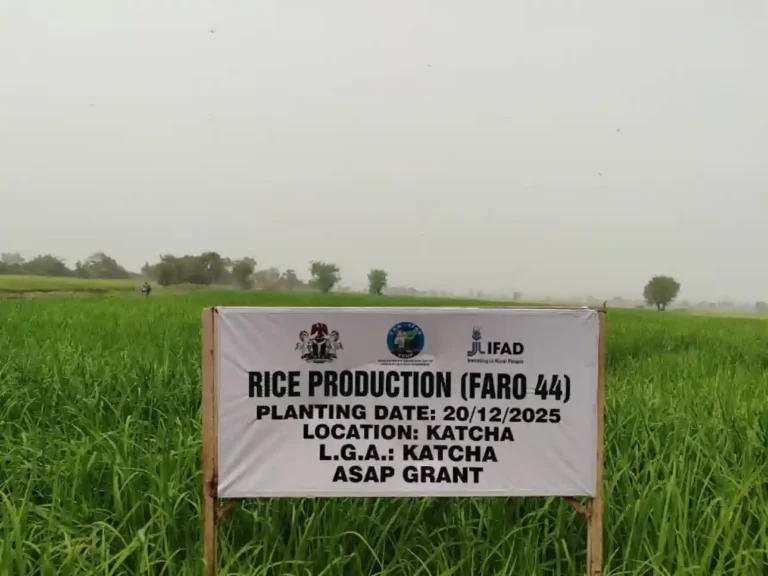
As reported by Nigeria Startup News in Katcha on Saturday, the gains follow the rollout of the Adaptation for Smallholder Agriculture Programme (ASAP) grant. A field tour by VCDP officials to intervention sites in Katcha and Bida Local Government Areas showed expanded farm sizes, bumper harvests and growing waste-to-wealth enterprises among beneficiaries of the climate-resilient initiative.

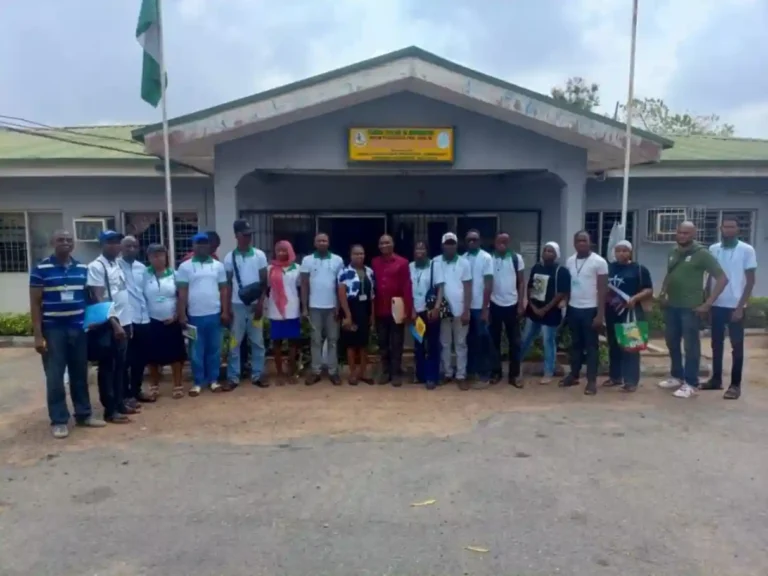
The tour included visits to the Bangi Farmers Cooperative and Emiworo community in Katcha, as well as the Dabarako Cassava Processing Centre in Bida. It was aimed at assessing the impact of improved rice seeds and climate-smart technologies provided under the ASAP grant.

ASAP is a global initiative of IFAD, integrated into Nigeria’s VCDP framework. It is designed to channel climate finance directly to smallholder farmers and strengthen resilience in food systems.

In Niger State, the programme covers Bida, Borgu, Edati, Katcha, Mokwa and Wushishi local government areas. It supports producers, processors, marketers, women cooperatives and youth groups involved in the rice and cassava value chains.

Hajiya Hadizat Isah, State Programme Coordinator of VCDP, said the grant began in March 2025 in Niger and Kogi, two of the nine states participating in VCDP nationwide.

She said 18,710 beneficiaries were recorded in Niger out of 24,000 farmers supported across the two states. In Katcha LGA alone, 1,410 beneficiaries are cultivating about 500 hectares under the scheme.

Isah explained that the core objective of ASAP is to improve climate resilience, promote sustainable production systems and enhance waste management through innovative waste-to-wealth technologies.

She added that farmers received improved and climate-resilient rice seeds, as well as high-yield cassava stems including Vitamin A varieties. Processors were also equipped to convert rice husks and cassava peels into useful products.

At Emiworo community in Katcha, members of the Emiworo Women Cooperative demonstrated briquettes produced from rice husks. The project is aimed at reducing waste, curbing deforestation and creating alternative income sources.

Similarly, cassava processors at the Dabarako Processing Centre in Bida LGA showcased equipment that converts cassava peels into animal feed. The initiative supports livestock production and reduces environmental pollution.

Halima Ibrahim, a beneficiary from Emiworo community, said the training on rice husk conversion had improved her livelihood. She said proceeds from briquette sales now support her household income.

Ahmed Mohammed, a rice farmer in Katcha, expressed appreciation for the improved seeds, noting that farmers are already recording bumper harvests.

“Our markets are full of paddy. We can now sponsor our children in schools without stress,” he said.

Nathaniel Gana, an Extension Agent in Katcha LGA, said the programme ensured proper distribution and monitoring of equipment. He added that farmers were trained in Good Agronomic Practices and climate-smart agriculture.

Beyond seed distribution, the intervention included construction of bunds for water retention, erosion control through planting grasses and shrubs, drilling of tube wells and deployment of 1,200 solar-powered irrigation pumps to support year-round farming.

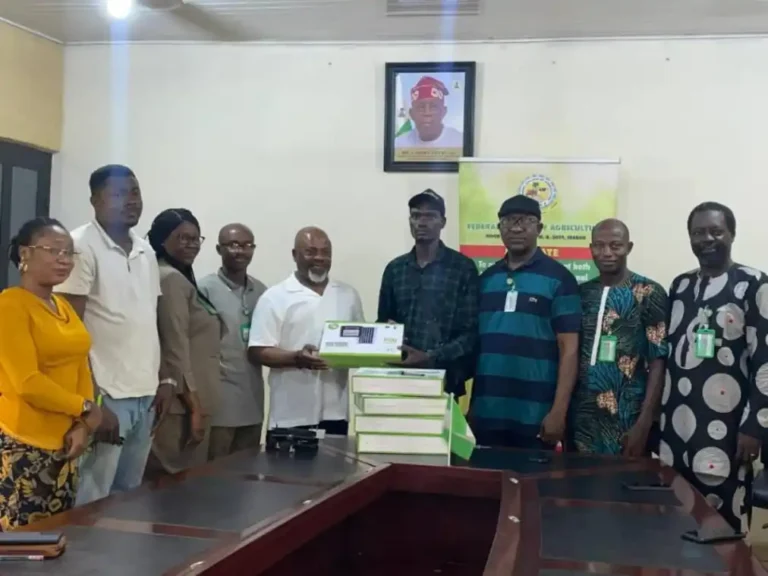
Other equipment distributed includes 36 cassava peel conversion machines, 50 rice husk briquette machines and 110 power tillers for bund construction. Laptops and mobile phones were also provided for climate information dissemination, alongside training on digital extension services.


Advertisement

HER Advantage Mentorship Program opens for women in Cross River

The HER Advantage Mentorship Program (From Experience to Influence) is now open for applications. The initiative is presented by the Office of the Speaker, Cross River State Youth Parliament (3rd Assembly), in collaboration with the Office of the Special Assistant on Climate Change and Green Economy, Calabar Municipal Government, in commemoration of International Women’s Day 2026.

The HER Advantage Mentorship Program is a three-month mentorship experience designed to connect accomplished female leaders with ambitious young women and girls across Cross River State. Organized by the Speaker of the Cross River State Youth Parliament in partnership with the Office of the Special Assistant on Climate Change and Green Economy, Calabar Municipal Government, the program aims to inspire growth, leadership, and confidence.

With the theme “From Experience to Influence,” the initiative will pair selected participants with distinguished women across sectors such as banking and finance, medicine and nursing, law, business and entrepreneurship, politics and governance, media and communications, peace and conflict resolution, climate and sustainable development, and other strategic industries. Participants will gain practical guidance, career insights, and personal development support throughout the program.

The program is open to young women and girls aged 16 years and above who reside in Cross River State. Applications open on February 21, 2026, and close on March 5, 2026.

Interested applicants are encouraged to apply by visiting https://forms.gle/bLC9t8pMiqYx1wcf9 and submitting their application before the deadline.

GWI to train 1,000 students in AI and mental health resilience

0

Gracy World Initiative Foundation (GWI) is set to organise “Project 1, 000,” a training seminar focused on Artificial Intelligence (AI) productivity skills and mental health resilience for students. The programme will hold on March 20, 2026 in Ikorodu, Lagos.

The Founder, Oreoluwa Grace Filani, said the initiative is designed to prepare young people for a fast-changing world shaped by technology and emotional challenges. According to her, “Project 1000 is about ensuring that the next generation isn’t surviving the system, but reforming it through technology and emotional intelligence.”

She explained that the seminar will equip 1,000 young scholars with practical AI-productivity skills alongside structured mental health support. “The training will transform the lives of 1,000 young scholars by empowering them with value AI-productivity skills, added with mental health support, thus proving to these students that their dreams are valid despite their circumstances and that no limitation can stop a focused mind,” Filani stated.

She added that the initiative aims to elevate Ikorodu’s profile. “The initiative will ultimately place Ikorodu on a global visibility scale, rewriting the local narrative from one of systemic vulnerability to a blueprint for world-class tech and innovation,” she said.

Filani further noted that GWI demonstrates that impactful social change can be achieved through strategic partnerships and a commitment to achieve the UN Sustainable Development Goal (SDG 4 and 17).

UNILAG, UWE Bristol to Advance TNE Entrepreneurship Education

0

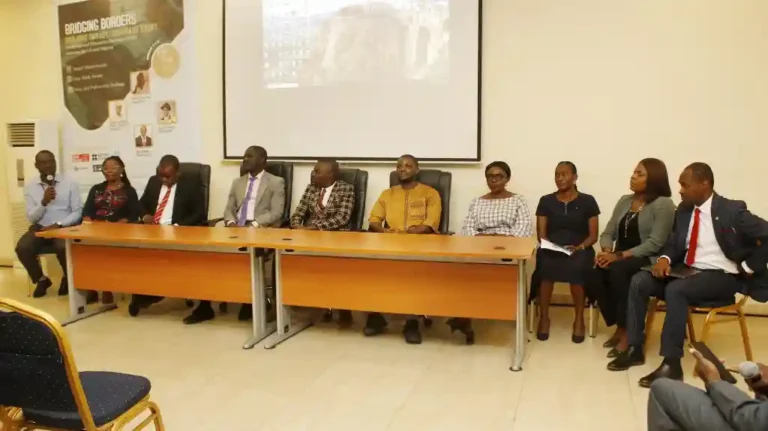
The University of Lagos (UNILAG), in partnership with the University of the West of England (UWE Bristol), Covenant University, and the University of Ibadan, convened a Project Impact Showcase for the Bridging Borders Project at the Arthur Mbanefo Digital Research Centre, UNILAG, Akoka, on Wednesday, February 18, 2026.

The project, themed Transnational Education Pathways between the UK and Nigeria, was funded by the British Council and aimed at strengthening entrepreneurship education through sustainable international collaboration.

Speaking at the event, the Project Lead, Prof. Paschal Anosike of UWE Bristol, gave an overview of the initiative and highlighted its mission to enhance institutional capacity for effective Entrepreneurship Education (EE) delivery in Nigerian universities. He explained that the project was designed to establish transnational education (TNE) partnerships anchored on joint and dual award models, thereby expanding access to quality higher education across borders.

According to him, the approach allows institutions to share expertise while creating clear academic pathways for students. He noted that the collaboration focused on building systems that would continue to function even after the initial funding phase.

Between April and June 2025, twelve online training workshops were delivered via Microsoft Teams. A total of one hundred and seven participants from UNILAG, University of Ibadan, and Covenant University took part in the sessions. The workshops enabled participants to review and update entrepreneurship curricula in line with global best practices, while maintaining local relevance and practical impact.

A major milestone of the project was the signing of Memoranda of Understanding (MoUs) between UWE Bristol and the three Nigerian partner universities. These agreements formalized commitments to joint curriculum development, co-delivery of programmes, and clearly defined student progression pathways. The MoUs also laid a strong foundation for sustained TNE collaboration beyond the project’s lifecycle.

In his remarks, the Director of Office of International Relations, Partnerships and Prospects, UNILAG, Prof. Ismail Ibraheem, described entrepreneurship as “a philosophy, culture, and way of life that must be embraced.” He commended Prof. Anosike for bringing together three leading Nigerian universities on a shared platform to advance entrepreneurship education.

Also speaking, the Director of Centre for Entrepreneurship and Innovation, University of Ibadan, Prof. Sherifat Abaoba, shared measurable outcomes from the training. Despite her academic background in Chemistry, she said the programme had significantly enhanced her capacity in entrepreneurship education. She also outlined future plans to further strengthen EE delivery at her institution using the knowledge gained from the workshops.

Highlighting the impact at Covenant University, Dr. Isaac Akinwumi of the Department of Civil Engineering emphasized the importance of developing joint short courses and providing seed funding for student start-ups. He also stressed the need to expand industry partnerships in order to deepen entrepreneurial learning and make it more practical for students.

The event featured a panel discussion with participants from the three universities, who reflected on their experiences during the training sessions and shared lessons learned. There was also a goodwill message from Mr. Daniel Emanahor, Head of Higher Education at the British Council. He reaffirmed the Council’s commitment to equitable and mutually beneficial partnerships in transnational education and highlighted plans to further advance entrepreneurship education through innovative toolkits designed to empower students.

The Bridging Borders Project Impact Showcase highlighted the role of transnational collaboration in shaping the future of entrepreneurship education in Nigeria, focusing on innovation, capacity building, and expanded access to higher education opportunities.

NGA to train 50,000 artists in AI through National Creatives AI Media Toolkit

0

The Director General of the National Gallery of Art (NGA), Ahmed Sodangi, has unveiled an initiative aimed at empowering 50,000 young visual artists through specialised training focused on artificial intelligence (AI)-based innovations.

The programme is designed to equip artists with the skills needed to blend modern technology with their creative work, helping them stay relevant in a fast-changing digital world. According to the NGA, the training will cover both the structural aspects of artistic production and hands-on experience with AI tools that can enhance creative expression.

Participants will also have access to financial support through the Social Good Fund, a platform created to support viable projects and encourage sustainable career growth for creatives.

Sodangi made the announcement during the official launch of the National Creatives AI Media Toolkit, a joint initiative between the NGA and AIDOS Studios. The event was held at the SGF Innovative Hub in Mabushi, Abuja.

He described the launch as a major step in bringing technology and culture together. He said the initiative would empower artists to tell their unique stories, protect their artistic identity, and connect with audiences in more meaningful ways.

Sodangi observed, “the creative industry in Nigeria has been flourishing for years, driven by the talent and passion of its people, often with minimal government intervention. However, the growth of this industry has reached a point where its influence is undeniable on the global stage. The government must partner with industry players. The Social Good Fund is an established framework that ensures business viability and access to funding for creative endeavours.”

The NGA stated that by providing advanced tools and structured support, the initiative aims to help creatives and media professionals build strong and sustainable careers. It also seeks to merge artificial intelligence with artistic insight to strengthen the future of the arts sector.

Chief Executive Officer of AIDOS CREATIONS, Pamela Williams, explained that the project focuses on preservation, empowerment, and improving Nigeria’s position globally. She said the initiative will support creativity, protect culture, and strengthen the narrative around Nigerian stories.

She added that improving communication and distribution channels for creative content is key to growing the creative economy.

Williams said, “Nigeria is abundant in talent, expression, and imagination. Our contributions to art, film, media, and digital content significantly impact global conversations. However, even the most compelling creative work needs effective communication, positioning, and sustainable support to make a lasting impression. This is precisely the gap the National Creatives AI Media Toolkit seeks to fill as we take intentional steps toward establishing Nigeria as a global leader in AI-enabled creative infrastructure.”

Global Cluster Launches 37 Million Digital Literacy SparkHubs Initiative

0

Global Cluster has reaffirmed its commitment to ensuring that youths are digitally inclined through its SparkHub programmes, targeting about 100 million Nigerians.

Speaking at the mega launch of the 37 million digital literacy and SparkHubs initiative, Global Cluster President, Dr. Adekunle Azeez Badmus, described the project as a unique movement to reshape Nigeria and position Africa for global competitiveness.

He said the organisation is working towards achieving one billion digitally literate people across Africa, with Nigeria expected to account for 37 million beneficiaries, approximately one million people per state starting with Lagos.

According to him, digital knowledge must now start early. He noted that children as young as six years old, under parental supervision, should be guided on responsible and productive digital engagement.

Badmus explained that the SparkHubs, a digital community platform designed to combine social interaction with knowledge sharing, entrepreneurship and professional networking, will allow users to learn, connect, earn and build communities. He said the platform will promote inclusivity, moral values and a sense of belonging regardless of socio-economic background.

He added that the programme aims to reach at least 100 million Nigerians within the next five years. He expressed confidence that a developed Nigeria is achievable through collective action and continuous learning.

Badmus also disclosed that Global Clusters, in partnership with organisations in the United States, plans to distribute free educational books, including creative thinking materials, to millions of Nigerians.

Outlining the organisation’s weekly engagement schedule, he said Mondays will focus on critical and creative thinking development, while Tuesdays will centre on empathy, compassion and values in nation building.

He said Wednesdays will promote kindness and environmental responsibility, while Thursdays will focus on agriculture, real estate, export opportunities and business networking. Saturdays will address security awareness and knowledge sharing, while Sundays will focus on community and people-to-people engagement.

Renowned Mind Surgery expert and CEO of Mastermind Specialist, Dr. Michelle Bacote-Ukoh, called on Nigerians and Africans to embrace their identity, invest locally and reject negative narratives about the continent. She described Nigerians as resource-rich and capable of driving national growth, urging citizens abroad to return home.

President and Chief Executive Officer of Amos International Consultancy Services, Dr. Amos Fayem, urged Nigerian youths to prepare for what he described as a “new world” driven by digital innovation and relevance.

FG launches programme to raise yam yield to 30 Metric Tonnes per Hectare

0

The Nigerian government has unveiled the Ramping Up Programme to increase national yam production yield from 10 metric tonnes to 30 metric tonnes per hectare as part of efforts to strengthen food security and boost farmer incomes across the country.

The programme forms part of the Renewed Hope Agenda’s broader agricultural transformation drive designed to address an over 50 million metric tonnes national supply deficit. It was launched during the National Yam Advocacy Summit organized by the International Institute of Tropical Agriculture (IITA) in collaboration with the Federal Ministry of Agriculture and Food Security (FMAFS) in Abuja.

Speaking at the event, the Minister of State for Agriculture and Food Security, Aliyu Sabi Abdullahi, said the ministry’s Ramping Up Programme is anchored on three strategic pillars. These include increasing the total land area under yam cultivation, raising the current yield from 10 metric tonnes per hectare to 30 metric tonnes per hectare, and reducing post-harvest losses from 40 per cent to 25 per cent by the end of 2027.

He explained that, “The programme adopts global best practices, leveraging verified data, realistic projections, state-level comparative advantage, mechanization, cluster-based farming, post-harvest loss reduction, and market integration.

“A key innovation is the categorization of staple crops into tiers based on national spread, consumption patterns, and strategic importance. Yam is officially classified as a Tier-1 crop, with nationwide demand and consumption, confirming its status as a priority crop central to food security and economic growth.”

Abdullahi said that, “By achieving these targets, we aim to close the national demand gap, enhance farmer incomes, and position Nigeria to capture a fair share of the global yam market. With the current national productivity figure of 10 metric tonnes per hectare, Nigeria produces 67.2 million metric tonnes of yams annually, accounting for 67 per cent of global production.

“This shortfall underscores both the untapped potential of the sector and the urgent need to modernize the yam value chain, increase productivity, and leverage Nigeria’s leadership to capture greater domestic and international market opportunities.”

He highlighted the importance of yams to the country’s economy and culture, saying, “Yam occupies a unique place in Nigeria’s economy, culture, and food system. It is not merely a staple but a symbol of prosperity, rural enterprise, and national resilience. For millions of Nigerians, yams represent both food, wealth, sustenance and livelihood.”

According to him, the Ministry is committed to supporting future scaling of innovations through sustainable seed production, engagement with yam seed companies, adoption of high-yielding and climate-resilient varieties, extension services, farmer training, and facilitation of access to finance, mechanization, and structured aggregation.

He stated that, “We also recognize the vast opportunities in yam processing, storage innovation, and export development. By reducing post-harvest losses, standardizing quality, and improving traceability, Nigeria can move from being the largest producer of yam to becoming a major exporter of value-added yam products.”

The Minister stressed that the Summit must move beyond dialogue to coordinated action, noting that government alone cannot transform the yam sector. “Success requires collaboration among MDAs, research institutions, private investors, state governments, development partners, farmer cooperatives, and youth agripreneurs,” he said.

He further explained that under the leadership of President Bola Ahmed Tinubu, agricultural transformation has been elevated to a national priority through the Renewed Hope Agenda. He recalled that in 2023, the President declared a State of Emergency on Food Security as a call for decisive, coordinated, and data-driven actions.

Abdullahi revealed that the Ministry, in collaboration with the Economic Management Team, initiated interventions to stabilize food supply, including boosting dry season production and structured grain releases. He said that recognizing that short-term stabilization must lead to long-term transformation, a high-level Technical Team was established in March 2025 to develop the comprehensive programme titled “Ramping Up Staple Crops Production for Renewed Hope Food Security.”

He commended IITA for its work on seed systems, saying, “I therefore want to commend IITA for advancing Early Generation Seed production and improving propagation technologies, which have the potential to increase productivity by 70 to 140 per cent while providing planting materials with low disease risk.

“The old Root and Tuber Expansion Programme has now been transformed into the Root and Tuber Industry and Export Development Programme under the Federal Department of Agriculture, yams, along with the various root and tuber crops, are in the process of getting the desired policy attention and actions.

“This National Yam Advocacy Summit has reaffirmed our commitment to achieving sustainable food sovereignty based on the core food demands, types, and consumption patterns of Nigerians, and thus, together, we will build a yam sector that is productive, profitable, resilient, and globally competitive,” he said.

In his remarks, the Deputy Director-General, Partnerships for Delivery and Scaling at IITA, Tahirou Abdoulaye, stated that, “IITA is collaborating with the Ministry of Agriculture and Food Security on several projects to share technical expertise. Specifically on yams, it is expected that FMAFS will utilise innovations from years of research on yam seed systems at IITA to improve the yam value chain for the benefit of all stakeholders, especially farmers.

“The National Yam Advocacy Summit, organized by the Federal Ministry of Agriculture and Food Security in collaboration with the International Institute of Tropical Agriculture, is a good example that aims to utilise the seed system to promote development in the yam value chain.”

He added that yam breeding has produced good and valuable varieties adopted across West African countries, but noted that the varieties cannot do it alone. He said there is a need for an efficient seed system to ensure that improved varieties get to the people who need them most.

During his goodwill message, the Director General of the National Agricultural Seed Council, NASC, Fatuhu Mohammed, commended the organizers for bringing together critical stakeholders to deliberate on a crop that is both culturally symbolic and economically strategic to Nigeria.

According to him, Nigeria remains the largest producer of yam globally and the crop plays a vital role in food security and income generation.

“For us at NASC as you move into National Yam production expansion, quality assurance, regulatory, compliance remains central to ensure that improved yam economy translate into enhanced productivity, increased income and improved food and nutrition security,” Mohammed added.

FCAIB Launches ICT German Programme, Receives Five Solar Lights

0

The Federal College of Agriculture, Moor Plantation, Ibadan (FCAIB) has launched a new ICT-supported language programme initiative and received five solar-powered lights to improve campus safety.

The solar lights were donated on Wednesday, February 18, 2026, by Engr. Kazeem Ojoye, Chief Executive Officer of Mutivate.com.ng and Chairman of the African Youth Enlightenment Empowerment for Self Sustainability Initiative, alongside Mr. Adesanya Kayode Mayokun, Chief Executive Officer of Wakajeje Frame Nation. The donation was facilitated by the College’s Students’ Union leadership.

Speaking at the event, the Provost of the College, Prof. Jonathan J. Atungwu, commended the Students’ Union President, Comrade Oluwafemi Arala, describing him as “my indefatigable President” and praising his proactive leadership style.

He expressed satisfaction that the Students’ Union adopted constructive engagement in addressing campus concerns. He emphasized that students remain the foundation of any higher institution and that their welfare is a top priority of the management.

Prof. Atungwu noted that the installation of the solar-powered lights would significantly improve safety on campus, especially at night. He described the initiative as one that would have a lasting positive impact on the College community.

Facilitating the donation, Comrade Arala had earlier raised concerns about inadequate lighting across the campus and subsequently reached out to the donors for intervention. He expressed appreciation for their prompt response and collaboration in supporting the College.

In his remarks, Engr. Ojoye reaffirmed his commitment to youth empowerment and institutional development. He announced plans to introduce a German language programme powered by a dedicated ICT hub to enhance digital learning and expand global opportunities for students and staff.

According to him, 30 computers have been made available to support the initiative, while a dedicated ICT centre will serve both students and lecturers. The programme will operate in a hybrid format, combining physical and online learning, and is expected to commence in June 2026.

Engr. Ojoye also disclosed ongoing discussions on a UNESCO-supported agricultural programme targeted at institutions such as FCAIB. He said the proposed partnership would strengthen learning infrastructure, promote student safety, and provide expanded opportunities for skills acquisition and international exposure.

Present at the event were the Dean, School of Agriculture, Dr. Modupe Sodamola; the Dean, School of Engineering Technology, Engr. Dr. Ayoade Atere; the Director of ICT, Engr. Ademola Ijadunola; and the Director of Works and Maintenance, Engr. Joseph Adebisi, underscoring the College’s commitment to strategic collaboration and sustainable institutional development.

FCAIB Trains 30 Under IDEAS TVET Crop Production Internship

0

The Federal College of Agriculture, Moor Plantation, Ibadan (FCAIB) has commenced training for 30 trainees under the Federal Government’s IDEAS/TVET training scheme in Crop Production, a compulsory three-month internship programme designed to strengthen practical agricultural skills.

The trainees were formally welcomed in February during a brief ceremony coordinated by the Head of the Students Industrial Work Experience Scheme (SIWES) Unit, Dr. (Mrs.) Oyeyemi Oni, who represented the Provost, Prof. Jonathan J. Atungwu.

The internship programme is organised in partnership with Jolap Business Venture Limited in collaboration with the National Horticultural Research Institute (NIHORT). The government-driven IDEAS/TVET initiative, implemented alongside NIHORT, focuses primarily on cereal crop production.

According to the trainees, the programme began in November 2025 with three months of intensive classroom instruction covering key aspects of cereal production. They explained that the training structure consists of three months of theoretical learning followed by a compulsory three-month practical internship.

They added that their posting to FCAIB is aimed at giving them hands-on experience and expanding their knowledge beyond cereal crops to other agricultural enterprises.

During the internship, participants are expected to apply classroom knowledge to practical agricultural activities, including the cultivation and management of maize, rice, sorghum, millet and other cereal crops.

Addressing the trainees, Dr. Oni urged them to show dedication, discipline and genuine interest throughout the programme. She stressed that agriculture remains a critical driver of national development and encouraged them to make the most of the opportunity.

She also advised them to report for all practical sessions with their Personal Protective Equipment (PPE) to ensure safety during field activities.

Field work began on the second day of the programme at the College’s Organic Farm. The trainees were received by the Acting Head of the Department of Organic Agricultural Technology, Mr. J. A. Adedeji, who assigned a technologist in the department, Mr. Taiwo Afolabi, to supervise their practical training.

Mr. Afolabi provided hands-on instruction on land preparation techniques, including land clearing, soil watering, bed formation and the application of organic manure ahead of planting Corchorus olitorius (ewedu) and Amaranthus viridis (efo tete).

He informed the trainees that they would work on the crops for two weeks before moving to other crop enterprises for broader exposure.

The trainees, escorted by Engr. Odeyemi J. O. of NIHORT, expressed appreciation to the Provost and Management of the College for the opportunity, describing the experience as “enriching.” They commended the institution for providing a conducive environment that enhances practical agricultural skills and knowledge acquisition.

AfDB Approves $200m Loan for Nigeria NAGS-AP Phase Two

0

The Board of Directors of the African Development Bank (AfDB) Group has approved a $200 million loan to scale up priority agricultural investments in Nigeria.

The AfDB announced this in a statement published on its website, noting that the financing will support the second phase of the Federal Government’s National Agricultural Growth Scheme–Agro-Pocket (NAGS-AP).

According to the statement, the programme is designed to boost productivity, strengthen value chains, and accelerate climate-smart, data-driven farming across the country.

The approval follows earlier financing provided under the Bank Group’s African Emergency Food Production Facility. The new funding will contribute to the implementation of five programmes under the National Agricultural Technology and Innovation Policy (NATIP).

These programmes focus on improving access to quality agricultural inputs, strengthening value chains for priority crops, revitalising extension services, promoting digital and climate-smart agriculture, and enhancing agrarian data management.

“The funding is expected to raise staple crop production through climate-resistant, high-yield seed varieties and fertiliser blends tailored to local conditions, while expanding crop insurance coverage to protect farmers from climate-related losses,” the statement said.

The AfDB added that the fund targets a fivefold increase in wheat production and a 20 per cent rise in rice output.

According to the statement, the intervention is expected to strengthen national food self-sufficiency while encouraging youth participation in commercial farming.

The statement quoted Abdul Kamara, Director General of the Bank’s Nigeria Country Department, as saying that the second phase builds on the strong results recorded under Phase One.

“Building on the strong results achieved under Phase One, this second phase draws directly from those lessons and successes to scale up impact even further. By expanding access to quality inputs, digital tools, and climate-smart technologies, we are supporting farmers to improve productivity and resilience. This programme will continue to play a critical role in reducing food imports, boosting local production, and advancing inclusive growth across the country,” Kamara said.

Phase One featured an ICT-based system that delivered quality seeds, pesticides, and fertiliser to farmers through more than 600 agro-dealers nationwide.

It also supported the cultivation of 118,000 hectares of wheat during the 2023/2024 dry season, tripling national wheat output to an estimated 0.5 million metric tonnes in 2024, with 650,000 smallholder farmers benefiting so far.

Agriculture employs about 38 per cent of Nigeria’s workforce and contributes 25.2 per cent to Gross Domestic Product. However, the sector has faced low productivity due to limited access to quality inputs, inadequate irrigation, and climate challenges.

The four-year project, scheduled to begin in March, aligns with the Bank Group’s strategic vision to empower young people and women.