
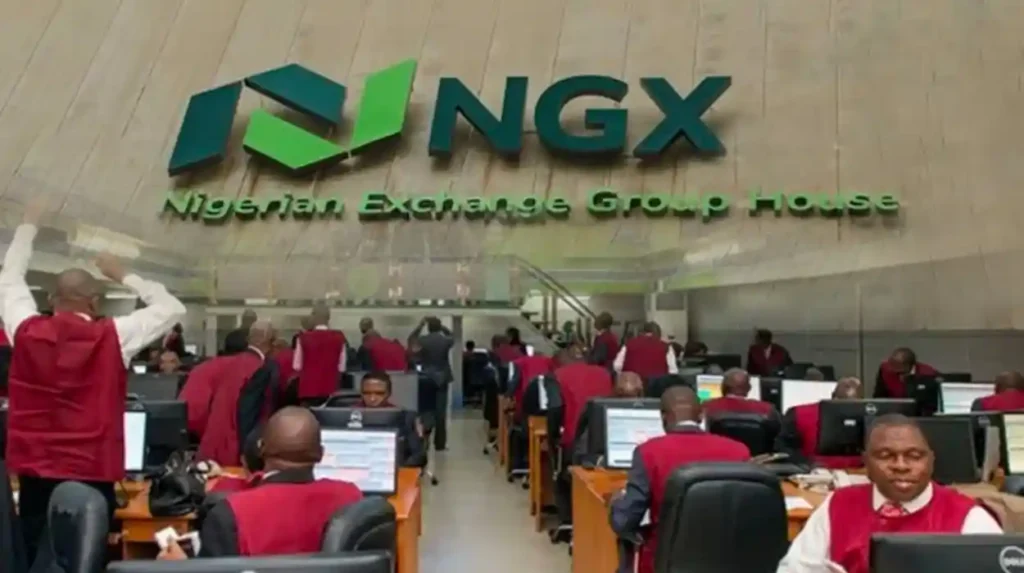
The Nigerian Exchange Group (NGX) has launched its Net Zero Initiative, marking a major step toward integrating climate action and sustainability into Nigeria’s capital market. The initiative aims to align with global efforts to transition to a low-carbon economy while positioning Nigerian companies to attract climate-focused investments.
 Follow us on Google News
The Net Zero Initiative is designed to help Nigerian corporates meet stricter climate and sustainability standards required by global investors and open access to long-term, climate-aligned capital. The move follows President Bola Ahmed Tinubu’s recent signing of Nigeria’s Carbon Market Initiative, signaling growing policy support for climate finance and emissions reduction.
Speaking at a closing gong ceremony in Lagos to commemorate the launch, NGX Chairman, Temi Popoola, said the Net Zero Initiative represents the Exchange’s strategic response to global and local sustainability challenges. He explained that international development finance institutions such as DEG, Germany’s development finance institution and a subsidiary of KfW, now apply rigorous environmental, social, and governance (ESG) and climate standards before providing capital.
“For the Exchange, the key question is how we support Nigerian companies to align with this direction and how we attract climate-aligned capital. Our goal is to bridge the gap between opportunity and execution by building capacity across the ecosystem and helping corporates unlock funding,” Popoola said.
He highlighted that DEG’s contribution to Nigeria’s capital market has been significant, with many Nigerian banks, private equity firms, and pre-listing companies benefiting from DEG-backed financing. Popoola also acknowledged the contributions of DEG’s outgoing Country Director, Ben, whose seven-year tenure strengthened the private sector and deepened the capital market ecosystem.
NGX Chief Executive Officer, Jude, said the Exchange was determined to “lead by action” on the Net Zero agenda, which he described as a defining element of global capital markets. He explained that the initiative includes structured capacity-building components, extending beyond listed companies.
“At least 30 market participants will receive training in climate and sustainability. This is a shift from availability to sustainability. Corporations must now operate not only for profitability, but also for impact. ESG is no longer optional, and NGX takes this responsibility seriously,” Jude said.
For DEG, the launch of the initiative at the Nigerian Exchange underscores the vital role of capital markets in promoting private sector-led development. DEG’s Chief Investment Officer, Monika Beka, described the event as a “mini-Davos” for Nigeria and reaffirmed DEG’s focus on Africa, identifying Nigeria as a priority market.
“Profitability and sustainability are not contradictory. They reinforce each other. Working with leading corporates on climate and impact creates long-term value for shareholders,” she said.
Ben, DEG’s outgoing Country Director, expressed appreciation for his years in Nigeria and restated DEG’s confidence in the private sector’s potential to drive responsible economic growth. He added that DEG remains committed to supporting the development of Nigeria’s capital market.
Through the Net Zero Initiative, NGX is positioning Nigeria’s capital market to play a leading role in financing climate-aligned growth, boosting investor confidence, and preparing the market for a future where sustainability and capital formation go hand in hand.