


Nigeria has unveiled a fresh push to transform its agriculture sector through the Special Agro-Industrial Processing Zones (SAPZ) Programme, a major initiative expected to strengthen food security, create jobs and attract private sector investment into agro-processing across the country.
The Federal Government said the programme is designed to move Nigeria away from exporting raw agricultural products to building a stronger agro-industrial economy driven by value addition, processing and rural development.
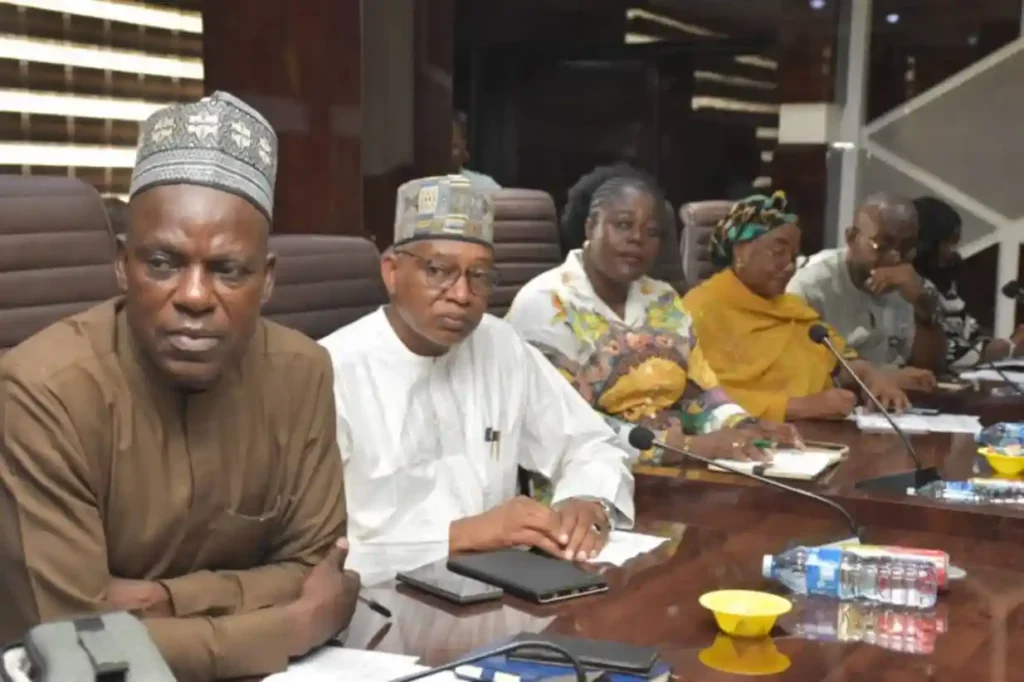
Speaking during the meeting of the Federal Inter-Agency Technical Committee on the SAPZ Programme in Abuja, the Permanent Secretary of the Federal Ministry of Agriculture and Food Security, Dr. Marcus Ogunbiyi, described the initiative as a key model for agricultural industrialisation and economic transformation in Nigeria.
According to him, the SAPZ Programme will help reduce post-harvest losses, improve productivity, create sustainable jobs for youths and women, boost rural incomes and support inclusive economic growth across participating states.
Dr. Ogunbiyi said the programme would establish integrated agro-industrial hubs with critical infrastructure located close to major farming communities and production centres.
“The SAPZ initiative seeks to establish integrated agro-industrial hubs with critical infrastructure such as roads, power, water supply, storage facilities, logistics systems and processing centres located close to areas of high agricultural production,” he said.
He added that the programme would help transform Nigeria’s agricultural landscape by shifting focus from the export of raw commodities to agro-industrial processing and market-driven agricultural development.
The Permanent Secretary described the SAPZ Programme as one of the most strategic agricultural and economic transformation initiatives of the Federal Government.
He explained that the programme is jointly financed by the Nigerian Government, the African Development Bank (AfDB), the International Fund for Agricultural Development (IFAD) and the Islamic Development Bank (IsDB), alongside support from participating state governments and private sector stakeholders.
According to him, the programme presents an opportunity for Nigeria to reposition agriculture as a business-driven and industrialised sector capable of creating employment, driving national development and increasing competitiveness in regional and global markets.
“The Programme aligns strongly with the Renewed Hope Agenda of the present administration and the Nigerian Government’s commitment to achieving food security, economic diversification, import substitution and rural industrialisation,” Dr. Ogunbiyi said.
“SAPZ is not merely an infrastructure project; it is a strategic platform for transforming rural communities into centres of economic prosperity and industrial growth.”
He also reaffirmed the commitment of the Ministry of Agriculture and Food Security to provide policy coordination and the enabling environment needed for the successful implementation of the programme.
Dr. Ogunbiyi stressed the importance of stronger collaboration among Ministries, Departments and Agencies (MDAs), development partners and other stakeholders involved in the implementation of the initiative.
He urged members of the Federal Inter-Agency Technical Committee to continue providing technical expertise and institutional support to ensure the programme achieves its objectives.
The Permanent Secretary further commended development partners including AfDB, IFAD and IsDB for their continued support towards Nigeria’s agricultural transformation agenda.
Also speaking at the meeting, the Director of the Federal Department of Development Partners Projects, Dr. Mrs. Iluromi Adebola, said the SAPZ Programme remains a strategic intervention aimed at transforming Nigeria’s agricultural sector through value addition, agro-industrialisation, private sector investment and rural economic development.
She noted that the role of the inter-agency committee remains critical in ensuring policy alignment, coordination and timely resolution of implementation challenges.
“Our discussions today will further strengthen inter-agency collaboration and advance the collective objective of delivering sustainable agricultural transformation and food security for our nation,” she said.
Meanwhile, the National Programme Coordinator of SAPZ, Dr. Kabir Yusuf, described the initiative as a cross-cutting platform designed to attract private sector investment into value-added agro-processing.
According to him, the programme is expected to unlock opportunities for improved food security, job creation, export earnings, rural poverty reduction and increased contribution of agriculture to Nigeria’s Gross Domestic Product (GDP).
Dr. Yusuf added that the programme’s development objective is to support inclusive and sustainable agro-industrial development while helping Nigeria diversify its economy and reduce its food import bill.