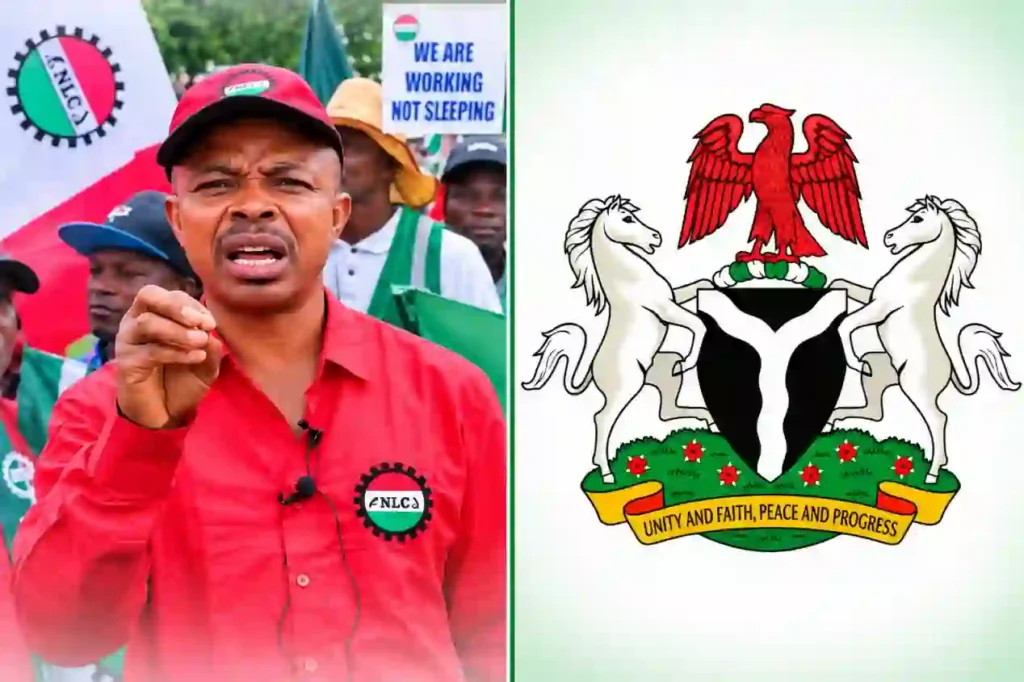
The Nigeria Labour Congress (NLC) has called on the Federal Government to ensure the payment of the ₦70,000 transportation allowance to Nigerian workers before the end of November 2026, in line with its agreement with organised labour.
 Follow us on Google News
The congress also demanded the establishment of the Tripartite National Minimum Wage Negotiation Council to commence discussions on a new national minimum wage for Nigerian workers.
The NLC President, Joe Ajaero, made the demands at the opening of the 2026 NLC Harmattan School at the Public Service Institute in Abuja.
Ajaero said workers were expecting the government to fulfil the commitments contained in the agreement reached with organised labour on October 27, including the payment of the transportation allowance and the convening of a monitoring meeting.
“We expect workers to receive them this month, as agreed, including the convening of the Monitoring meeting,” he said.
The labour leader also called on state governments and private sector employers to implement the agreement, noting that honouring commitments made during negotiations was necessary to maintain trust between employers and workers.
He expressed concern over the economic difficulties facing Nigerian workers, particularly the increasing cost of transportation, food, accommodation, healthcare and education.
According to him, the declining purchasing power of workers has made it increasingly difficult for many households to meet their basic needs despite earning salaries.
Ajaero said the success of economic reforms should be measured by their impact on workers, pensioners, unemployed youths, small business owners and vulnerable Nigerians.
“The question before us is therefore not simply how much workers earn, but whether workers can live decently from their earnings,” he added.
New minimum wage negotiations
Speaking on the forthcoming minimum wage negotiations, Ajaero warned against alleged attempts to create divisions within the labour movement before discussions commenced.
He said some interests were seeking to exploit differences among workers and unions to weaken their collective bargaining position.
The NLC president urged workers to remain united and resist attempts to undermine negotiations aimed at securing better salaries and improved working conditions.
He maintained that organised labour must present a common position during negotiations to ensure that the outcome reflected the economic realities confronting Nigerian workers.
Ajaero also called for greater attention to workers’ welfare ahead of the 2027 general elections.
He urged political parties and candidates to explain their plans for employment creation, wages, social protection, healthcare, education, security, food production and industrial development.
The labour leader said workers had the right to examine the programmes of political candidates and demand accountability on issues affecting their livelihoods.
He also urged the Independent National Electoral Commission (INEC) to ensure transparency and maintain a credible voters’ register ahead of the elections.
Addressing participants at the training, Ajaero stressed the importance of equipping workers with knowledge of labour laws, taxation, economic policies and technological developments affecting employment.
He noted that artificial intelligence and automation were changing traditional employment arrangements, requiring trade unions to develop new strategies for protecting workers.
Also speaking, the International Labour Organisation (ILO) Country Director for Nigeria, Ghana, Liberia and Sierra Leone, Dr Vanessa Phala, called for stronger collective bargaining and social dialogue.
Phala said rising living costs, unemployment and widening inequality had continued to affect the purchasing power of Nigerian workers.
She explained that workers deserved wages that would enable them to maintain a decent standard of living and escape poverty.
The ILO official also encouraged trade unions to extend their activities to workers in the informal sector, including those engaged in outsourced employment and digital platforms.
She reaffirmed the organisation’s commitment to working with the government, employers and organised labour to promote decent employment and sustainable development.
What workers should know about the ₦70,000 transportation allowance
The transportation allowance is among the commitments contained in the October 27 agreement between the Federal Government and organised labour.
The NLC expects the payment to be made within November, alongside other commitments reached during discussions with the government.
Ajaero’s latest statement also extends the call for implementation to state governments and private sector employers, as workers continue to face rising transportation expenses.
The congress is equally seeking the establishment of a negotiation council to address the issue of a new national minimum wage.
While the NLC has reiterated its expectation of payment this month, Ajaero did not announce a specific commencement date for the disbursement of the allowance during his address at the training programme.