President Bola Ahmed Tinubu on Friday told the National Assembly that the 2026 budget will be driven by stronger revenue mobilisation, better spending discipline and strict accountability, as his administration moves from economic stabilisation to consolidation.
 Follow us on Google News
Presenting the N58.18 trillion 2026 Appropriation Bill to a joint sitting of the Senate and House of Representatives, Tinubu said the focus of the new fiscal year is to ensure that public funds are raised efficiently, spent with purpose and tracked transparently so Nigerians can see results.
He explained that lessons from previous budget cycles shaped the approach for 2026, especially around execution and fiscal discipline. According to the President, “2026 will be a year of stronger discipline in budget execution,” noting that specific directives have already been issued to key finance and budget officials to ensure strict implementation.
Tinubu disclosed that as at the third quarter of 2025, government revenue stood at ₦18.6 trillion, representing 61 percent of the target, while expenditure was ₦24.66 trillion, about 60 percent of what was planned. He added that ₦2.23 trillion was released for 2024 capital projects following the extension of their implementation timeline, while only ₦3.10 trillion, or 17.7 percent of the 2025 capital budget, had been released by Q3 due to the transition period.
He said the experience underscored the need to align spending with available resources and realistic timelines. “We will spend with purpose, manage debt with discipline, and pursue growth that is broad-based and sustainable,” Tinubu told lawmakers.
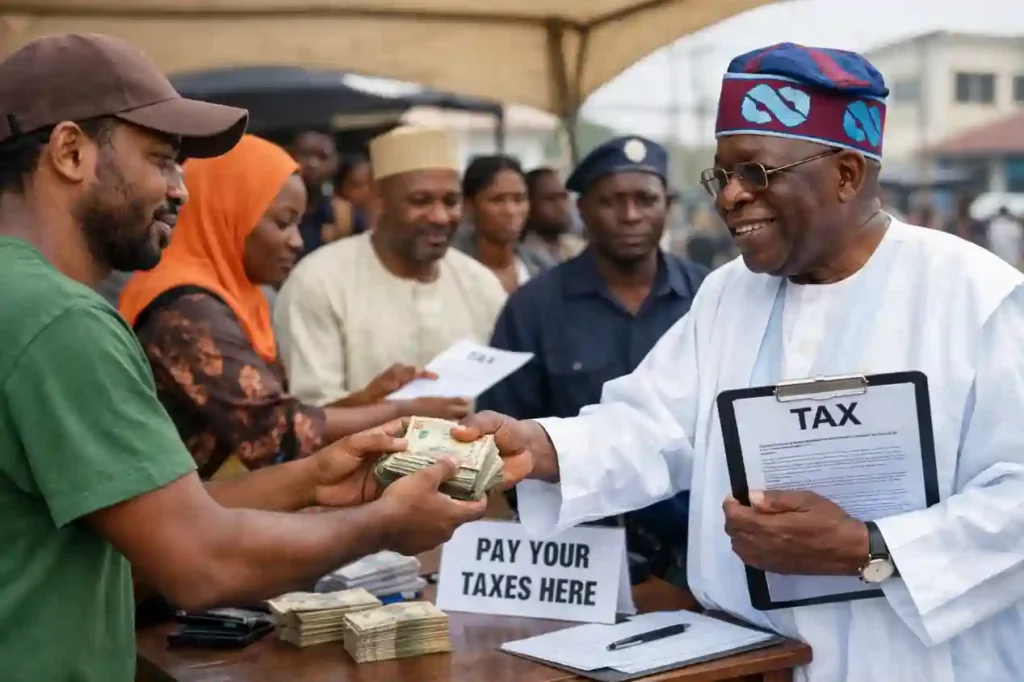
On revenue mobilisation, the President said improved performance is expected from the new National Tax Acts and ongoing reforms in the oil and gas sector. He stressed that the reforms are “designed not merely to raise revenue, but to drive transparency, efficiency, fairness, and long-term value in our fiscal architecture.”
Tinubu placed special emphasis on Government-Owned Enterprises, warning that leakages and underperformance will no longer be tolerated. “Heads of all GOEs are hereby directed to meet their assigned revenue targets,” he said, adding that revenue collection will be fully digitised through standardised e-collections, interoperable payment systems, automated reconciliation and real-time performance dashboards.
He explained that these measures will make compliance verifiable and remittances prompt, while revenue targets will form part of performance evaluations. “Nigeria can no longer afford leakages, inefficiencies, or underperformance in strategic agencies. Every institution must play its part,” he said.
The President also highlighted accountability on the spending side, saying government will prioritise projects that can be completed and felt by citizens. He said procurement discipline, monitoring and reporting will be strengthened so Nigerians can track how public money is used.
According to him, the 2026 budget deficit of ₦23.85 trillion, representing 4.28 percent of GDP, reflects a balance between supporting growth and maintaining fiscal sustainability. He added that the budget framework is anchored on realistic assumptions, including a conservative oil price benchmark and cautious revenue projections.
Tinubu said the administration’s broader goal is to rebuild trust between government and citizens through results. “This is how we will build trust: by matching our words with results, and our allocations with outcomes,” he told the National Assembly.
He assured Nigerians that the focus on better revenue mobilisation, better spending and better accountability is aimed at ensuring that public resources translate into improved living standards, as the country enters what he described as a phase of consolidation after difficult but necessary reforms.