
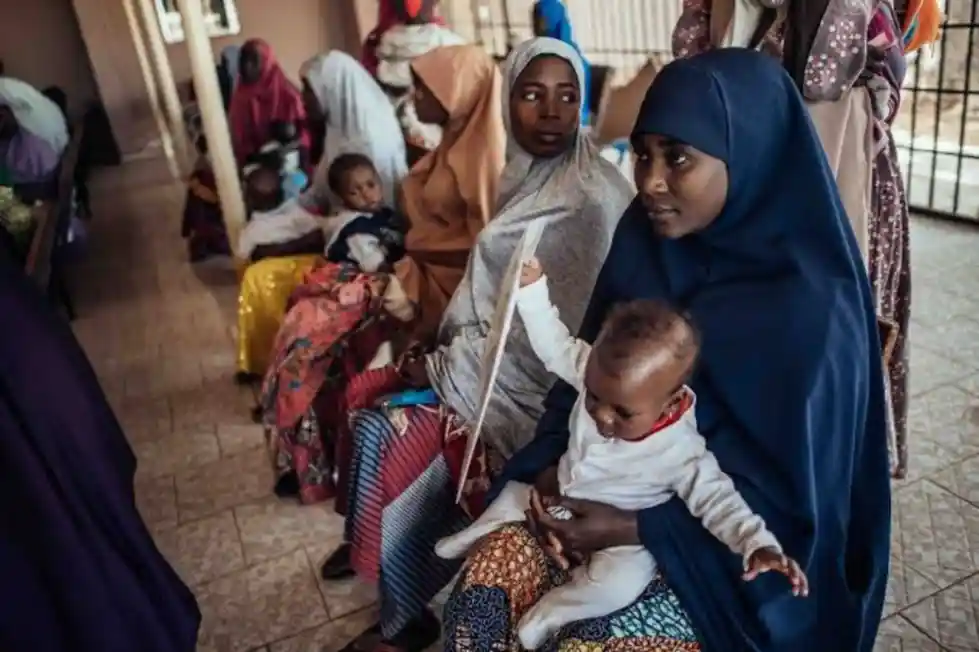
The Federal Government has announced plans to deploy Nigeria’s network of more than 13,000 Primary Health Care Centres (PHCs) to deliver nutritious food support to vulnerable pregnant women and children under six.
 Follow us on Google News
The Executive Director of the National Primary Health Care Development Agency (NPHCDA), Dr Muyi Aina, disclosed this on Tuesday in Abuja while outlining the operational framework of the newly launched National Community Food Bank intervention.
Aina explained that the health-integrated social protection programme aligns with President Bola Tinubu’s Eight-Point Agenda. He stressed that the intervention would not operate as a standalone food distribution scheme, but as a structured extension of maternal and child health services delivered at PHCs across the country.
According to him, trained health workers will assess pregnant women and mothers of young children who visit health facilities, determine their vulnerability status, and enrol eligible beneficiaries into a digital database linked to their National Identification Number (NIN).
“Only those assessed as vulnerable within the health system will receive vouchers for monthly food supplies,” he said.
He added that the vouchers would be redeemable at community food banks located close to PHCs to ensure easy access and reduce the risk of diversion.
The NPHCDA boss noted that integrating food support with antenatal care, immunisation services and child growth monitoring would improve nutrition outcomes, strengthen early childhood development and enhance school readiness.
“This is about protecting Nigeria’s future human capital. Nutrition begins from pregnancy, and the health system provides the most reliable platform to reach mothers and children,” he said.
Aina further stated that the initiative would stimulate local economies, as food items would be sourced from local farmers and fishermen through the Bank of Agriculture, linking agriculture directly to health and social investment.
To ensure accountability, he said beneficiaries would be tracked digitally, while performance and financial management officers, alongside community-based committees, would monitor implementation to minimise leakages.
He emphasised that community ownership would be central to the programme’s success and urged traditional and religious leaders to promote transparency and ensure that only eligible mothers and children benefit.
“The programme will be funded through a dedicated trust fund chaired by the First Lady and housed in the Bank of Agriculture, drawing contributions from government, private sector partners and well-meaning Nigerians,” he said.
Aina described the intervention as a “multi-sectoral reform effort” involving the Ministries of Health and Social Welfare, Agriculture, Budget and Planning, and Women’s Affairs and Youth Development.
He added that the initiative would not only address acute food stress but also strengthen Nigeria’s primary healthcare system by expanding its role in preventive and social health services.
“With over 13,000 PHCs nationwide, we now have the infrastructure to deliver integrated health and nutrition support,” he said.
He said implementation would begin with advocacy and stakeholder engagement, followed by the establishment of community-level food banks and the enrolment of beneficiaries.