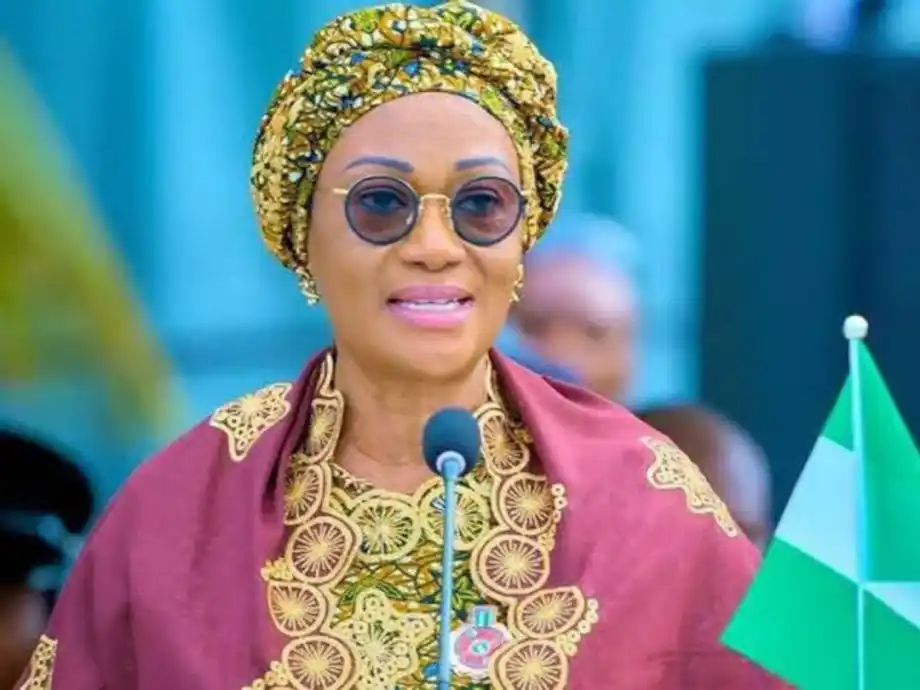
Nigeria’s First Lady, Oluremi Tinubu, has urged wives of state governors across the country to begin creating empowerment and skills acquisition programmes that can address social challenges and improve economic opportunities for citizens at the grassroots level.
 Follow us on Google News
She made the call during the first quarterly meeting of Wives of State Governors for 2026, where discussions focused on strengthening community development efforts through the Renewed Hope Initiative.
According to a statement issued by her Senior Special Assistant on Media, Busola Kukoyi, the First Lady challenged the governors’ wives to take more independent and proactive steps in designing programmes that empower women, support youth and respond to the unique needs of their states.
Speaking during the meeting, Tinubu said the role of governors’ wives should go beyond ceremonial duties and instead focus on initiatives that produce measurable impact in communities.
“I expect them to do what they are supposed to do,” she said while encouraging them to lead programmes that build skills, create economic opportunities and strengthen families.
She emphasised that empowerment programmes targeted at women and young people can play a major role in reducing poverty and improving livelihoods across Nigeria.
Tinubu urged the governors’ wives to prioritise projects such as vocational training, business development programmes and grassroots mentorship initiatives.
She also stressed the importance of designing programmes that reflect the specific economic strengths and resources available in each state.
Drawing from her experience as the former First Lady of Lagos State, Tinubu explained how locally driven initiatives can successfully complement government policies in areas such as education and youth development.
She recalled programmes she introduced while serving in Lagos, including a Spelling Bee competition aimed at encouraging learning in public schools and keeping students engaged academically.
Tinubu also highlighted other initiatives she previously launched, such as the Musical Fiesta and a Leadership Academy for girls.
According to her, the Leadership Academy started with just 20 participants but eventually grew into a programme that helped young girls develop confidence, leadership abilities and career aspirations.
“These initiatives started small but grew because they met real needs in the community,” she said.
Using a metaphor to explain how empowerment programmes evolve, Tinubu said initiatives often require patience and support before they become sustainable.
“It’s like giving birth to a baby — the teething stage and learning how to walk. After a while, the baby is supposed to walk unaided, and that is what I want to see,” she said.
Tinubu also commended some governors’ wives who have already begun implementing state-based empowerment initiatives.
She cited a project in Ekiti State involving the development of an adire fabric hub that provides women with training and income opportunities through textile production.
According to her, such models can easily be replicated in other states to promote entrepreneurship and job creation.
Beyond vocational training, the First Lady encouraged the governors’ wives to explore empowerment opportunities in agriculture.
She pointed out that each region in Nigeria has unique agricultural resources that can support local economies if properly developed.
“Encouraging women to produce cassava on a large scale… those in the riverine area, we want to see them doing smoked fish,” Tinubu said.
She explained that helping women develop agricultural businesses can strengthen food security while also improving household income.
Tinubu also advised the governors’ wives to introduce mentorship programmes aimed at guiding young boys and helping reshape their attitudes toward education, discipline and responsibility.
She referenced an initiative currently operating in Lagos that focuses on mentoring the boy child and preparing young boys for leadership roles in society.
The meeting also included discussions on several upcoming programmes planned under the Renewed Hope Initiative for 2026.
One major project expected to launch soon is a National Community Food Bank that will operate across the country’s six geopolitical zones.
According to the First Lady, the food bank will be linked to Primary Health Care Centres and will provide nutritional support for malnourished children between the ages of zero and six as well as pregnant women.
Tinubu said child nutrition must remain a national priority and called for aggressive action to address the issue.
“It is sad for a nation like ours to still be talking about child malnutrition at this level,” she said.
She further encouraged governors’ wives to mobilise youth groups to support environmental sustainability efforts such as tree planting and plastic waste reduction ahead of July 15, 2026.
Tinubu also highlighted upcoming programmes under the initiative, including a national scholarship programme scheduled for September and support activities planned for the International Day of Persons with Disabilities.
Additional plans include an Elderly Support Scheme expected to launch in December, which aims to provide grants, medical screenings and welfare assistance for elderly citizens across the country.