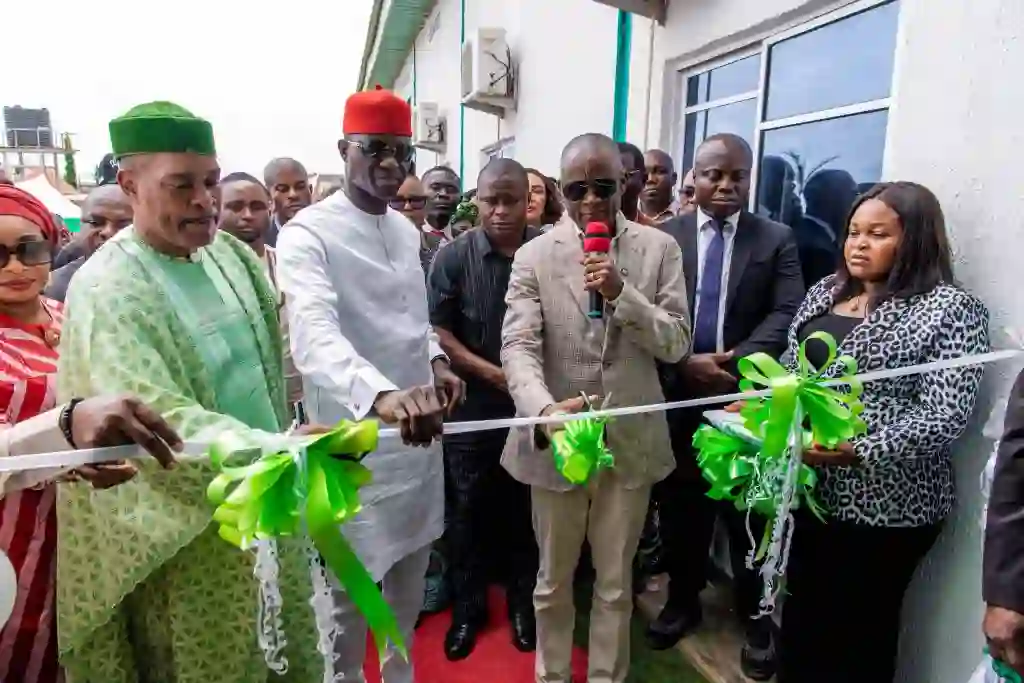
The Federal Government has commissioned a new Automotive Training Centre of the National Automotive Design and Development Council in Ebonyi State, with officials saying the facility will help young Nigerians gain practical skills needed in the changing automotive industry.
 Follow us on Google News
Speaking at the commissioning ceremony on Thursday, September 18, 2026, the Minister of State for Industry, Federal Ministry of Industry, Trade and Investment, Senator John Owan Enoh, described the centre as an investment in people, technology and the future of Nigeria’s automotive sector.
Enoh said the facility would provide practical training in automotive technology, vehicle diagnostics, repairs and maintenance, mechatronics and emerging automotive technologies. He said industrial development would require a skilled workforce capable of supporting local production, technology transfer and the growth of local content.
According to the minister, Automotive Training Centres being established across Nigeria’s six geopolitical zones are intended to widen access to employable and entrepreneurial skills. He said the approach would help ensure that young Nigerians, regardless of their location, have opportunities to acquire technical knowledge that can support employment and enterprise.
He said Ebonyi and the wider South-East had strong potential because of existing activities in vehicle repairs, spare-parts distribution, commerce, entrepreneurship and technical craftsmanship. The new centre, he added, could help modernise these activities and connect them with emerging technologies.
Enoh also highlighted the growing importance of cleaner transportation technologies. He said the centre would help develop technicians capable of working with Compressed Natural Gas vehicles, electric vehicles and other cleaner transportation systems.
The minister urged the NADDC to focus not only on the physical infrastructure but also on the quality of training delivered at the facility. He called for regular upgrades of equipment, modern training programmes, qualified instructors and stronger partnerships with vehicle manufacturers, assemblers, component producers, technical institutions and private operators.
He also stressed the need to connect graduates with employment opportunities, entrepreneurship support, further training and relevant government programmes.
The Ebonyi State Governor, Francis Ogbonna Nwifuru, described the centre as a strategic investment in the state and Nigeria’s automotive technology ecosystem. He said the facility should not be viewed as another conventional mechanic workshop but as an investment in technicians, engineers, entrepreneurs and other professionals who can develop solutions and create businesses.
Nwifuru welcomed the partnership between the state, NADDC and the Federal Government. He said Ebonyi’s sustainable development would depend on infrastructure, human capital, technology and productive enterprise.
The Chairman of the NADDC Governing Board, Chief Emma Eneukwu, said the commissioning demonstrated the Federal Government’s effort to create practical opportunities for Nigerians, particularly young people in the South-East.
Eneukwu commended the Federal Ministry of Industry, Trade and Investment for its support and thanked Ebonyi State for its cooperation. He said the board would continue to provide policy direction and oversight to ensure that NADDC programmes deliver measurable benefits.
The Director-General and Chief Executive Officer of NADDC, Otunba Oluwemimo Joseph Osanipin, described the commissioning as an important milestone in the council’s efforts to build a skilled automotive workforce.
Osanipin said Automotive Training Centres across the six geopolitical zones form part of NADDC’s mandate to support the sustainable development of Nigeria’s automotive industry through local human and material resources.
He said the centres would serve as hubs for skills acquisition, technical innovation, entrepreneurship, technology transfer and workforce preparation as vehicle technology continues to change.
According to him, the Ebonyi centre has modern training equipment, tools and facilities and will offer practical training to youths, technicians, artisans, students, vehicle owners, entrepreneurs and other automotive practitioners in Ebonyi and the wider South-East.
Osanipin said the centre would also support sectors such as agriculture, manufacturing, commerce and solid mineral development because those activities depend on reliable transportation, machinery and automotive services.
He said the facility aligns with the Nigerian Automotive Industry Development Plan, which focuses on local vehicle production and assembly, investment, local content, technical capacity, employment and a stronger automotive value chain.
The NADDC boss added that the council would continue updating its programmes to reflect technologies such as CNG, electric vehicles, automotive mechatronics and electronic diagnostics.
The commissioning places greater attention on technical training at a time when Nigeria’s automotive sector is adapting to new vehicle systems and cleaner transportation technologies. The centre is expected to provide a platform where young people and existing practitioners can develop practical skills relevant to these changes.
Government officials at the event also emphasised the importance of linking training to real economic opportunities. Beyond acquiring technical knowledge, graduates will need pathways into employment, entrepreneurship, further education and partnerships with companies operating across the automotive value chain.
For Ebonyi, the centre is expected to complement existing commercial and technical activities while providing access to specialised training within the South-East. For NADDC, it forms part of a wider plan to strengthen automotive training infrastructure across the country.
The Federal Government said the initiative supports its broader objectives of industrialisation, youth skills development, local content, job creation and sustainable economic growth.
NADDC said it would continue to strengthen partnerships, improve training infrastructure and promote innovation as it works to develop a workforce capable of supporting Nigeria’s evolving automotive industry.
The Ebonyi centre is therefore positioned not simply as a training facility, but as part of efforts to build the technical workforce needed for vehicle maintenance, diagnostics, manufacturing support and emerging mobility technologies in Nigeria.
The development also comes as vehicle technology becomes increasingly dependent on electronic systems, specialised diagnostics and technicians who understand both conventional and newer propulsion systems. This means training centres of this kind could become important for artisans and young people seeking to remain relevant as the industry changes.
The centre is also intended to serve people already working in the automotive sector, allowing technicians and practitioners to improve their knowledge and adapt to modern equipment and repair methods. Its wider use could help strengthen standards across automotive services and encourage more young Nigerians to consider technical careers.
Officials said the success of the project would ultimately depend on consistent training, effective partnerships and the ability to connect skills acquired at the centre with opportunities in the wider economy.
The Federal Government and NADDC therefore reiterated their commitment to expanding training infrastructure, supporting innovation and developing local expertise that can contribute to Nigeria’s industrial and automotive development.