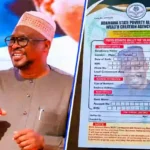

The National Agricultural Development Fund (NADF) is set to begin the rollout of its Farm Inputs Support Programme (FISP) aimed at supporting over 128,000 farmers across Nigeria as the cost of fertiliser, seeds and other agricultural inputs continues to rise.
 Follow us on Google News
The Fund disclosed this during a stakeholders’ engagement meeting held at its headquarters in Abuja ahead of the official launch of the programme. The session brought together farmer groups, security agencies and agricultural stakeholders expected to play key roles in the implementation process across 25 states and the Federal Capital Territory.
NADF described the intervention as a major economic and social impact programme designed to reduce the burden currently facing smallholder farmers struggling with increasing production costs.
Speaking during the meeting, the Executive Secretary of NADF, Mohammed Ibrahim, said the initiative was created in response to growing concerns from farmers affected by rising prices of essential farm inputs.
“What we are here to do is to inaugurate the Stakeholders Committee for the Farm Inputs Support Programme,” Ibrahim said. “The rising cost of farm inputs is one of the major challenges confronting our farmers. Through this programme, we hope to provide support to about 128,930 farmers across 25 states and the Federal Capital Territory.”
According to him, the programme is expected to improve access to critical agricultural materials and help farmers remain active during the current farming season despite difficult market conditions.
He added that NADF had previously carried out a pilot phase for agro-processors before expanding the intervention to cover smallholder farmers now facing the highest pressure from rising input costs nationwide.
Ibrahim also appealed for cooperation from industry stakeholders to ensure proper implementation, transparency and accountability throughout the distribution process.
“This is not just an NADF programme; it is a Nigerian project,” he said. “Please criticize us where necessary, tell us where we can improve, advise us, and work with us so that together we can deliver impact.”
The President of the All Farmers Association of Nigeria (AFAN), Muhammad Magaji, pledged the association’s support for the programme while warning against duplication and diversion of farming inputs meant for beneficiaries.
“We have repeatedly advised our members that there must be absolutely no diversion of inputs under this programme,” Magaji said. “If a farmer’s name appears under AFAN, such a person should not also appear under the Ministry of Agriculture list. Any duplication will be removed.”
He explained that AFAN had already started reviewing beneficiary lists to remove duplicate names, invalid identification details and other irregularities before implementation begins.
Magaji noted that many farmers were already considering abandoning cultivation because of rising costs, especially the price of fertiliser.
“Today, a farmer may need to sell two or three bags of maize just to buy one bag of fertilizer,” he said. “However, once news of this programme began circulating, many farmers started expressing renewed interest in returning to farming.”