Home Blog Page 125

Google, African universities launch WAXAL speech dataset for 21 languages

Google has partnered with leading African research institutions to launch WAXAL, a speech dataset aimed at expanding access to artificial intelligence for over 100 million people across Sub-Saharan Africa.

Developed three years with Google’s support, WAXAL contains 1,250 hours of transcribed natural speech and over 20 hours of studio-quality recordings. These resources are expected to support the development of voice recognition systems and synthetic speech tools for African users.

The initiative targets a major digital gap by providing foundational speech data for 21 African languages. These include spoken languages such as Hausa and Yoruba, as well as Luganda and Acholi.

Despite the rapid global growth of voice-enabled technologies, many African languages remain underserved due to limited high-quality speech datasets. This situation has left millions unable to access digital tools in their native tongues.

Aisha Walcott-Bryant, head of Google Research Africa, said the project is designed to empower African students, researchers, and entrepreneurs. She said it will help them build technologies in local languages and unlock economic opportunities across the continent.

Data collection for WAXAL was led by African institutions, including Makerere University in Uganda, the University of Ghana, and Digital Umuganda in Rwanda. The institutions retain ownership of the dataset.

Advertisement

Ekiti urges BEDC to open power operations to private investors

0

The Ekiti State Government has urged the Benin Electricity Distribution Company (BEDC), through its subsidiary, Benin Electricity Ekiti Limited (BEEL), to open its operations to private investors to boost electricity generation and improve power supply across the state. The appeal was made by the Commissioner for Infrastructure and Public Utilities, Mobolaji Aluko, during a meeting with officials of the Ekiti State Electricity Regulatory Bureau and BEEL in Ado-Ekiti.

Aluko said greater private sector participation would strengthen the power sector, improve service delivery, and support the state’s push for sustainable infrastructure development. He recalled that the state had begun regulating its unbundled multi-tier electricity market to expand energy access to unserved and underserved communities. “We want collaboration that leverages existing network infrastructure to improve generation and distribution,” he said.

According to the commissioner, economic growth at state and national levels depends on adequate and reliable electricity supply. He noted that key sectors such as water supply and sanitation rely heavily on stable power for water pumping, alongside residential, industrial, commercial, and institutional needs. He added that better power would improve productivity and quality of life for residents.

Speaking at the meeting, the Permanent Secretary, Ministry of Infrastructure and Public Utilities, Toyin Ojelabi-Pedro, referenced earlier discussions on the Egbe Dam and stressed the need for adequate electricity to enable the facility function optimally in providing water to residents. She said consistent power remains critical to achieving planned water outcomes.

In his remarks, the Executive Secretary of the Ekiti State Electricity Regulatory Bureau, Samson Dare David, urged BEEL officials to maintain regular engagement with the bureau and access relevant regulatory information. He said this would ensure smooth operations and steady growth of the state’s electricity market.

Responding, the Chief Executive Officer of Benin Electricity Ekiti Limited, Victor Olowe, said efforts were ongoing to resolve power challenges affecting the Egbe Dam. He assured stakeholders of improved information sharing and collaboration with the state government to enhance customer satisfaction and electricity supply across Ekiti State.

The meeting also reviewed timelines and next steps for investor engagement and regulatory coordination across Ekiti.

Nigeria set to launch Africa Energy Bank by April

0

Nigeria has completed its final obligations for the launch of the Africa Energy Bank, clearing the way for the institution to begin operations.

At a handover ceremony in Abuja on Monday, the Minister of State for Petroleum Resources (Oil), Senator Heineken Lokpobiri, said the Federal Government had finished procuring, constructing and furnishing the bank’s headquarters, which has now been formally transferred to APPO and Afreximbank.

He said Nigeria had met all the conditions required for the bank to take off. “Nigeria has fulfilled all her commitments, and the last commitment was this bank,” he said.

The minister explained that earlier attempts to build the headquarters were unsuccessful due to design and location concerns. “Attempts were made to construct the bank three times. The first was discarded for being too enormous, and the second was not accepted because of its location. We are happy that we got this one right,” he said.

He added that the new building is fully completed, furnished and ready for use. “It is paid for and furnished, and Nigeria is happy to hand over this well-furnished Africa Energy Bank building to APPO and Afreximbank, who are the enablers of the bank,” he said.

Senator Lokpobiri said the government would continue to support the project because of its importance to Africa’s energy sector. “Because of the strategic importance of the bank to oil and gas investment in Africa, we will do everything in our power to ensure the bank takes off,” he said.

He confirmed that the bank is expected to start operations by April. “We have scheduled the bank to take off by April at the latest, as all the issues that were causing delays, including the headquarters, have now been resolved,” he said.

Formally handing over the facility, he added: “We are now formally handing over this furnished Africa Energy Bank to APPO and Afreximbank.”

Nigeria Pushes Local Content Beyond Compliance at 2026 Energy Summit

0

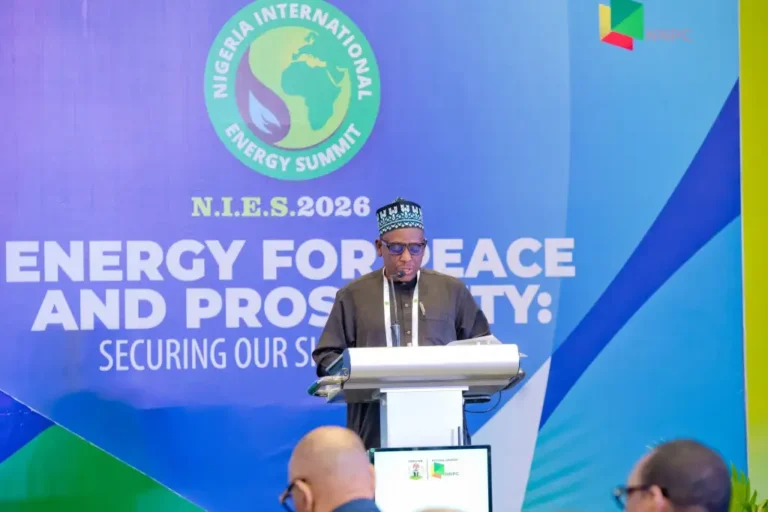
At the 2026 Nigeria International Energy Summit, the Executive Secretary of NCDMB, Engr. Felix Omatsola Ogbe, represented by Abdulmalik Halilu, delivered a keynote titled “Local Content Beyond Compliance: Building African Industrial Powerhouses” under the summit theme “Energy for Peace and Prosperity: Securing Our Shared Future.”

The address challenged Africa to move from consuming innovation to creating innovation, framing “beyond compliance” around three pillars: competence, capacity utilisation, and collaboration. According to the keynote, competence means building an indigenous supply chain that delivers service excellence without compromising standards. Capacity utilisation focuses on maximising domestic assets, from fabrication yards to marine fleets, so local content becomes local mastery and value retention. Collaboration…

NCDMB highlighted progress achieved through regulations, systems, and processes that have strengthened indigenous technology, local manufacturing, research and innovation, and a more resilient supply chain. Examples cited included Nigerian cable manufacturers supporting major projects like NLNG Train 7 and positioning to serve wider African markets. Fabrication and assembly yards such as Aveon Offshore, Beamco Nigeria Limited, and Tranos were referenced for building capability across key components. The …

The keynote further stated that Nigerian service companies are expanding operations into other African markets, while the training pipeline continues to grow. More than 10,000 youths are being skilled through field readiness programmes in high-demand areas such as subsea, QA/QC, marine operations, automation and controls, underwater welding, digitalisation and drilling.

In line with Bola Ahmed Tinubu’s reforms, Executive Orders and the “Nigeria First” policy, the focus is to boost local capacity, reduce contracting costs, and remove intermediaries that add cost without value. NCDMB announced policy revisions around the NCEC to prevent transfers to intermediaries and to prioritise competent contractors, including within the $1,000,000 threshold referenced in Section 17(1) of the NOGICD Act 2010.

On regional cooperation, Nigeria reaffirmed support for the Brazzaville Accord as a pathway toward a unified industrial engine for Africa’s 1.4 billion-person market and stronger cross-border partnerships. Access to competitive financing was also highlighted, with stakeholders informed that the African Energy Bank is now a reality and its office will be handed over to APPO.

The closing message stressed that “local content beyond compliance is not just an energy agenda, but a development and sovereignty agenda for African prosperity,” adding that with competence, capacity utilisation and collaboration, Africa can move from local participation to local mastery, for Africa.

FG says “Living History” textbook not approved for Nigerian schools

0

The Federal Ministry of Education has reacted to misleading reports and discussions surrounding a History textbook titled “Living History,” including claims of content exclusion and suggestions that the book has been approved for use in Nigerian schools.

In a statement, the Ministry said “Living History” is not an approved textbook and has not been recommended for use in any Nigerian school.

The Ministry explained that the book was never submitted to the National Educational Research and Development Council (NERDC), which is the statutory body responsible for reviewing, evaluating, and approving instructional materials in line with the national curriculum. As a result, the textbook was neither assessed nor recommended by NERDC and does not appear on the official list of approved History textbooks.

According to the Ministry, consultations were held with NERDC leadership, alongside a review of the endorsed textbook list aligned with the revised curriculum. These checks confirmed that “Living History” is not an approved instructional material for nationwide use.

The Ministry urged parents, teachers, school proprietors, administrators, and the general public to ignore misinformation and avoid the use of unapproved textbooks. It warned that the use of such materials undermines curriculum standards and may negatively affect learning outcomes.

It added that approved textbooks reflect Nigeria’s cultural diversity, shared history, and national values. Stakeholders were advised to verify textbook approvals through official NERDC channels, stressing that “education thrives on truth.”

FG to Digitally Register 30,000 Farmers Cooperatives

0

The federal government has announced plans to digitally register and capture about 30,000 farmers’ cooperative societies nationwide as part of a broad reform aimed at cleaning up Nigeria’s agricultural ecosystem.

The initiative is designed to block impostors, strengthen the credibility of farmers’ groups, and ensure that government incentives, funding, and support schemes are channelled strictly to legitimate cooperatives actively driving food production across the country.

According to the government, the decision followed observations of countless impostor organisations masquerading as representatives of farmers, agro processors, and dealers, a situation that has weakened trust and distorted access to support within the sector.

The digital registration initiative is also expected to modernise cooperative operations, promote transparent financial reporting, maintain accurate records of members and assets, and improve governance standards across cooperative societies.

Minister of State for Agriculture and Food Security, Aliyu Sabi Abdullahi, announced the move during a meeting on the Review of the Nigerian Cooperative Societies Act, Cap N98 LFN 2004. He said the digitalisation process would bring efficiency, integrity, inclusion, and sustainable growth to the cooperative sector.

According to him, “Digitalisation will strengthen cooperative institutions, increase trust, improve service delivery, reduce fraud, and unlock new opportunities across the cooperative economy.”

Abdullahi revealed that when properly structured and supported, cooperatives would become a vital instrument for Nigeria to achieve capital mobilisation, inclusive growth, and shared wealth creation.

As the driver of the Renewed Hope Cooperative Reform and Revamp Programme (RH-CRRP), the minister explained that the programme aligns with President Bola Tinubu’s vision to mobilise all sectors of the economy towards building a One Trillion Dollar Economy by 2030.

He described the RH-CRRP as a bold and transformational national framework designed to position cooperatives as a powerful tool for community wealth creation, poverty eradication, and inclusive growth across Nigeria.

The minister noted that key areas of focus under the programme include digital registration, the creation of a national cooperative database, a digital membership identification system, electronic documentation, administration of cooperative societies, as well as filings and reporting.

He maintained that cooperatives must no longer be treated as a side activity, stressing that they should be seen as strategic institutions capable of mobilising capital, empowering citizens, creating jobs, driving agricultural productivity, and strengthening the national economy.

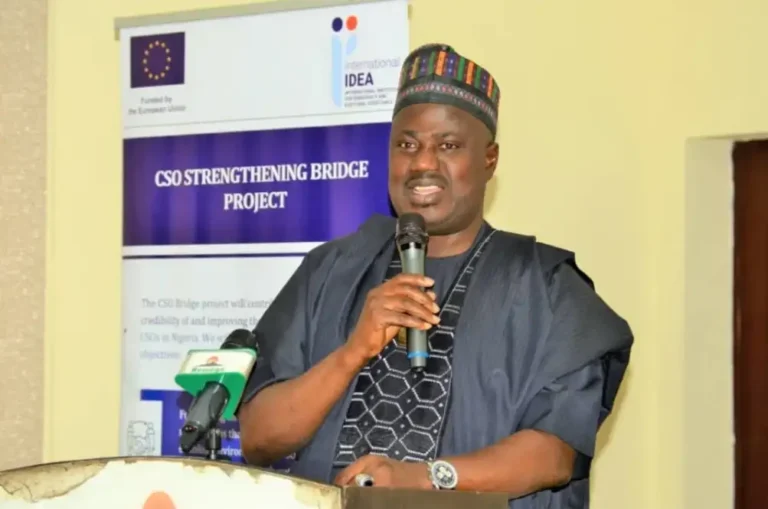
Abdullahi acknowledged the contributions of CFN and International IDEA to cooperative development efforts, but emphasised that by mandate and structure, the current initiative should be led by the Federal Ministry of Agriculture and Food Security as the supervising ministry responsible for cooperative development in Nigeria.

He also revealed that the ministry had fixed a date for a broader harmonisation process that would consolidate the reviewed output from the stakeholders’ meeting and the ministry’s parallel work into a final national document.

According to him, “This document will align with the International Cooperative Alliance – Africa Model Cooperative Law and the Africa Ministerial Declaration and Action Plan, which Nigeria co-signed with other African Ministers in Kenya during the 14th Africa Ministerial Cooperative Conference (AMCCO) in October 2025.”

The minister further disclosed that International IDEA would join the Coalition of the Willing (CoW), a group of credible partners supporting the Renewed Hope Cooperative Reform and Revamp Programme (RH-CRRP).

He lauded the efforts of critical stakeholders and the Federal Department of Cooperatives, highlighting the global relevance of cooperative societies.

“Cooperatives today represent over 1 billion members worldwide, operating in over 100 countries, and providing over 280 million jobs — that’s almost 10% of the world’s employed population,” he said.

“In Nigeria, cooperatives are actively transforming lives across the agriculture, housing, credit, transportation, and trade sectors,” Abdullahi added.

He disclosed that Nigeria currently has over 370,000 registered cooperative societies with millions of members working to boost rural livelihoods, improve agricultural productivity, and expand financial inclusion, particularly among women and youth.

In her remarks, President of the Cooperative Federation of Nigeria (CFN), Hannatu Mershak, said the digitisation initiative was not about innovation for its own sake, but about improving efficiency, integrity, inclusion, and sustainable growth.

She stated that the initiative would strengthen cooperative institutions, increase trust, improve service delivery, reduce fraud, and unlock new opportunities across the cooperative ecosystem.

However, some farmers have expressed doubts about the commencement of the initiative, recalling similar promises made by the government in the past.

In 2025, during the commemoration of the second United Nations International Year of Cooperatives (IYC), the government announced similar plans, but farmers say no concrete action followed.

“These initiatives are good. But to what end? As a farmer, my concern is how to get inputs to grow my crops and not the reforms the government is talking about that will be actualised,” Abdul Aziz, a farmer in the Federal Capital Territory (FCT), Abuja, said.


FG inaugurates NEC technical sub-committee on livestock development

0

The Federal Government has inaugurated the National Economic Council (NEC) Technical Sub-Committee on Livestock Development, reaffirming its commitment to repositioning the livestock sector as a driver of economic growth and food security.

The Minister of Budget and Economic Planning, Senator Abubakar Bagudu, inaugurated the committee in Abuja on Monday. He explained that the sub-committee was created to harmonise existing policy frameworks and speed up the development of an actionable roadmap for adoption by the National Economic Council.

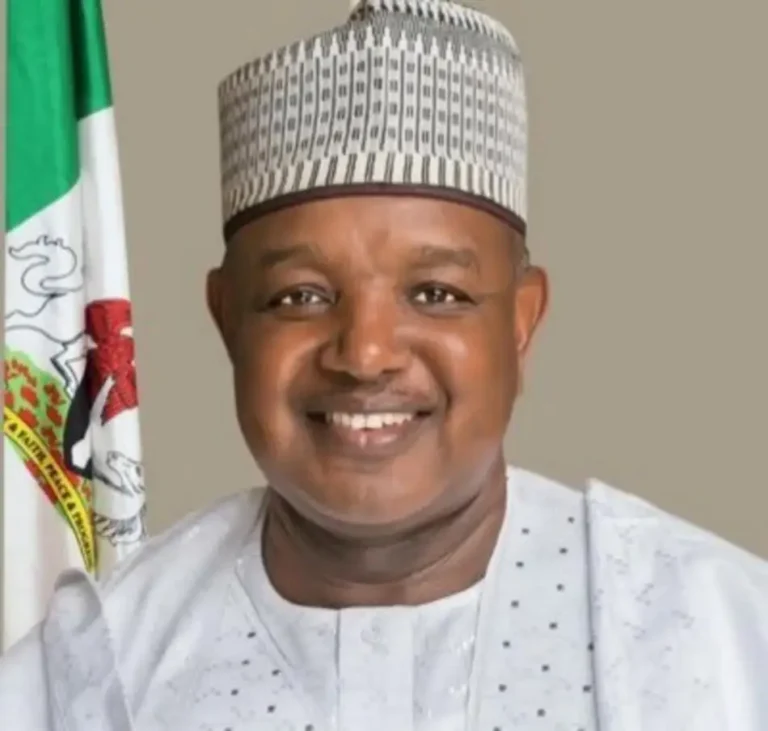
Bagudu recalled that NEC had earlier set up a high-level committee on livestock development chaired by the Governor of Kebbi State, Dr Nasir Idris. He said the committee included governors from the six geopolitical zones, relevant ministers, and the co-chair of the Presidential Committee on Livestock Development.

According to the minister, the urgency of the assignment and the tight schedules of state governors made it necessary for NEC to approve the formation of a technical sub-committee under his chairmanship to manage the process. “Our task is not to reinvent the wheel. A substantial body of work already exists. What is required now is to distil these reports into a clear, practical implementation roadmap that the National Economic Council can adopt without delay,” he said.

Bagudu highlighted President Bola Tinubu’s personal commitment to livestock development, describing it as a strategic shift in Nigeria’s economic and agricultural policy. He said the President had consistently stressed the importance of the sector to development.

“Mr President has consistently emphasised that livestock is not a marginal activity but a central economic driver for food security, agricultural productivity, and inclusive growth. His decision to personally chair the Presidential Committee on Livestock Development reflects this clarity of purpose,” he stated.

The minister added that the establishment of a stand-alone Ministry of Livestock Development further showed the administration’s intention to treat livestock as a strategic economic sector rather than a subsidiary activity.

He explained that the President’s engagement with the National Economic Council aligns with Nigeria’s federal constitutional structure, which assigns responsibility for agriculture and food security, including livestock development, to the federal, state, and local governments.

“Livestock development requires collaboration across all tiers of government. As the institution mandated to coordinate national development planning, this ministry acts as the secretariat of our federal system, ensuring that national plans and programmes are aligned and implemented collaboratively,” he said.

On funding support, Bagudu pointed to initiatives available to back implementation, including the World Bank supported Livestock Productivity and Resilience Support (L-PRES) Project, NG-CARES, the Nigeria for Women Programme, and the Renewed Hope Ward-Based Development Plan covering Nigeria’s wards.

Apply: CRSMEDA REDI Phase 2 for Retirees in Cross River State

0

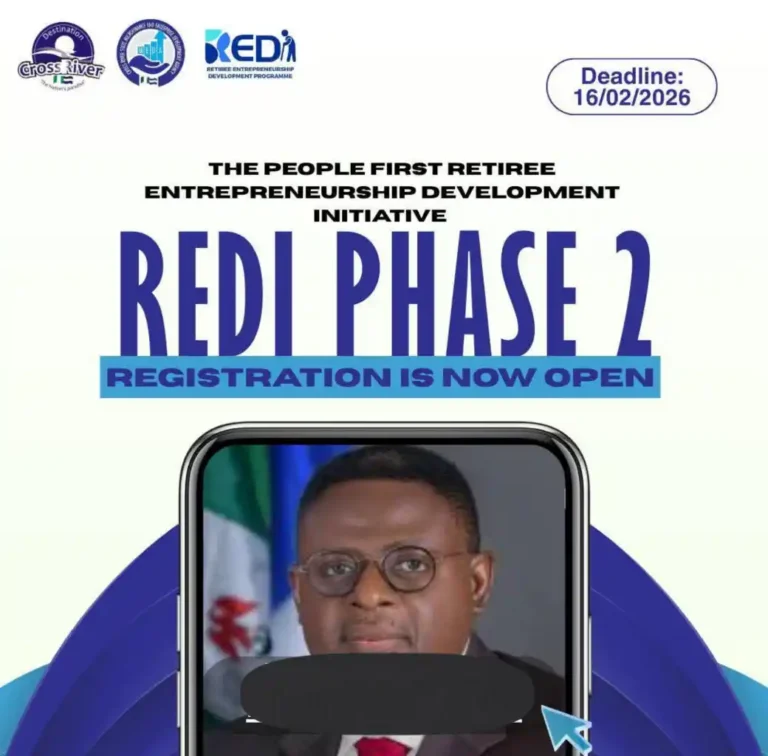
The Cross River State Microfinance and Enterprise Development Agency, CRSMEDA, has announced the official commencement of applications for Phase 2 of the People First Retiree Entrepreneurship Development Initiative, REDI. The programme is aimed at retired civil servants in Cross River State and seeks to support them in starting and growing small businesses after leaving public service.

The initiative is being implemented under the leadership of Governor Prince Bassey Otu and aligns with the administration’s People First mandate. Cross River REDI Phase 2 programme is structured to help retirees move into the MSME sector by offering business training, guidance, and clear financial planning options that can support long term sustainability.

The Director General and Chief Executive Officer of CRSMEDA, Great Ogban, said retirement should be seen as a new opportunity rather than an end. Retirement should not be the end of one’s contribution to the economy, but rather a new chapter of impact. Through REDI, the state government is ensuring that the wealth of experience held by retirees is harnessed to drive inclusive enterprise growth across the state.

CRSMEDA REDI programme targets retirees willing to remain economically active and contribute to local enterprise development across the state.

Only Retirees are eligible to apply, and the deadline for applications is on the 16th of February, 2026.

To apply, eligible retirees are invited to register online via the official REDI application form https://docs.google.com/forms/d/e/1FAIpQLSdz_rgOPxxCvReUZSSJSKcrio6sFERgz3wtKCPDph-he7qV_w/viewform

FG assures N-Power beneficiaries of outstanding stipend payment

0

The federal government, through the Federal Ministry of Humanitarian Affairs and Poverty Reduction, has assured N-Power beneficiaries that outstanding stipends will be paid as the programme is currently under review.

The assurance comes just hours before a planned nationwide protest by N-Power beneficiaries scheduled to hold nationwide on February 4, 2026.

The Honourable Minister of Humanitarian Affairs, Dr. Bernard M. Doro, said all verified N-Power beneficiaries who are owed outstanding payments will receive them. He explained that the ministry is working with the National Social Investment Programs Agency (NSIPA) to review the programme and address gaps and structural challenges affecting delivery.

In a statement issued on Monday, the minister said, “Dear N-Power beneficiaries, I am aware of the concerns surrounding your program, and I hear all of you.”

He added, “Since assuming office, I have been working with the National Social Investment Programs Agency (NSIPA) to review the program, address the identified gaps, and fix structural challenges affecting delivery. I assure you that all legitimate concerns are being resolved.”

Dr. Doro further disclosed that he had engaged directly with representatives of the beneficiaries. “I met with your leaders earlier today (being Monday 2nd), and we discussed extensively. All beneficiaries with verified challenges will be addressed and will receive their payments,” he said.

He also reaffirmed the government’s plans for the scheme, stating, “We are committed to reforming the program to be more sustainable, with clear exit plans, in line with Mr. President’s vision and the Renewed Hope agenda.”

N-Power beneficiaries are expected to be paid soon, as arrangements are being finalized to disburse stipends to verified and eligible beneficiaries soon.

Young Innovators of Nigeria opens YIN Campus Ambassadors Program 2026

0

Applications are now open for the Young Innovators of Nigeria (YIN) Campus Ambassadors Program 2026. YIN said the programme is focused on building innovation communities across Nigerian tertiary institutions while empowering students to lead and create impact.

The initiative gives selected students the chance to represent YIN on their campuses and access national opportunities. Ambassadors will lead campus innovation, drive youth innovation, and build a standout profile.

The programme targets undergraduates nationwide in Nigeria.

Interested students passionate about leadership and community development are encouraged to apply.

Applications are open via yinigeria.com.ng or by sending an email to info@yinigeria.com.ng.