Home Blog Page 147

FG trains women, youths on sheep and goat production

0

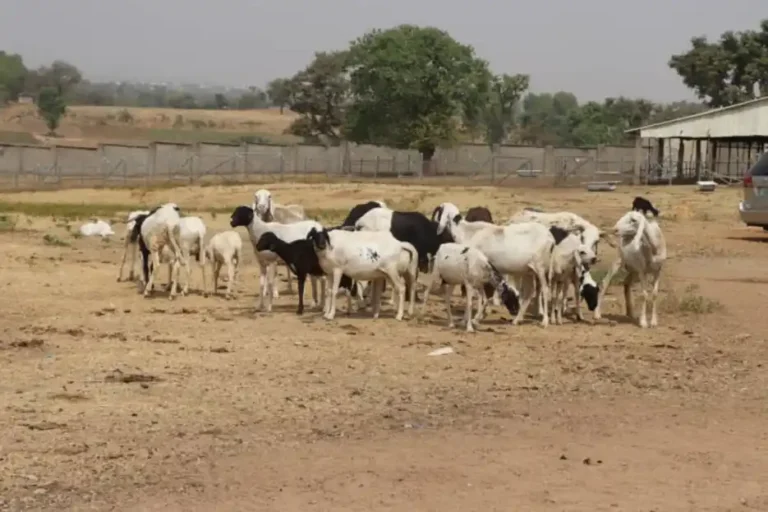
The Federal Government through the Federal Ministry of Livestock Development has organised an on-farm skills training programme for women and youths involved in the sheep and goat value chain across selected states of the country.

The initiative forms part of the Ministry’s efforts to promote sustainable livestock development and strengthen government support for women and youths in Nigeria.

The Director, Livestock Extension and Business Development Department, Joseph Ako, stated this in his opening remarks at Najaoni Farms, Uke, Nasarawa State, on Friday, January 23, 2026.

Ako said the training “underscores the Ministry’s commitment to strengthening small ruminant production as a viable pathway to improved food security, job creation and sustainable livelihoods,” particularly for rural farmers, women and youths.

Represented by an Assistant Director in the Department, Mercy Otiteh, Ako explained that the practical skills to be acquired during the training, especially in feeding, breeding, animal health and housing, are critical to improving productivity and reducing losses in sheep and goat production.

He commended the participants for their contributions to transforming the livestock sector and urged them “to apply the lessons learned and cascade the knowledge to others within their communities,” especially those involved in the sheep and goat value chain.

Ako also emphasised “the importance of networking and collaboration among participants,” noting that shared learning would help strengthen production outcomes.

In his presentation, an Animal Scientist and Nutrition Expert, Alhassan Danlami, explained that semi-intensive rearing is the recommended best practice for sheep and goat production.

According to Danlami, “this system allows animals to be sheltered and fed indoors during unfavourable weather conditions, while permitting grazing within the farm settlement when conditions are favourable.”

He highlighted key considerations for starting a sheep and goat farm, including site selection, choosing suitable breeds, ensuring adequate feed and water supply, maintaining good animal health through vaccination, and adopting sound management practices.

Also speaking, the Nasarawa State Coordinator of the Ministry, Dr. Lazarus Illaubayums, advised farmers “to ensure animals are properly stabilised before vaccination.”

Illaubayums stressed “the importance of maintaining strict biosecurity measures through regular farm sanitation to prevent disease outbreaks and reduce mortality.”

He encouraged farmers to provide adequate care for animals during feeding, grazing and delivery, noting that handling would improve productivity overall.

Read also: FG Says SPIN Irrigation Project in Benue Will Create Youth Jobs
Advertisement

Shettima says Nigeria has reclaimed global policy influence

0

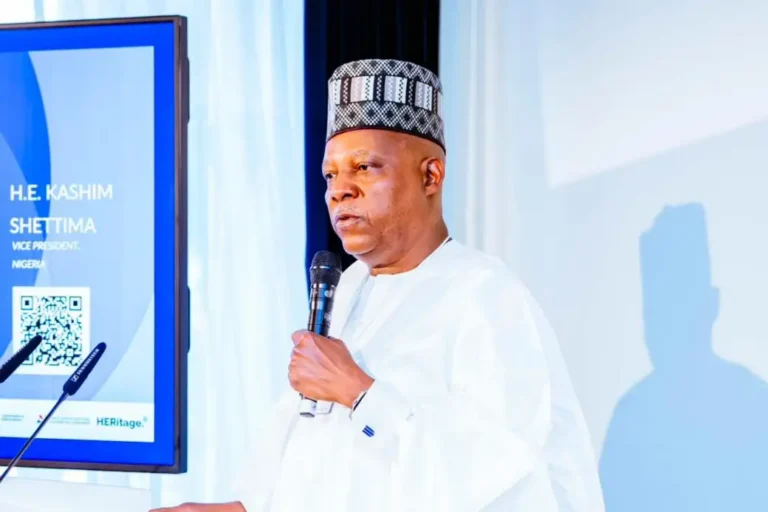
Vice President Kashim Shettima has returned to Abuja after a week-long diplomatic and economic mission to Guinea-Conakry and Switzerland, saying Nigeria has reclaimed a frontline seat in global and regional policy conversations.

Shettima arrived at the Nnamdi Azikiwe International Airport Abuja, on Saturday after representing President Bola Ahmed Tinubu at the inauguration of Guinea’s President, Mamadi Doumbouya, and leading Nigeria’s delegation to the 56th World Economic Forum WEF Annual Meeting in Davos.

According to the Vice President, the trip is part of Nigeria’s renewed commitment to regional solidarity in West Africa and its determination to reposition the economy under President Tinubu’s Renewed Hope agenda.

He said the visit to Conakry, where he attended President Doumbouya’s inauguration, reaffirmed Nigeria’s leadership role within ECOWAS, while opening new pathways for bilateral cooperation in agriculture and manufacturing.

From Guinea-Conakry, Shettima proceeded to Davos, Switzerland, where he led the Nigerian delegation at the WEF 2026.

One of the highpoints of his engagements in Switzerland was the commissioning of Nigeria House Davos, Nigeria’s first-ever sovereign pavilion on the Davos Promenade, designed as a permanent investment hub showcasing opportunities in solid minerals, agriculture and the digital economy.

At a high-level WEF session titled, “When Food Becomes Security,” the Vice President outlined Nigeria’s new national food security framework, describing agriculture as a strategic pillar of national security and macroeconomic stability.

Vice President Shettima also joined former President Olusegun Obasanjo, former Vice President Yemi Osinbajo and Minister of Finance, Wale Edun, to advance the Accra Reset Initiative, a forum advocating African industrialisation driven by domestic capital and value chains rather than foreign aid.

On the economic front, Shettima told investors that Nigeria’s macroeconomic indicators were stabilising, citing a projected 4.4 per cent GDP growth in 2026 and a decline in inflation to 12.94 per cent.

He also pointed to Nigeria’s imminent transition into a net exporter of refined petroleum products, anchored by the Dangote Refinery, and the growing export of digital talent.

He said these steps reflect efforts to deepen investor confidence and expand trade partnerships globally this year.

Top 10 Universities in Nigeria according to Times Higher Education World University Rankings 2026

0

The Times Higher Education World University Rankings 2026 has placed Nigerian universities on the global academic map, assessing institutions based on teaching quality, research environment, research impact, industry engagement and international outlook.

The 2026 ranking evaluated 2,191 universities across 115 countries and territories, making it one of the most comprehensive global assessments of higher education. Nigerian universities featured across different global bands, with the top 10 standing out for their research output, academic influence and growing international relevance.

Below are the top 10 universities in Nigeria, based on the Times Higher Education World University Rankings 2026, and why each institution earned its place.

1. University of Ibadan

The University of Ibadan, located in Ibadan, Oyo State, is a federal government-owned institution established in 1948. It is Nigeria’s oldest university and ranked in the 801–1000 global band, making it the highest-ranked Nigerian institution in 2026.

UI recorded a strong and balanced performance across key indicators, particularly in research quality and academic citations. Its long history of postgraduate training, medical research and scholarly publications continues to boost its visibility on the global stage. The university’s ability to maintain research output despite funding challenges helped it retain its leading position nationally.

2. University of Lagos

The University of Lagos is a federal university located in Akoka and Idi-Araba, Lagos State. Founded in 1962, UNILAG also ranked within the 801–1000 global band, tying closely with the University of Ibadan.

UNILAG stood out for recording one of the highest research quality scores among Nigerian universities, reflecting the strong global impact of its academic publications. Its location in Nigeria’s commercial capital supports industry partnerships and international collaboration, strengthening its performance in both industry income and international outlook.

3. Bayero University, Kano

The Bayero University Kano is a federal university located in Kano, Kano State. It became a full-fledged university in 1975 and ranked in the 1001–1200 global band.

BUK emerged as one of Nigeria’s strongest performers in international outlook, indicating active engagement with global research networks and academic partnerships. Its growing research presence in northern Nigeria and consistent academic output helped it secure a place among the country’s top three universities.

4. Covenant University

Located in Ota, Ogun State, Covenant University is a private Christian university established in 2002. It ranked in the 1001–1200 global band, making it one of the highest-ranked private universities in Nigeria.

Covenant University recorded the strongest industry income score among Nigerian institutions, reflecting robust partnerships with the private sector and applied research activities. Its structured academic environment, emphasis on innovation and consistent research output continue to strengthen its global standing.

5. Landmark University

The Landmark University is located in Omu-Aran, Kwara State, and was established in 2011. Like Covenant University, it ranked in the 1001–1200 global band.

Landmark University performed well in research quality, despite being a relatively young institution. Its strong focus on agriculture, sustainability and applied research distinguishes it from more general universities and contributes to its growing international recognition.

6. Ahmadu Bello University

Situated in Zaria, Kaduna State, Ahmadu Bello University is a federal university founded in 1962. It ranked in the 1201–1500 global band.

ABU remains one of the largest universities in sub-Saharan Africa and recorded notable strength in research quality. Its extensive academic programmes, research institutes and postgraduate output continue to support its relevance in global rankings, despite infrastructure and funding pressures.

7. Federal University of Technology, Minna

The Federal University of Technology Minna is located in Minna, Niger State, and was established in 1983. It also ranked within the 1201–1500 global band.

As a technology-focused institution, FUT Minna’s ranking reflects the growing visibility of STEM-oriented universities in Nigeria. Its contributions to engineering, technology and applied sciences helped secure its place among the country’s top institutions.

8. University of Ilorin

The University of Ilorin is a federal university located in Ilorin, Kwara State. Founded in 1975, it ranked in the 1201–1500 global band.

UNILORIN is known for a relatively stable academic calendar and improving research output. Its steady performance in research quality and teaching environment contributed to its continued presence among Nigeria’s top 10 universities in the global ranking.

9. University of Jos

Located in Jos, Plateau State, the University of Jos became an independent federal university in 1975. It ranked in the 1201–1500 global band.

The University of Jos has remained a consistent centre for teaching and research in Nigeria’s North-Central region. Its inclusion in the rankings reflects sustained academic activity and participation in global research evaluation, even as competition among Nigerian universities increases.

10. University of Nigeria, Nsukka

The University of Nigeria Nsukka is located in Nsukka, Enugu State. Founded in 1955 and officially opened in 1960, it ranked in the 1201–1500 global band.

UNN is Nigeria’s first indigenous university and maintains a broad academic footprint across disciplines. Its historical legacy, research contributions and national influence continue to support its global recognition, despite challenges in research funding and infrastructure.

The Times Higher Education World University Rankings 2026 highlight both the strengths and limitations of Nigeria’s higher education system. While no Nigerian university currently ranks among the world’s top 500, the consistent presence of multiple institutions across global bands shows progress in research visibility, industry engagement and international collaboration.

FG launches IFAD-VCDP agricultural support, training in Kogi

0

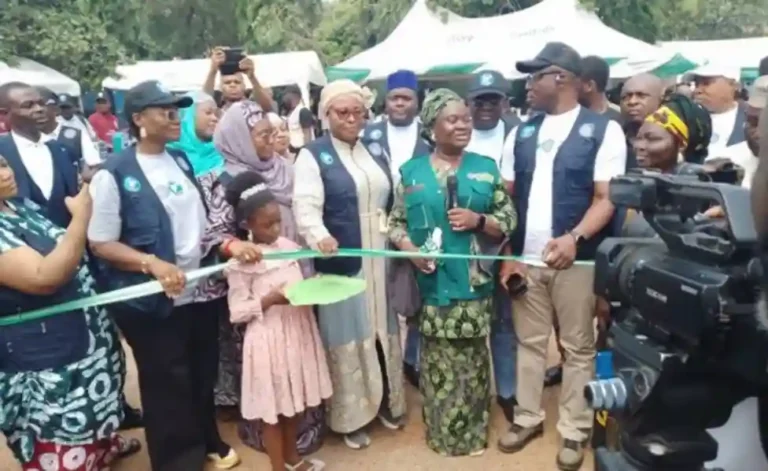
The Federal Government on Friday launched a comprehensive package of agricultural support in Kogi State aimed at improving productivity, enhancing food security, and promoting youth empowerment across the state.

The support package includes the distribution of dry season farming inputs, the establishment of a seed testing laboratory, and the training of youths in equipment fabrication under the International Fund for Agricultural Development – Value Chain Development Programme (FGN/IFAD-VCDP).

Launching the programme in Lokoja, the Permanent Secretary, Federal Ministry of Agriculture and Food Security, Dr Marcus Ogunbiyi, said the initiatives were designed to stimulate rural economic growth while strengthening food security.

According to Ogunbiyi, the VCDP has supported over 5,832 farmers across five Local Government Areas in Kogi State, with benefits extending beyond direct beneficiaries to farming communities across the state.

Represented by the Director, Department of Donor Agencies, Dr Adebola Iluromi, Ogunbiyi commended the Kogi State Government for what he described as strong political will and the prompt payment of counterpart funding obligations to the programme.

He urged the state government to institutionalise the programme by transforming it into a state agency when IFAD support comes to an end.

“The initiatives, which include the introduction of dry-season rice farming and provision of irrigation facilities, have improved productivity, income levels, and resilience among beneficiary farmers,” he said.

The National Programme Coordinator of FGN/IFAD-VCDP, Dr Fatima Aliyu, said the items distributed included improved rice seeds, fertilisers, herbicides, and other complementary materials to support dry-season rice cultivation.

Aliyu stated that the VCDP has supported over 5,877 farmers across the rice and cassava value chains in Kogi State, with emphasis on youth empowerment and mechanisation.

She explained that the 5,877 beneficiaries comprised 2,602 males, 3,275 females, and 2,101 youths.

“The programme has also empowered 30 youths from Kogi State with training in equipment fabrication and maintenance,” she said.

Aliyu added that the trained youths would be provided with starter packs to enable them begin their entrepreneurial journeys.

She further disclosed that a seed testing laboratory had been established under the programme to support the testing and certification of different categories of seeds.

“Kogi holds a special place in my heart, as the state has consistently distinguished itself in the effective implementation of the VCDP across participating states,” Aliyu said.

She noted that Kogi was quick to adopt dry-season rice farming, enabling farmers to cultivate rice three to four times a year, thereby boosting productivity, incomes, and food security.

The Kogi State Commissioner for Agriculture, Mr Ojomah, praised the Federal Government and IFAD-VCDP for empowering farmers in the state, stressing that the intervention had improved food security and livelihoods.

Ojomah said the initiative aligned with the youth empowerment and food security agenda of Governor Ahmed Usman Ododo.

Earlier, the State Programme Coordinator, Dr Stella Adejoh, highlighted the programme’s achievements in Kogi State despite prevailing economic challenges.

Adejoh said the programme would support 787 farmers with inputs and equipment during the dry season, covering 756 hectares of farmland in the five benefiting Local Government Areas of Lokoja, Ibaji, Kabba-Bunu, Ajaokuta, and Olamaboro.

She praised Governor Ododo for his consistent support, particularly his commitment to timely funding and agricultural development.

One of the beneficiaries, Mr Moru Ahmed, expressed appreciation to the programme, saying, “We’re extremely thankful to FGN/IFAD-VCDP for empowering youth farmers at the grassroots. It’s really improved our lives.”

Ahmed, who is the Chairman of the Asco Ajaokuta cluster, pledged that farmers would use the inputs and equipment responsibly to achieve the programme’s objectives.

Items distributed included 756 bags of improved rice seed, 3,024 bags of NPK fertiliser, 1,512 bags of urea, and 1,512 units of herbicides.

Also distributed were critical processing equipment such as power tillers, hydraulic jacks, mechanised frying machines, rice polishers, colour sorters, parboiling pots, and industrial scale machines covering 756 hectares.

Dignitaries at the event included the Secretary to the State Government, Dr Folashade Ayoade; Deputy Speaker of the Kogi State House of Assembly, Rt Hon. Comfort Egwaba; Managing Director of Kogi ADP, Dr Bello Ogirima; and the State Project Coordinator, Kogi L-PRES, Mr Abdulkabir Otaru, among others.

Earlier, the programmme trained 20 Kogi youths.

YABATECH Plastogas Hub turns plastic waste into cooking gas, jobs

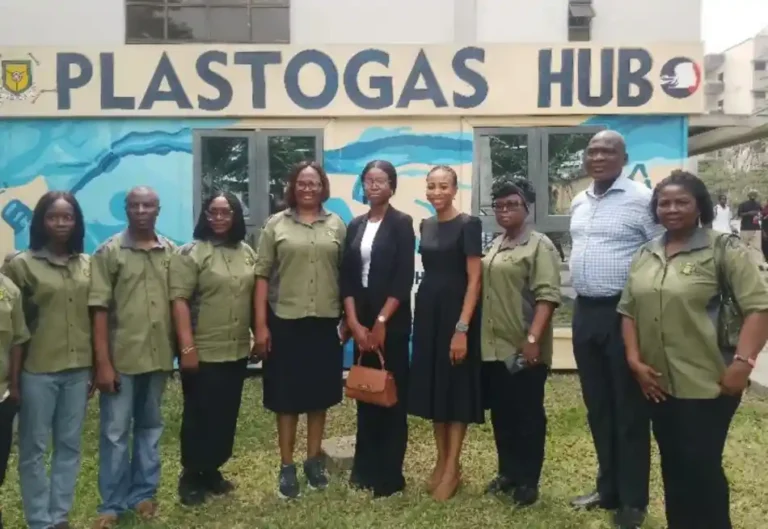
Yaba College of Technology has launched its Plastogas Hub, a plastic-to-gas and upcycling facility aimed at reducing plastic waste, promoting environmental sustainability, and creating jobs for students and neighbouring communities.

The hub was unveiled on Wednesday at the Lagos campus of the institution and was described by stakeholders as a model for community-driven waste management, clean energy production, and skills development.

Speaking at the launch, Dr Lauretta Ofodile, Team Lead of the hub, said the initiative was born from a shared vision to tackle plastic pollution within Yaba College of Technology and its surrounding communities.

“This project is called the Yaba Tech Plastic Waste Hub. It is an initiative that has come out of a shared dream for the sustainable management of plastic in Yaba College of Technology and its entire environment,” Ofodile said.

She explained that the hub focuses on reducing plastic waste, educating the community, and working toward what she described as complete environmental sustainability.

According to her, neighbouring communities including Yaba, Bariga, and Somolu are key partners in the project, contributing plastic waste and participating in training and awareness activities.

The facility converts plastic waste into cooking gas, while the residue from the process is upcycled into useful products such as paving stones, plates, cups, and briquettes.

Ofodile noted that the hub also serves as a learning and training centre that is open to students, artisans, and members of the public.

She revealed that the initiative became possible after the team secured a grant from the French Embassy in Nigeria in 2024.

“We started this project, which is all about the sustainable collection of plastic through smart collection, shredding, breaking it down, and then using it for gas production,” she said.

Eno-Obong Sampson, Project Coordinator of the French Embassy Fund, described the launch as a milestone in the effort to fight plastic pollution.

She said the hub would support capacity development, research, and community awareness on sustainable waste management practices.

Representing the Rector of Yaba College of Technology, Dr Ibraheem Abdul, the Deputy Rector, Lawal Adefemi, said the project aligns with the institution’s waste to wealth vision.

Adefemi added that residents who bring plastic waste to the hub are rewarded with money based on the volume contributed, while the initiative is expected to create jobs, improve public health, build skills, and serve as a scalable sustainability model across Nigeria.

NAOWA Trains 202 Barracks Youths in ICT and Fashion Skills

0

The Nigerian Army Officers’ Wives Association (NAOWA) has equipped 202 youths drawn from military barracks with market-relevant skills in ICT and fashion design, as part of efforts to promote economic self-reliance among young people.

The gesture was carried out under the NAOWA Youth Empowerment Project, which focuses on boosting confidence, dignity and sustainable livelihoods for youths connected to the military community.

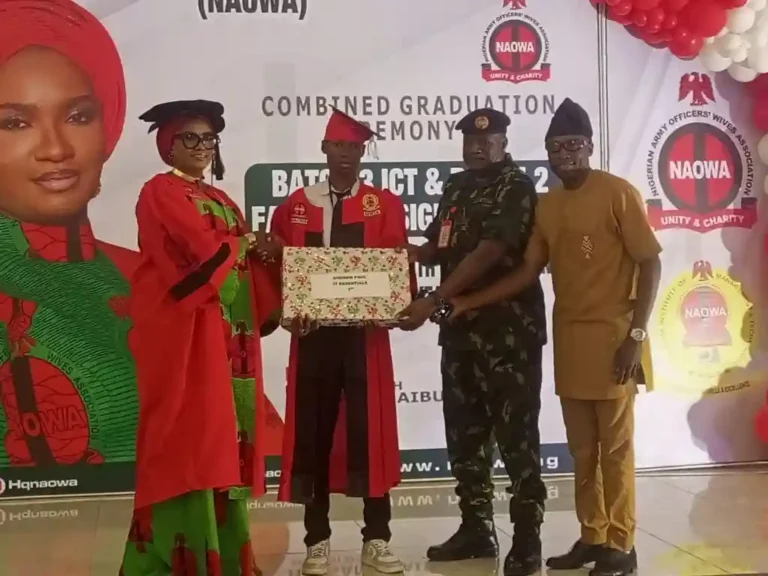
The President of NAOWA, Mrs Safiyyah Shaibu, disclosed this in Abuja at the combined graduation ceremony of Batch 3 ICT and Batch 2 Fashion Design trainees of the NAOWA Youth Empowerment Project.

She described the programme as a strategic investment in the future, explaining that practical and market-relevant skills had a direct impact on families, communities and national development.

“This project goes beyond skills acquisition. It is about giving our youths the tools to chart their own course and become productive members of society,” Shaibu said.

“A total of 202 youths graduated from the programme, which focused on ICT and fashion design, at the Mrs Alero Azazi Event Centre,” she added.

Shaibu commended the Chief of Army Staff (COAS), Lt.-Gen. Waidi Shaibu, for his consistent support for NAOWA initiatives, noting that such encouragement had strengthened the association’s ability to deliver sustainable empowerment programmes.

She said that NAOWA would continue to provide mentorship and post-training support to beneficiaries to enable them translate the skills acquired into sustainable livelihoods.

The COAS, represented by the Chief of Administration (Army), Maj.-Gen. Isa Abdullahi, praised NAOWA for complementing the Nigerian Army’s non-kinetic efforts aimed at youth development and social stability.

He said that skills acquisition remained a key pathway to reducing unemployment, promoting peace and building resilient communities.

According to him, by empowering the youth, the Nigerian Army is contributing to a resilient society, which is critical to sustaining a resilient fighting force.

He explained that the programme formed part of the Army’s broader efforts to build resilient families and empower communities, in line with its transformation agenda to become a professional, adaptable and combat-ready force.

The Rector of the NAOWA Institute of Management and Technology (NIMTA), Abuja, Col. Comfort Adamu, said that the graduation marked the fulfilment of dreams and the unlocking of hidden potentials among the trainees.

Adamu stated that the graduands underwent weeks of intensive training that transformed curiosity into competence and positioned them for opportunities in a technology-driven economy.

She said that the institute equipped participants with practical, income-generating skills in fashion design, tailoring and computer studies to enable them thrive in today’s digital space.

According to her, the training, which commenced on Sept. 22, 2025, produced 202 graduates, comprising 32 trainees in fashion design and tailoring and 170 in ICT.

She added that all beneficiaries were children of serving and retired non-commissioned officers, noting that outstanding trainees would receive awards and undergo a four-week internship to further strengthen their skills and employability.

One of the beneficiaries, Faitha Garba, described the training as impactful and empowering, saying it helped her develop self-awareness, confidence and practical life skills.

“The programme opened my eyes to new opportunities for self-reliance. I can now apply what I have learned to support myself and my family,” she said.

Another student, Gabriel Agboola, said the six-week ICT programme equipped him with valuable digital skills in areas such as cybersecurity, web design, Internet of Things and programming.

Agboola said the facilitators ensured clear understanding before introducing new topics, making the learning process effective and engaging.

He expressed confidence in his ability to apply the knowledge gained, protect himself and others online, and transfer the skills to peers within the barracks and surrounding communities, thereby expanding the impact of the training programme.

FG Says SPIN Irrigation Project in Benue Will Create Youth Jobs

0

The federal government through the Minister of Water Resources and Sanitation, Prof. Joseph Utsev, has said the proposed Sustainable Power and Irrigation in Nigeria Project in Katsina-Ala will create jobs for youths and boost food production through year-round farming.

Utsev stated this while inspecting the World Bank and Federal Government-supported SPIN project in Katsina-Ala, Benue State, alongside other ongoing Federal Government water supply projects across the state.

The inspection, conducted on Friday, also covered the Ugbema Semi-Urban Water Project in Buruku Local Government Area and the upgrading of the Buruku/Gboko Water Supply Scheme.

Speaking at the SPIN project site in Katsina-Ala, the minister said in a statement that the inspection was in line with President Bola Tinubu’s directive to assess water facilities and dams nationwide and identify areas that require government intervention.

He explained that the 5,000-hectare Katsina-Ala irrigable farmland, when completed, would support large-scale farming activities and improve food availability. According to him, “the project will create jobs for youths and significantly boost food production through year-round farming.”

Utsev disclosed that the Federal Government plans to concession the dam component of the project under a Public-Private Partnership arrangement to ensure efficient delivery and proper management of the facility.

He urged residents of the area to support the Federal Government’s initiatives, noting that the project could generate employment for about 2,000 youths. He also encouraged state governments to take advantage of opportunities provided under the World Bank-supported SPIN Programme.

The National Project Coordinator of SPIN, Mr Ipinlaye Olaiya, said the project was designed to increase food production, create jobs, and contribute to national economic growth. He added that implementation of the project would commence once clearance was received from the development partner.

Some Katsina-Ala farmers, Mr Jude Oke and Mr Ugbema Godfrey, commended the Federal Government for the proposed irrigation project. They appealed for additional support, particularly farm inputs, to enable farmers benefit fully from dry-season farming.

The minister, accompanied by the Permanent Secretary of the ministry, Dr Emanso Umobong, and technical directors, also inspected the 30,000-litre capacity Semi-Urban Water Project in Ugbema, Mbaakura Ward, Buruku Local Government Area.

Utsev said the project had attained about 80 per cent completion, with outstanding works on water reticulation needed to make it fully operational.

The inspection team further visited the Buruku/Gboko Water Supply Scheme located at Ameladu Community in Gboko Local Government Area.

The minister said the scheme, which has reached about 90 per cent completion, would supply water to four local government areas, including parts of Tarka and Ushongo. He added that the contractor had been directed to adhere strictly to the 18-month completion timeline, noting that electro-mechanical components were currently being installed at the intake point along the River Benue axis.

The tour ended at the Amgbo Dam in Wannune, Tarka Local Government Area, where Utsev said the dam would be expanded from 400 metres to 1,000 metres, with a reservoir capacity of 1.2 million cubic metres.

He said the dam would support water supply and irrigation, provide water to the Federal Polytechnic, Wannune, create employment opportunities, and promote tourism in the area.

In his response, the Rector of the institution, Dr Tyover Ashinya, commended the Federal Government for the project, saying it would significantly address the institution’s water challenges.

FG Shifts Humanitarian Aid Focus With 2026 Needs and Response Plan

Digital Skills Program: 300 MSMEs to train others in Sokoto by Q1 2026

300 MSMEs are expected to be actively training and mentoring others across the 23 local governments in Sokoto State by the end of the first quarter of 2026, following the completion of the Digital Skills Mentorship Program for MSMEs.

The three-day Digital Skills Mentorship Program for MSMEs was jointly organised by the Federal Government through the National Information Technology Development Agency and the Sokoto State Government through the Ministry of Innovation and Digital Economy, and concluded with the presentation of awards to outstanding participants.

The program was designed to equip micro, small and medium enterprise owners with practical digital skills needed to improve business operations, expand market reach and enhance competitiveness in today’s technology-driven economy.

Speaking at the closing ceremony, the Acting Director, Digital Literacy and Capacity Building Department of NITDA, Dr. Ahmed Yusuf Tambuwal, explained that winners emerged after a rigorous evaluation process.

He said the assessment covered knowledge acquisition, practical skills application, level of engagement and entrepreneurial mindset demonstrated by participants throughout the program.

According to him, “the process focused on how well participants understood the training and applied digital tools to address real business needs.”

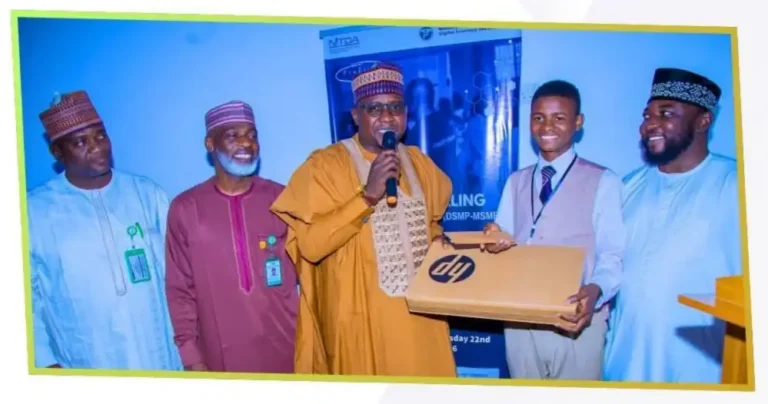
At the end of the program, Umar Sanusi Garba emerged as the top performer, while Isma’il Abubakar and Sadiya Ibrahim Dogondaji finished in second and third positions respectively.

The top three participants received laptops and cash prizes, while other participants were provided with cash tokens to support logistics. Certificates were also awarded to all participants who attended the program.

In his closing remarks, the Commissioner for Innovation and Digital Economy, Hon. Bashar Umar Kwabo, commended participants for their commitment and encouraged them to apply the skills gained to strengthen their businesses.

He said, “the expectation is that these digital skills will translate into business growth and contribute to the overall economic development of Sokoto State.”

The Commissioner expressed appreciation to the Director-General of NITDA, Kashifu Inuwa Abdullahi, CCIE, for supporting ICT development in the state, and also commended Dr. Tambuwal for facilitating collaboration between NITDA and the Ministry.

Kwabo assured that more initiatives would be introduced under Governor Dr. Ahmad Aliyu, as the state government remains committed to digital inclusion, innovation and MSME development.

The Sokoto State Government, through the Ministry, plans to upscale the program by enabling 30 successful participants to mentor 10 startups each, a move expected to produce 300 MSMEs capable of nurturing others statewide by early 2026.

The closing ceremony was attended by the Permanent Secretary of the Ministry, Nasir Daniya, Ph.D, mni, directors and heads of units from the Ministry and SICTDA, as well as invited guests.

MTN Trains Over 2,000 Youths on ICT and Business Skills for SMEs

0

MTN Foundation has trained over 2,000 young Nigerians on basic ICT and business skills aimed at helping small businesses adopt digital tools, as part of efforts to improve the productivity of small and medium-sized enterprises (SMEs) across the country.

The training, which held virtually between Monday and Friday, January 5–9, 2026, formed the seventh phase of an ICT and business skills programme targeted at youths aged 18 to 35.

The move was aimed at strengthening the capacity of youth-led SMEs to operate more efficiently through MTN’s digital skills intervention, at a time when small businesses continue to play a critical role in Nigeria’s economy.

According to data from the National Bureau of Statistics (NBS), SMEs account for over 90 per cent of businesses in Nigeria and employ a significant share of the workforce, highlighting the need for initiatives that support their sustainability and growth.

The beneficiaries were selected from over 5,000 applications received during a one-month application window in September 2025.

Participants were drawn from sectors such as food services, fashion, retail, logistics, beauty and printing, and are expected to undergo a five-week training programme scheduled to run until February 2026.

The training focused on the use of simple and affordable digital tools rather than complex technologies, with facilitators encouraging participants to digitise routine business tasks and gradually scale their operations.

Sessions during the first week covered topics including digital record-keeping, customer engagement, telesales and basic cybersecurity practices.

Speaking during the programme, Executive Director of the MTN Foundation, Odunayo Sanya, said the initiative was designed to address practical challenges faced by small business owners.

“Small businesses are the backbone of our economy, and helping young entrepreneurs adopt simple digital tools can make a real difference in productivity, sustainability, and long-term growth,” she said.

One of the facilitators, Babajide Jolaolu-Kehinde, a business analyst and digital transformation expert, led sessions on digital transformation for small businesses.

He explained that automating repetitive tasks helps save time, reduce errors and improve efficiency, while tools such as WhatsApp and WhatsApp Business can enhance customer engagement and visibility.

Case studies shared during the sessions highlighted how small enterprises improved sales and customer reach after adopting digital ordering, online payments and basic digital marketing.

Participants were also encouraged to view digital transformation as a continuous process rather than a one-off effort.

Organisers said participants will continue to have access to learning materials and session recordings throughout the duration of the programme, with the aim of ensuring that the skills gained translate into long-term improvements in business operations.

Kano Hospitals Management Board Recruitment for Consultant Pediatrician

0

The Kano State Hospitals Management Board has announced a vacancy for the position of Consultant Pediatrician, inviting qualified and experienced medical professionals to apply for immediate employment into the Kano State health service. The recruitment is aimed at strengthening pediatric healthcare delivery across state-owned hospitals.

According to the vacancy notice issued by the , the position is based in Kano State and is open to medical professionals who meet the required qualifications and professional standards.

Position and Location

The available position is Consultant Pediatrician, with successful applicants expected to work within Kano State health facilities under the management of the Board.

Qualification & Requirements

Applicants are required to meet the following criteria before applying:

  • Possession of an MBBS degree or its equivalent from a recognized institution
  • Fellowship in Pediatrics from either the West African College of Physicians (WACP) or the National Postgraduate Medical College of Nigeria (NPMCN)
  • Full registration and a current practicing license with the Medical and Dental Council of Nigeria (MDCN)
  • Evidence of National Youth Service Corps (NYSC) discharge or exemption certificate
  • Post-fellowship clinical experience, which will be considered an added advantage
  • Demonstrated competence in pediatric care, professional ethics, and teamwork

Mode of Employment and Remuneration

The Board stated that the appointment will be either pensionable or contract-based, depending on applicable conditions. Remuneration is described as attractive and in line with existing government regulations.

Method of Application

Interested and qualified candidates are required to submit an application letter, detailed Curriculum Vitae, copies of relevant credentials, and evidence of professional registration. All applications should be addressed to the Executive Secretary, Kano State Hospitals Management Board, Kano State.

The notice emphasized that only shortlisted candidates will be contacted, as the recruitment is for immediate engagement. The announcement was signed by Samira Suleiman, Public Relations Officer of the Board, and dated January 24, 2026.