
Home Blog Page 202

Tinubu to Launch Unemployment Benefits Scheme for Nigerian Youths

0

The Deputy Speaker of the House of Representatives, Benjamin Kalu, has announced that President Bola Ahmed Tinubu will soon unveil an unemployment benefits scheme aimed at reducing the impact of joblessness among Nigerian youths. Kalu made this known during a town hall meeting of the Renewed Hope Partners (RHP) held in Bende, Bende Local Government Area of Abia State. He also revealed a N1 billion empowerment package for 2,000 small and medium-scale enterprises (SMEs) across the state.

Kalu explained that the planned unemployment benefits scheme forms part of a broader set of social protection initiatives being developed by the Tinubu administration to ease economic hardship and improve citizens’ welfare.

Addressing participants at the event, Kalu said, “My people, there are several other programmes in the pipeline, including the unemployment benefits scheme soon to be launched by Mr President to cater to our unemployed youth. Your legislature is working. Your President is working. And your Deputy Speaker, from Bende to Abuja, is working tirelessly, accountable to you, driven by the conviction that Nigeria’s best days are not behind us but ahead of us. I ask you today: Support President Tinubu. Support our party, the All Progressives Congress. Support the Renewed Hope Agenda. Support Nigeria. We are not just rebuilding a country; we are building a legacy for our children.”

During the event, the Deputy Speaker distributed trailer loads of rice, other food items, and N100 million in cash to over 100 churches, the All Progressives Congress (APC), and several support groups. He explained that this gesture was part of efforts to strengthen party structures and support vulnerable groups across the state.

Kalu recalled that about six months earlier, he donated N500 million through the Renewed Hope Partners to assist businesses in Abia State. He said the newly announced N1 billion SME intervention would cover all 17 local government areas in the state. According to him, the programme would be implemented in partnership with key financial institutions, including the Bank of Industry, Bank of Agriculture, Small and Medium Enterprises Development Agency of Nigeria (SMEDAN), and the Nigeria Consumer Credit Corporation (CREDICORP), which are expected to match the funds provided.

“We are going to support 2,000 businesses with N1 billion across the entire Abia State. Each business will get about N500,000 to start with. From there, we will invite the Bank of Industry, Bank of Agriculture, SMEDAN, CREDICORP and others to partner with us and match our fund,” he said.

Kalu also instructed the Director-General of the Benjamin Kalu Movement, Pastor Emma Trumps Eke, to ensure that eligible businesses are identified and properly structured before the empowerment exercise begins in the first quarter of next year.

Describing Abia as a highly enterprising state with many traders and business owners, Kalu said the initiative was designed to boost economic growth and strengthen productivity at the grassroots level. He added that the empowerment scheme aligns with his commitment to improving livelihoods through business support, skill development, and access to credit.

Highlighting his legislative achievements, Kalu, who represents Bende Federal Constituency, said he had sponsored 127 bills in the last two years. These bills, he noted, cover areas such as governance, inclusion, infrastructure, security, and economic reforms. He also pointed out that more than 50 constituency projects had been completed or were ongoing across the 13 electoral wards in Bende. These projects include the construction of schools, ICT centres, health facilities, roads, agricultural processing centres, electricity restoration, water projects, and skills acquisition centres.

Beyond infrastructure, Kalu disclosed that over 150 individuals from his constituency had benefited from employment facilitation, scholarships, and overseas training, while about 1,600 people had accessed the Benjamin Kalu Grants. He emphasized that his office remains committed to empowering the people through tangible and sustainable projects.

Kalu also commended President Tinubu for what he described as bold and decisive economic and financial reforms, including the removal of fuel subsidy, fiscal and tax policy reforms, power sector improvements, social protection initiatives, and measures to strengthen food and national security. He encouraged Nigerians to remain patient and supportive of the administration, assuring that the government would deliver on its promises.

“We must give honour where it is due. In the last two and a half years, our nation has navigated turbulent global economic waters. That we are standing strong today is a testament to the steady hand of President Bola Ahmed Tinubu,” Kalu said.

He further praised the President’s leadership and his efforts to unite the country. “I want to use this platform to thank Mr President for his role as the Unifier-in-Chief. He has not only stabilized our great party, the APC, but has also engendered a harmonious relationship between the Executive and the Legislature that is unprecedented in our democratic history. This stability is not accidental; it is the bedrock upon which development is built. Because the centre is holding, we in the legislature can work,” he said.

The Deputy Speaker reaffirmed his commitment to the Renewed Hope Agenda and to working closely with the federal government to ensure that Abia State and Nigeria at large benefit from ongoing and upcoming economic programmes. He urged citizens to stay hopeful and united, noting that collaboration between government and the people remains essential for progress and stability.


Advertisement

Apply: FG SMEDAN free business name registration for MSMEs

0

The federal government, through the Small and Medium Enterprises Development Agency of Nigeria (SMEDAN), is continuing applications for the free CAC business name registration programme for Nigerians operating micro, small and medium enterprises across the country. The portal is open.

The initiative is implemented in partnership with the Corporate Affairs Commission and forms part of the Renewed Hope agenda aimed at encouraging business formalisation and economic inclusion.

Under the programme, eligible MSMEs are able to register their business names with CAC at no cost.

The programme was introduced following the signing of a memorandum of understanding between SMEDAN and CAC, with the target of registering 250,000 MSMEs nationwide. It is designed for entrepreneurs who are already operating businesses but remain outside the formal sector due to cost, limited awareness, or fear of regulatory processes. The initiative is a free business name registration for MSMEs.

Participation is limited to business name registration only. It does not currently apply to limited liability companies or incorporated trustees. While SMEDAN facilitates and sponsors the process, CAC remains the sole authority responsible for reviewing applications, approving registrations, and issuing official certificates. This means beneficiaries ultimately receive valid CAC documents directly from the Commission.

Eligibility requirement is for Nigerian citizens who operate micro, small or medium enterprises and do not already have a CAC business name registration.

Applicants are expected to provide accurate personal and business details and typically require a valid National Identification Number to complete the process.

MSMEs already captured in SMEDAN’s database without CAC registration are also eligible under the initiative.

There is no fixed deadline for the programme. However, it is strictly limited to the first 250,000 qualified MSMEs, making it a first come, first served process. Once the allocated slots are exhausted, free registration under this initiative will stop even if the application portal remains open.

To apply, interested applicants are required to submit applications through official SMEDAN portal portal.smedan.gov.ng.

Successful applicants will be contacted for the free business registration.

Akwa Ibom to Begin ₦50,000 Payment for Civil Service CBT Candidates

The Akwa Ibom State Government has informed candidates who participated in the Civil Service CBT examination that the approved ₦50,000 lunch and transport allowance will soon be paid. Addressing circulating claims, the government said, “no diversion has taken place as claimed by some people.”

It explained that the disbursement process is scheduled to commence shortly from tomorrow (December 31st) and that all eligible beneficiaries will be duly attended to. The government also advised beneficiaries to regularly check their email addresses for further updates and official payment notifications regarding the allowance.

The approval was earlier granted by His Excellency, the Governor, Umo Eno.

BSADP warns farmers against fake agrochemicals in Bauchi

0

The Bauchi State Agricultural Development Programme (BSADP) has raised concern over the increasing circulation of counterfeit agrochemicals, seeds, and fertilisers across the state.

Programme Manager of BSADP, Ya’u Muhammad, gave the warning in an interview on Tuesday in Bauchi. He noted that fake farm inputs were being sold with forged labels to deceive unsuspecting farmers, describing the development as a growing threat to agriculture in the state.

Mr Muhammad warned that the menace poses a serious risk to agricultural productivity and farmers’ livelihoods. He explained that BSADP maintains strict screening and verification procedures before approving any agrochemical or seed for use, stressing that both are critical components of crop production.

According to him, any compromise in the quality of inputs could lead to total crop failure. He recalled recent incidents involving onion farmers in parts of Bauchi who suffered major losses after unknowingly using substandard and fake agrochemicals.

“The situation was avoidable if farmers had remained vigilant and relied on approved products,” he said.

Mr Muhammad described a recent farmers’ workshop organised by the programme as timely, noting that it was designed to address recurring pest infestations and crop diseases affecting several farms in the state. He expressed optimism that the knowledge shared during the engagement would assist farmers in overcoming these challenges and ensure safer, more profitable harvests.

He further stated that modern farming should now be seen as a business that requires innovation, quality inputs, and smart techniques to achieve higher yields. He urged farmers to adopt modern practices and follow manufacturers’ instructions carefully when using agrochemicals to prevent health hazards and poor outcomes.

The programme manager also cautioned against unsafe handling of chemicals such as mixing with bare hands, using wrong measurements, and neglecting safety gear. He advised farmers to wear boots, gloves, caps, and protective clothing, and to keep agrochemicals safely stored away from children.

On efforts to tackle the spread of counterfeit products, Mr Muhammad said BSADP was collaborating with regulatory agencies and legal experts to curb the circulation of fake agrochemicals in the state.

FG Denies Claims of ADP4VIP Programme to Arrest Opposition Figures

0

The Federal Government has denied circulating claims that it plans to arrest, detain, or prosecute opposition figures through a secret programme or task force known as ADP4VIP. It described the claims as fake and misleading, saying they were deliberately created to spread fear, misinformation, and disinformation among the public.

This position was made known in a press release issued on Tuesday by Mohammed Idris, fnipr, Honourable Minister of Information and National Orientation. The government said the document currently in circulation, which alleges the creation of a multi-agency task force targeting opposition figures, is entirely fabricated and does not reflect any policy or action of the administration.

According to the statement, “The Federal Government of Nigeria categorically states that it harbours no plans to unlawfully arrest, detain, or prosecute opposition figures.” The clarification followed allegations of a non-existent programme tagged ADP4VIP, meaning Arrest, Detain, Prosecute for Very Important Persons.

The fake document claimed that a task force made up of the Economic and Financial Crimes Commission (EFCC), the Independent Corrupt Practices and Other Related Offences Commission (ICPC), and the Nigerian Financial Intelligence Unit (NFIU), under the coordination of the Office of the National Security Adviser, was set up to target prominent opposition members without due process.

It further alleged, without evidence, that the programme was aimed at the “systematic weakening and neutralisation of opposition political activity,” particularly within the African Democratic Congress (ADC). The government dismissed these claims as deliberate falsehoods designed to mislead the public.

The Federal Government stated emphatically that “there is no such programme as ADP4VIP.” It added that the administration of President Bola Ahmed Tinubu, GCFR, remains focused on its core responsibilities, including implementing economic reforms, addressing insecurity, expanding trade opportunities, and restoring investor confidence.

The statement noted that attempts by some opposition elements to portray lawful accountability as political persecution are dangerous and misleading. According to the government, such narratives are often used to shield certain individuals from answering to national laws and established anti-corruption agencies.

The government also reaffirmed its commitment to constitutional principles, referencing Section 40 of the 1999 Constitution (as amended), which guarantees every Nigerian the right to freely associate and assemble. It stressed that President Tinubu took an oath to uphold the Constitution, including freedoms of association and religion, and described him as “a democrat with considerable and positive footprints.”

Under President Tinubu’s leadership, the government said it remains committed to the rule of law, due process, and the independence of institutions. It emphasized that Nigeria is a constitutional democracy where law enforcement and judicial bodies are expected to operate professionally, without political interference, and in the best interest of the nation.

Politicians and citizens were urged to desist from spreading disinformation, misinformation, and fake news, especially at a time when public credibility depends on accurate information. The government warned that as the 2027 general elections approach, fabricated narratives and political blackmail may increase.

The statement urged Nigerians to remain vigilant and reject politics built on distortion and division. It added that while every Nigerian has the constitutional right to lawful political activity, security and anti-corruption agencies also retain their lawful mandate to operate in the national interest.

“As we draw the curtain on 2025 and step into a new year, this government will not be distracted by those invested in perpetual politicking,” the statement said, adding that Nigerians deserve continuity, progress, and tangible results.

NANS asks FG to audit ITF over unpaid SIWES allowances

0

The National Association of Nigerian Students (NANS) has called on the Federal Government to audit and investigate the Students’ Industrial Work Experience Scheme (SIWES) funds managed by the Industrial Training Fund (ITF) and probe the conduct of its Director-General over the persistent failure to pay student allowances across tertiary institutions nationwide.

This followed NANS’ growing concern over the continued inability of the ITF to resolve the long-standing issue of unpaid and delayed SIWES allowances affecting thousands of students in higher institutions across the country.

In a statement issued on Tuesday by the Assistant Secretary General of the association, Adejuwon Olatunji Emmanuel, NANS said that for several years, many students who participated in the SIWES programme had not received their statutory allowances.

According to the association, despite repeated complaints, petitions, and meetings by students’ unions and other stakeholders, the problem has remained unresolved, subjecting students to financial hardship and undermining confidence in a programme designed to promote skill development and workforce readiness.

NANS expressed concern that under the leadership of the Director-General of the ITF, Dr Afiz Oluwatoyin Ogun, there has been no clear or transparent explanation given to Nigerian students on the status of the unpaid allowances. It said the continued silence, poor communication, and lack of accountability surrounding SIWES disbursements have raised serious questions about administrative efficiency and institutional responsibility within the ITF.

While the association clarified that it was not pre-empting any investigation, it described as troubling the widespread allegations of mismanagement and diversion of funds circulating among affected students.

It stated that such allegations demand urgent clarification, stressing that the Federal Government has a duty to ensure transparency in matters involving public funds meant for education and youth empowerment.

NANS called on President Bola Tinubu to order a comprehensive audit and investigation into the management of SIWES funds over the years. It also urged that, pending the outcome of such an investigation, the leadership of the ITF should be reviewed to protect institutional integrity and public trust.

“Where necessary, the Director-General should either step aside or be relieved of his duties to allow for an unhindered probe,” the statement added.

The association insisted that Nigerian students should not continue to suffer because of administrative lapses, reminding authorities that SIWES is a statutory entitlement, not a privilege. It warned that any system that consistently denies students their due rights has failed in its purpose.

NANS reaffirmed its commitment to peaceful advocacy, accountability, and constructive dialogue but warned that it would not hesitate to take lawful actions until all affected students receive their allowances in full.

SFDP Opens $300 Health Innovation Grant for Nigerian Students, Professionals

0

The SFDP Health Innovation Challenge 2026 has officially opened for applications, offering $300 mini-grants to each of the top three teams with innovative, low-cost public health solutions focused on real health challenges in Nigeria. The initiative is organised by the and is targeted at Nigerian students and young professionals interested in public health, disease prevention, and community-driven health innovation.

According to SFDP, the challenge is designed to support ideas that can be practically implemented within local communities. The organisation stated that the programme is meant for early-career changemakers who want to gain funding, hands-on implementation experience, and national visibility in the public health and healthcare innovation space.

SFDP is a registered non-profit organisation focused on preventing public health crises through technology, education, and grassroots innovation. The Health Innovation Challenge is structured to encourage small-scale projects that use affordable and scalable approaches, rather than theory-heavy proposals. The organisers explained that they are looking for actionable ideas that directly address pressing public health problems facing Nigerian communities.

Selected teams under the SFDP Health Innovation Challenge 2026 will receive several benefits. Each of the top three teams will be awarded $300 in project funding. Beneficiaries will also have the opportunity to implement a real public health project, gain national visibility for their innovation, and acquire practical experience in managing grant-funded initiatives. SFDP noted that participation in the programme can also help strengthen CVs for careers in public health, global health, healthcare innovation, and non-governmental organisations.

To be eligible for the challenge, applicants must meet specific criteria. Teams must consist of three to five members, and all applicants must be students or young professionals based in Nigeria. Every team member must be below 30 years of age, while at least one person in each team must be studying or working in a health-related field. Project ideas are expected to be suitable for small-scale and low-cost implementation, with solutions that address real public health challenges within the country.

The opportunity is considered suitable for a wide range of applicants. These include public health students, medical, nursing, pharmacy, and allied health students, health-tech innovators, NGO volunteers, and community health advocates. Young professionals working in healthcare, data, or social impact are also encouraged to apply, as well as interdisciplinary teams that combine health and technology skills.

SFDP announced that applications opened on December 28, 2025, and will close on January 18, 2026. The organisers warned that late submissions will not be considered and advised interested teams to apply early to avoid missing the deadline.

Applications must be submitted through the official SFDP Health Innovation Challenge application portal. SFDP stated that all entries will be assessed based on the relevance of the health problem being addressed, the practicality and affordability of the proposed solution, and its potential impact on Nigerian communities. Other selection factors include team composition, health-related expertise, and the feasibility of implementing the project within a short timeframe.

In response to frequently asked questions, SFDP clarified that “this is a mini-grant, not a traditional scholarship,” adding that the funding is meant to support project implementation rather than tuition fees. The organisation also confirmed that undergraduate students are eligible to apply, provided they meet the age and team requirements. On team composition, SFDP explained that “only at least one team member must be in a health-focused degree or career,” noting that multidisciplinary teams are encouraged.

SFDP further stated that NYSC members below 30 years old and based in Nigeria are eligible to apply. Addressing funding structure, the organisation said, “the $300 grant is awarded per team, not per individual.” It also clarified that secondary school students are not eligible and that the opportunity is strictly open to applicants based in Nigeria. For interested applicants, SFDP advised that applications should be submitted through the official application page linked on its platform.

Read Also: Apply: SFDP Health Innovation Challenge 2026 $300 Grant

FG Launches Tsetse Fly Control Intervention in Taraba, Sokoto

0

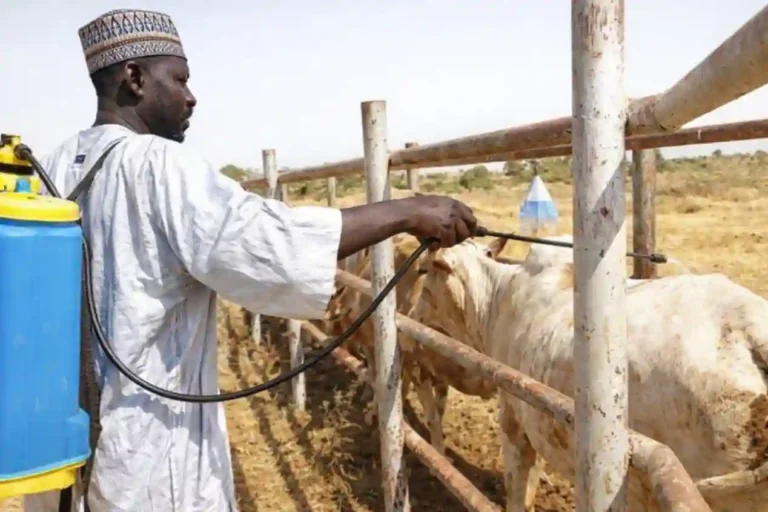
The federal government, through the Federal Ministry of Livestock Development, has launched a coordinated intervention to control tsetse fly and other parasites affecting cattle in Taraba State and Sokoto State, as part of ongoing efforts to improve livestock health and increase productivity nationwide.

The exercise, which commenced on Monday, 22 December 2025, involves the spraying of approved insecticides on cattle farms and selected strategic locations to reduce disease vectors and limit the spread of livestock infections that affect animal welfare and farmer incomes.

Leading the intervention in Jalingo, the State Coordinator and Federal Epidemiology Officer, Dr. Emmanuel Yarai, said the first phase of the programme covers Jalingo, Ardo-Kola, Lau, and Wukari Local Government Areas. He explained that the programme would later be extended to the remaining 12 LGAs to ensure full coverage across Taraba State.

Dr. Yarai noted that tsetse fly transmits trypanosomiasis, describing it as “a highly endemic disease in Africa that causes significant economic losses to livestock farmers.” He explained that the disease attacks the blood and lymphatic systems of infected animals, leading to fever, weight loss, anaemia, paralysis, and in severe cases, death.

He added that although most cattle breeds are susceptible to the disease, West African N’dama cattle possess a natural tolerance to trypanosomiasis. According to him, the intervention also includes the deployment of biconical traps in strategic locations to sustain control efforts and further reduce infection rates beyond the initial spraying exercise.

In Sokoto State, the Ministry’s Coordinator, Dr. Umar Tukur Argungu, said farmers assisted the team by identifying grazing areas with high tsetse fly prevalence. He noted that traps would be installed in affected locations to confirm and address the level of infestation.

Dr. Argungu disclosed that the team visited major livestock markets, including Kasuwan Kara in Sokoto North and Bodinga Local Government Areas, where engagements were held with farmers and traders. He added that concerns raised during the visits would be documented and forwarded for consideration in future government interventions.

The Director of Veterinary Services at the Sokoto State Ministry of Animal Health and Fisheries, Alhaji Abubakar Maidabo, urged farmers to promptly report disease outbreaks, warning that “some livestock diseases are zoonotic and pose risks to human health.”

Chairman of the Cattle Traders Association in Sokoto State, Alhaji Bashir Bello, said traders recorded severe losses during the last rainy season due to skin rashes linked to tsetse fly infestation. He noted that the problem cuts across all 23 local government areas, especially around hurumi and fadama zones between Sokoto South and Wamakko. Bello also identified foot-and-mouth disease and peste des petits ruminants (PPR) as other major challenges, pledging timely reporting of future outbreaks to enable swift ministry response.

Foundation Concludes Empowerment Programme Across Lagos, Osun and Oyo

0

The Okanlomo Foundation has concluded its multi-state empowerment and humanitarian intervention across Lagos, Osun, and Ibadan, Oyo State.

The foundation reaffirmed its commitment towards sustainable community development, social inclusion, and the promotion of human dignity.

Its founder, Oluwatosin Akinyemi, said the initiative combined youth skills empowerment with elderly welfare support, addressing economic vulnerability and social care needs in underserved communities.

According to her, the programme was designed to create long-term impact through skills acquisition, entrepreneurship support, and targeted humanitarian assistance.

Akinyemi said, “Okanlomo Foundation is a non-governmental organisation focused on empowering individuals and communities through skills development, entrepreneurship promotion and social welfare initiatives. The Foundation programmes are aimed at providing sustainable solutions that improve livelihoods, support vulnerable populations and contribute to the attainment of the United Nations Sustainable Development Goals (SDGs) in Nigeria.”

As part of the empowerment programme, the Foundation implemented a four-month intensive training in fashion design and makeup artistry, during which eight beneficiaries were trained and certified.

The training was delivered in collaboration with Phitos Glam and Anike Clothings, providing participants with hands-on, industry-relevant skills targeted at self-employment and economic independence.

To further strengthen sustainability outcomes, beneficiaries also participated in a comprehensive entrepreneurship and business development session facilitated by Temitayo Adewole, National Business Development Service Provider (NBDSP).

“The session covered enterprise structuring, customer acquisition, pricing strategies and business growth, equipping participants with practical tools to successfully launch and manage their businesses,” Akinyemi explained.

She thanked partners, facilitators, volunteers and supporters for their contributions to the success of the programme.

Akinyemi emphasised the importance of collaboration in achieving sustainable development, noting that the Foundation remained open to partnerships with government institutions, corporate organisations, individuals and other non-profit bodies to scale its impact.

“Beyond youth empowerment, the Foundation also extended its humanitarian outreach to elderly citizens. In partnership with Omojolagbe Geriatric Care Foundation, Ibadan, food items and essential gift packages were distributed to 90 elderly persons across Lagos and Ibadan. The intervention was aimed at providing immediate relief while promoting dignity, care and social inclusion for senior citizens,” she added.

Founder of Omojolagbe Geriatric Care Foundation, Dr. Ojo Florence, expressed gratitude for the support received and commended Okanlomo Foundation for its commitment to elderly welfare.

She prayed for the organisation and expressed hope for continued collaboration in serving the aged population.

The Foundation noted that the initiative aligned with several SDGs, including SDG 1 (No Poverty), SDG 4 (Quality Education), SDG 8 (Decent Work and Economic Growth), SDG 10 (Reduced Inequalities) and SDG 17 (Partnerships for the Goals).

One of the beneficiaries, Ogunowo Valentina, described the programme as life-changing, stating that it enabled her to acquire her desired skill despite financial limitations.

She said the training has positioned her for self-reliance and economic empowerment.

Akpabio Donates 10 Fishing Boats to Riverine Women in Akwa Ibom

The President of the Senate, Distinguished Senator Godswill Akpabio, has empowered women in riverine communities of Akwa Ibom State through the donation of fully equipped fishing boats, in a move aimed at strengthening livelihoods and supporting local economic activity. The intervention took place on Boxing Day at Senator Akpabio’s country home in Ukana, Essien Udim Local Government Area, and forms part of his ongoing constituency empowerment programme targeted at grassroots development.

The empowerment initiative involved the presentation of 10 outboard engine fishing boats to women and cooperative groups drawn from riverine communities across the state, where fishing remains the primary source of income and food supply. The boats were distributed to beneficiaries selected from coastal and riverine areas known for fishing activities, with the aim of boosting productivity and improving safety on the waterways.

Each fishing boat was fully equipped with essential tools required for modern fishing operations. These included fishing nets, refrigerators for fish preservation, fuel tanks, and durable engines designed to withstand regular use on open waters. Larger boats were fitted with twin 75-horsepower engines, while smaller boats were equipped with 40-horsepower engines, ensuring that the equipment matched the specific needs and operating conditions of different fishing communities.

Speaking at the presentation ceremony, Senator Akpabio stressed that meaningful empowerment must focus on providing tools that enable people to earn sustainable incomes rather than offering short-term financial assistance. He noted that fishing communities play a crucial role in food production and local commerce, and that supporting women in these areas would have a direct impact on household welfare and community stability.

“I can never forget your prayers, your love, and your support. Today, I am empowering you not just to catch fish, but to build stronger, self-reliant livelihoods for your families and communities,” Senator Akpabio said. He added that the empowerment programme was designed to help beneficiaries expand their businesses, reduce operational risks, and improve earnings over time.

The Senate President also acknowledged the long-standing contributions of women in the riverine economy, describing them as central to fish processing, preservation, and distribution. According to him, investing in women-led fishing activities would strengthen local food supply chains and promote economic resilience across coastal communities in Akwa Ibom State.

Dr Ekaette Unoma Akpabio, wife of the Senate President, also addressed the gathering and expressed appreciation for the outreach. She said the programme demonstrated a clear understanding of the realities of life in riverine areas, where access to modern tools often determines income levels and long-term economic security. Her remarks emphasized that empowerment initiatives must be practical, inclusive, and tailored to the specific challenges faced by beneficiaries.

She noted that providing modern fishing equipment would not only ease the physical burden of fishing work but also improve efficiency and reduce post-harvest losses. According to her, access to refrigerators and better storage facilities would help women preserve their catch for longer periods, secure better prices, and reduce waste associated with traditional methods.

Beneficiaries of the programme described the initiative as timely and transformative, stating that access to modern fishing boats and equipment would significantly expand their capacity to operate. They explained that many women previously relied on rented or outdated boats, which limited the distance they could travel and exposed them to safety risks on the water.

One representative of the beneficiaries said the support would allow them to operate with greater confidence and dignity. She noted that the boats and equipment would help them increase daily catch volumes, stabilize income, and improve their ability to support their families. According to her, the intervention would enable them to “fish with dignity and grow our operations for lasting benefit.”

The empowerment programme aligns with Senator Akpabio’s broader vision of uplifting grassroots communities and strengthening local industries through access to productive assets. By focusing on fishing, a key economic activity in Akwa Ibom’s riverine belt, the initiative targets a sector with strong links to food security, employment, and rural development.

Observers noted that the intervention goes beyond individual support by reinforcing cooperative structures and community-based economic activity. With improved tools and shared resources, beneficiaries are expected to contribute more effectively to local markets and community prosperity, while building resilience against economic shocks common in coastal areas.

The initiative has been described as a practical example of community-centered leadership that prioritizes sustainability, economic independence, and inclusive development in Akwa Ibom State.