Home Blog Page 222

A’ Ibom unveils manufacturing apprenticeship programme for 2000 youth

0

Akwa Ibom State Government has announced the introduction of a dual training programme that places 2000 youths annually in apprenticeships within manufacturing firms, as part of efforts to build skilled manpower and support industrial growth in the state. The programme was unveiled alongside the completion of the state’s industrial park, which officials say will create hundreds of jobs and strengthen entrepreneurship.

The industrial park, located on a 250-hectare facility, is equipped with modern amenities including a dedicated customs checkpoint and a logistics hub. According to the state government, the infrastructure has reduced the cost of moving goods to port by up to 30 percent, making operations easier for manufacturers.

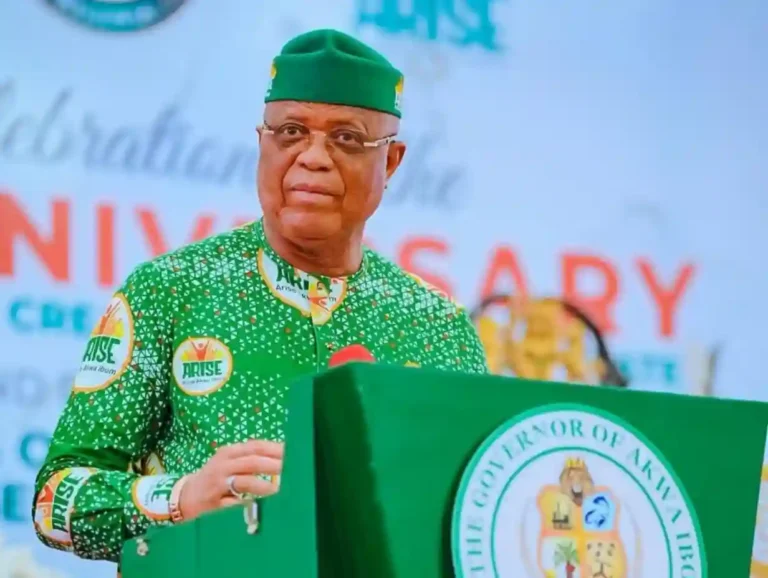
Governor Umo Eno disclosed this while declaring open the 18th Annual General Meeting of the Cross River and Akwa Ibom States branch of the Manufacturers Association of Nigeria (MAN) held in Uyo, the state capital.

The governor said the state has also deployed a digital business portal described as a one-stop-shop to simplify company registration, tax incentives and permits. He explained that since the portal was launched, the average time required to obtain a business licence has dropped from 45 days to just seven days.

“In partnership with the Nigerian Institute of Industrial Engineers and local universities, we have introduced a dual training programme that places 2000 youths annually in apprenticeships within manufacturing firms, ensuring a pipeline of skilled labour tailored to industry need,” he said.

Governor Eno, who was represented at the event by the Commissioner for Trade and Investment, Iniobong Ekong, said the state’s industrial policy for 2024 to 2029 offers several incentives to investors. He listed these to include a five-year tax holiday for new manufacturing enterprises, a 50 percent reduction in electricity tariffs for energy-intensive plants, and a matching grant scheme for research and development projects, which he said has delivered a 15 percent increase in productivity.

He called on MAN members to partner with the state government by investing in the industrial park, tapping into available incentives and bringing innovation into the state.

“Together we can create a robust ecosystem where raw materials are transformed into value-added products, jobs are generated and our economy diversifies beyond oil,” the governor said.

He also appealed to the federal government for policy support. “To the federal government, we seek continued support in the form of fiscal measures that encourage local production as well as the swift implementation of the national industrial policy which aligns closely with our state initiatives,” he stated.

In his address, the chairman of the MAN branch, Inalegwu Adoga, praised the governors of the two states for improving infrastructure, stabilizing the business environment, enhancing security and supporting local enterprise. He said these efforts have gone unnoticed.

Advertisement

NMDPRA, NUPRC CEOs resign as Tinubu seeks replacements

0

The chief executive of the Nigerian Midstream and Downstream Petroleum Regulatory Authority (NMDPRA), Mr Farouk Ahmed, has resigned alongside his counterpart at the Nigerian Upstream Petroleum Regulatory Commission (NUPRC), Mr Gbenga Komolafe. Following the development, President Bola Tinubu has asked the Senate to confirm new chief executives for the two agencies.

The President’s request was conveyed in separate letters to the Senate, according to a statement signed by Mr Bayo Onanuga, the Special Adviser to the President on Information and Strategy. The officials were appointed in 2021 by former President Muhammadu Buhari to head the regulatory agencies created under the Petroleum Industry Act (PIA).

President Tinubu requested expedited confirmation of Mrs Oritsemeyiwa Amanorisewo Eyesan as chief executive officer of NUPRC and Mr Saidu Aliyu Mohammed as chief executive officer of NMDPRA. The nominations were forwarded to the Senate for consideration.

Mr Ahmed’s resignation comes amid a conflict with businessman, Mr Aliko Dangote, who alleged that the NMDPRA chief and his family were “living beyond their legitimate means,” citing “millions of Dollars” allegedly spent on overseas schooling for his four children. The allegations drew public attention to the leadership of the petroleum regulator.

Mrs Eyesan is a graduate of Economics from the University of Benin and spent nearly 33 years with the NNPC and its subsidiaries. She retired as Executive Vice President, Upstream, during the 2023–2024 period, and previously served as Group General Manager, Corporate Planning and Strategy at NNPC between 2019 and 2023.

Mr Mohammed, born in 1957 in Gombe, graduated from Ahmadu Bello University in 1981 with a Bachelor’s degree in Chemical Engineering. He was announced as an independent non-executive director at Seplat Energy.

His previous roles include Managing Director of Kaduna Refining and Petrochemical Company and Nigerian Gas Company, and Chair of the boards of West African Gas Pipeline Company, Nigeria LNG subsidiaries, and NNPC Retail. He also served as Group Executive Director and Chief Operating Officer, Gas and Power Directorate, where he provided leadership for major gas projects and policy frameworks, including the Gas Masterplan, Gas Network Code, and contributions to the PIA. He played a role in delivering projects such as the Escravos–Lagos Pipeline Expansion and the Ajaokuta–Kaduna–Kano (AKK) Gas Pipeline.

SMEDAN unveils 2026 roadmap to create jobs, affordable MSME financing

0

The Small and Medium Enterprises Development Agency of Nigeria (SMEDAN) has unveiled an ambitious 2026 roadmap aimed at expanding job creation, easing access to affordable finance, and driving inclusive growth across Nigeria’s micro, small and medium enterprises (MSMEs) sector.

The roadmap was announced at an interactive session with journalists in Abuja and places strong emphasis on skills development, financial inclusion, and a review of the National MSME Policy, with focus on grassroots participation across the country.

Speaking at the briefing, SMEDAN Director-General, Charles Odii, said the agency’s 2026 agenda builds on gains recorded in 2025, including the creation of more than 90,000 direct jobs and the disbursement of ₦12bn in affordable financing to small businesses nationwide.

According to Odii, the new strategy is designed to reduce the cost of doing business for MSMEs while ensuring that government interventions reach those they are meant to serve.

“We are focused on creating more jobs and ensuring that small businesses can access finance at single-digit interest rates,” he said. “Anything above that is not sustainable for MSMEs, and we will not be part of it.”

A key highlight of the roadmap is SMEDAN’s plan to deepen access to low-cost funding through partnerships with the Bank of Industry, state governments, and other development partners.

Odii disclosed that several states, including Kaduna, Enugu, Zamfara and others, have adopted a matching-fund model, committing up to ₦1bn each to support small businesses in their jurisdictions.

Under the arrangement, MSMEs can access funds for three purposes, including boosting working capital, procuring workspaces or farms, and acquiring essential work tools.

Odii stressed that the funds are strictly for business growth and would be closely monitored to prevent diversion or misuse.

Beyond financing, SMEDAN is also prioritising skills acquisition and inclusion, particularly for vulnerable and marginalised groups.

One of the most notable initiatives in the 2026 roadmap is a planned inmate rehabilitation and reintegration programme, under which the agency will provide vocational training to prison inmates between six months and one year before their release.

Odii said the initiative is aimed at breaking the stigma faced by formerly incarcerated persons and reintegrating them into the productive economy.

“Many of them have told us that because of the stigma, people don’t want to touch them,” he said. “We want to equip them with skills and work with employers to absorb them back into the workforce as responsible, employable citizens.”

As part of its performance review for 2025, Odii reported that 90,162 direct jobs were created across multiple sectors, while 263,454 businesses were formally registered to improve access to finance and sustainability.

He also said that 18,339 nano businesses received conditional grants, 3,100 cooperatives benefited from financial support, and over 200,000 work tools were distributed nationwide.

Another pillar of the 2026 roadmap is the planned review of the National MSME Policy, which is due to expire on December 31, 2025.

Odii said the new 2026–2031 policy framework would be developed through consultations with entrepreneurs across the 36 states and the Federal Capital Territory.

“This policy will not be written behind a desk in Abuja,” he said. “We want small business owners to tell us what is working, what is not working, and what policies they want to see.”

To support this process, SMEDAN has opened an online portal for stakeholders to submit inputs and is engaging the National MSME Council, chaired by the Vice President.

The final draft of the revised policy is expected to be presented to the President after consultations, with completion targeted for the first quarter of 2026.

Infrastructure development also features in the roadmap, with plans to modernise 23 Industrial Development Centres (IDCs) across the country.

According to Odii, the upgraded centres will provide training, incubation, and production support to MSMEs at no cost.

Addressing challenges facing small businesses, Odii identified power supply and access to finance as the most critical issues.

He said SMEDAN is exploring renewable energy solutions, including solar power and compressed natural gas (CNG), while partnering with private firms to allow MSMEs to acquire power equipment on instalment plans.

He added that these measures are expected to ease operating costs, improve productivity, and help small businesses remain competitive while expanding their operations responsibly.

The agency said feedback from operators will guide implementation and continuous programme adjustments nationwide.

“We know government cannot do this alone,” he said, calling for stronger collaboration with the private sector, media, and development partners to bridge the information gap between government programmes and MSME operators.

UBA Backs Lagride with $100m to Expand EV Charging, Driver Ownership

0

The United Bank for Africa (UBA) Plc has provided a financing facility worth about $100 million to support Lagride in expanding its electric vehicle charging infrastructure across Lagos State. The funding will also be used to scale the company’s Drive-to-Own programme, enabling about 3,500 Lagos drivers to move from daily income earners into long-term asset owners, business operators and mobility investors.

The financing partnership is expected to strengthen Lagos State’s transportation ecosystem and speed up the shift toward a more structured, technology-enabled and financially bankable mobility sector. It aligns with growing efforts to improve urban transport while supporting drivers with access to sustainable financing options.

Over the past 10 months, Lagride has rebuilt its entire onboarding and operational system for drivers, known as Lagride Captains. The company introduced a performance-led Drive-to-Earn structure supported by weekly and monthly rental models. This system has produced consistent 90-day usage and repayment data across its fleet, allowing UBA and other financial institutions to assess driver performance with greater accuracy, confidence and transparency.

Eligibility for the Drive-to-Own programme is based on clearly defined performance thresholds, repayment discipline, safety compliance and service consistency. Through this structured approach, Lagride has positioned itself as a data-driven and credit-ready mobility platform, setting a benchmark for bankable driver financing and asset ownership in Nigeria.

As part of the milestone, Lagride also unveiled an expanded electric vehicle charging facility in Alausa, Lagos. The facility is designed to support the growing electric vehicle segment within Lagride’s fleet, reduce operational downtime and enable more efficient and sustainable transportation at scale. By combining driver financing with practical EV infrastructure, the company is targeting long-term improvements in clean mobility.

“Lagride was created to give Lagos a modern, disciplined and technology-driven mobility system while ensuring that drivers are not left behind,” the chairman of Lagride, Ms Diana Chen, said. She added that the goal is for drivers, known as Captains, to become business owners, fleet partners and mobility investors, not just drivers.

“This $100 million partnership with UBA moves thousands of captains closer to owning productive assets, managing multiple cars and building stronger financial futures. It is a major step forward in our commitment to driver prosperity and the future of smart mobility in Lagos,” Chen said.

The chief executive of UBA, Mr Oliver Alawuba, said Lagride represents the kind of transformational, well-governed and data-backed initiative that UBA exists to support.

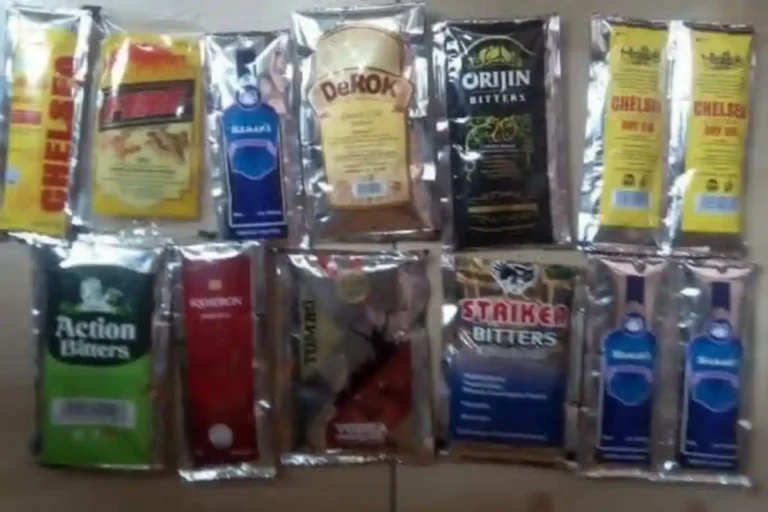
FG Suspension of Sachet Alcohol Ban Gets NECA Backing

0

The decision of the federal government to suspend the ban on alcohol produced in sachets has been welcomed by the Nigeria Employers’ Consultative Association (NECA).

The Director-General of NECA, Mr Adewale-Smatt Oyerinde, described the move as a step in the right direction, saying it respects existing National Assembly resolutions and restores regulatory clarity for operators in the sector.

Recall that the Office of the Secretary to the Government of the Federation (OSGF) had recently ordered the suspension of the policy following concerns raised by the House of Representatives Committee on Food and Drugs Administration and Control.

In a statement, Mr Oyerinde said the immediate suspension of all enforcement actions relating to the proposed ban on sachet alcohol and 200ml PET bottle products, pending the conclusion of consultations and the issuance of a final policy directive, was positive for the industry and the wider economy.

According to him, the sachet and PET segment of the alcoholic beverage industry represents a significant share of the estimated N800 billion invested in the sector and supports thousands of direct and indirect jobs across manufacturing, packaging, logistics, wholesale and retail activities.

He stressed that in an economy already facing high unemployment and rising business costs, abrupt policy actions that threaten existing jobs and legitimate investments would be counterproductive and damaging.

“We fully acknowledge the need to address public health concerns, especially regarding children and young people, but the solutions must be evidence-based and carefully designed so as not to drive activities into the informal and unregulated economy or encourage illicit products,” he said.

Mr Oyerinde added NECA was looking forward to deeper consultations with stakeholders to ensure jobs, livelihoods and legitimate investments are protected, while public health objectives are achieved.

Federal Ministry of Works Latest Recruitment 2025

There are claims that the Federal Ministry of Works is recruiting unemployed graduates and skilled artisans under its Capacity Building and On-Site Training Programme. It is further stated that individuals interested in the Federal Ministry of Works’ recruitment should review job details and the application process.

However, information available to Nigeria Startup News indicates that the Ministry has not yet made any announcement concerning the recruitment.

The claims state that the Federal Ministry of Works is currently recruiting for various positions, including Surveyor Grade I, Principal Data Processing Officer, Senior Data Processing Officer, Higher Data Processing Officer, Senior Technical Officer (Mechanical), Higher Technical Officer (Mechanical), Senior Instructor (Mechanical), Instructor II (Mechanical), Senior Scientific Officer, Computer Engineer II, Senior Superintendent of Press, and Higher Superintendent of Press.

According to the claims, interested individuals are to visit the Federal Ministry of Works website and follow steps: choose the desired job vacancy, read the job description, fill out the online application form, attach required documents, and submit the application.

The stated eligibility criteria include being a Nigerian citizen, being at least 20 years old and not older than 45 years, possessing a degree or HND certification, being computer literate, having communication skills, and having three years of experience.

The claims further state that the recruitment process is expected to last two weeks, and applicants are advised to apply immediately.

To apply, interested applicants should visit www.fmw.gov.ng and apply.

NADF Reviews Farm Input Supply Programme Pilot With Agro-Processors

0

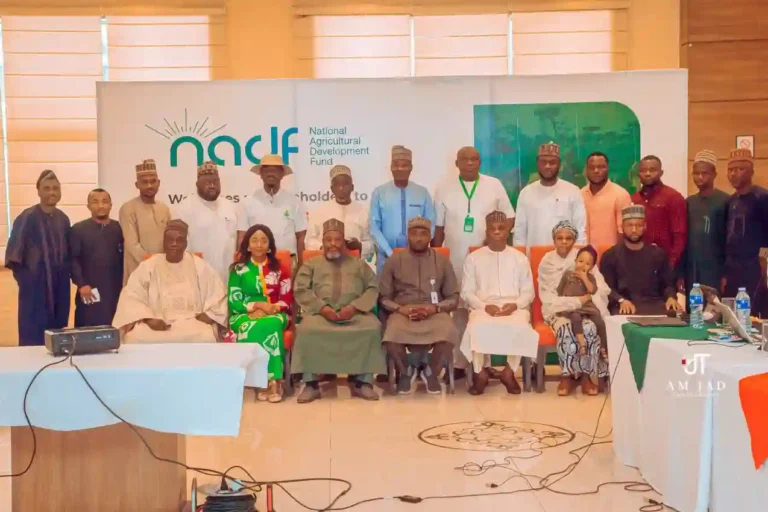
The National Agricultural Development Fund (NADF) has engaged agro-processors and other stakeholders to review the pilot phase of its Farm Input Supply Programme and strengthen delivery ahead of the next farming season.

The engagement took place through a roundtable held concurrently in Lagos and Kano States, bringing together agro-processors from both the southern and northern regions. The Executive Secretary of NADF, Mohammed Ibrahim, was represented by Mr Abiodun Sosanya, General Manager, Corporate Services, in Lagos, and Mr Nasir Ingawa, General Manager, Partnerships and Investor Relations, in Kano.

Speaking on behalf of the Executive Secretary, Sosanya and Ingawa explained that the programme was created to address a key challenge facing Nigerian agriculture. “The NADF–Farm Input Supply Programme (NADF-FISP) is a strategic intervention to improve access to essential inputs, enhance productivity and strengthen rural livelihoods through out-grower systems,” Ibrahim said.

He noted that the pilot phase recorded implementation difficulties, especially delays caused by logistics issues and climate variability. “These challenges are real and reflect the complexity of agricultural interventions, but they also provide valuable lessons,” he said. Ibrahim added that the review process would help improve coordination, timelines and quality assurance in the next phase.

Agro-processors expressed support for the programme’s objectives and subsidy structure, describing them as relevant to farmers’ needs. However, they raised concerns over logistics delays, changes in import policies and falling commodity prices, noting possible effects on profitability and loan repayment. They called for stronger stakeholder engagement.

NADF assured participants that feedback from the discussions would guide a more efficient, transparent and climate-responsive second phase, in line with efforts to boost agricultural productivity and national food security across the country in Nigeria nationwide for farmers and stakeholders alike.

FG Sets Up Livestock Committee to Address Farmer Herder Crisis

0

The National Economic Council (NEC) has constituted a committee on livestock development to fast track the implementation of livestock production reforms in Nigeria, as part of efforts to strengthen food security and address long standing challenges in the sector.

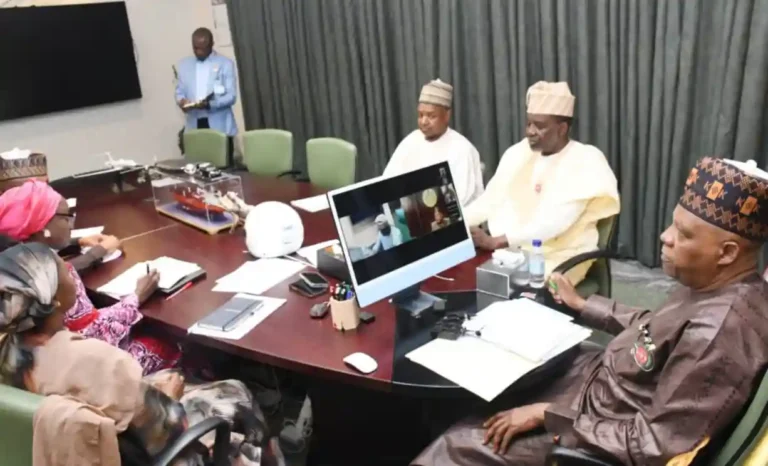
The decision was taken on Wednesday during the 155th meeting of NEC, which was held virtually. The committee is expected to work closely with relevant stakeholders to ensure effective implementation of livestock development programmes across the country.

Chairman of the Council and Vice President of Nigeria, Kashim Shettima, said a practical, enduring, and nationally accepted solution to the farmer herder crisis remains critical to guaranteeing food security in Nigeria. He stressed that food security is both an economic and moral responsibility of government to its citizens.

The NEC committee on Livestock Development includes one representative from each of the six geo political zones. Bauchi State represents the North East, Niger State represents the North Central, Ondo State represents the South West, Imo State represents the South East, Cross River State represents the South South, while Kebbi State represents the North West.

Other members of the committee are the Ministers of Livestock Development, Agriculture and Food Security, and Budget and Economic Planning, as well as the Senior Special Assistant to the President on Agribusiness from the Office of the Vice President.

The Council directed the committee to review the recommendations of the Presidential Livestock Reform Committee (PLRC) and the proposal submitted by the Ministry of Livestock Development. The committee is also to identify states that are willing and ready to participate in the implementation of the livestock development programme.

President Bola Ahmed Tinubu had earlier directed NEC to work with the Ministry of Livestock Development to develop a roadmap for transforming Nigeria’s livestock industry. This directive was given during the Federal Executive Council meeting held on 10 December 2025.

Following the President’s directive, the Ministry of Livestock Development prepared a proposal which was presented to the Council for endorsement. The proposal is aimed at repositioning Nigeria’s livestock sector as a modern, peaceful, and profitable contributor to national development.

In his opening address, Vice President Shettima said food security cannot be achieved without resolving the farmer herder crisis. “We must acknowledge with absolute regret the deep distrust created by this violence, born out of a trade and an ancestral practice that ought to have remained a central pillar of our food security and rural economy. The loss of lives, the destruction of homes, and the devastation of farmlands must end.”

He added, “We cannot perform a task as fundamental as feeding ourselves unless we find an enduring, practical, and nationally accepted solution to the farmer herder crisis. Food security is a moral obligation to our people.”

The Vice President said the conflicts were caused by poor management of long standing tensions that escalated into violence. “What began as a challenge of coexistence gradually hardened into cycles of violence that were allowed to persist for far too long without a durable solution,” Senator Shettima said.

He noted that the violence now affects all regions of the country. “Today, that violence respects no geography. It has become a shared nightmare that has scarred every region, disrupted livelihoods, and eroded trust between neighbours who once relied on one another for survival,” he added.

Vice President Shettima commended President Tinubu’s initiative to transform livestock production and urged state governors to take the presentations by the Ministry of Livestock Development and the PLRC seriously. He said states should leverage opportunities in the sector for economic growth, conflict resolution, and peace.

He noted that President Tinubu created a separate Ministry of Livestock Development in recognition of the sector’s vast potential. He assured that the recommendations of the PLRC and the Ministry would receive priority attention from the administration.

“The presentations before us today offer critical insight into responses designed to stabilise our food systems, restore confidence in rural economies, and reduce the security pressures that flow from competition over land, water, and livelihoods,” the Vice President stated.

“At their core, these presentations seek to dispel the false choice between agriculture and security by demonstrating that both are inseparable pillars of national stability,” he added nationwide across rural communities countrywide.

Ekiti approves PFF documents for World Bank SABER programme

0

The Ekiti State Executive Council has approved the Project Facilitation Fund (PFF) documents for implementation under the World Bank State Action on Business Enabling Reforms (SABER) programme.

The decision was taken at the Council’s meeting held on Tuesday, 16th December, 2025, as part of the state’s participation in the SABER programme and in fulfilment of a key requirement under Disbursement-Linked Indicator (DLI) 3, which focuses on developing an effective Public Private Partnership (PPP) framework.

According to the Council, the approval “meets the expectation that the State develops and publishes Project Facilitation Fund documents to strengthen private sector participation in infrastructure and investment projects.”

The approved documents include the Ekiti State Infrastructure and Investment Facilitation Fund Regulation, the Ekiti State Project Facilitation Fund (PFF) Business Plan and Financial Plan, and the Ekiti State Project Facilitation Fund (PFF) Governance and Operational Manual.

The Council explained that the documents outline the recommended structure, governance, and operational modalities for the PFF, noting that they are consistent with national PPP policies and aligned with international best practices.

In preparing the documents, the Ekiti State Development and Investment Promotion Agency (EKDIPA) considered the Ekiti Wealth Fund Law 2023 as the legal framework for the PFF. The PFF was reviewed and cleared by the Nigeria Governors’ Forum (NGF) Secretariat for use, while all three documents were developed with technical support from the NGF through virtual review sessions to ensure quality and compliance and transparent implementation across state.

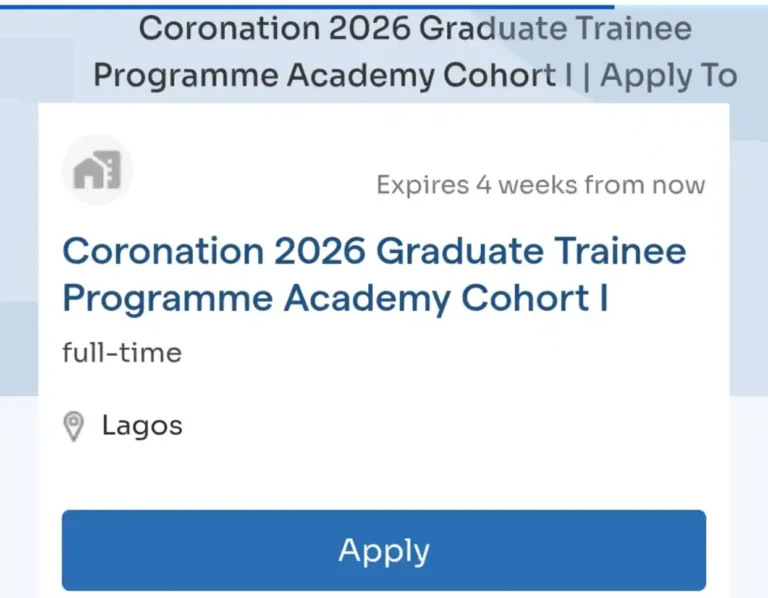
Apply: Coronation 2026 Graduate Trainee Programme Academy Cohort I

0

The Coronation has opened applications for 2026 Graduate Trainee Programme Academy Cohort I in Lagos, offering young graduates an opportunity to start their careers within the Coronation Ecosystem. The programme is designed to attract entry-level talent into companies across the group, while providing practical work experience, tailored training, and structured mentorship in a supportive environment.

The 2026 Graduate Trainee Programme Academy features eight pathways. These include Actuarial Pathway, Enterprise Pathway, Finance Pathway, Financial Advisers (Trust Advisers) Pathway, Insurance Pathway, Investment Pathway, Sales Pathway, and Technology Pathway. The programme is aimed at helping participants build relevant skills and gain exposure across key business areas.

Eligibility requirements state that applicants must hold a minimum of a Bachelor’s degree from a reputable university with at least a Second-Class Upper Division (2:1). Candidates are also required to have a minimum of five O’ Level credits, including English and Mathematics, and must have completed the National Youth Service Corps (NYSC) programme. Applicants must not be older than 27 years at the time of application, while relevant professional qualifications or certifications will be considered an added advantage.

The application deadline is four weeks from December 17.

To apply, interested applicants should visit coronationgroup.seamlesshiring.com/job/view/7758 and apply.

Coronation is a venture builder business in Nigeria, focused on digital technologies and offering equal employment opportunity nationwide.