
Home Blog Page 227

NITDA Urges Kano to Use Innovation to Drive Economic Growth

The National Information Technology Development Agency has urged the Kano State government to pursue initiatives that use innovation to reshape the state’s economic future, according to a statement on Monday. The call was made by the director-general of NITDA, Kashifu Inuwa, during a speech at the Kano Startup Weekend, where he encouraged government officials, entrepreneurs, academics and investors to embrace innovation, technology and collaboration as key drivers of growth in the 21st century.

Mr Inuwa acknowledged Kano’s reputation as a commercial hub of northern Nigeria and the wider Sahel region. He said its history of trade, enterprise and human capital provides a strong foundation, but the modern economy now offers greater opportunities through innovation and technology.

“Innovation is the process of transforming ideas into impactful solutions through commercialisation. When ideas are effectively deployed, they create value, solve societal challenges and generate sustainable economic growth,” he said.

He added that Kano’s large market, strategic location and vibrant entrepreneurial culture place it in a strong position to benefit from innovation-driven opportunities. “Innovation is the process of taking an idea from inception to impact. On the other hand, when you commercialise an idea and turn it into a product or service that solves a real problem, it drives economic growth and inclusion,” Mr Inuwa said.

The NITDA chief, however, noted challenges within the state’s education and research ecosystem. He said Kano is home to many degree-awarding institutions, but several operate in isolation from industry realities, with research outputs rarely translating into commercial or industrial applications.

Mr Inuwa said NITDA remains committed to strengthening national innovation capacity through focused human capital development programmes. He cited the Digital Literacy for All initiative, which aims to equip Nigerians with basic digital skills, and the 3 Million Technical Talents programme, designed to produce globally competitive technical professionals.

“Through DL4ALL, we are ensuring that Nigerians at all levels have the basic digital skills needed to participate in the digital economy. The 3MTT is deliberately building a pipeline of globally competitive technical talents who can drive innovation, create jobs and attract investment,” he said.
Advertisement

ActionAid seeks probe into alleged $5m school fees linked to NMDPRA Boss

0

ActionAid Nigeria has described recent media reports calling for a probe into the Chief Executive of the Nigerian Midstream and Downstream Petroleum Regulatory Authority (NMDPRA), Mr. Farouk Ahmed, as a matter of urgent national and economic importance. The civil society organisation said the allegations raise serious concerns about accountability and public trust in governance, especially in a country facing deep economic pressure and widespread hardship.

According to ActionAid Nigeria, the alleged payment of 5 million dollars, estimated at about N7.5 billion, for the secondary education of four children has triggered public outrage and questions about living far beyond legitimate means.

While stressing that the claims remain allegations, the organisation said they are grave and disturbing, and deserve urgent attention from relevant authorities. It noted that such allegations demand transparency, integrity, and accountability from those holding public office.

The group said the situation presents a critical test for President Bola Tinubu’s administration, particularly its stated commitment to fighting corruption and ensuring that public officials serve national interests rather than personal enrichment. ActionAid Nigeria said allegations of this magnitude strike directly at public confidence in government and democratic institutions, and therefore require an immediate, transparent, and independent response.

ActionAid Nigeria called on independent anti-graft agencies, including the Economic and Financial Crimes Commission (EFCC) and the Independent Corrupt Practices and Other Related Offences Commission (ICPC), to commence a comprehensive investigation into the matter. The organisation stressed that the findings of such investigations must be made public in order to restore confidence and show clearly that no individual is above the law.

Speaking in Abuja, the Country Director of ActionAid Nigeria, Andrew Mamedu, praised the role of whistleblowers in exposing alleged wrongdoing. He said, “ActionAid Nigeria wholeheartedly applauds Alhaji Aliko Dangote for taking the courageous step of blowing the whistle on this potentially colossal act of financial impropriety. His action demonstrates the vital principle that if Nigerians ‘See Something, it is best to Say Something.’”

Mamedu called on citizens, private sector players, and public service professionals who have evidence of corruption to speak out. He said whistleblowers are the first line of defence against the theft of public resources and must be protected and encouraged to come forward without fear.

He added, “While this allegation targets a high-ranking regulatory official, it reflects a deeper, systemic crisis in governance. The extravagant lifestyle of many politicians and public office holders far exceeding their verifiable incomes has become a national embarrassment and a driver of poverty and inequality.”

He said the open display of wealth through private jets, large estates, luxury vehicles, and unchecked spending without accountability normalises the diversion of public resources meant for health, education, and infrastructure.

Mamedu also raised concerns about petroleum supply and pricing in Nigeria. He said the country continues to import petroleum products at prices higher than what local refineries could achieve if they were fully functional. According to him, while importation benefits a few players, it places a heavy burden on ordinary Nigerians, particularly the poor and vulnerable. He said fair pricing must protect citizens, promote local production, and avoid monopolies.

He added that the government must urgently invest in maintaining functional refineries, establish more local refining capacity, and ensure Nigerians benefit from the country’s natural resources instead of being exploited by import driven market distortions. He further noted that a culture of impunity creates the impression that public office is mainly an avenue for wealth accumulation rather than selfless service, which continues to weaken trust in the rule of law.

ActionAid Nigeria called for systemic reforms to address corruption and rebuild public trust. The organisation said Mr. Farouk Ahmed must respond immediately to the allegations and provide full clarity. It also urged the Federal Government to strengthen mandatory public asset declarations, ensure verification, and make them accessible to citizens.

The group said EFCC and ICPC must investigate officials living beyond verified means, while the National Assembly should enforce transparency in procurement, budgets, and revenue management. Citizens were urged to monitor public resources, report corruption, and demand accountability at all levels.

National Health Fellows Shortlisted Candidates for Physical Interview

0

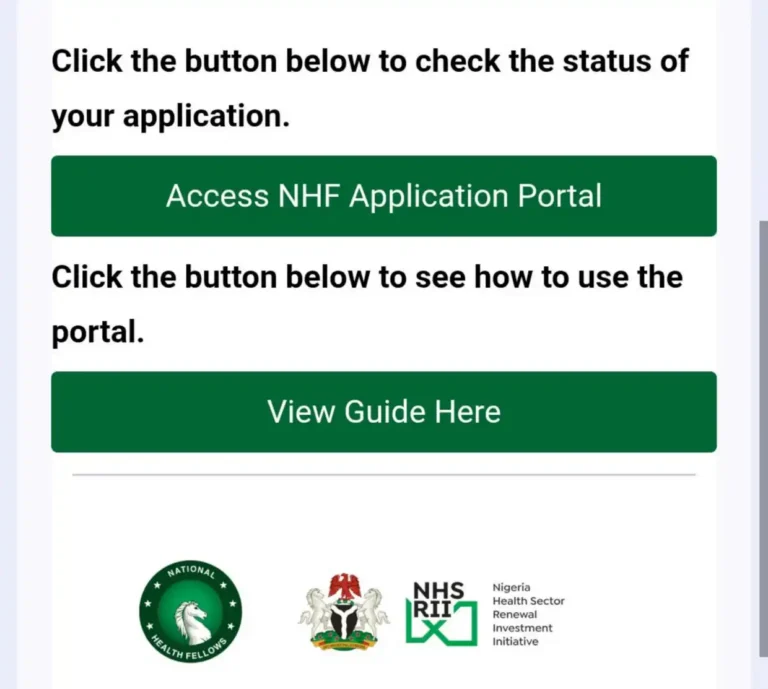
The National Health Fellows Programme (NHFP) 2.0 has sent emails to candidates to check if they have been shortlisted for the physical (oral) interview. Applicants are required to check their application status using the link provided in the email message.

To check NHFP, applicants should click the status button on their dashboard to view the status of their application via the NHFP application status portal, and follow the link in their email.

The physical interview stage will also involve further shortlisting of candidates who will be invited to attend NHFP interviews in their respective states.

All shortlisted candidates are being contacted. Applicants whose Application Status shows “Dropped” are not eligible.

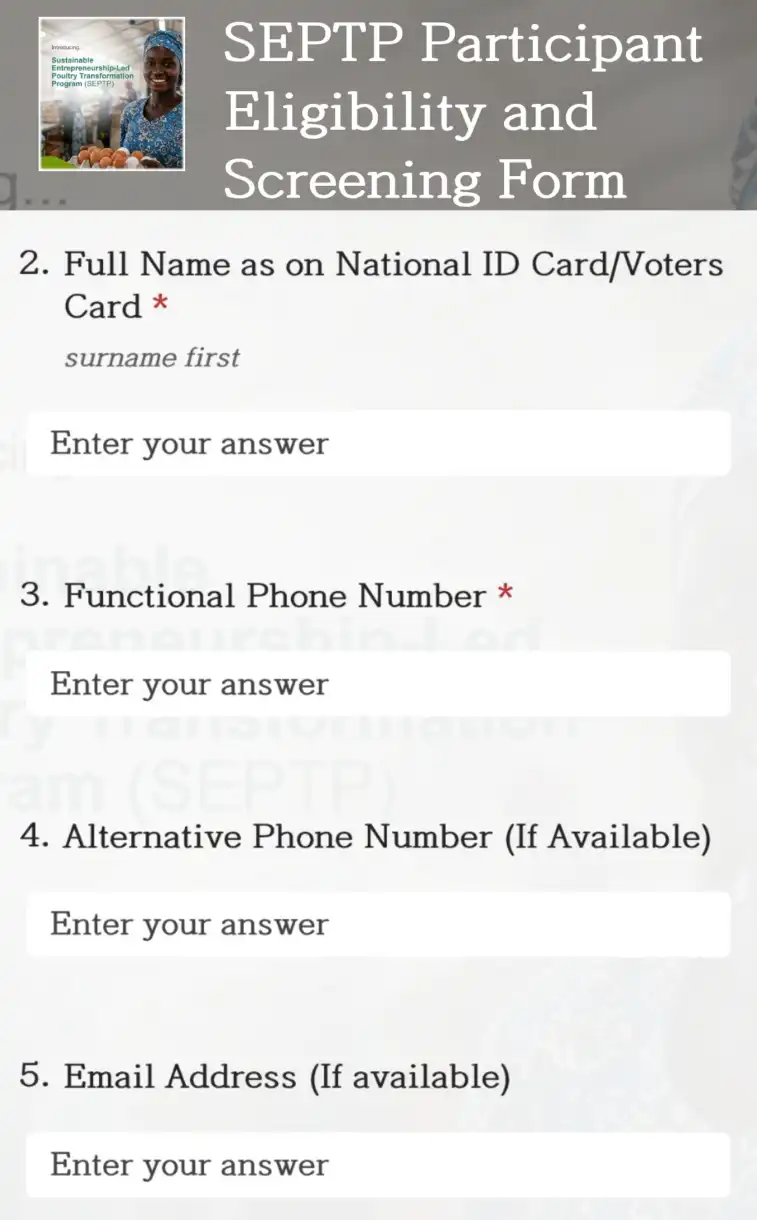
Apply: Christian Aid, Mastercard Foundation SEPTP Poultry Programme

Christian Aid Nigeria, with support from the Mastercard Foundation, is implementing the Sustainable Entrepreneurship-Led Poultry Transformation Program (SEPTP) to help youths aged 18 to 35 build sustainable livelihoods through poultry value chain activities.

The programme targets over 245,000 youths in Adamawa, Delta, Enugu, Ogun, Kano, Plateau, and the Federal Capital Territory (FCT), with priority for young women at 80 percent, persons with disabilities at five percent, and internally displaced persons at one percent.

Eligible participants will receive training and support to become productive poultry entrepreneurs involved in farming, processing, or marketing activities.

Registration is open only to applicants aged 18 to 35 who live in target states, have interest and space for poultry activities, and are open to learning.

Screening and verification will be conducted at state and community levels after the application deadline of January 04, 2026.

Registration is free, and applicants are advised not to send money to anyone, as only qualified participants will be contacted through official email or phone numbers.

To apply for SEPTP poultry programme, interested applicants should register through this Link before the deadline.

Abia enacts Startup Law 2025, unveils electric bus, youth tech plans

Governor Alex Otti has assented to the Startup Bill passed by the Abia State House of Assembly, officially enacting it as the Abia State Startup Law 2025. The development was disclosed on Monday by the Commissioner for Information, Okey Kanu, during a briefing with journalists on the outcome of the State Executive Council meeting held in Umuahia.

Mr Kanu said the new law was designed to domesticate and implement the Nigerian Startup Act 2022 within Abia State. He explained that the legislation provides a framework to foster innovation, support tech-enabled startups, nurture digital talent and position Abia as a technology and innovation hub.

“The law applies to companies with major operations in Abia and startups duly recognised and labelled under the national Act,” Mr Kanu said.

The commissioner also revealed plans to launch a state-owned electric bus mass transit scheme under the Abia Transport Transformation Project. He said the first batch of 20 electric buses arrived in November, while another 20 units were expected early next year.

According to him, about 100 buses would be deployed in the first phase of the project. He added that the 40-seater electric buses were custom-built for Abia State and can travel up to 400 kilometres on a single charge.

“They are equipped with modern safety and comfort features, including cameras, charging ports, disability access, emergency exits and fire extinguishers,” he said.

Mr Kanu said the initiative would place Abia at the forefront of clean and environmentally friendly mass transit in Nigeria. He also disclosed that the Abia 25-Year Development Plan would be unveiled on Tuesday at the International Conference Centre, Umuahia.

He said the unveiling would attract development partners, advisory council members, local government chairmen, traditional rulers and other stakeholders.

On healthcare, Mr Kanu said the Abia Global Medical Mission commenced on Monday and would run until December 20, with free advanced medical services offered across designated centres.

Mr Kanu added that 850 youths would graduate from the second cohort of the Abia Techrise ICT Training Programme on Saturday, bringing the total number of beneficiaries trained under the programme in 2025 to 1,399 youths.

The commissioner said the works ministry continued direct labour interventions on major roads ahead of the yuletide. He urged residents to remain vigilant during the festive season and report suspicious activities to security agencies, adding that security agencies had been placed on full alert to safeguard lives and property.

National Health Fellows Announces Physical Interviews for January 2026

0

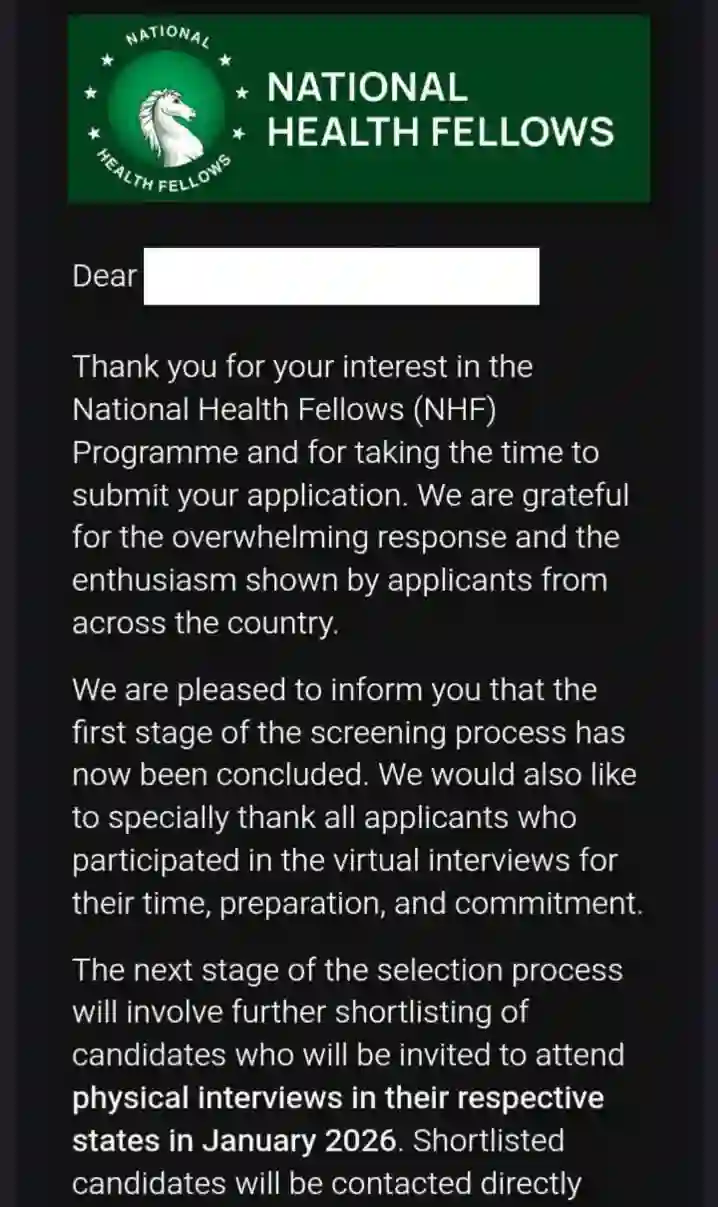
The National Health Fellows Programme has sent emails to applicants, informing them that the first phase of its recruitment process has been concluded. This phase covered the virtual interview stage and announced the start of the physical, also known as oral, interview stage.

Applicants were advised to check the status of their applications using the link provided in the message.

The message from National Health Fellows reads, “Dear candidate, thank you for your interest in the National Health Fellows (NHF) Programme and for taking the time to submit your application. We are grateful for the overwhelming response and the enthusiasm shown by applicants from across the country.”

It further stated, “We are pleased to inform you that the first stage of the screening process has now been concluded. We would also like to specially thank all applicants who participated in the virtual interviews for their time, preparation, and commitment.”

According to the update, the next stage will involve further shortlisting of candidates who will be invited to attend physical interviews in their respective states in January 2026.

The programme clarified that shortlisted candidates will be contacted. Applicants whose Application Status shows Dropped are not eligible.

FG to Establish National AI Centre at University of Jos

0

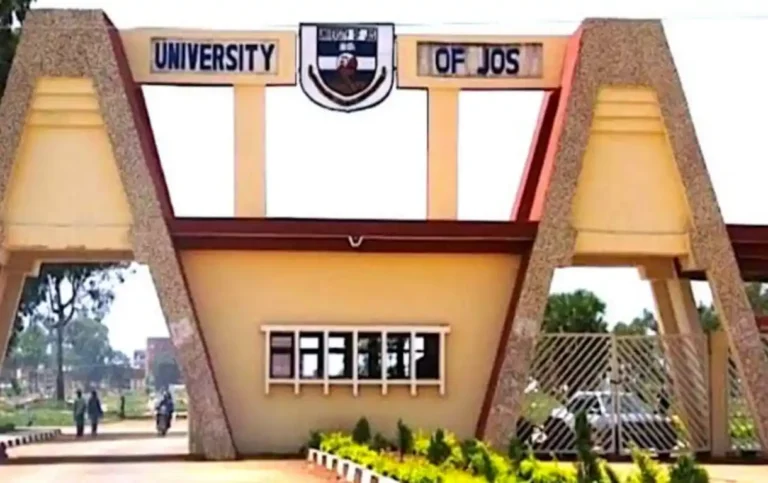
The Federal Government plans to establish a National Artificial Intelligence Centre of Excellence at the University of Jos as part of efforts to strengthen Nigeria’s digital transformation and place academic institutions at the centre of technology-driven development.

The Minister of Communications, Innovation and Digital Economy, Bosun Tijani, disclosed this in a post on LinkedIn on Sunday after delivering a convocation lecture at the University of Jos. He said the proposed centre would serve as a hub for artificial intelligence research, skills development and innovation, helping to align academic research with industry needs and government priorities.

Tijani spoke at the university’s 35th and 36th Convocation Ceremony, which also marked its 50th anniversary. His lecture was titled “Building a Prosperous Nigeria: Academic Institutions and the Architecture of a Technology-Powered Society.”

According to the minister, Nigerian universities must play a central role in the country’s development journey by acting as engines of research, innovation and talent development. He said stronger collaboration between academia, industry and government was urgently needed to turn knowledge into real-world impact.

He explained that locating the AI centre within the university would position the institution as a key contributor to Nigeria’s emerging artificial intelligence ecosystem and support the Federal Government’s wider digital economy agenda.

The announcement aligns with Nigeria’s recent efforts to move artificial intelligence beyond pilot projects into practical sector impact. The country has rolled out a National Artificial Intelligence Strategy, set up a government-backed AI Collective ecosystem, and introduced programmes such as an AI Scaling Hub and a National AI Trust to speed up adoption across key sectors.

In April 2025, Nigeria formally launched its National AI Strategy in Lagos, outlining a framework to drive AI-led productivity and economic growth. The strategy is built on five pillars: infrastructure, development of a world-class AI ecosystem, sector-wide adoption, responsible use of AI, and strong governance, supported by 12 goals and 34 initiatives guiding implementation.

To promote coordination and inclusive innovation, the government also created the Nigeria AI Collective Ecosystem, bringing together more than 70 AI leaders from companies, start-ups, professional bodies and enabling organisations. A National AI Trust, established in early 2025, is responsible for overseeing execution of the strategy and coordinating AI investments across critical sectors.

These initiatives complement existing talent development pipelines such as the 3 Million Technical Talent programme, alongside increasing private-sector use of AI solutions in education, healthcare and financial services.

Tijani described his return to the University of Jos, his alma mater, as deeply personal. He thanked the Vice-Chancellor, Prof. Tanko Ishaya, and the university’s leadership for the invitation and warm reception.

He said he left Jos encouraged by the energy and ambition of the institution, adding that empowering academic institutions to lead in innovation would help build a stronger and more prosperous Nigeria.

No implementation timeline was disclosed.

Apply for Dufil Prima Foods Graduate Management Trainee Recruitment

0

Dufil Prima Foods Ltd has opened applications for the position of Six Sigma Facilitator under its Graduate Management Trainee programme. The company, known as the maker of Indomie Instant Noodles and one of Nigeria’s leading FMCG firms, operates eight processing locations.

The role is open to young graduates who are ambitious, enthusiastic, and ready to deliver excellent results while showing respect and integrity.

Applicants must hold a First Class Honours degree with zero to five years of work experience and must not be more than 30 years of age.

Eligible qualifications include B.Eng. and B.Sc. degrees in Electrical Engineering, Chemical Engineering, Mechanical Engineering, Food Technology, Chemistry, Biochemistry, Statistics, Mathematics, Physics, Biotechnology, Computer Science, Microbiology, Metallurgical Engineering, and Civil Engineering.

Dufil stated that candidates must be willing to accept deployment to any location at the company’s discretion. Applicants are also required to have completed NYSC and upload a scanned copy of their NYSC discharge certificate, while being computer literate with an innovative mindset.

The application closes on December 24, 2025.

To apply, interested applicants should visit https://recruitment.dragnet-solutions.com/portal/apply?d=dufilprima&details=512 and apply.

FG Trains Women, Youths to Cut Livestock Feed Costs

0

The Federal Ministry of Livestock Development on Monday, 15th December 2025, commenced a training of women and youths in the feed and fodder value chain in Abuja, aimed at addressing critical gaps in livestock nutrition and boosting productivity across the sector.

The programme is designed to equip participants with practical skills in feed formulation, strategic ingredient use, operation of feed mill machinery, production of monogastric animal feed, hay bale production using local technology, biosecurity measures, and feed mill insurance, positioning them as pioneers in a new era of sustainable livestock development.

Declaring the training open on behalf of the Permanent Secretary, Dr. Chinyere Ijeoma Akujobi, the Director (Technical), Dr. Alike Peters, described the programme as a shift from routine capacity-building to a results-driven intervention focused on practical, market-relevant skills for participants.

He noted that feed accounts for over 70 per cent of livestock production costs and remains a major driver of productivity, competitiveness, and conflict over grazing resources across the country.

Dr. Peters emphasised that improving nutrition is central to unlocking the genetic potential of livestock, increasing output in eggs, milk, and meat, and achieving the national target of doubling the livestock sector’s contribution to the economy to an estimated $74 billion.

“This training would adopt a data-driven and evidence-based approach, with all participants profiled to ensure tailored learning aligned with their specific value-chain interests,” he said.

Highlighting the strategic importance of women and youths, he commended the strong gender balance and youth representation at the training, noting that sustainability of the Ministry’s 10-year livestock strategic plan depends largely on these groups.

He assured participants that the programme would go beyond classroom sessions, feeding into a structured national skills and certification framework with proper monitoring and evaluation mechanisms.

The initiative aligns with federal efforts to modernise livestock systems nationwide sustainably.

FG, Private Sector to Revive 38 Livestock Facilities Nationwide

0

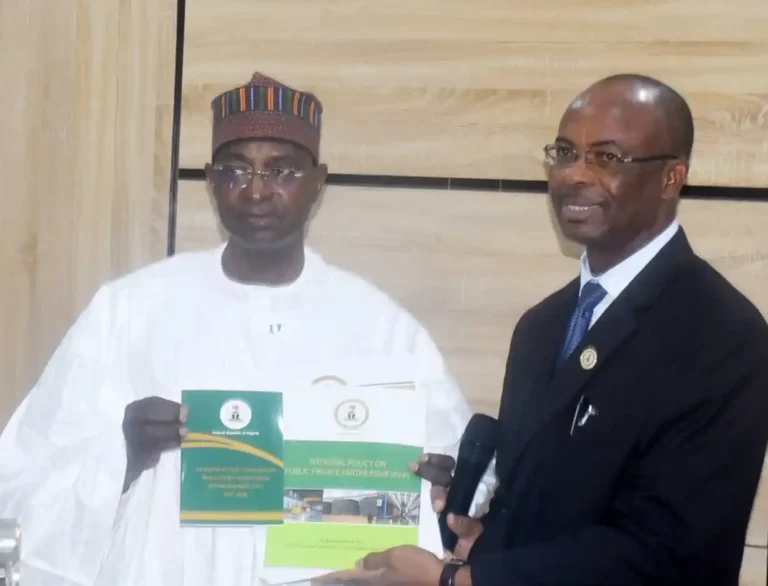
The Federal Government has restated plans to partner with the private sector through Public-Private Partnerships (PPP) to revive 38 legacy livestock facilities across Nigeria’s six geopolitical zones. The Honourable Minister of Livestock Development, Idi Mukhtar Maiha, disclosed this on Monday, 15th December 2025, during a Specialised Training on Public-Private Partnership organised by the Federal Ministry of Livestock Development in Abuja.

Maiha said the facilities, which include milk collection centres, cattle multiplication centres, goat and sheep breeding centres, and pig progeny centres, were established between 60 and 70 years ago and are now in need of major rehabilitation. He explained that rather than building new facilities, the government believes restoring the existing ones through PPP would deliver faster and more sustainable results.

According to him, PPP remains the most viable business model for returning the assets to productive use while ensuring long-term efficiency. He noted that properly structured partnerships would allow the government to leverage private sector capacity and reduce the financial burden on public resources.

He added that effective PPP arrangements would unlock private investment, stimulate innovation, create jobs, reduce conflict, enhance productivity, and improve the livelihoods of millions of Nigerians who depend on the livestock value chain. “The outcome of this training must translate into well-structured PPP projects that are economically viable, socially inclusive, environmentally sustainable, and aligned with national development priorities,” Maiha said.

Also speaking at the event, a representative of the Infrastructure Concession Regulatory Commission (ICRC), Dr. Amanze Okere, explained that PPP projects are built on mutual agreements between government and private investors. He said government provides policy direction and regulatory oversight, while the private sector contributes technical expertise, operational capacity, maintenance skills, and financing.

The PPP stakeholders’ training attracted participants from civil society organisations and organisations.