Home Blog Page 231

Presidency, UNESCO REF Launch Urban Agriculture Training for Women

The Presidency, through the Office of the Senior Special Assistant to the President on Food Security, in collaboration with the UNESCO REF and the Police Officers’ Wives Association (POWA) Lagos State Chapter, has launched a bespoke Urban Agriculture Training Programme aimed at strengthening food systems and expanding income opportunities for women in Lagos.

The formal inauguration took place in Lagos, where the Senior Special Assistant to the President on Food Security, Barr. Yejide Ogundipe, said the initiative aligns with President Bola Ahmed Tinubu’s Renewed Hope Agenda. She stressed that women farmers must be recognised as key contributors to Nigeria’s food security.

Ogundipe explained that the programme is designed to strengthen the Lagos State agricultural food system while empowering women through innovation, sustainability, and financial inclusion. She noted that the training, themed “Seed of Empowerment: Growing Women in Lagos,” equips participants with practical tools, knowledge, and opportunities to succeed in urban farming.

According to her, the initiative aligns with the National Agricultural Technology Innovation Policy (NATIP) and connects directly with the ₦500 billion Offtake Guarantee Fund under the Produce for Lagos Programme, launched earlier in July 2025. She added that participants are guaranteed a steady income every two to three weeks, ensuring that empowerment leads to financial stability for households.

Organisers announced plans to expand the bespoke programme in 2026, targeting at least 120,000 women across all local governments and local council development areas in Lagos State.

Speaking at the event, President of UNESCO REF, Abdulsalami Ladigbolu-Oranmiyan, described the programme as empowerment rather than charity. He said, “Philanthropy provides immediate relief, but capacity building empowers individuals to achieve financial freedom and long-term sustainability. What we are launching today is designed to transform lives and communities.”

Also speaking, the POWA Chairperson in Lagos State, Risqat Jimoh, highlighted the impact of women’s empowerment on families, communities, and the food system of Lagos State.

Jimoh said, “Each participant would receive a Tier 2 certificate, which not only recognises training but also guarantees subsidised entry for their children into future agricultural programmes. This ensures that empowerment becomes generational, extending benefits beyond immediate participants.”

She added that each woman received a variety of seeds to ensure the training moves beyond theory into hands-on farming practice, enabling participants to begin cultivating produce immediately across their neighbourhoods and shared community spaces.

A participant, Aisha Sanni, described the programme as “an alternative means for financial income,” explaining that as a youth corps member, it helps her save and prepare for life after service and independent economic decisions.

The initiative is supported by partners including NIHORT, IAR&T, The Lichfield, Op3n Labs USA, Women’s Space USA, and others, under UNESCO REF’s Strategic Intervention Programme – Alpha Category 2 Framework.

Organisers noted that improved household financial stability is a strong deterrent to crime, positioning the programme as an economic and social intervention and a CSR model for partners investing in women’s empowerment and food security nationwide, especially in urban communities and densely populated areas across Lagos State, with term benefits for families markets livelihoods and local resilience.

Advertisement

Lecturer Seeks Amendment of Disability Commission Act

0

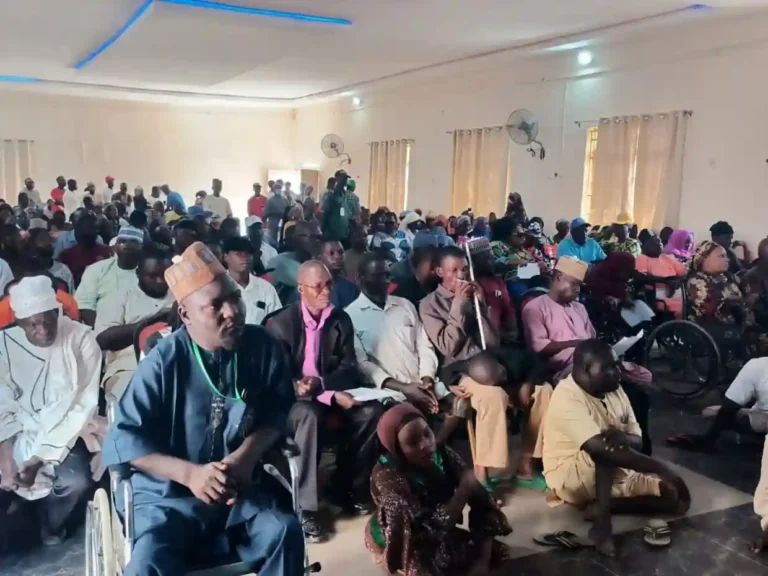
A lecturer at the Federal University of Lafia, Nasarawa State, Professor Terfa Adaka, has called for the amendment of the Act establishing the Disability Commission at federal and state levels to promote inclusivity and effective participation. He made the call at a one-day symposium for persons with disabilities held in Lafia to mark the International Day of Persons with Disabilities, with participants drawn from across Nasarawa State.

Professor Adaka reviewed existing federal and state disability policies and stressed the need for strong legislative frameworks, noting that policies based only on political will can easily be reversed by future administrations. “We must go beyond political statements. The National Disability Commission gives more powers to the governing board, regardless of the executive secretary. This does not reflect inclusivity. The law should be amended to carry everyone along,” he said.

He urged leaders to prioritise empowerment, infrastructure development and sustainable accessibility for persons with disabilities. He also called on the Nasarawa State Government to give legal backing to policies such as the five per cent employment quota to ensure implementation.

Officials of the Nasarawa State Disability Rights Commission spoke on government efforts, challenges, while panel discussions featured experts and persons with special needs.

Bauchi Government to Begin Recruitment of 5,669 Civil Servants

The Bauchi State government is set to begin the recruitment of 5,669 civil servants into the state workforce, forming part of the 10,000 employment slots earlier promised by the administration of Governor Bala Mohammed.

The governor, Senator Bala Mohammed, disclosed this at a meeting convened to ensure justice, fairness, and equity in the recruitment process across the state. He recalled his earlier pledge to recruit 10,000 civil servants to address manpower gaps within the Bauchi State civil service.

To deliver on the commitment, the governor met with stakeholders from all 20 Local Government Areas to review available vacancies and agree on measures for a transparent and credible exercise. According to him, the state has identified 214 job categories with a total of 5,669 vacancies spread across 18 Ministries, Departments, and Agencies (MDAs).

Governor Mohammed appealed to the four stakeholder groups present to “put aside personal interests” and avoid actions that could compromise the integrity of the process. He assured residents that the remaining vacancies would be filled next year, stating that “the financial analysis required to support the additional recruitment has already been completed” by his administration. The recruitment exercise is expected to strengthen service delivery across key public institutions.

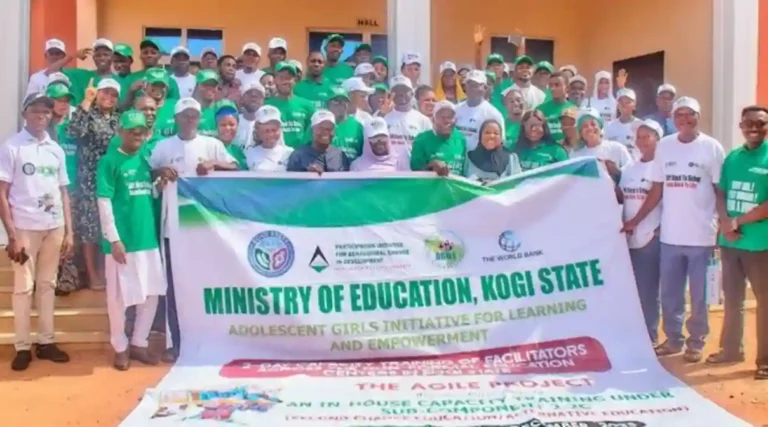
Kogi Trains 130 Non-Formal Education Facilitators Under AGILE Project

The Kogi State Ministry of Education, through the Adolescent Girls Initiative for Learning and Empowerment (AGILE) Project, has trained 130 facilitators drawn from non-formal education centres across the three senatorial districts of the state to strengthen the delivery of second-chance and alternative education programmes.

The two-day capacity-building training was held under AGILE Sub-Component 2.2C (Second Chance/Alternative Education) in partnership with the Participation Initiative for Behavioural Change in Development (PIBCID). It focused on improving facilitators’ understanding of post-literacy manuals, harmonising instructional methods, and promoting participatory and adult learning techniques.

Speaking at the opening, the State Project Coordinator (SPC), Alhaji Ahmed Tijani Oricha, described the training as “a strategic intervention aimed at improving access, quality, and equity in education delivery.” He said non-formal education remains critical to reaching adolescents and young people excluded from the formal system and noted that well-trained facilitators are central to achieving the objectives of the AGILE Project at the grassroots.

Oricha urged participants to apply learner-centred approaches in their centres, stressing that their commitment and professionalism would directly influence learning outcomes and the overall success of the Second Chance Education programme.

The Component Lead, Hajia Mariam Bello, said the training was designed to ensure uniformity and consistency in content delivery across all non-formal education centres in Kogi State. She explained that facilitators were guided through structured sessions to deepen their understanding of lesson sequencing, integrated teaching approaches, and effective classroom engagement for adult and adolescent learners.

According to her, adopting participatory methods would help create inclusive learning environments that respond to learners’ realities while advancing AGILE’s goal of improved literacy, numeracy, and life skills acquisition.

Also speaking, the Executive Director of PIBCID, Mrs. Racheal Akande, reaffirmed the organisation’s commitment to supporting capacity development and behaviour-change interventions that strengthen teaching quality within the non-formal education sector.

The training featured technical sessions in English Language, Mathematics, Civic Literacy, and Basic Science, facilitated by resource persons and reinforced through interactive discussions. Participants described the programme as impactful and pledged to deploy the skills acquired to improve learning outcomes across non-formal education centres in Kogi State.

Ilorin Lawmaker Empowers 500+ Constituents with Tools, Cash Grants

0

No fewer than 500 constituents of Ilorin West/North Constituency benefited from a Mega Empowerment Programme organised by the member representing the constituency at the Kwara State House of Assembly, Hon. Aisha Babatunde Tundun Alanamu, on Saturday in Ilorin.

The well-attended programme, witnessed by prominent APC stalwarts and community leaders in Ilorin West, featured the distribution of empowerment tools aimed at improving livelihoods and reducing poverty at the grassroots. Items distributed included 10 sewing machines, 20 hair dryers, 30 solar-powered fans, 20 grinding machines, and a cash grant of ₦20,000 each to 250 beneficiaries.

Speaking at the event, Hon. Aisha Tundun Alanamu said the initiative was designed to complement the commitment of Kwara State Governor, AbdulRahman AbdulRazaq, to poverty alleviation and socio-economic development across the state. She urged beneficiaries to make proper use of the items and funds to support sustainable economic growth. According to her, “this programme is part of efforts to empower people at the grassroots and support small-scale economic activities.”

She also encouraged residents of Ilorin West and North to continue supporting the present administration, especially in implementing people-oriented projects such as the ongoing urban renewal programme across Kwara Central and other development efforts.

Earlier, the royal father of the occasion and Balogun Alanamu of Ilorin, Dr. Usman Atolagbe, advised beneficiaries to handle the empowerment tools responsibly to ensure durability and long-term benefits. He commended Hon. Tundun Alanamu for her compassion and commitment to the welfare of vulnerable members of society, and called on other lawmakers to emulate her people-focused approach to representation.

Tinubu Administration Targets Global NIPSS Status by 2030

0

The Vice President, Senator Kashim Shettima, has reaffirmed the resolve of the administration of President Bola Ahmed Tinubu to remodel the National Institute for Policy and Strategic Studies, NIPSS, into a globally recognised centre of excellence that is digitally driven and financially stable by 2030. He said the goal reflects the government’s broader vision to strengthen institutions that shape leadership, policy thinking, and long term national development in Nigeria.

According to him, apart from serving as the most strategic platform for developing thinkers, reformers, and innovators in Nigeria, the institute’s Senior Executive Course represents a deliberate investment in the nation’s future leadership. He described the programme as a meeting point for ideas that define policy, guide reform, and influence the overall direction of national development across sectors.

Senator Shettima stated this on Saturday when he represented President Tinubu at the Graduation Ceremony of Senior Executive Course 47 of NIPSS in Kuru, Plateau State. The event brought together senior government officials, academics, policy experts, and graduates of the institute from different parts of the country.

“His Excellency, President Bola Ahmed Tinubu, has been unequivocal in his commitment to supporting NIPSS in its transformation agenda, particularly its ambition to become a digitally driven, financially stable, and globally recognised centre of excellence by 2030,” the Vice President said. “We recognise the Institute’s critical role in shaping national policy and in building the leadership capacity required to navigate an increasingly complex world,” he declared.

The Vice President noted that the support the Tinubu administration is giving to transform the institute goes beyond funding, infrastructure, and the provision of a conducive research environment. He stressed that the true value of NIPSS lies in the relevance and usability of its research outputs in real governance situations.

He said, “Our support must therefore go beyond funding, infrastructure, and a conducive research environment. It must ensure that NIPSS produces implementation ready policy papers and that its outputs are fully integrated into national decision making and execution frameworks.” According to him, policy ideas must translate into actions that directly improve governance outcomes.

VP Shettima applauded the theme of the Senior Executive Course 47, “Blue Economy and Sustainable Development in Nigeria,” describing it as timely and reflective of current national priorities. He said the theme captures urgent realities and “captures the reality that development, security, environmental stewardship, and social inclusion are inseparable.”

He however observed that the strength of the academic work from the course does not depend only on its academic depth. He said its value lies in its insistence that policy must be practical, implementable, and firmly grounded in Nigeria’s realities, especially in sectors facing security and economic pressures.

Commending the graduands, the Vice President said, “We are grateful for your sustained and rigorous enquiries into the affairs of the maritime domain, enquiries that continue to provide the nation with insights it depends upon.” He said the research work undertaken by the participants offers useful perspectives for addressing national challenges.

“Your latest research makes it clear that securing Nigeria’s waterways, coastlines, and inland communities goes far beyond safety alone. It speaks to livelihoods, food security, environmental protection, and national cohesion. When young people have productive work, when communities trust the state, and when institutions coordinate effectively, insecurity loses its oxygen,” he added.

Assuring that the Tinubu administration takes evidence based policymaking seriously, the Vice President said he had already directed relevant ministries, departments, and agencies to give the report and recommendations of the graduands close attention. He said this would be for both immediate application and long term strategic planning.

He thanked the Director General, Prof. Ayo Omotayo, as well as the management and staff of NIPSS, for what he described as their dedication, professionalism, and unflinching commitment. According to him, their efforts have continued “to uphold NIPSS as the nation’s foremost centre for strategic thought and leadership development.”

The Vice President also hailed Plateau State Governor Caleb Mutfwang and the people of the state for sustaining a peaceful environment around the institute. He said this support has enabled the “Institute to function as a true national asset” and continue its academic and research activities without disruption.

Earlier, Governor Mutfwang applauded the Federal Government’s support to the institute, particularly in facilitating the hitch free completion of its academic programmes. He also commended the execution of strategic projects that align with the mandate of NIPSS.

Underscoring the importance of academic programmes at the institution, Governor Mutfwang noted that Nigeria stands to benefit immensely from the research output of NIPSS. He said such work broadens governance perspectives and offers valuable recommendations for addressing security challenges across the country.

On his part, the Chairman of the NIPSS Board, Senator Ken Nnamani, said pathways to addressing some of the nation’s challenges can be found in research reports produced by institutions across the country. He urged authorities at national and subnational levels to adopt and implement products of the institute.

While charging members of the SEC 47 to be worthy ambassadors of NIPSS, Senator Nnamani expressed confidence in the commitment of the Tinubu administration to continue supporting research endeavours. He also expressed optimism about the implementation of key research findings from academic institutions, including NIPSS.

In his welcome address, the Director General of NIPSS, Prof. Omotayo, said the Vice President’s presence at the graduation ceremony underscores the Federal Government’s recognition of the institute as the premier research institute for advancing Nigeria’s policy and governance framework.

Reeling out achievements anchored on its five year strategic plan, Prof. Omotayo said NIPSS has completed key institutional research endeavours in collaboration with international partners. He listed areas such as crisis anticipation and adaptive governance as part of the focus.

He said with these achievements, NIPSS has established itself as the premier institute for policy research aimed at rebuilding public trust and addressing emerging societal challenges facing the country.

In a goodwill message, the President of the NIPSS Alumni, AANI, Amb. Emmanuel Okafor, thanked the Vice President for his support to the institute. He also acknowledged the transformative projects executed under the present management.

On his part, the Monitor General of Course 47, Col. Muhktar Sani Daroda, said the rigour of the programme has prepared participants for tasks across sectors. He pledged their renewed commitment to national service.

The highpoint of the occasion was the presentation of certificates to graduands and their induction into AANI. Earlier, the Vice President inaugurated four units of two bedroom apartments donated by SEC 47 participants.

Meanwhile, Senator Shettima also interacted with strawberry farmers in Plateau State. He said the Tinubu administration remains committed to transforming Nigeria’s agricultural value chain and supporting fruit production nationwide.

Apply for Zamfara Full Nursing Scholarship for Female Indigenes

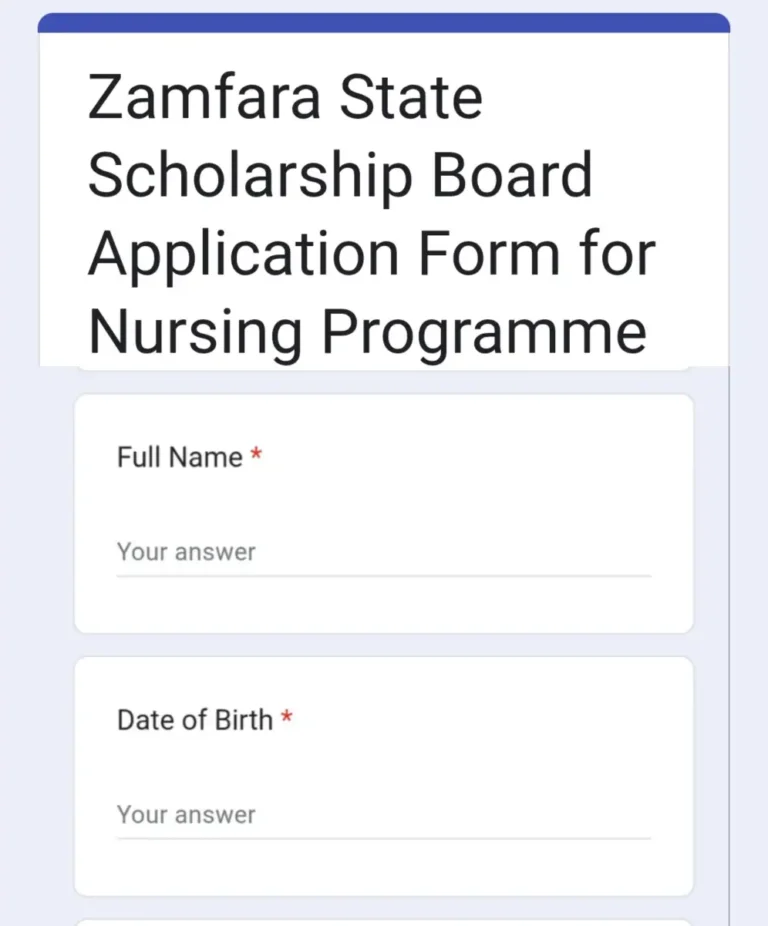
The Zamfara State Scholarship Board has opened application for its Nursing Programme scholarship. The Zamfara State Government is offering a full scholarship opportunity for only female students to study Nursing at Nexus Nursing College, Katsina. According to the Board, eligible applicants “must be female, an indigene of Zamfara State, and an indigent student who requires financial support.”

Academic requirements include SSCE with a maximum of two sittings and a minimum score of 140 in JAMB.

The scholarship covers full tuition payment, registration, accommodation, and allowance. Applicants are advised to submit academic details. The deadline for submission is December 24, 2025.

Interested applicants are to complete the scholarship application form at https://forms.gle/1xY5CJDtXFwyc5Gh7 online.

NDDC MD urges Universities to shift from degrees to problem-solving

0

The Managing Director of the Niger Delta Development Commission, NDDC, Dr Samuel Ogbuku, has proposed a university system that focuses more on solving real-life problems while reducing excessive emphasis on awarding degrees.

Ogbuku made the proposal while delivering the keynote address at the 2nd Convocation Lecture of the Federal University Otuoke, Bayelsa State, where he questioned how universities had shifted from problem-solving centres to institutions driven mainly by certificates.

He spoke on the theme, “From Degree-Awarding to Problem-Solving Institutions: Retooling University Education for Nation-Building,” stressing that higher education must play a direct role in national development.

The NDDC Chief Executive Officer affirmed that “Education is the most powerful weapon which you can use to change the world,” urging universities to rethink their purpose and impact.

Ogbuku lamented the present academic culture, saying, “We have built an academic culture where promotion is often tied more to the number of papers published in journals, many of which have minimal bearing on local problems, than to the impact of research on society.”

He expressed concern about the growing gap between universities and the productive sectors of the economy, noting that “employers repeatedly complain that graduates lack critical thinking, creativity, digital skills, and practical experience.”

According to him, the challenge is linked to declining funding and infrastructure. He said, “We have witnessed a gradual decline in funding and infrastructure in the education sector. A system that is underfunded struggles to be innovative.”

Ogbuku added that poor learning conditions have affected quality, explaining, “When laboratories lack basic equipment, when libraries are outdated, when classrooms are overcrowded, and when staff are poorly motivated, the easiest thing for a university to do is to default to theory-heavy, exam-driven education.”

He proposed embedding practical learning into academic programmes, stating, “We can change this by deliberately inserting problem-solving contents into our programmes.”

Giving an example, he said “every final-year student, regardless of discipline, could be required to undertake a capstone project that addresses a real, identified problem in a community, industry, or government institution.”

Ogbuku also said universities must strengthen innovation and entrepreneurship structures. “Another strategic step is to build and strengthen innovation and entrepreneurship ecosystems within our universities,” he said.

He noted that although institutions like the Federal University Otuoke, FUO, have entrepreneurship centres, many are treated as peripheral units rather than core academic structures.

Highlighting regional challenges, Ogbuku said environmental and climate-related problems in the Niger Delta demand urgent attention. “We need to deal with oil spills, gas flaring, flooding, biodiversity loss, and land and water degradation,” he said.

On technology, he observed, “In a world driven by technology, Nigeria cannot afford to be a passive consumer of other people’s innovations.”

He asked, “What can we do to develop local manufacturing capabilities to reduce dependence on imported goods? What can we do to leverage digital technologies?”

The NDDC boss said Nigeria must “retool University Education for Sustainable Nation-Building,” adding that universities should be redefined as problem-solving institutions.

He stressed that research should not be for promotion alone, saying, “If we are serious about sustainable nation-building, university research must be more than a personal promotion ladder.”

Addressing graduands, Ogbuku urged them to see themselves as problem-solvers. “The degree in your hand is not a trophy; it’s a tool,” he said.

He added, “You must embrace the charge to learn and adapt continuously. The world you are entering is changing faster than any generation before you. Do not treat your degree as the end of learning.”

On development efforts, Ogbuku said the NDDC had moved from a transactional to a transformational development approach.

He announced the award of a contract for a five-kilometre internal road network within the university campus. “We will also build a modern convocation arena and a five-star Corpers’ Lodge inside the university,” he said.

In his personal capacity, Ogbuku pledged to sponsor two professorial chairs at the university, one in honour of his late father and another for cancer research.

The Vice Chancellor of the Federal University Otuoke, Professor Teddy Charles Adias, thanked President Bola Tinubu for appointing a new Chancellor for one of the country’s youngest federal universities.

Adias charged graduating students to continue learning, stating, “Learning never ends.”

The lecture also featured the installation of the Paramount Ruler of Idoma Worldwide, Dr Elaigwu Odogbo Obagaji, as the Chancellor of the Federal University, Otuoke.

Africa needs industrialization as half its population is under 25 by 2050

The World Bank has said that by 2050, half of Africa’s projected 2.5 billion people will be under the age of 25, a demographic shift that places urgent focus on industrialization as a pathway to jobs and opportunity for the continent’s young population.

Africa is preparing for what analysts describe as a major consumer and manufacturing boom, but experts warn that this growth will not happen instantly. The continent must first overcome long-standing barriers such as weak infrastructure, fragmented markets, skills gaps, and inconsistent regulations. Despite these obstacles, the potential remains strong, and the consequences of inaction are high.

By mid-century, Africa’s population is expected to double, with millions of young people eager for modern goods, services, and economic inclusion. However, current production levels tell a different story. Africa remains heavily dependent on imported finished goods, even though it is rich in raw materials such as cocoa, cotton, and cobalt. At present, only about 2 percent of global manufactured goods come from Africa, leaving many economies exposed to trade disruptions, currency instability, and structural imbalances.

Building a strong manufacturing base is increasingly viewed as a strategy for resilience. Industrialization supports large-scale job creation, expands government revenue, and helps fund public services. It also strengthens communities, improves access to education, speeds up technology adoption, and equips young people with skills that are relevant for future industries. Analysts say a vibrant manufacturing sector can support long-term prosperity, inclusion, and stability across the continent.

Experts argue that this transformation requires close cooperation among entrepreneurs, industrial leaders, and policymakers. A pan-African manufacturing ecosystem, supported by regional integration and cross-border collaboration, is seen as critical to developing industrial champions that can compete globally.

An African proverb often used in policy discussions states that “it takes a village to raise a child,” and development specialists say the same idea applies to industrial growth. No single company, regardless of innovation, can scale across borders without a supportive ecosystem. Integrated policies, connected value chains, and shared infrastructure are considered essential. While many of these elements already exist, aligning them with clear purpose remains a challenge.

Speaking from an investment perspective, an official at the International Finance Corporation said, “At the IFC, my role is to help seed these industrial ecosystems by directing investment into manufacturing hubs.” One sector showing early promise is textiles. West Africa produces cotton, East Africa is expanding garment manufacturing, and North Africa, with its strong logistics links to Europe, can serve as an assembly and export hub.

The strategy, the official explained, is not to support isolated projects but to link national strengths into a continental value chain. “The goal is to knit these national efforts into a continental value chain, where a factory in Ghana sources inputs from Benin, assembles in Kenya, and exports through Tunisia,” the IFC official said.

This approach is expected to give rise to regional industrial champions built on cooperation rather than isolated success. Such firms could form the backbone of Africa’s industrial future and create millions of jobs across a wide range of skill levels. While the scale of the task is large, experts say the pathway is clear, relying on deliberate integration rather than individual breakthroughs.

There are signs of progress. The African Continental Free Trade Area (AfCFTA) is operational, covering 54 countries and potentially connecting 1.4 billion people into the world’s largest free trade area by population. Countries including Ethiopia, Morocco, and Rwanda are investing in industrial parks and manufacturing zones. Foreign direct investment is also increasing as global brands recognize the purchasing power of Africa’s growing middle class.

Despite these gains, challenges persist. Infrastructure development has not kept pace with demand, electricity supply remains unstable in many regions, and border procedures continue to slow intra-African trade. Differences in regulation and governance across countries add further complexity to building supply chains that stretch across cities such as Lagos, Lusaka, and Tunis.

Still, momentum is building. Governments are digitizing customs systems, improving ports, and working to harmonize standards. Investment sources are broadening, with Chinese, Turkish, Indian, and Western firms all increasing their presence. Africa’s young and increasingly skilled workforce continues to attract attention.

Energy is also emerging as a strategic advantage. With strong solar, hydro, and geothermal resources, Africa has the potential to industrialize using clean energy. In a global economy focused on lower emissions, green manufacturing is seen as both an environmental and commercial advantage.

Beyond natural resources, Africa’s long-term strengths include its youth, geographic position, and ambition. Close proximity to Europe and the Middle East, combined with global efforts to diversify supply chains, gives the continent an edge. Development experts often point to Asia’s experience, where countries learned to process raw materials into finished products. The message is clear: process, manufacture, innovate. The village must be built, and the moment to act is now.

NITDA Launches DL4ALL Digital Literacy Campaign in Kano, Bauchi

The National Information Technology Development Agency (NITDA) has launched the Digital Literacy for All campaign in partnership with Nigeria’s creative industry as part of efforts to expand digital skills and improve public understanding of ICT driven opportunities across the country. The initiative, also known as “DL4ALL”, was unveiled this week in Kano and Bauchi States to support the agency’s Strategic Roadmap and Action Plan (SRAP 2.0).

According to NITDA, the campaign focuses on fostering digital literacy and talent development, promoting inclusive access to digital infrastructure and services, building strategic partnerships, and strengthening digital trust. In Kano State, the awareness rally commenced at the Zoo Road takeoff point, passed through Tarauni Market, and ended at Farm Center GSM Market, where it attracted strong public attention.

The Bauchi outreach began at Pali Suite in the New GRA and moved through Government House Street, the Emir’s Palace, Wunti Market, Muda Lawal Market, GSM Village and Central Market, before concluding at Kano Road. Participants carried banners, interacted with traders and shoppers, and demonstrated how mobile applications can support daily activities and small business operations.

The campaign recorded lively participation from NYSC corps members, creative influencers, entertainers and market communities, helping to make digital literacy more relatable to everyday people. NITDA said the nationwide outreach is aimed at driving Nigeria toward achieving 70 percent digital literacy by 2027, in line with President Bola Ahmed Tinubu’s “Renewed Hope Agenda”, while reinforcing the agency’s commitment to building a digitally empowered, innovative and inclusive nation for future growth.