Home Blog Page 235

Ekiti Begins Promotion Exercise for Teaching and Non Teaching Staff

0

Ekiti State Government has started the promotion exercise for qualified teaching and non-teaching staff in public secondary schools across the state. The process began at Ola-Oluwa Muslim Grammar School in Ado Ekiti, where eligible staff gathered for verification and assessment.

Speaking at the venue, the Permanent Secretary of the Ekiti State Teaching Service Commission, Mr Michael Boluwade, appealed to staff to give full cooperation to the panels overseeing the promotion process. He noted that their support would help ensure what he described as “a hitch free exercise.”

Mr Boluwade also expressed appreciation to Governor Biodun Oyebanji for approving the 2024/2025 promotion cycle on time. He explained that employees under the Teaching Service Commission would receive their financial benefits without delays. According to him, staff would enjoy these benefits just like their colleagues in the core civil service, with no gap between the effective date of promotion and when payment starts.

The Permanent Secretary added that eligible staff must appear with their original certificates and other required documents. He stated that proper dressing to the venue was also part of the requirements for participation in the exercise.

He informed staff that a complaint desk had been created to address any issues that may arise during the exercise. Mr Boluwade assured workers that “no deserving staff would be denied of his or her rights,” stressing that the process was designed to be fair and transparent.

It would be recalled that Governor Biodun Oyebanji recently approved the promotion of eligible state employees, a move that affects no fewer than 3713 staff of the Teaching Service Commission. The promotion exercise is expected to run for six working days.

Advertisement

Tinubu Says Youth Tech Workforce Will Drive Trillion-Dollar Economy

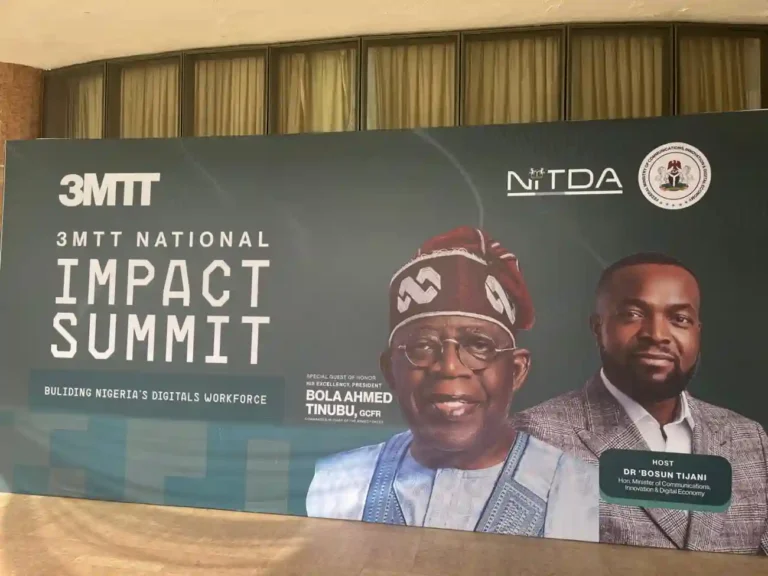
President Bola Ahmed Tinubu said on Thursday in Abuja that his administration is laying a solid foundation for a youthful digital workforce that will drive Nigeria’s next phase of growth and shared prosperity. He made this known at the State House Conference Centre while chairing the 3 million Technical Talent National Impact Summit and launching the 3MTT Digital Skills Fund. The Secretary to the Government of the Federation, Senator George Akume, represented him.

President Tinubu said the push to build a trillion–dollar economy is based on the understanding that the future will be powered by technical skills, productivity, innovation and a youthful workforce with globally competitive abilities. The 3MTT programme, launched in 2023 by the Ministry of Communications, Innovation and Digital Economy, aims to train three million young Nigerians in essential digital skills, create two million tech jobs and even export surplus talent to international markets.

He said the country’s ambition requires deliberate steps and not chance, adding that digital skills now drive growth across all major sectors such as agriculture, healthcare, finance, manufacturing, education and public service. According to him, “Our ambition to build a trillion-dollar economy will not be achieved by chance. It requires productivity, innovation and a workforce whose skills meet global standards. Digital skills now underpin growth across every major sector of our economy, including agriculture, healthcare, finance, manufacturing, education and public service.”

The President said digital skills are not only key to economic stability and growth but also a major source of job creation for the country’s young population. He stated that “A strong digital workforce creates jobs, expands enterprise and positions Nigeria to participate competitively in the global marketplace. More importantly, it shapes our role in the world.” He added that the programme is helping to shift Nigeria from being just a consumer of technology to becoming a creator and exporter of talent.

He noted that 3MTT has already recorded national reach, saying, “From over 1.8 million applications drawn from every local government in the country, to new jobs created, startups formed and solutions developed, 3MTT has moved from concept to nationwide impact across all 36 states and the Federal Capital Territory.” Tinubu urged the 30,000 youths who have completed the training to stay committed and see themselves as the digital foundation of Nigeria’s next development phase.

Minister of Communications, Innovation and Digital Economy, Bosun Tijani, said Nigeria’s digital economy remains one of the most attractive on the African continent for investment. He commended President Tinubu for his vision and also thanked private sector players and development partners for supporting the initiative. Tijani revealed that when the administration took office in 2023, there were over 4.5 million vacant jobs in the global technology sector. He said this influenced the Ministry’s decision to create what he described as the world’s largest technology talent accelerator through 3MTT. According to him, the goal is to produce premium technical talent for both Nigeria and international markets.

Some beneficiaries of the programme shared testimonies of how the training improved their skills and opened opportunities for jobs, global programmes, tech competitions and scholarships. Hauwa Yakubu Aliyu from Jigawa State said the training helped her build solutions that support local farmers, especially in greenhouse farming. She said, “Through 3MTT, I received some of the most life-changing opportunities of my journey so far. I was given a fully funded trip to China, where I represented Nigeria at the Huawei ICT Tech4Good Global Summit. I received a brand-new laptop, which became the tool that supported my learning and helped me practice and build real projects.”

Another beneficiary, Adelani Adelaja, a military personnel from Lagos State, said the programme equipped him to build logistics solutions that improved his work and enabled him to train others in digital skills.

UNDP representative, Elsie Attafuah, praised the Tinubu administration for its economic reforms, saying, “Nigeria has chosen reform over retreat, courage over comfort, and the future over the past.” The European Union Ambassador to Nigeria, Gautier Mignot, announced a pledge of $48m to support the 3MTT Digital Skills Fund.

Several partners, including Google, Moniepoint, Airtel, IHS, Secure ID and HUAWEI, sent goodwill messages, commending the administration’s commitment to strengthening the technical capacity of young Nigerians and improving conditions for the telecom sector to thrive.

NASENI Launches FutureMakers Programme to Build Innovation Skills

NASENI has introduced a new programme called FutureMakers to inspire innovation and creativity in children aged 15 and below. The launch took place on Thursday, December 11, 2025, at the Agency’s headquarters in Abuja, and it brought together key stakeholders, educators, and students from Aflon Digital Academy, Kuje, and Government Secondary School, Idu-Karmo. The initiative aims to strengthen early exposure to Science, Technology, Engineering and Mathematics (STEM) while preparing young Nigerians to become future problem-solvers.

Speaking at the event, the Executive Vice Chairman and CEO of the National Agency for Science and Engineering Infrastructure (NASENI), Khalil Suleiman Halilu, said the programme is designed to equip Nigeria’s younger generation with the mindset needed for the country’s technological growth. He explained that FutureMakers by NASENI, accessible at www.innovationlab.naseni.gov.ng/futuremakers, will encourage children to create solutions for societal problems by promoting creativity and structured problem-solving. Halilu said, “Today, we take another step toward securing Nigeria’s long-term innovation future. We are here to officially launch FutureMakers by NASENI, another national programme designed to identify, nurture and empower young innovators between the ages of 5 and 16 years.” He added that early exposure creates lifelong innovators and that Nigeria is now joining that league through this effort.

He explained that FutureMakers, an initiative of the NASENI Innovation Hub, is part of a long-term national plan focused on building technical confidence from a young age. According to him, the programme will prepare children for STEM, entrepreneurship and leadership, while strengthening the nation’s innovation ecosystem. Halilu noted, “This is our way of securing Nigeria’s innovation stability over the next 30 to 50 years,” urging parents, teachers, partners and the private sector to support young talents by investing in competitions, funding prototypes and encouraging creativity.

Earlier, the Special Adviser to the EVC/CEO on Commercialization and Efficiency, Engr. Dr. Anas Balarabe Yazid, said FutureMakers is deeper than robotics, design thinking, coding or competitions. He said it is about believing in children even before the world recognizes their abilities. According to him, “It is about something deeper: believing in our children before the world has fully seen them, investing in their talent before their CV exists, and creating an experience that will stay with them for life. The moment they realized they can build things, solve real problems and be a maker of the future.”

In her presentation, the Head of the NASENI Innovation Hub, Mrs. Rachael Oluwabukola Perez-Folayan, explained that the programme will run from December 2025 to February 2026. A total of 60 children will be selected from all six geopolitical zones. She said top winners from each zone will receive prizes worth up to N5 million, including a scholarship and an exclusive study tour abroad with the EVC of NASENI.

The Chairman of the Senate Committee on NASENI, Senator Francis Ezenwa Onyewuchi, praised the Agency for the initiative. He thanked mentors, teachers, parents and partners for supporting young innovators and said, “As we launch FutureMakers, let us renew our collective commitment to building a nation, where creativity is elevated, where ideas are supported and where the potential of every child is allowed to thrive. I believe that what we are doing today will inspire a new generation of young ones.”

FCCPC Seals Ikeja Electric HQ Over Non-Compliance, Rights Violations

0

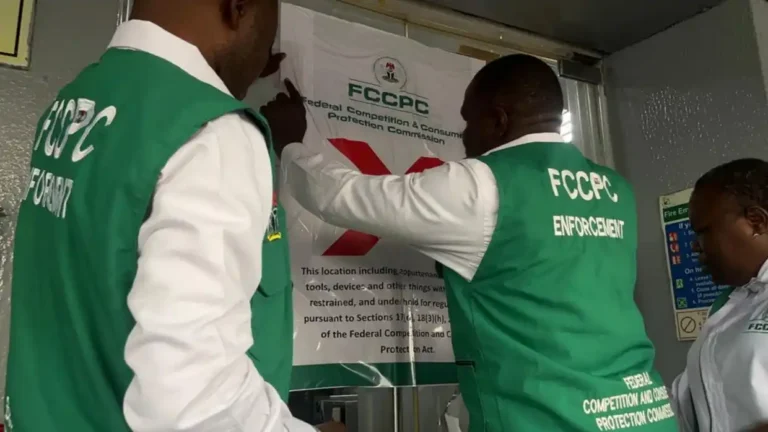
The Federal Competition and Consumer Protection Commission (FCCPC) on Thursday, December 11, 2025, sealed the headquarters of Ikeja Electric (IE) over what it described as continuous violations of consumer rights and the company’s refusal to comply with clear regulatory directives issued by both the Nigerian Electricity Regulatory Commission (NERC) and the FCCPC.

According to the Commission, NERC had earlier issued a binding decision directing Ikeja Electric to unbundle a Maximum Demand account into twenty non-Maximum Demand accounts. This was meant to recognise each of the nineteen residential units and one service point owned by a complainant as separate customer units and to provide the required metering and connection. FCCPC stated that Ikeja Electric did not implement this decision.

Because of this failure, the complainant has been without electricity supply for more than two and a half years. The Commission explained that this happened even though the complainant paid all charges requested by Ikeja Electric and met every obligation required. The lack of electricity has stopped the complainant from putting the nineteen residential units to use.

FCCPC noted that it engaged Ikeja Electric several times on the matter. The Commission said, “We notified the company of the complaint and the outstanding NERC decision.” In April 2025, FCCPC issued a directive outlining the steps required and the timelines for compliance, but no action was taken. It added that on 2 October 2025, a Compliance Notice was issued demanding full compliance within seven business days, yet the company still did not comply.

The Commission stated that its intervention is supported by the Federal Competition and Consumer Protection Act (FCCPA). It explained that Section 17 outlines its functions, including resolving complaints, issuing directives, and taking enforcement action where breaches continue. Section 18 gives the Commission powers to ensure compliance, including sealing premises where an undertaking’s conduct has created or prolonged consumer harm.

FCCPC further referenced Section 124, which prohibits harassment, coercion, undue influence or unfair tactics in the supply of goods or services. It said withholding or frustrating access to a service in a way that causes avoidable hardship falls under this prohibition. Section 150 allows the Commission to issue a Compliance Notice and escalate enforcement if the notice is ignored, while Section 155 makes it an offence for an undertaking to infringe consumer rights.

The Commission stated that Ikeja Electric’s sustained refusal to carry out a lawful regulatory decision and the prolonged deprivation of electricity to nineteen residential units meet the threshold for intervention. It said sealing the facility is a proportionate enforcement step taken only after repeated engagement and several opportunities for voluntary compliance. The seal will remain until the company fully complies with all directives and provides written evidence.

FCCPC added that consumers are entitled to fair treatment and timely access to essential services and assured that it will continue to enforce the law to protect these rights.

NIOB Inducts 300 Builders, Pushes for Entrepreneurship in Construction

0

Over 300 professionals have been inducted as corporate members of the Nigerian Institute of Building, NIOB, with a strong call for them to embrace entrepreneurship, drive innovation, and tap into the large opportunities across the construction value chain. The induction ceremony, held in Abuja alongside the 5th Annual Pa Fatai Isola Osikoya Memorial Lecture, gathered industry leaders, scholars, and practitioners to discuss the theme “The Builder as an Entrepreneur: Maximising the Construction Value Chain for Innovation and Sustainable Benefits.”

Opening the event, NIOB President, Daniel Kolade, described the memorial lecture as a tribute to the late Pa Osikoya, whom he referred to as a pioneer and visionary whose commitment to professionalism shaped modern building practice in Nigeria. Kolade explained that the theme was chosen to prepare builders for a changing industry where they must operate beyond traditional site roles and adopt entrepreneurial thinking that contributes to national economic growth. According to him, “The builder of today cannot be confined to the traditional boundaries of site management alone. Our value extends to materials production, modular construction, real estate development, green construction, project consulting, and digital technologies.” He congratulated the new inductees and urged them to uphold professionalism while becoming active contributors to national development.

Delivering the keynote lecture, former NIOB President, Chucks Omeife, said the role of the Builder must be fundamentally redefined as the construction industry continues to expand beyond bricks and mortar. He stressed that rapid urbanisation, rising client expectations, and global sustainability demands now require knowledge-driven and innovation-led solutions. Omeife said, “Builders must evolve into innovators, business leaders, and entrepreneurs capable of shaping the future of the built environment.” He highlighted several entrepreneurial prospects, including consulting services, modular construction, digital construction start-ups, facility management, real estate development, aluminum and glass production, and precast material manufacturing. He also noted barriers such as limited access to finance, skills gaps, regulatory inconsistencies, and competition from informal operators, calling on government to support the sector through low-interest financing, better enforcement of standards, incentives for sustainable construction, and full implementation of the National Building Code.

The General Secretary of NIOB, Mr. Nwekete Jonathan, said the lecture aims to reorient builders toward enterprise, pointing out that many professionals depend only on salaried jobs while ignoring opportunities in material production and fabrication. He said, “Builders must not wait only for site jobs or teaching positions. They can produce aluminium, glass, balustrades, frames, timber components, or even precast concrete. These are all part of the value chain. If more builders venture into these areas, they will create wealth and contribute significantly to the nation’s economy.” Jonathan added that increased local production of building materials would reduce import dependence, strengthen the naira, and boost Nigeria’s GDP.

NIOB Publicity Secretary, Mr. Usenobong Atangaedi, said the induction of more than 300 corporate members marks a significant milestone and reflects a future where innovation and entrepreneurship will shape the construction industry. He stated, “At the end of the day, value chains will be expanded, jobs will be created, and the construction sector—which plays a major role in national economic growth—will continue to blossom.”

The event closed with renewed calls for builders to maintain professional standards, ensure quality in material production, and position themselves as key contributors to Nigeria’s economic transformation.

Nigeria Eyes $70bn Boost from Livestock Reform

0

Nigeria is taking major steps to unlock more than $70 billion in economic value from its livestock sector, following fresh government commitments and stronger collaboration with development partners. The Federal Government said it is adopting new financing models designed to boost investment, raise productivity, and strengthen the sector against economic, climate, and operational pressures.

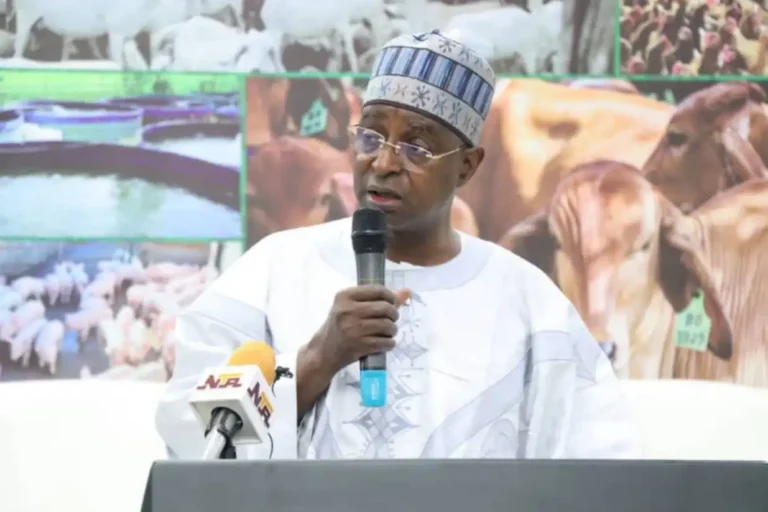
Minister of Livestock Development, Alhaji Idi Muktar Maiha, explained this during an engagement with private sector players on investment opportunities in Climate-Resilient Livestock Systems. He described the meeting as timely and strategic, adding that its outcomes would help shape and advance the future of the livestock sector.

Dr. Tunde Amole, Country Director of the International Livestock Research Institute Nigeria, also spoke at the forum. He said the livestock sector has the potential to transform the economy if it receives the right level of financing and management. He noted that years of underinvestment have led to economic losses and contributed to security challenges. According to him, the government’s National Livestock Growth Strategy and a 15-year investment master plan now offer a clear pathway for sustainable progress.

“Our goal is to develop the livestock sector in a climate-smart and sustainable way,” Dr. Amole said. “We aim to expand production, improve productivity, and attract investments from donors, private companies, and technology partners, while safeguarding the environment.”

The Managing Director of the Bank of Agriculture, Ayo Sotinrin, said the bank is increasing its commitment to livestock financing. He explained that livestock currently accounts for about 30 percent of its loan portfolio, mostly supporting poultry and cattle fattening. “Local dairy cows produce just 1–2 litres of milk per day, while comparable breeds in Southern Africa yield 16–40 litres,” he said. “With proper investment in high-performing African breeds and improved management, Nigeria can achieve similar productivity levels.”

Mr. Sotinrin added that BOA is scaling financing through partnerships with Christian Aid and the Mastercard Foundation, supporting poultry production for around 500,000 farmers. He said the bank plans further investments in ranching, feedlots, and other value chain areas, with 30 percent of its recapitalization funds set aside for livestock development in partnership with the Ministry of Livestock and organizations such as PropCom+, FCDO, GIZ, and the World Bank.

Private sector interest is also increasing. Frederick Benefenpong, CEO of Farming in Africa, said his Ghanaian company is preparing to expand into Nigeria after introducing improved goat, sheep, and cattle genetics in Ghana. He commended the focus on innovation and climate resilience, noting that environmental sustainability is essential for long-term profitability.

Experts believe that strong public-private partnerships, targeted financing, and climate-smart approaches could reduce Nigeria’s heavy reliance on meat imports, especially from South Africa, while building a competitive and productive livestock economy capable of generating large revenue and new jobs.

FG Launches Gas Trading Licence Platform for Transparency, Investment

0

The Federal Government has launched the Gas Trading License, Clearing House and Settlement Authorisation platform, a system described as a secure and automated solution for natural gas trading. According to officials, the platform is designed to support transparent and market-driven price discovery, faster and more efficient transactions, greater accountability and an investment-ready gas market. Photo: Gwankat Gwamzhi/Radio Nigeria.

At the launch event, the Minister of State for Petroleum Resources, Gas, Dr. Ekperikpe Ekpo, said the Gas Trading Licence Platform aligns with the Renewed Hope Agenda of President Bola Ahmed Tinubu. He explained that several gas-focused policies and frameworks, including the Decade of Gas Initiative, the Presidential CNG initiative PiCNG, the Nigerian Gas Flare Commercialization Program NGFCP and recent executive orders on investment promotion and incentives, have continued to make Nigeria’s gas sector attractive for investors across the African continent.

The Minister stated that natural gas is expected to play a central role in energy security, industrialization and economic diversification. He said President Tinubu’s vision requires a regulatory environment that is predictable, trusted and designed to unlock value. Ekpo noted that Nigeria, despite being richly endowed with some of the world’s largest natural gas reserves, could face setbacks if the market is not efficient, reliable and well-regulated.

He warned that without a strong market structure, “it will not be possible for us to realize the ultimate potential of the resource. The Gas Trading Licence introduced today is decisive on this front, paving the way for a new, regulated market where reliable traders will feel safe doing business, where businesses can plan, and where investors can invest, knowing that it will safeguard both their capital and the public interest.”

Authority Chief Executive of the NMDPRA, Farouk Ahmed, said the Gas Trading Licence and other regulatory instruments administered by the Authority will continue to promote sustainable gas market development by applying global best practices that ensure transparency, efficiency, price discovery and reporting, as well as safe and reliable market trading. He said the platform has improved automated online and real-time market trading, market liquidity, inclusive participation and enhanced market access.

Ahmed explained that since the signing of the PIA in August 2021, the Authority has implemented key provisions for midstream and downstream gas operations, turning the sector into a critical driver of the Nigerian economy. He listed some fully implemented provisions such as the establishment of the annual Domestic Gas Demand Requirement, implementation of the Gas Aggregation Licence, issuance of the wholesale gas supply licence, revision and operationalization of the Gas Transportation Network Code and emplacement of the strategic sector gas pricing and transportation tariff framework.

He advised licensees to be guided by the terms and conditions of the licence and urged them to use global expertise and partnerships to introduce innovation and credibility to the platform.

Professor Zainab Gobir, Director of Economic Regulations and Strategic Planning at the Authority, said the regulatory instrument was created under the Petroleum Industry Act and implemented by the NMDPRA to enable electronic gas trading and payment within Nigeria’s gas industry.

The Office of the National Security Adviser, represented by Nuhu Ribadu, pledged renewed commitment to protecting national gas infrastructure. Members of the National Assembly, including Chairman of the Senate Committee on Downstream, Senator Kawo Samaila, House Committee Chairman on Midstream, Prince Henry Okojie, and Committee Chairman on Downstream, Ugo Chinyere, said the gas subsector has recorded major improvements. They described the Gas Trading License Authorization as a game changer for developing the nation’s gas industry.

Nigeria’s Top Startups Shine at iHatch National Demo Day

0

Nigeria’s raising stars took the spotlight as the top startups showcased their work at the iHatch National Demo Day, marking the end of months of hustling, state-level selections, and regional competitions. The event, part of the 4th Cohort of the iHatch programme, was organised by NITDA in partnership with JICA and brought together investors, hub managers, and policymakers to witness some of the most promising ideas in the country.

iHatch, launched in 2021, was created to give young Nigerians an enabling environment to build and scale innovative solutions. According to organisers, the programme supports the Federal Government’s drive under President @officialABAT’s Renewed Hope Agenda by offering a clear platform for homegrown talent to contribute to digital transformation and economic diversification.

After a rigorous selection process, the top founders gathered to present their innovations, and the standout performers were announced. Interface Africa secured 15,000 dollars for what the organisers described as a solution that is driving Nigeria’s clean energy transition by providing structured and affordable solar financing. Ahioma earned 12,000 dollars for a digital marketplace improving food accessibility by connecting consumers directly with trusted vendors.

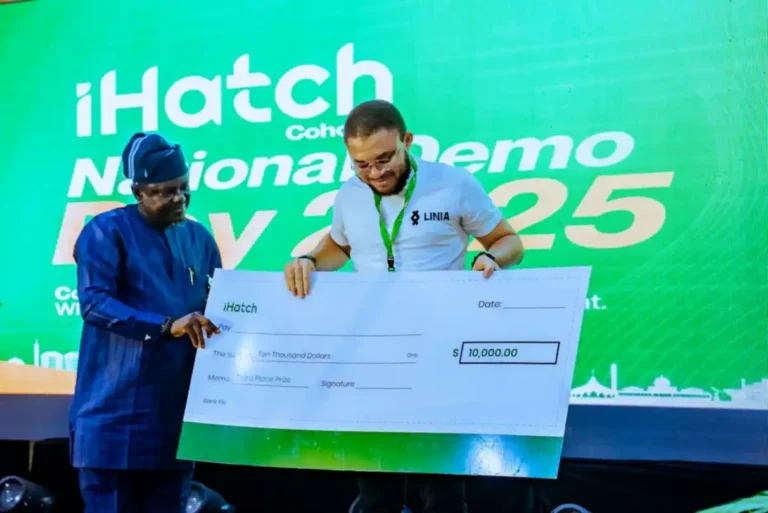
Linia Finance received 10,000 dollars for helping Nigerians manage their money with budgeting, tracking, and smart planning tools. Chapta was rewarded with a laptop for developing an offline-capable school application that ensures consistent and accessible learning for students in any location. Softdrop also received a laptop reward for its modern delivery platform aimed at tackling logistics challenges with speed, convenience, and efficiency.

The organisers noted that today’s Demo Day shows innovation is growing across Nigeria, reaching cities, communities, and hubs at every level.

FG Launches YouthCred for Employed Youth Offering Up to N3m Loan

0

The Federal Government has launched the Employed Youth Phase of YouthCred, introducing a credit window that offers up to N3 million to young working Nigerians as part of efforts to expand access to affordable consumer credit. Announced in Abuja by the Minister of Finance and Coordinating Minister of the Economy, Wale Edun, the new phase targets employed Nigerians aged 18–39 across both public and private sectors. Many in this group earn steady incomes yet remain unable to access formal credit due to existing barriers in the financial system.

The initiative will be delivered through the Nigerian Consumer Credit Corporation (CREDICORP) and partner financial institutions. Beneficiaries will be able to use the loans for essential needs including mobility, solar home systems, rent support, digital devices, household upgrades, and work tools, all without the requirement of collateral. Edun described the programme as “a practical expression of President Bola Ahmed Tinubu’s vision for a modern, credit-enabled economy where young Nigerians can live productive, dignified lives.”

He explained that government reforms should lead to visible improvements for everyday Nigerians, especially the youth, who make up more than 65 percent of the country’s population. “The future belongs to you,” he said.

He added that by 2050, Africa will supply 25 percent of the global workforce, with Nigeria making a major contribution. According to him, with the ongoing investment in digital infrastructure, young Nigerians “no longer need to ‘japa’ to succeed. You can build your future here.”

The minister said that access to credit provides dignity, financial independence, and equal opportunity, which the administration is determined to support through a growing and inclusive economy.

CREDICORP Managing Director, Uzoma Nwagba, said YouthCred has expanded from a small pilot into a national platform shaped by strong public demand. He noted that the earlier NYSC-focused phase attracted 51,000 applicants who completed credit education, with many receiving loans. “We found that most young people need credit for basic tools—laptops, accommodation, mobility, and solar power. These are essential for a dignified life,” he said.

Nwagba stated that CREDICORP has already reached 200,000 beneficiaries with N30 billion in consumer credit while maintaining zero non-performing loans. He credited this achievement to strong credit education and responsible lending practices. With the extension to employed youth, YouthCred is expected to reach one million young Nigerians and provide the country’s most affordable structured credit without collateral. “YouthCred is not just about loans; it is a movement that teaches financial responsibility and opens doors,” he said.

The Federal Government said the rollout creates a stronger pathway for financial inclusion, youth empowerment, and shared prosperity. Young Nigerians aged 18–39 are required to complete the mandatory credit education programme before applying digitally through CREDICORP’s approved channels.

FG Backs Scale-Up of Agribusiness Hub to Reach 30,000 Youths

0

The Federal Government has pledged its support for the scale-up of the Agribusiness Hub initiative, an intervention designed to create sustainable employment for at least 30,000 youths across the country. The initiative is led by the International Fund for Agricultural Development in partnership with the International Institute of Tropical Agriculture, Germany’s Federal Ministry for Economic Cooperation and Development, and the Visa Foundation. It aims to transform Nigeria’s agrifood systems by strengthening skills development, enterprise creation, and market integration for young people.

The Director, Federal Department of Development Partners Projects, Ministry of Agriculture and Food Security, Iluromi Adebola, made the pledge during the Agribusiness Hubs Development Partners Roundtable organised by IITA in Abuja. The event brought together development agencies, financiers, government institutions, embassies, and private sector actors who are seeking new ways to unlock opportunities for young Nigerians across the agricultural value chain.

Adebola noted that the government’s presence at the forum reflects a shared commitment to youth empowerment and national food security. She said the Agribusiness Hub model is more than a single project, explaining that it serves as a transformative ecosystem that connects young people to training, jobs, and enterprise support across various agricultural segments.

She stressed that unemployment, limited education, and rural insecurity continue to pose challenges for the country, adding that this “reality underscores an urgent need to ensure that young people, especially in the rural areas, are empowered with the skills, finance and methods to thrive.”

She highlighted the impact of the current phase of the initiative, saying, “Here in Nigeria, the AgriHub initiative implemented by IITA is demonstrating the power of partnership and innovation through structured hubs, job fairs, hands-on training and strong links with agribusinesses. Our youths have been prepared for employment in priority value chains such as rice, cassava, tomato, groundnuts and so on.”

She also said the government is pleased that the planned scale-up will prioritise fragile and conflict-affected areas, helping reduce migration pressures, supporting peacebuilding, and strengthening local economies through agribusiness opportunities.

Adebola added that the Agribusiness Hub initiative directly supports the Renewed Hope Agenda of President Bola Tinubu, especially in the drive toward achieving national food security. She explained that the next phase would ensure young agripreneurs can access markets, finance, and technical skills needed to grow their income and contribute to local development.

Speaking at the event, IFAD Nigeria Country Director, Dede Ekoue, outlined the achievements recorded during the first phase of the initiative. She said the programme has proven what strategic investments in young people can achieve, noting that it generated more than 5,600 direct jobs and 1,300 indirect jobs in both rural and semi-urban communities. According to her, the project surpassed its targets by 174 per cent for enterprise creation and 163 per cent for employment in agribusiness and related sectors.

Ekoue added that the pilot phase attracted over 7,000 youths, encouraging partners to plan a larger rollout. She listed the nine states of the Niger Delta, along with Benue, Enugu and Anambra, as areas to be covered in the scale-up, with additional plans to extend activities to the North-East and North-West. She also stated that the expanded phase aims to reach at least 30,000 youths nationwide.

She maintained that investing in rural youth remains essential for economic growth, peace, stability and the long-term future of the nation. “The scale-up of the Agribusiness Hub is a game-changer for Nigeria’s rural youth. It provides structured pathways from training to enterprise, supports green economic growth, and strengthens resilience in fragile areas. It positions young Nigerians as leaders of inclusive rural transformation and green economic growth through entrepreneurship and employability,” she said.

Agribusiness Hub Nigeria Project Coordinator at IITA, Adesanya Omotomiwa, described the roundtable as a platform to mobilise resources for the next implementation phase. He explained that the initiative does not only place youths in jobs but also encourages them to start their own agribusinesses, with at least 30 per cent of beneficiaries expected to become entrepreneurs who can employ others.

Omotomiwa said the programme operates in stages, where beneficiaries either move into employment opportunities or receive support to establish their own ventures after completing their training. “In the first phase, we impacted over 7,000 youths. With the lessons learned, we aim to double or even triple that number in the next phase, reaching at least 30,000 young Nigerians. There is no ceiling; the only limitation is the resources we can mobilise,” he added.