
Home Blog Page 240

Nigeria pushes Africa to adopt risk-based surveillance to stop ruminant disease

0

The federal government has called on African countries to move away from reactive, event-driven responses and adopt predictive, risk-based, and analytics-driven surveillance systems to meet the global target of eradicating Peste des Petits Ruminants, PPR, by 2030. PPR is a viral disease caused by a morbillivirus, closely related to the rinderpest virus, and it affects goats, sheep, wild relatives of small ruminants, and camels.

Chinyere Akujobi, permanent secretary of the Federal Ministry of Livestock Development, made this statement in Abuja on Wednesday during the Regional Training on Strengthening Animal Disease Surveillance, Building Capacities for PPR Eradication, and Transboundary Animal Diseases. The training was held under the Framework for the Implementation of the Pan-African PPR Eradication and other Sheep and Goat Disease Control Programmes in West African Member Countries. It was organised by the Food and Agriculture Organisation of the United Nations in collaboration with the African Union-Interafrican Bureau for Animal Resources, with financial support from the European Union.

Ms Akujobi urged countries to build surveillance systems that were smarter, faster, and more collaborative. She also encouraged stronger coordination, the adoption of modern tools, and actions guided by accurate information.

“We must build stronger technical skills in participatory and risk-based surveillance and harmonise epidemiological procedures so that data generated across countries can be compared and acted upon,” she said.

She explained that African countries must adopt modern tools to define epi-systems, map high-risk zones, integrate results into continental and global platforms, and strengthen regional coordination structures, including the Regional Veterinary Committee.

According to her, these priorities address the core challenges faced across the region, such as uneven reporting, weak linkages between laboratories and field surveillance, fragmented information systems, and gaps in cross-border coordination.

Ms Akujobi urged participants at the training to adopt an evidence-driven mindset that reflects the complex nature of today’s transboundary animal disease landscape. She emphasised that surveillance systems must depend on real-time information and include digital tools that detect risks early and support quick intervention. She added that cooperation among countries was essential because diseases like PPR do not recognise administrative boundaries.

“It is essential that our systems speak to one another and that information flows seamlessly from community animal health workers to national databases and onwards to regional and global systems. This gathering is more than a routine training session; it represents a strategic turning point for West Africa,” she said.

She noted that many African countries continue to struggle with PPR, foot-and-mouth disease, African swine fever, anthrax, and highly pathogenic avian influenza, along with other transboundary and zoonotic diseases that threaten food security.

“The small ruminant sector, in particular, supports millions of families, including women and youth whose livelihoods depend on healthy animals. Every outbreak that sweeps through our communities deepens vulnerability and disrupts social and economic stability,” she said.

Ms Akujobi assured that Nigeria remained committed to regional cooperation and to the Pan-African PPR Eradication Programme. She explained that the country was working to strengthen the National Animal Disease Information System to improve reporting nationwide and enhance collaboration between laboratories and field teams under the One Health approach.

She added that Nigeria collaborates closely with ECOWAS, the AU-IBAR, the FAO, and the World Organisation for Animal Health to ensure national actions align with continental strategies. The training brought together veterinarians, laboratory scientists, epidemiologists, wildlife experts, border authorities, and pastoralist communities across West Africa, with the goal of strengthening national and regional systems to better equip them for PPR eradication.
Advertisement

FG to Boost Youth Agripreneurship for Food System Growth

0

The Federal Government on Wednesday announced new plans to tap into the agribusiness potential of Nigerian youths. The move was revealed by the Minister of Agriculture and Food Security, Sen Abubakar Kyari, during an address at the Scaling up Youth Agripreneurship in Nigeria for Food Systems Transformation summit held in Abuja. The summit was organised by the Federal Government of Nigeria in partnership with the Niger Delta Development Commission, NDDC, the International Fund for Agricultural Development, IFAD, and the Livelihood Improvement Family Enterprises Niger Delta, LIFE-ND, Project.

Kyari highlighted the many challenges that have held young people back in the agricultural sector. He noted issues such as limited access to finance, land, processing facilities, markets, and mentorship. He also explained that many youths lack skills aligned with current market needs and often face environments that do not fully support their potential. He said the Tinubu-led administration is already implementing programmes and projects aimed at creating better opportunities for youth participation across major value chains.

In his words, “Today, we come together with one huge focus to change the narrative. This event marks a clear commitment to scale up youth agripreneurship across our country and region. Our goals are concrete: To unlock land and productive resources for young farmers, while ensuring secure tenure and responsible stewardship of the land.” He added that the government aims “to expand access to inclusive finance, credit guarantees, and streamlined procurement mechanisms that favor youth-led agribusinesses.”

Kyari also explained plans “to accelerate business development support—mentorship, incubation, and commercialization services that translate innovative ideas into viable enterprises.” He said the government intends “to strengthen market systems through digital platforms, value chains, and production, public-private partnerships that enable youth products to reach local, regional, and international markets.” He added that part of the agenda is “to embed climate resilience and sustainable practices at the core of all youth-led productive endeavours, aligning with our climate and food security commitments,” and “to measure progress with transparent, disaggregated data so that we can learn, adapt, and scale what works.”

The minister announced upcoming initiatives, including a land access and tenure assistance programme, innovative financing mechanisms with blended finance options, expanded business development services, a digital platform for youth agripreneurs to showcase products and reach buyers, and a strong monitoring, evaluation, and learning system. He stressed the need for collaboration, saying, “None of these ambitious plans will succeed without partnership. I call on all actors—government ministries and agencies, financial institutions, development partners, the private sector, academia, farmers’ organizations, and, most importantly, young agripreneurs— to join hands.” He added, “Your trust and collaboration give us confidence that scaling-up youth agripreneurship is not only possible but inevitable. Let us commit to concrete actions, shared accountability, and a shared vision of a transformed agrifood system where every young person can grow, innovate, and prosper.”

The National Coordinator of LIFE-ND, Dr Abiodun Sanni, also shared updates on the project’s achievements in states where it is active. Sanni said the project has trained over 29,620 youths and women as agripreneurs across major value chains such as cassava, rice, oil palm, aquaculture, poultry, and horticulture. He noted that the initiative has enabled the creation of over 23,751 direct jobs in rural communities and increased household incomes by an average of 50 percent among beneficiaries. He added that enterprise incubation has been strengthened through business mentorships.

Sanni stated, “The LIFE-ND Project has demonstrated that with the right model, Nigeria can convert its youthful population from job seekers to agripreneurial wealth creators capable of transforming the nation’s food system.” He expressed confidence that with continued commitment and broader partnerships, the project will grow into a national model for agricultural prosperity, food security, and economic resilience.

FG moves to boost industrialisation with stronger energy supply focus

0

The federal government says Nigeria must prioritise industrialisation and a dependable energy supply to reduce the export of raw materials and strengthen local value chains. Minister of State for Industry John Enoh stated this at the Industrial Revolution Work-Group Premier Ministerial Roundtable on Energy, Security, and Industrial Infrastructure held on Wednesday in Abuja.

Speaking on the theme “Beyond Power: Building the Backbone of the Industry—Energy, Infrastructure, and Sovereignty in Action,” Mr Enoh described industrialisation as an economic imperative for the country. He stressed the need to increase productivity through value addition and processing, noting that Nigeria must shift away from sending out unprocessed raw materials.

Mr Enoh said the programme was designed to help Nigeria become more productive by reducing raw material exports and improving economic management. According to him, discussions within the Industrial Revolution Workgroup identified energy security and weak industrial infrastructure as major challenges slowing growth. He explained that the roundtable series would start by addressing power supply issues in industrial clusters since energy remained central to industrial development.

He added that strengthening clusters was the most practical way to deliver energy and infrastructure efficiently. While recognising the role of the national grid, Mr Enoh said alternative energy options must complement it. He explained that blended power from gas, solar, and other sources was important, especially in areas where grid supply was unreliable.

Mr Enoh said the forum aimed to produce actionable solutions, including identifying priority industrial clusters and determining the quickest ways to provide them with power. He also highlighted obstacles such as right-of-way delays affecting transmission projects and called for faster implementation. He added that there was now consensus on the need for stronger collaboration between the Ministry of Power and the industrial sector to resolve challenges systematically, cluster by cluster.

Minister of Power Adebayo Adelabu said economic growth depended on a vibrant industrial sector supported by reliable and affordable electricity. He stated that ongoing reforms in legislation, policy, and infrastructure had improved grid stability while boosting generation and consumption.

Mr Adelabu said the government was strengthening transmission, distribution, regulation, and investment to ensure a sustainable electricity supply and reduce grid disturbances nationwide.

President of the Manufacturers Association of Nigeria, Francis Meshioye, said the roundtable discussed important issues, including alternative power sources to guarantee an independent and reliable electricity supply for industries.

He said the discussions covered options such as independent power and dual international connections, guided by cost-benefit analysis, and expressed confidence that practical power solutions for industrial clusters would emerge in the coming months.

FG Begins Payment of N35,000 to ITF SUPA Beneficiaries

10

The federal government has commenced payment of the N35,000 monthly stipend for the Industrial Training Fund (ITF) Skill-Up Artisans (SUPA) programme to beneficiaries. Those who attended at least 90% of the training are now receiving credit alerts of N35,000.

This second phase of the SUPA Skill-Up Artisans programme began in August 2025. Eligible artisans have confirmed that they have been paid, with social media, especially Facebook, being flooded with posts like “SUPA ITF has started payment of N35k for those trained. Expect yours if you have been trained.” The payment of the SUPA stipend to trainees began on December 10.

As gathered by Nigeria Startup News, one of the viral SMS messages reads:
“Credit
Amt:NGN35,000.00
Acc:081******769
Desc:099ZEXA25344091L/
R-1389639132/
INDUSTRIAL: REQUESTFORPAYME
NTO
Date:10/12/2025
Avail Bal:NGN35,042.87
Total:NGN”

This massive disbursement of ITF SUPA stipends is going to artisans who attended 90% of the training. The development comes after Industrial Training Fund confirmed that only SUPA Phase 2 trainees who meet the 90% attendance requirement will receive payment, according to official letters sent to centres across the country in November.

ITF started spot checks and follow-up monitoring of ongoing artisans training to verify training at approved centres, assess quality of delivery, and confirm trainer and trainee participation. About 100,000 trainees nationwide are part of the exercise.

ITF has established 30 training centres across Nigeria, with plans to create more facilities to meet the increasing demand.

Congratulations all ITF SUPA beneficiaries.

Those who are yet to register for ITF SUPA artisan can visit https://supa.itf.gov.ng/register.

Tinubu Orders Implementation of NIPSS Blue Economy Recommendations

0

President Bola Ahmed Tinubu has unveiled a new security and economic framework designed to unlock Nigeria’s marine and aquatic resources under the blue economy, describing the sector as central to the country’s long-term transformation. He directed all ministries, departments, and agencies to immediately review and implement recommendations from the National Institute for Policy and Strategic Studies’ comprehensive study on blue economy development.

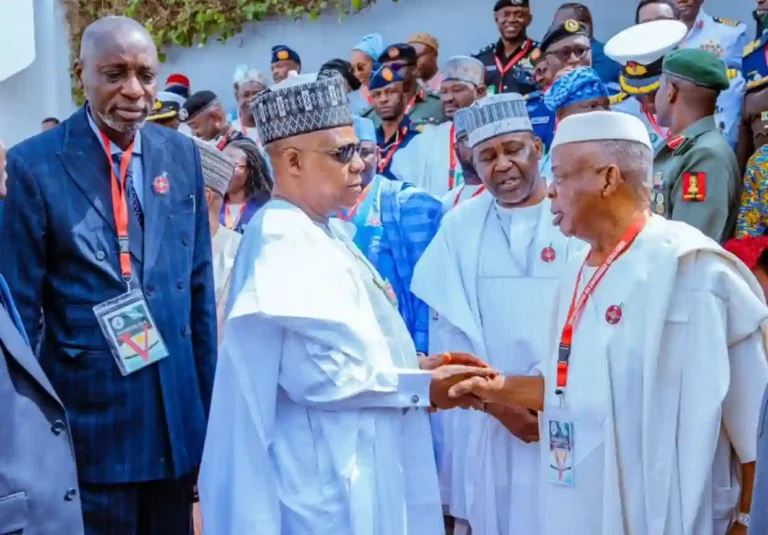
Speaking on Wednesday during a Presidential Parley with participants of Senior Executive Course 47 of the National Institute for Policy and Strategic Studies at the Presidential Villa, the President, represented by Vice President Kashim Shettima, said the administration is focused on turning Nigeria’s maritime potential into a major driver of economic diversification, job creation, and national prosperity.

He explained that the blue economy provides what he called a strategic route for expanding revenue, supporting sustainable employment, and revitalising ecosystems. “If properly harnessed, this sector could become an anchor of shared prosperity for generations,” he said.

President Tinubu welcomed the findings of the NIPSS study on Blue Economy and Sustainable Development in Nigeria, calling it a timely document that outlines the opportunities to seize, challenges to confront, and policies to refine. He commended the institute for what he described as its tradition of analytical rigour, creativity, and patriotic duty.

According to him, Nigeria’s marine endowments, including an 853-kilometre coastline, rich fisheries, inland waterways, and a strategic position in the Gulf of Guinea, place the country in a strong position to create new growth channels.

He stated that the government is prioritising aquaculture expansion, maritime corridor upgrades, port modernisation, coastal tourism, marine biotechnology, and renewable ocean energy. “These opportunities lie within our grasp if we act with discipline and intentionality,” he said. He highlighted the creation of the Ministry of Marine and Blue Economy as a key step toward improving port systems, strengthening maritime security, and supporting private-sector growth.

The President warned that none of the plans for the blue economy will succeed without a secure environment.

Although piracy has reduced through the Deep Blue Project, he noted that oil theft, illegal fishing, smuggling, vandalism, and kidnapping continue to threaten national revenue and investor trust. “These threats are real, and this Administration is taking decisive steps to address them,” he said.

He gave NIPSS an expanded national security assignment, directing it to conduct a nationwide security diagnostic and submit actionable recommendations to guide reforms in the country’s security structure. “The policy paper shall be submitted to my office within an agreed timeline, and it will receive the utmost attention,” he said. Tinubu described NIPSS as the intellectual engine of national transformation and encouraged its scholars to stay bold, practical, and connected to the realities of the nation.

Earlier, the Director-General of NIPSS, Prof. Ayo Omotayo, expressed appreciation to the President for the support the institute has received. He also thanked the Minister of Finance and Coordinating Minister of the Economy, Wale Edun, for providing funding for SEC 47. Omotayo explained that the team had visited several Nigerian states and 14 countries outside Nigeria before presenting their findings titled Blue Economy and Sustainable Development in Nigeria: Issues, Challenges and Opportunities.

Colonel Murkar Dauda, who highlighted the content of the report, said the Federal Government was already addressing systemic gaps in the blue economy and praised the President for what he called visionary leadership. The report identified challenges such as governance issues, institutional coordination weaknesses, and policy inconsistencies, alongside infrastructure levels that fall short of global standards.

It also outlined available opportunities, noting that fisheries and aquaculture remain strong entry points. The document advised that diversifying revenue across the marine and blue economy sector would open new financial streams for the country.

The report recommended that the Federal Government launch a national fisheries expansion programme that uses public-private partnerships to raise fish production from the current 1.2 metric tonnes to 10 metric tonnes within two years. It also proposed expanding the revenue base of the marine and blue economy sector and creating a financing framework for the industry.

Additionally, the report advised the government to review and harmonise all legal, policy, and institutional structures for the marine and blue economy. It recommended establishing a marine and blue economy skills, job creation, and social inclusion framework and strengthening safety and security across inland water bodies, among other measures.

Tinubu Prioritises Ranch Development after VIP Police Withdrawal

0

The Presidency has placed fresh emphasis on livestock reform, with President Bola Tinubu directing Vice-President Kashim Shettima to use the National Economic Council to identify and rehabilitate grazing reserves into ranches. He said this is necessary to defuse farmer-herder flashpoints and formalise the livestock economy, stressing that ranch development must now take priority.

He explained that states should work with NEC to salvage available land and convert it into ranches or livestock settlements that can open new economic opportunities. Tinubu stated, “We must eliminate the possibility of conflicts and turn the Livestock reform into economically viable development. The opportunity is there. Let’s utilise it.”

This charge came as the President, on Wednesday, reaffirmed his earlier order to pull police officers off VIPs and redeploy them to core policing duties. He spoke minutes before presiding over the Federal Executive Council at the State House, Abuja. Showing frustration about the slow pace of implementation, he said, “I honestly believe in what I said… It should be effected. If you have any problem because of the nature of your assignment, contact the IGP and get my clearance.”

To avoid exposing individuals who require protection, Tinubu directed the Minister of Interior, Dr Olubunmi Tunji-Ojo, to work with the Inspector-General of Police, Kayode Egbetokun, and the National Security and Civil Defence Corps to replace withdrawn escorts. He said, “The minister of interior should liaise IG and the Civil Defence structure to replace those police officers who are on special security duties. So that you don’t leave people exposed.”

He also instructed the National Security Adviser, Nuhu Ribadu, and the Department of State Services to guide the process and ensure compliance. According to him, “NSA and DSS will provide further information and form themselves the committee and review the structure.”

The President linked the decision to rising kidnapping cases across several states. He said, “We are facing challenges of kidnapping. We need all the forces we have on the ground, fully utilised.” While he acknowledged that some officials remain vulnerable, he said civil defence officers should take over VIP protection when necessary.

Tinubu added, “I know some of our people are exposed and I understand that we have to make exceptional provision for them and civil defence is equally armed and I want to know that from NSA to arm our forest guards too, take it very seriously.”

Tinubu confirmed that forest guards will be armed, saying, “I have directed the NSA to arm our forest guards, too. Take it seriously.”

Reiterating his directive on livestock reform, he said Shettima should ensure NEC identifies grazing reserves or villages that can be rehabilitated into ranches. He explained that land belongs to the states and whichever areas can be salvaged should be converted into livestock villages to reduce conflicts and promote prosperity.

Wednesday’s announcement followed a similar order issued on November 23 after a security meeting at the State House, Abuja, where the government responded to attacks that led to the kidnapping of at least 300 people across Kebbi, Kwara and Niger States.

A statement by the President’s Special Adviser on Information and Strategy, Bayo Onanuga, noted that VIP police escorts will now be redeployed to core police duties. Onanuga said VIPs requiring protection must request personnel from the Nigeria Security and Civil Defence Corps.

Bauchi sets January 4 resumption, approves reopening for Unity Colleges

0

The Bauchi State Government has announced the re-opening of all Basic, Senior Secondary Schools and Tertiary Institutions following detailed discussions with key stakeholders. According to the Ministry of Education, the engagement involved School Principals, education managers in the state and private school owners. The government said the decision was reached by consensus after reviewing the current situation.

In the statement, the ministry confirmed that His Excellency, the Executive Governor of Bauchi State, Senator Bala Abdulkadir Mohammed, CON (Kauran Daular Usmaniyya), has approved that schools resume effective Sunday 4 January 2026. It added that examinations that were supposed to take place before the closure will now be conducted within the first week of resumption, after which other academic activities will continue.

The announcement also stated that approval has been given for the immediate re-opening of the three Federal Government Unity Colleges in the state, following directives from the Federal Ministry of Education.

The ministry explained that the earlier closure of schools was based on advice from security agencies who acted on available information after several troubling incidents were recorded in schools across the country. It noted that the decision to reopen is due to an improvement in the security situation.

Parents and guardians were urged to return their children to school without delay. The ministry assured that additional security measures are being put in place to ensure the safety of students, teachers and non-teaching staff across schools and higher institutions in the state. The statement ended with an appreciation for the continued cooperation of the public.

Nigeria Immigration Service Denies Replacement Recruitment

1

The Nigeria Immigration Service has alerted the public about a false recruitment post currently circulating on Facebook. The Service said it has no ongoing recruitment and urged people to ignore, avoid engaging, and report the page. According to the statement, “This is false. The public is advised to ignore, avoid engaging, and report the page immediately.” Officials explained that the only recruitment connected to the Service is the one recently conducted by the Civil Defence, Corrections, Fire and Immigration Board, and applicants are still waiting for the results. Nigerians were advised to check the CDCFIB portal at recruitment.cdcfib.gov.ng for confirmed updates.

The warning comes as a replacement recruitment advertisement continues to trend online, claiming that the Nigeria Immigration Service is launching an urgent exercise to fill vacant positions. The advertisement states that it is a Replacement Recruitment Exercise meant to address a manpower gap caused by the retirement of over 25,000 officers. It also claims that the Service plans to recruit 5,000 new personnel officers across all cadres. The post adds that applicants must be between 18 and 35 years old and that the portal would remain open for two weeks.

The advertisement further invites interested candidates to submit applications immediately and follow instructions strictly on the supposed official portal. While these details are widely circulated, the Nigeria Immigration Service has clearly denied the recruitment claims and emphasized that members of the public should rely only on official communication channels.

Apply for Kashim Ibrahim University Teaching Hospital recruitment

0

Kashim Ibrahim University Teaching Hospital (KIUTH) has commenced applications for a massive recruitment drive, inviting qualified Nigerians to apply for 13 available positions across clinical, non-clinical, and academic roles. The hospital confirmed that the openings cut across key departments and will support its growing healthcare operations in Maiduguri.

The available clinical positions include Radiographer CONHESS 09 in the Radiology Department, Medical Laboratory Technician CONHESS 06 and Medical Laboratory Scientist CONHESS 09 under Laboratory Services, Pharmacist CONHESS 09 in the Pharmacy Department, and Medical Officer CONMESS 3 in Clinical Services. Other clinical roles are Physiotherapist CONHESS 09 in the Physiotherapy Department and several nursing positions such as Staff Nurse CONHESS 06, Senior Nursing Officer at KIUTH Main Campus, Senior Nursing Officer CONHESS 09, Nursing Officer I CONHESS 08, and Nursing Officer II CONHESS 06.

Non-clinical positions include Health Information Management Officer CONHESS 06 in Health Records and Environmental Health Officer CONHESS 06 in the Environmental Health Department. All positions are based in Maiduguri, except one Senior Nursing Officer role at the KIUTH Main Campus.

Applicants must meet the required academic and professional qualifications for their chosen role. The statement added that NYSC discharge or exemption certificate is compulsory, and ICT proficiency is required for all applicants.

Applications must be submitted within six weeks from the date of the advertisement and only shortlisted candidates will be contacted for interviews.

To apply, interested applicants are to write an application letter attached with subject title of the position addressed to: The Director of Administration, Kashim Ibrahim University Teaching Hospital, P.M.B. 1065, Njimtilo, Kano Road, Maiduguri, Borno State.

Applicants are expected to merge their application letter, CV, certificates, practicing license where applicable, and computer proficiency certificate into one PDF file before uploading on the portal https://www.kiuth.com.ng. Applicants can compress the PDF using tools like iLovePDF for easier submission.

Sub-Saharan Africa Doubles Services Export Jobs in Two Decades

The World Bank has released new insights showing how developing countries, especially in Sub-Saharan Africa, can expand job opportunities by tapping into services trade. The report explains that services already play a major role in the global economy and now contribute more jobs and more GDP than manufacturing in most parts of the world. It also notes that services jobs usually pay better than roles in agriculture or manufacturing because they require higher skills. However, many low-income countries have not fully explored these opportunities. According to the World Bank, high-income countries get almost 60 percent of their export-related jobs from services, while the poorest countries get only 20 percent.

The report highlights a major shift in Sub-Saharan Africa. In 2000, services made up about 14 percent of the jobs tied to exports, but this amount doubled in less than twenty years. The World Bank says this progress shows that developing economies can follow two main paths to benefit from services trade. One option is to import more efficient upstream services, which help boost productivity in other sectors. The other is to directly export services, ranging from tourism to financial services to technology-driven support work. The challenge, however, is understanding which policies can create the biggest improvements in productivity, investment, and employment.

To address this, the World Bank and the World Trade Organization introduced newly detailed data on Services Trade Restrictions. The institutions say this data offers a clearer picture of the policies that influence trade in services, which are traditionally harder to measure than trade in goods. For physical goods, customs processes make it easier to track tariffs and quotas. But for services such as transport, tourism, call center operations, or financial products, there is no border checkpoint to observe. The report states that “trade restrictions are embedded in domestic laws and regulations,” which often exist for valid public policy reasons. As a result, identifying and quantifying barriers requires a sector-by-sector review of local laws. According to the World Bank, this is exactly what the new research has done.

This work expands on a 2020 analysis in which researchers studied services restrictions in 68 economies and created the Services Trade Restrictions Indices, known as STRI. In that earlier study, restrictions were identified, rated, and combined into an index that helped countries estimate the potential benefits of removing or easing those restrictions. The new study increases the number of covered countries to more than 134 and now includes all African countries except Eritrea. It also widens the sector coverage. While previous work focused on communications, financial services, and transport, the updated research adds sectors such as computer services, construction, health, and tourism, along with several sub-sectors that were previously not analyzed.

The expanded data makes it possible to compare countries by income level and understand how restrictions differ across regions. The report points out that Africa shows significant variation in how restrictive its services policies are. While the median restrictiveness in each sector is similar to other regions, the range across African countries is very wide. This means some African countries have very open services markets, while others still maintain heavy restrictions.

The World Bank also notes that international agreements appear to influence these patterns. The report points to the Western African Economic and Monetary Union, explaining that “WAEMU has policies on regional banking regulation, as well as initiatives on professional services such as accounting, auditing, and legal.” These policies may help explain the lower and more consistent levels of restrictions across WAEMU countries. There are similar signs of harmonization within the European Union, the Comprehensive and Progressive Agreement for Trans-Pacific Partnership, and the East African Community. In contrast, the Regional Comprehensive Economic Partnership shows a wide spread in services restrictiveness, suggesting less coordinated policy approaches among its members.

The findings from this new research will be discussed at a global conference taking place in Geneva on December 3 to 4. The event is jointly organized by the World Bank and the WTO and will focus on how developing countries, especially in Africa, can use policy reforms and capacity building to unlock more opportunities in services trade.

The World Bank says the progress already made by developing countries in opening up services is promising. The institution added that it will “continue to support countries leveraging these possibilities for job creation,” encouraging more governments to pay attention to the potential gains in productivity, investment, and employment by engaging more actively in services trade.