Home Blog Page 252

Cross River Procures 150 Mini Buses for Grassroots Empowerment

0

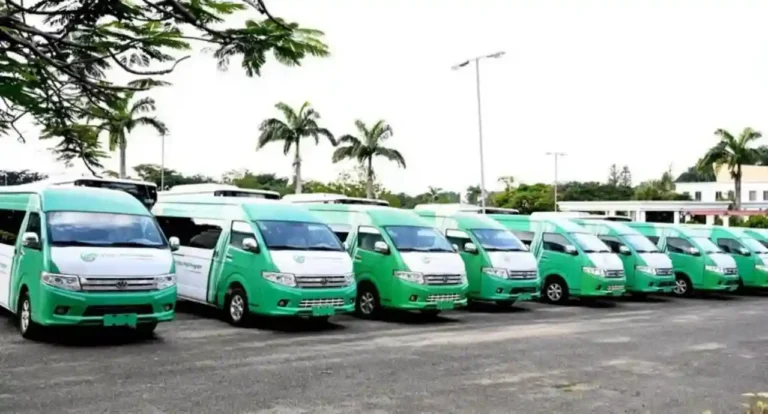
Cross River State has approved the direct procurement of 150 Daihatsu Hijet mini buses as a fresh empowerment move targeting vulnerable and less privileged groups in its three senatorial districts. The government said this step is part of wider efforts to improve economic inclusion and grassroots development.

In a statement signed by the Commissioner for Transport, Ekpenyong Cobham, and released on Friday in Calabar, the initiative was described as “more than a routine procurement, but a strategic intervention designed to restore dignity, hope, and economic independence at the grassroots.” He explained that despite reforms under Governor Bassey Edet Otu, many households still face “the stark reality of economic exclusion.”

“The Cross River State government has approved the direct procurement of 150 units of Daihatsu Hijet mini buses as part of a new empowerment initiative aimed at supporting vulnerable and less-privileged groups across the state’s three senatorial districts,” the statement confirmed. According to him, the Otu-led administration has recorded progress in poverty reduction, but there remains a need to provide direct tools to disadvantaged groups. “For the vulnerable, poverty is not a statistic; it is a daily struggle for survival. This initiative seeks to move our people from dependence to productivity,” he stated.

The statement added that the minibuses will be shared across the zones. “The approved minibuses will be distributed equitably, with 50 units allocated to the Northern, Central, and Southern senatorial zones,” Cobham explained, noting that this structure guarantees balanced development and inclusivity. He further noted that the vehicles would support small enterprises, strengthen rural transportation, and increase local commercial activity.

Cobham highlighted the economic value of the move, calling the vehicles “productive assets capable of transforming 150 beneficiary groups into viable micro-enterprises,” with an expected ripple effect on job creation and transport access. He described the initiative as a major marker of the administration’s mid-term progress. “This project stands as a cornerstone of the administration’s mid-term achievements, demonstrating a clear, impactful use of state resources,” he said.

The Daihatsu Hijet model was chosen for its durability, fuel economy, and ability to handle both rural and urban roads. An official familiar with the process explained, “It is a tested and trusted vehicle for high-frequency, low-cost mobility. We expect these units to serve the beneficiaries for many years.”

The government opted for direct procurement to speed up delivery. According to the commissioner, “The direct procurement allows for complete acquisition and distribution within the 2025 fiscal year, ensuring immediate impact on the lives of the people.” He added that the responsible agency will begin acquisition and distribution immediately.

In February, the state launched a similar support scheme with 200 tricycles under the Social Welfare Mobility Support Scheme. The tricycles were given to widows, youths, and displaced persons in Calabar, Ogoja, and Ikom. Officials said beneficiaries were selected using community-based verification, and repayment conditions were waived for the poorest cases. The initiative was widely praised as one of Governor Bassey Otu’s most visible poverty-reduction programmes, improving rural mobility and livelihood support for vulnerable families.


Advertisement

Lafarge Trains 100 PWDs in Lagos Under D2A Empowerment Initiative

0

Lafarge Africa Plc marked the International Day of Persons with Disabilities on Thursday, December 4, 2025, alongside beneficiaries of its Disability-to-Ability Programme, also known as D2A. The event was held in partnership with the Lagos State Employment Trust Fund, the Lagos State Ministry of Youth and Social Development, the Lagos State Office for Disability Affairs and Tunde Onakoya, Founder of Chess in Slums Africa and Guinness World Record Holder for the longest marathon chess game.

A statement from the organisation said the D2A Programme, themed “Ability Reimagined,” is designed to train 100 Persons with Disabilities and equip them with market relevant vocational and entrepreneurial skills that create access to employment, business opportunities and long term self reliance. Participants are receiving hands on training in laptop and phone repairs, make up and gele styling, wig and braid making and shoe and bag production.

To ensure inclusion and participation across Lagos State, the programme is running in two hubs, Ikeja in Lagos West and Ikorodu in Lagos East, allowing beneficiaries from various areas to take part fully.

Speaking at the event, the Director of Communications, Public Affairs and Sustainable Development, Lafarge Africa Plc, Viola Graham Douglas, said the initiative reflects Lafarge’s commitment to inclusivity, empowerment and sustainable livelihoods. She expressed gratitude to the partners for championing inclusion and supporting the success of the programme.

Graham Douglas explained that the training goes beyond technical skills, adding that beneficiaries will also be exposed to entrepreneurship, financial literacy and mentorship sessions coordinated by LSETF to ensure participants are not only skilled but ready to succeed as business owners or professionals.

“This programme is very important to us at Lafarge and underscores our commitment to our communities. We don’t just produce building solutions, we build society, homes, and empower people to be the best that they possibly can be,” she said. She added that “Everyone has a right to dignity, to make a living, and we believe in real opportunities. A society is not governed by the policy, it is governed by people, committed people, people who really want to make a difference. We really want to make a difference in people’s lives and an inclusive society is one where everyone can make a living and give back in their own way.”

In his speech, programme partner Tunde Onakoya encouraged participants by sharing his personal story, explaining how chess and books gave him the chance to travel around the world despite his own challenges. He urged beneficiaries to believe in themselves and take full advantage of the Lafarge D2A programme as a valuable opportunity. He encouraged them to be diligent with their talents and use them to make positive impact. He commended Lafarge for designing an initiative that empowers people living with disabilities.

Mrs Feyisayo Alayande, the Executive Secretary and CEO of the Lagos State Employment Trust Fund, joined other key stakeholders in a speed mentoring session with beneficiaries, offering insights and career guidance.

Also speaking, the General Manager, Lagos State Office for Disability Affairs, Mrs Adenike Oyetunde Lawal, represented by Dr Adekola Oluwafunmilayo, Director, Monitoring and Evaluation at LASODA, stressed that creating an inclusive society is a shared responsibility that goes beyond government. She said it requires collaboration, compassion and consistent effort from all stakeholders.

She praised the partnership between Lafarge Africa Plc and LSETF for delivering impactful entrepreneurship training to over 100 participants. “By supporting business registration and providing starter toolkits at the end of the training, you are empowering these individuals to begin their entrepreneurial journeys with confidence and clarity. This is the kind of thoughtful support that truly transforms lives, and we at LASODA sincerely appreciate your commitment,” she said.

The programme continues with hands on learning sessions, mentoring and enterprise support to help participants move from skill development to real income opportunities, reflecting ongoing efforts to reduce barriers faced by persons with disabilities.

Professor urges Gen Z to build adaptive ICT skills for Nigeria’s future

A renowned Professor of Computer Science and Cyber Security at the Federal University of Agriculture, Abeokuta, Prof Adebukola Onashoga, has urged Generation Z to take intentional steps toward becoming adaptive, future-ready ICT talents who can influence national development. She made the appeal on Thursday while delivering the Joseph Ayo Babalola University 16th Convocation Lecture titled “Empowering the Gen Zs: Building Adaptive ICT Talents for the Future,” where she described young people as digitally connected, curiosity driven and naturally inclined toward exploring technology.

Prof Onashoga noted that Nigeria’s fast-changing digital environment demands young individuals who are not only tech savvy but also equipped with creativity, resilience and problem-solving skills. While acknowledging that these characteristics already give Gen Z an advantage, she stated that they must be supported with discipline, intentional capacity building and focus. According to her, cultivating a growth mindset that embraces challenges, keeps learning, and adapts to constant changes remains necessary for their relevance.

She stressed that youths must move beyond simply using ICT tools and make an effort to understand how those technologies function. She explained that the future of work will be interdisciplinary, requiring individuals who can bridge sectors and collaborate across different fields. In her words, “It is not enough to be able to operate technology and to become creators and innovators; you must understand how these tools work.” She added that “whether you are in agriculture, social sciences, engineering, or the creative sector, technology is now the foundation for growth.”

The professor encouraged young Nigerians to see themselves as bridge builders and grasp how collaboration will determine their impact. She said the digital age requires more than technical expertise, insisting that youths must support their knowledge with problem-solving skills, critical thinking, and clear purpose. “Don’t wait for problems to come to you,” she advised. “Actively look for challenges around you and apply critical thinking to solve them. That is how you stay relevant.”

Prof Onashoga further urged youths to deploy creativity in their digital journeys, calling attention to the importance of innovative digital delivery mechanisms in a communication-driven world. She encouraged them to collaborate widely, communicate effectively, and view learning as something that continues through life. According to her, mobile phones should serve as learning tools, not just for chatting or scrolling through unproductive content.

She challenged young people to approach their roles as builders equipped with global digital resources, saying, “Use tools for creation, not just consumption, approach every challenge as a builder equipped with the world’s digital toolkit. Learn at least one new tech skill, start a hands-on project, and embrace collaboration.” She also warned that digital literacy must go hand-in-hand with responsible online behaviour, reminding them that the internet preserves their actions.

Prof Onashoga cautioned, “Be careful how you present yourself online. Your digital footprint can determine opportunities you gain or lose.” She explained that how young people engage on digital platforms could support or damage their future goals, stressing that they must act with awareness when building their online identity.

In his remarks, the institution’s Vice Chancellor, Olasebikan Fakolujo, said selecting the lecture theme was both deliberate and timely. He explained that it was a strategic effort to steer young people toward purposeful leadership and digital readiness. According to him, the university wants to spark curiosity in the younger generation, strengthen their desire to take leadership roles and give them the capacity to function effectively in a rapidly changing technological world.

Fakolujo added that modern realities demand young Nigerians who are innovative, adaptable and capable of using ICT to solve real-world problems. He said this was why exposing students to conversations that prepare them for the future remains important, stressing that nurturing talent will contribute to national growth.

Nigeria surpasses 100,000 CNG vehicles as FG targets one million by 2027

0

The Presidential Initiative on Compressed Natural Gas and Electric Vehicles has announced that more than 100,000 vehicles in Nigeria now use CNG. The Executive Chairman and CEO of the initiative, Mr Ismaeel Ahmed, said this on Friday in Abuja. He spoke during the unveiling of CNG products by Alfa Designs Nigeria Limited and a stakeholder engagement held in collaboration with the News Agency of Nigeria. Ahmed was represented by Mr Zayyanu Tambari, Chief Compliance Officer of the initiative.

He explained that Nigeria had only about 11,000 CNG converted vehicles as at 2023. He said the new figures show that the adoption of CNG as a transport fuel is growing among transportation companies and private vehicle owners. The event was attended by dignitaries including Malam Ali M. Ali, Managing Director of NAN, Mr Mubarak Abdul, Chief Operating Officer of Alfa Designs, and Pankaj Bohhra of Mijo AutoGas, who is an Original Equipment Manufacturer. Other officials from the PiCNG and partner companies were also present.

The products unveiled were CNG conversion kits designed by Mijo AutoGas, CNG cylinders manufactured by EKC International, a CNG Mother Station from CIMC ENRIC, and an Optical Gas Imaging Camera produced by Opgal Optronics. Ahmed said the entire programme was built around the number of vehicles on Nigerian roads that are using CNG as either an alternative fuel or a complementary option. He described the initiative as a legacy project that started over a decade ago when the first CNG facility was commissioned in 2012 by NIPCO in Benin City.

“Today, as we speak, there are over 100,000 cars that are using CNG on the Nigerian roads. Companies in the private sector and operators are refitting their fleet, especially the long haulage to move on CNG. Our target is to convert one million by 2027,” he said. According to him, the one million target covers vehicles converted locally, factory fitted, manufactured in Nigeria, or imported. He stressed that the instruction to convert at least one million vehicles by the end of 2027 was a direct presidential mandate.

Ahmed noted that the initiative is working with stakeholders and development partners to support the president’s goal to make CNG a cheaper, safer, and cleaner fuel alternative. He recalled that President Bola Tinubu inaugurated the programme in October 2023 when only 11 states had some form of CNG infrastructure. “Basically, it is only around the pipeline system that we have either a conversion center or a retail outlet. And there are only about 11 states,” he said.

He stated that the situation has changed, as “today, there are over 25 states with a CNG footprint in one form or another. And about six or eight states will join in the next few months.” He added that officials are confident that by the end of next year, the programme will cover the entire country. Ahmed said, “The target is to do 36 states plus Abuja by 2027. I believe that at the rate we are going, by the end of 2026, we will have taken the CNG footprint in every state, if not every senatorial district in Nigeria.”

The PiCNG boss described the unveiling event as a milestone in Nigeria’s transition towards cleaner and cheaper transportation and industrial energy options. He praised Alfa Designs Nigeria Limited for partnering with NAN to host the engagement meeting and present new CNG products created with leading international manufacturers. He said the initiative reflects the growing momentum nationwide as innovators, local manufacturers, and development partners support Nigeria’s Gas Expansion Programme.

The push for CNG adoption received a major boost in April 2025. The Federal Government commissioned 2,700 new CNG-powered buses under the presidential initiative, with a focus on mass-transit operators in major cities. Officials said the buses would help reduce transportation costs, stimulate demand for conversion centres and refuelling stations, and attract more private investment into the gas mobility sector. They said the rollout would accelerate the shift from petrol to cleaner CNG solutions, further strengthening progress toward the one-million-vehicle target.

China, Nigeria Launch NAISCA to Train Youths in AI Skills

0

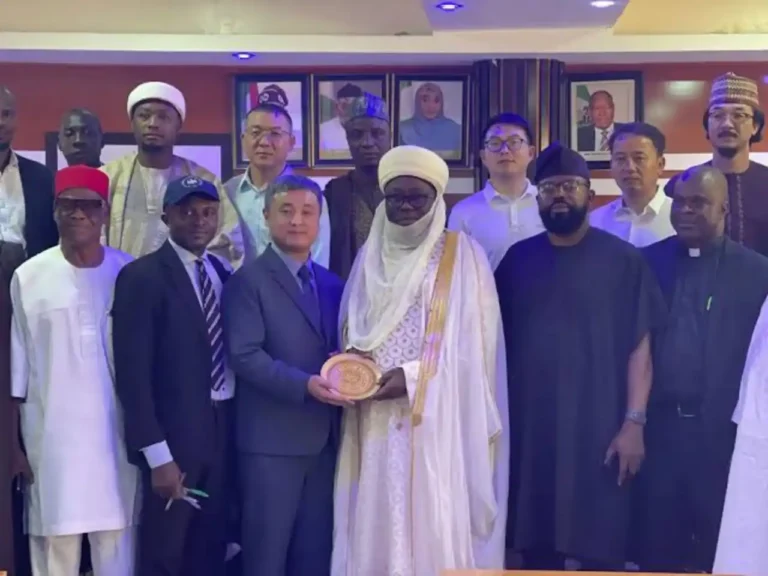
The Global South Research Centre, a think tank at Soochow University in China, has launched a new digital skills initiative in Nigeria to train young people in Artificial Intelligence (AI). The programme, known as the Nigerian Artificial Intelligence Skills Cooperation Alliance (NAISCA), was inaugurated in Abuja in partnership with Nigerian universities and youth organisations.

Speaking at the event, the Coordinator of the programme, Mr Wenkang Lyu, said that the alliance aims to equip students and youths with AI skills to support sustainable development across Global South countries. Lyu, a researcher at Soochow University’s think tank, explained that the project is designed to introduce modern AI technology and build practical experience that will boost the career competitiveness of young Nigerians.

“Today, we are launching the Nigerian Artificial Intelligence (AI) Skills Cooperation Alliance (NAISCA), together with the Global South Youth Development Alliance (GSYDA),” he said. According to him, the initiative represents more than a symbolic unveiling. “This is not just the launch of a project; it is a strategic action by Global South countries for the future of youth in the digital age.”

He highlighted the close ties between China and Nigeria, noting that both countries face a shared challenge regarding the growing digital skill gap among young people. He said this gap could undermine economic progress if left unaddressed. “Youths are the core engine of economic development. If digital capacity building lags behind, it will directly threaten our economic resilience and innovation capabilities in the digital age,” Lyu said.

Lyu added that enhanced cooperation could remove barriers and open access to opportunity. He emphasised that collaborative knowledge sharing would help build a more equitable and prosperous digital future for young people across developing nations.

In his remarks, Mr Xi Yang, General Manager of the Nigerian branch of China International Services Group Limited, described the programme as a meaningful move in strengthening China-Nigeria relations. Yang said it represents a vital milestone, especially in education and technology, reflecting a shared ambition to grow the digital economy.

He noted that his organisation had always supported friendly cooperation between both nations. “In the future, we will continue our unremitting efforts to build a long-term, mutually-beneficial and digitally-prosperous cooperation framework, opening a new chapter in China-Nigeria digital economy cooperation,” he said.

The Vice-Chancellor of Tansian University, Umunya, Anambra, Prof. Eugene Okoye, also praised the initiative. He described artificial intelligence as the future of development and expressed hope that institutions across Nigeria would fully embrace the opportunities it offers. He further shared optimism that public welfare training in AI and digital technology could support solutions to national security challenges.

The Executive Director of the African Youth Growth Foundation, Dr Arome Salifu, also welcomed the programme, stating that it would create new growth paths for Nigerian youths. He pointed to China’s rapid advancement over the last three decades as evidence of its capacity to share valuable knowledge. Salifu said young people learning AI skills stand to improve work efficiency, decision-making, innovation, cost reduction and performance in sectors like education and healthcare. While assuring continued organisational support, he revealed that youths had already been mobilised to join the programme.

The launch of NAISCA comes months after another major digital skills partnership. In January 2025, China and Nigeria strengthened technology cooperation when Huawei introduced its LEAP digital skills initiative in Abuja. That programme targeted 100,000 Nigerian youths for training in AI, cloud computing, cybersecurity and 5G technologies.

It received the endorsement of the Ministry of Communications and Digital Economy and was presented as a driver for tech talent growth, mirroring rising investment in youth-focused digital capacity building between the two countries.

Osun cash transfer beneficiaries demand awareness, fair disbursement

Stakeholders and beneficiaries of the Federal Government’s Cash Transfer scheme are calling for stronger awareness, clearer information sharing, and better transparency around the management and delivery of the programme. Their concerns were raised during a community outreach held in Elujoba community in Ife Central Local Government Area of Osun State. The outreach was organised by Act Naija Project, co-funded by the European Union with support from Brot fur die Welt and ANEEJ, under the theme “Empowering Communities Through Awareness: Strengthening Access and Feedback From Improved Social Protection Programmes In Osun State.”

One of the beneficiaries, Pastor Sesan Kuffo, urged the Federal Government to enhance the structure of the cash transfer scheme so more people can understand and benefit from it. He said, “I want the Federal Government to do certain very important things. Firstly, they should raise awareness among the public. Most people are not aware that this exists, like me. I was not aware of it before, but after being informed. I registered and got the cash transfer once.” Kuffo added that the distribution process must be closely monitored. “Secondly, the Federal Government should monitor the disbursement of the funds while prioritising equity and fairness. This will lead to more accountability and transparency. Thereby, availing everyone to benefit from it.”

The concerns were acknowledged by officials present. The Environmental and Social Safeguard Officer at the State Operating Coordinating Unit, Okunola Omoniyi, said there was room for improvement in programme delivery. According to him, “To every programme of the Federal Government, there has to be a form of improvement. Regarding the disbursement of funds through cash transfers, the issues raised by participants require prompt attention. We know that some received one tranche and others expected three tranches of disbursement, reflecting a need to prioritise equity and fairness. Therefore, I am imploring the Federal Government to make the disbursement seamless such that it will be easier to reach more people and everybody at every time.”

Omoniyi also encouraged citizens to show more interest so the programme can work effectively for them. “Some are lackadaisical when it comes to coming out for such programmes. I am imploring them to see the community outreach as an eye-opener, having listened to testimonies from beneficiaries. So, when such a programme comes to their community, they should endeavour to come out en masse so that those who are affected will easily be identified and enrolled in the social registry,” he said.

The State Programme Officer of New Initiative for Social Development (NISD) on Act Naija Project, Olaniyan Glory, appealed to residents to participate in the registration process so they do not miss out on the benefits. She stated, “I am imploring people to come out during the registration processes. When they are asked to come for registration, they should come out en masse and register so they can also benefit from it. When they don’t register, there is no way they will benefit from it. But when they register, they can also benefit from all the social protection projects in the state.”

Beyond beneficiary complaints, questions over transparency in the national cash transfer process intensified in 2025. In September, human rights lawyer Festus Ogun challenged the Federal Government’s claim that ₦330 billion had been disbursed to 8.1 million households. He filed an FOI request seeking a full beneficiary list, but the National Social Safety-Nets Coordinating Office rejected the request, citing data-privacy laws. The refusal deepened doubts over whether the reported sums truly reached households.

In November, the Federal High Court in Abuja ruled in favour of another FOI action. It ordered the Ministry of Humanitarian Affairs and Poverty Reduction to release full details of the Conditional Cash Transfer programme in Ondo State to lawyer and former ADC governorship candidate Myson Nejo. The court also awarded him ₦2 million in damages for the ministry’s earlier refusal, marking a significant push for transparency in the social protection space.

FG Assures Fair, Transparent Rollout of New Tax Acts

0

The federal government has moved to assure Nigerians and investors that the rollout of the new tax acts will be done with fairness, transparency, and what officials call a human face. This assurance came from the Chairman of the National Tax Policy Implementation Committee, Mr Joseph Tegbe, shortly after the committee was inaugurated in Abuja by the Minister of Finance and Coordinating Minister of the Economy, Mr Wale Edun.

Speaking to journalists after the event, Tegbe said there was no intention by government to breach the rights or privacy of citizens in enforcing the new laws. “Government is not going to encroach on their personal accounts. Nigerians are not under probe or investigation,” he stated. He stressed again that “this government has no business irresponsibly encroaching on personal bank accounts of citizens or its residents in Nigeria.”

He noted that worries about disruptions or negative impacts on the economy as the January 1 commencement date approaches were being taken seriously by authorities. According to him, “We would not implement anything that is going to be destructive to the economy. There will be no surprises. Some of those areas of concern will be addressed. The systems that we are building will respect legitimate expectations, reduce uncertainty, and protect the most vulnerable.”

Tegbe explained that the committee would operate through wide consultation and collaboration across sectors to ensure that decisions are shared and not imposed. “The committee has been set up to ensure broad and meaningful consultation and collaboration. We want to ensure that all stakeholders are aware and have fair buy-in and ownership of whatever they implement,” he said. He added that discussions would cut across businesses, subnational governments, civil society organisations, and professional bodies to encourage shared understanding of reforms and their implications.

He also addressed public concerns about parts of the tax laws, saying the administration was committed to resolving them in a responsible way. “This government is a humane government, and this government will work actively to build stakeholders to ensure that areas that need further clarification and further resolutions are addressed,” he said.

A major worry for stakeholders is the capital gains tax issue, which unsettled the capital market recently. Tegbe acknowledged this concern, calling it one of the priority areas for review. “The capital gains tax issue almost crashed the stock market when some statements were made. It took the intervention of the Minister of Finance for the stock market to bounce back. We will look at that,” he said.

He hinted that not all parts of the new laws may start immediately. “Inasmuch as we are going ahead with January 1, there might be some provisions that we will need to take a second look at before then. In some areas, the status quo might remain while we consult,” he revealed.

According to him, the tax reforms are not just about revenue generation. He explained that “sometimes taxes are about creating the right environment for investment. Under the Act, it’s not all about taxes and duties; there are incentives. And that’s what’s most important for us—those incentives that will encourage investment, both foreign and local.”

The implementation programme was described as one of the most significant policy efforts of the Tinubu administration, focused on strengthening the fiscal system while protecting economic stability. “If well executed—and we intend for that to happen—Nigerians will experience improved revenue mobilization, reduced leakages, and a more stable and competitive economic environment. We will work with everybody to ensure that the partnership with stakeholders happens in implementing these long-term reforms,” Tegbe stated.

He also highlighted provisions relating to the Nigerian Revenue Service included in the new act, saying several parts were meant to strengthen institutions and benefit citizens. Tegbe pointed out President Bola Tinubu’s focus on safeguarding low income earners. “One of the objectives of Mr. President is to ensure that Nigerians who are earning a lower income are exempted from tax as much as possible. And you see that the band of application of tax has been improved. We will not lose that benefit,” he said.

He added that implementation would continue while adjustments are made based on lessons learned. “As you are implementing, you are learning, you are refining. There are clear areas that we have identified. This is a very sensitive government. It’s a responsive government and a responsible government,” he said.

Beyond capital gains tax concerns, Tegbe mentioned that other areas, including pioneer status provisions under the old Export Development Incentives framework, would also be revisited. “There are some other areas that people are concerned with. Like the area in the past, the whole pioneer status, which is EDI. We would look at it,” he added.

He assured that relevant structures would be deployed to manage concerns, maintain confidence, and support reforms in ways that help growth and attract investment.

Presidential Committee Names 20 Tax Reform Creators

0

The Presidential Fiscal Policy and Tax Reforms Committee has announced the Top 20 Content Creators recognised for helping young Nigerians understand the country’s evolving tax reforms. According to the organisers, “A big thank you to everyone who nominated a creator who has helped you understand Nigeria’s new tax reform laws or someone you believe should be part of the conversation.”

The committee said it received 8,591 nominations covering more than 200 creators before ranking the final list by social media followership. The Top 20 names include Financial Jennifer, Onlinebanker, Don Aza, Mary Efombruh, Baba Ogbon Awon Agba International, Perpetual Badejo, Personalfinancegirl, Tomi Akinwale, Emeka Ayogu, Aderonke Avava, Odunola Ewetola, Christiana Balogun, Mosbrief, Chidozie Chikwe, Zainulabideen Abdulazeez, Chinemerem Oguegbe, Oyagha Michael, Ayomide Ogunlade, Ayọ̀dèjì Fálétò, and Vera Korie.

The chosen creators will attend a special training session aimed at improving their understanding of tax laws so they can share “clearer, more balanced, and insightful information” with their followers.

The deadline for acceptance was set for Monday, 8 December 2025, while the committee invited Nigerians to state the topics they want addressed during the training in the comments section.

Citizens are encouraged to take part in the process, as the statement urges the public, “If your favourite creator is on the list, tag or mention them and ask them to confirm their interest” by filling the provided online form Here.

FG disburses N3.7bn to tertiary staff under TISSF

The Federal Government has confirmed the successful disbursement of N3.7bn to workers in tertiary institutions nationwide under the Tertiary Institutions Staff Support Fund, marking what the Ministry of Education describes as a major milestone in fulfilling its welfare commitments.

According to the ministry, about 2,000 beneficiaries across 43 universities, polytechnics and colleges of education received the first tranche. The initiative, officials noted, is a key component of President Bola Ahmed Tinubu’s Renewed Hope Agenda aimed at strengthening motivation among employees in the education sector.

In a statement released through the Ministry’s spokesperson, it said the TISSF had moved beyond policy formulation to “measurable impact,” targeting the men and women sustaining Nigeria’s tertiary education system.

The ministry disclosed that academic staff accounted for 17 per cent of the beneficiaries, while non academic personnel made up 83 per cent. It added that male recipients currently represent 83 per cent compared to 17 per cent for female staff.

“The Ministry acknowledges this disparity and will intensify efforts to encourage application uptake among female staff to ensure gender parity in future tranches,” it stated.

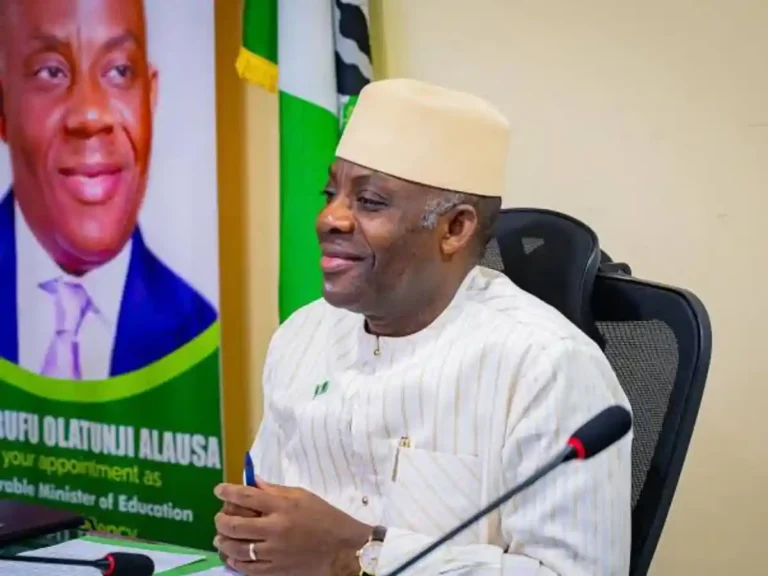
Minister of Education, Dr Maruf Tunji Alausa, described the scheme as a reflection of government appreciation. “The TISSF is more than just a financial intervention; it is a tangible expression of the Federal Government’s appreciation for the backbone of our education system,” he said.

“By swiftly disbursing these funds, we are keeping our solemn promise to enhance the welfare, productivity, and dignity of our staff, thereby strengthening our institutions for the future.”

The ministry noted that the programme aligns with the Renewed Hope Agenda’s goal of shifting Nigeria from a resource based economy to a knowledge driven society.

Cross River approves December 15 to January 5 leave for civil servants

Cross River State has approved its annual year-end leave for Civil and Public Servants, giving workers time to enjoy Christmas activities. In a circular dated December 5, 2025, with reference number GO/HOS/4/VOL.III/277 and issued as Head of Service Circular No: 6/2025, Orok Bassey Okon announced that His Excellency, the Governor of Cross River State, granted all Civil and Public Servants leave from Monday, December 15, 2025, to Monday, January 5, 2026.

According to the circular, “the approval is to enable Civil/Public Servants fully participate in the Christmas festivities within the State.” The notice was addressed to top government officials including the Hon. Speaker, the Hon. Chief Judge, Commissioners, Permanent Secretaries, the Chief of Staff, Chairmen of Boards, the Clerk of the House, and Heads of Departments.

The Head of Service explained that officers on essential duties will not be part of the break. He noted that these categories of staff are required to remain at their posts to maintain critical services throughout the holiday period.

The statement also directed Permanent Secretaries and Heads of Departments to ensure every employee is informed and instructed to comply. “Please be guided accordingly,” the circular concluded.

This move reflects a similar policy in December 2024 when the Cross River State Government declared a holiday from December 18 to January 3. Officials said the earlier break supported family bonding, encouraged spending within communities, and boosted informal businesses during Christmas. The 2025 approval continues this tradition and highlights the administration’s focus on staff welfare and festive participation.