Home Blog Page 316

UNESCO begins biodiversity business training for 10 Ogun communities

0

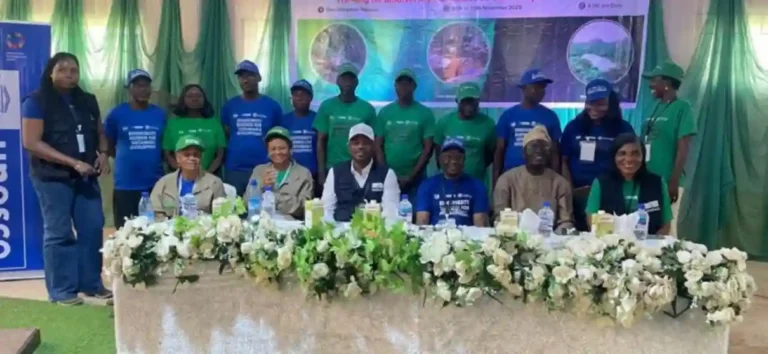
The United Nations Educational, Scientific and Cultural Organisation (UNESCO) on Monday began a six-day biodiversity business training for 10 communities around the Omo Biosphere Reserve in Ogun State.

The training, which is part of the Nigeria–UNESCO Biodiversity Business Project, aims to build the capacity of participants in environmental education, biodiversity conservation, and nature-based ventures such as fishery and piggery businesses.

Funded by the India–UN Development Partnership Fund, the programme is being implemented in collaboration with the Ministry of Environment, the Forestry Research Institute of Nigeria (FRIN), the National Park Service, and the Nigerian Man and Biosphere Committee.

The theme of the programme is “Biodiversity Business in Omo Biosphere Reserve, Oban Biosphere Reserve, and Shere Hills Reserve, Nigeria: A Means to Poverty Reduction, Biodiversity Conservation and Sustainable Development in Nigeria.”

Dr Jean-Paul Abiaga, Head of UNESCO Abuja Office and Representative of UNESCO to Nigeria, said the project aligns with one of UNESCO’s major goals, which is balancing conservation and sustainable development.

According to him, “This is especially important today as the international community strives to protect 30 per cent of the planet’s land and sea by 2030. At UNESCO, our philosophy is simple but powerful; to reconcile nature protection with human development within our biosphere reserves.”

Abiaga emphasized that the project is a reflection of courage and collective effort to link conservation with community well-being. “We encourage you to continue this partnership so that together, we can ensure this project delivers real and lasting benefits for both people and nature,” he said.

He added that UNESCO remains committed to working hand in hand with all stakeholders to achieve the project’s objectives. “UNESCO reaffirms its full commitment to working hand in hand with you to achieve the project’s objectives and to deliver lasting results for the people, the communities and the ecosystems of Nigeria,” he said.

Speaking on behalf of the Minister of Environment, Mr Balarabe Lawal, the Director-General of FRIN, Prof. Zacharia Yaduma, said the programme would help communities make sustainable use of their natural resources while preserving ecological integrity.

He noted that environmental education and business training are key to promoting community responsibility and long-term sustainability. “By equipping participants with management and entrepreneurial skills, we are promoting the development of nature-based businesses that enhance local resources, alleviate poverty and promote sustainable production methods,” he said.

Yaduma added that the training provides an opportunity to share knowledge, strengthen partnerships, and promote innovative approaches that align environmental conservation with local economic development. He urged all participants to engage actively and come up with practical ideas that could enhance livelihoods while protecting the environment.

Dr Enang Moma, National Professional Officer, Natural Science Sector, UNESCO, recalled that during the validation workshop held in May, participants had selected piggery and fish farming as focus areas for biodiversity-based business development.

Moma said the programme supports Nigeria’s National Development Plan (2021–2025), which emphasizes poverty reduction, biodiversity conservation, and sustainable development. “This training will strengthen the capacity of participants to operate biodiversity businesses and green income-generating livelihoods in a sustainable manner while reducing harmful human activities in forests,” she explained.

She also said the initiative would help ensure that communities benefit economically from the conservation of natural resources.

Mr Olukayode Shonibare, Immediate Past Manager of the Ogun State Plantation Project, highlighted the state’s ongoing efforts to combat deforestation. “Before now, every year we can plant up to 1000 to 2000 hectares with the support from the World Bank and African Development Bank, but now that the intervention is no more there, the state government is doing its bit,” he said.

According to him, the state now plants an average of 50 to 100 hectares of trees every year, focusing on replanting indigenous, endangered, and exotic species to restore biodiversity. “We are hoping to do more,” he added.

The benefiting communities include Aba Kurudu, Abeku 1, Etemi, Eseke, Sojukorodo, Owode, Apora, Akorede, Osoko, and Mokore.

Advertisement

Kwara Agrifirm to train 70 youth in livestock farming for 6 months

0

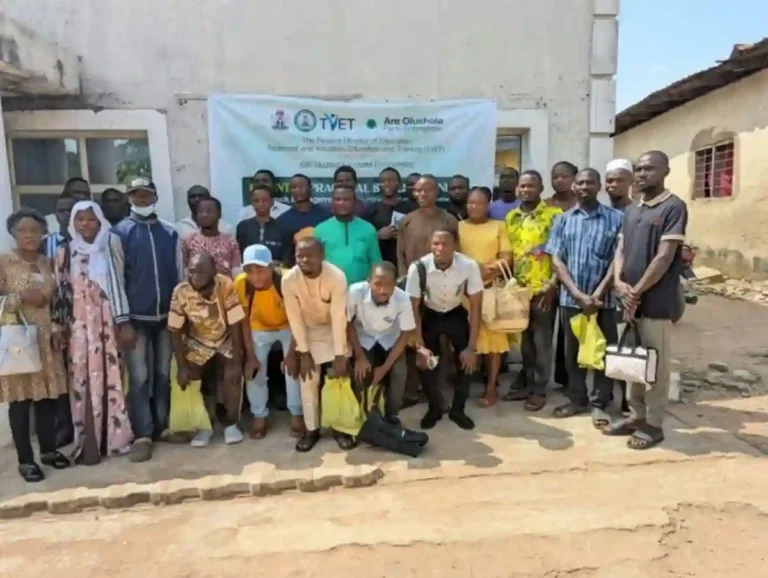
A Kwara-based agrifirm, Are Olushola Farm Enterprise, has announced plans to train 70 youth in livestock farming as part of efforts to create job opportunities and enhance food security in Nigeria.

The CEO and founder of the enterprise, Aremu Olushola, revealed that the training will last for six months and is being organized in partnership with the Federal Ministry of Education through its national technical-vocational scheme.

Speaking during an orientation session for the selected youth in Ilorin, the Kwara State capital, Aremu explained that 40 of the participants will receive tuition-free training in poultry production, while the remaining will be trained in animal husbandry.

He added that each participant will be provided with monthly stipends and start-up support from the federal government. According to him, the initiative is designed to produce skilled workers and potential agripreneurs who can drive growth in the agricultural sector.

“We are delighted to flag off this training in collaboration with the Federal Ministry of Education. Our goal is to raise skilled agriprenuers who are self-reliant and prepared to contribute to the promotion of food security in Nigeria,” Aremu said.

He noted that equipping young Nigerians with practical agricultural skills represents both an investment in individual livelihoods and a strategic effort toward national development and food security.

“This initiative is aligned with national efforts to prioritise vocational training as a mechanism to directly impact youth unemployment. By also offering start-up support to trainees, the scheme seeks to go beyond mere training to real livelihood creation and business empowerment,” he added.

Aremu commended the federal government for launching the TVET scheme and selecting his company as one of its implementing partners.

The Federal Ministry of Education has in recent years expanded its Technical and Vocational Education and Training (TVET) programme, recognising the importance of practical skills in bridging the gap between education and the labour market through collaborations with private-sector organisations like Are Olushola Farm Enterprise.

Ondo First Lady launches ICT empowerment programme for women

Ondo’s First Lady, Oluwaseun Aiyedatiwa, has reaffirmed the federal government’s commitment to women’s empowerment and development in the country. She made this known on Tuesday in Akure during the flag-off of the Renewed Hope Initiative Women Information and Communication Technology Training and Empowerment Programme.

The programme, organised in collaboration with the National Information Technology Development Agency (NITDA), aims to promote gender equality and digital inclusion among women. Mrs Aiyedatiwa said the initiative was a clear confirmation of the Federal Government’s dedication to fostering gender equality and harnessing the potential of women through digital empowerment.

According to her, “It is imperative for women to acquire ICT skills in order to be empowered and be competitive in an increasingly technology-driven world.” She explained that the training programme would be launched simultaneously in six states, targeting the empowerment of 40 women in each of the participating states.

Mrs Aiyedatiwa commended NITDA for its efforts in bridging the digital divide across the country, noting that such initiatives align with the Renewed Hope Agenda of President Bola Tinubu. She added that the programme would help accelerate economic diversification through industrialisation and digitalisation.

NITDA Director-General, Kashifu Abdullahi, said the agency’s mission is to transform Nigeria into a sustainable digital economy powered by technology and innovation. He stated that “women are leaders, creators, and innovators who play vital roles in families, communities, and the nation as a whole.”

NYSC 2025 Batch C Camp Opens November 19

0

The National Youth Service Corps has announced that the 2025 Batch ‘C’ Orientation Course will begin on Wednesday, 19th November 2025, in all NYSC Orientation Camps across the country. According to the NYSC management, registration for all Corps Members will hold from Wednesday, 19th to midnight of Friday, 21st November 2025.

The Swearing-in Ceremony is scheduled for Friday, 21st November, while the Closing Ceremony will take place on Tuesday, 9th December 2025.

The Director-General, Brigadier General Olakunle Nafiu, wished all prospective Corps Members safe travels to their respective camps. He advised, “Corps Members should not embark on night journeys while travelling to their Orientation Camps.”

This was contained in a statement signed by Caroline Embu, Director, Information and Public Relations.

FG to Establish Mechanisation Centres Across Six Zones for Food Security

0

The Federal Government has announced plans to establish agricultural mechanisation service centres across the six geopolitical zones of Nigeria as part of efforts to boost food security and promote sustainable agricultural practices. The initiative aims to enhance training, maintenance, and coordination of agricultural technology transfer among farmers to ensure long-term food sustainability in the country.

Minister of Agriculture and Food Security, Senator Abubakar Kyari, disclosed this in Ilorin, Kwara State, on Tuesday during the 25th International Conference and 45th Annual General Meeting of the Nigerian Institution of Agricultural Engineers (NIAE). The event was themed “Standardisation and Promotion of Proven Technologies for Agricultural Production and Value Addition in Nigeria.”

Speaking at the conference, Senator Kyari explained that the government’s plan includes setting benchmarks that will guide the production, assembly, and use of agricultural machinery in Nigeria for years to come. He said, “Beyond acquisition, our focus remains on standardisation, local assembly and maintenance systems, ensuring that every machine deployed is fit for purpose and supported by skilled technicians.”

The Minister noted that Nigerian farmers deserve home-grown technologies developed with a clear understanding of the country’s unique farming conditions. “Our farmers deserve technologies that are developed with a deep understanding of our soils, our crops, our scale of farming, and the labour dynamics of our rural communities,” Kyari said.

He announced a partnership between the Federal Ministry of Agriculture and Food Security, the National Centre for Agricultural Mechanisation (NCAM), and Tanta Motors of Egypt. According to him, this collaboration aims to support the local production and commercialisation of proven agricultural technologies.

Kyari stated, “The young mould-making machine, which was originally developed by NCAM here in Nigeria, serves as an example of what we can achieve even more through collaborations. The essence of NCAM Tanta Motors’ collaboration is to facilitate mass production and commercialisation of proven home-grown technologies.”

He revealed that the partnership had led to an improved version of the young mould-making machine, redesigned to function both as a mould-maker and a ridge-maker. He explained that the innovation would “give farmers the freedom to adopt which environment geometry that is most suitable for their region and preferred cultivation practice.”

Kyari said the collaboration would pave the way for local manufacturing and assembly of agricultural machinery in Nigeria, thereby promoting agricultural mechanisation and creating jobs. He added that the cooperation would also extend to other NCAM-developed technologies, including the mechanical weeder, cassava stem planter, grain and seed planter, and multi-crop thresher. “All of which are being prepared for standardisation and commercialisation under a joint NCA/TM branding arrangement,” the Minister added.

In his remarks, the National Chairman of the Nigerian Institution of Agricultural Engineers, Engr. Joshua Olaoye, urged Nigerian engineers and innovators to focus their expertise on producing affordable, adaptable, and locally made machinery that would serve the needs of smallholder farmers. He said smallholder farmers make up the majority of Nigeria’s agricultural population and are key to achieving food security.

“As we celebrate 50 years of dedicated service to the agricultural sector, let this gathering mark the dawn of a new era of purposeful engineering, one that translates ideas into implements, research into results, and technology into transformation,” Olaoye said. “Together, we shall drive the mechanisation revolution that Nigeria needs for food security, job creation, and national prosperity.”

Olaoye also highlighted the maiden National Agricultural Machinery Exhibition, jointly organised with NCAM, as an initiative aimed at bridging the gap between innovation and adoption. He said the exhibition was designed to showcase practical solutions that can help modernise Nigeria’s agricultural system.

Kwara State Governor and Chairman of the Nigeria Governors’ Forum (NGF), Alhaji AbdulRahman AbdulRazaq, in his address, emphasised the importance of agricultural innovation in addressing global food challenges. He said, “At a time when the world struggles to feed a growing population, gatherings like this light the path to Nigeria’s agricultural future through innovation and mechanisation.”

The Governor commended the organisers for fostering discussions that tackle critical issues such as climate change, the use of agricultural technology, and land management. “This gathering will definitely serve to share ideas about solutions to emerging issues, including the challenge of climate change, technology and global debate around GMOs, and the dynamic issues of land use among diverse economic groups,” AbdulRazaq said.

He added that Kwara State had already made significant progress in agricultural transformation. “In Kwara, we have mostly shifted agriculture from subsistence to full mechanisation, and your organisations have been the major enablers of this important leap,” the Governor stated.

Lagos Government Moves to Boost Local Printing Industry

0

Lagos State Government has reaffirmed its commitment to strengthening the local printing industry through strategic partnerships and supportive policies aimed at boosting economic growth and innovation.

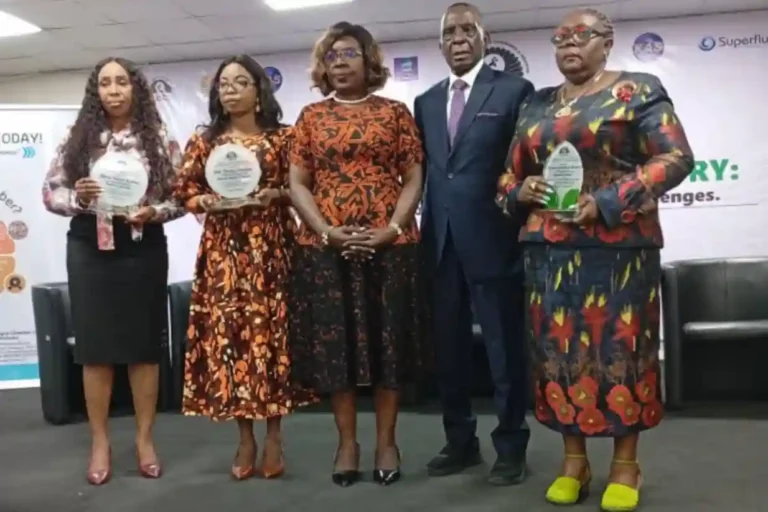
The State Commissioner for Information and Strategy, Mr. Gbenga Omotoso, stated this during a seminar organised by the Printing, Publishing and Allied Group of the Lagos Chamber of Commerce and Industry (LCCI), held recently in Victoria Island.

Speaking on the theme, “Nigeria’s Printing Industry: Unlocking Opportunities, Overcoming Challenges,” Omotoso described the printing sector as one of the oldest in Nigeria’s creative industry, adding that it continues to play a major role in job creation and entrepreneurship.

He noted that the Lagos State Government recognises the economic importance of the printing industry and remains focused on driving digital transformation, supporting entrepreneurs, and promoting sustainable growth within the creative economy. “Governor Babajide Sanwo-Olu’s administration understands the value of the printing industry to the economy and is committed to creating a business-friendly environment,” Omotoso said.

In his remarks, the President of LCCI, Mr. Gabriel Idahosa, called for the repositioning of the printing sector as a vital pillar of Nigeria’s creative and manufacturing economy. He emphasised the need for multi-dimensional strategies to drive innovation, enhance human capital development, promote sustainability, and align government policies with industry goals.

The Chairman of the Printing, Publishing and Allied Group at LCCI, Mr. Gabriel Okonkwo, highlighted the growth potential of the sector, noting that Africa’s printing industry is valued at about 10 billion dollars, with Nigeria contributing between 800 million and 1 billion dollars annually. He explained that the seminar was organised to foster collaboration among stakeholders and strengthen local production capacity.

A panel session titled “Unlocking Nigeria’s Printing and Publishing Potential: Policy Pathways and Financial Solutions” featured experts from the financial sector, academia, and the printing industry. Participants recommended policy reforms to remove financial barriers, review tariff structures for raw materials, and implement a “Nigeria First Policy” to promote local content and protect domestic producers.

Candidates report glitches as CDCFIB CBT exam begins nationwide

73

The Computer-Based Test (CBT) for the Civil Defence, Correctional, Fire and Immigration Services Board (CDCFIB) officially commenced on Wednesday, November 12, with several candidates taking to social media to share their experiences, ranging from smooth participation to unexpected technical issues.

According to the CDCFIB, candidates are advised not to minimize, close, or leave the exam page after a successful login until the test is completed and submitted. The agency also emphasized the need for a stable internet connection throughout the exam. “If you encounter a technical problem, follow the provided instructions, or alternatively contact CDCFIB,” the board stated. Candidates are required to log in through https://exam.cdcfib.gov.ng/.

However, reports from applicants suggest several technical challenges. A candidate, Muhammad Sani Haruna, expressed frustration, saying, “The system submitted my profile automatically after I waited for more than 10 minutes for the exam questions to come up and then I tried to refresh and was automatically submitted. If we are not ready for anything as a country, we shouldn’t be wasting people’s time.”

Others shared similar concerns. “I only got to answer 24 out of 40 questions. Where did the remaining go?” wrote another user. A candidate identified as Malam Abdul said, “I just got to fill 14 out of 40 questions and I didn’t see any other questions. They showed me to submit, and it’s showing results of the 14 questions! I used my smartphone to do the CBT. What’s our solution now please?”

Despite the challenges, some candidates reported successful experiences. Victory Isong posted, “Thanking God for successful entry and exit.”

The CDCFIB CBT examination uses Artificial Intelligence (AI) to monitor participants’ behavior, including camera activity, login attempts, and test duration. The system automatically flags suspicious actions such as early logins, repeated access attempts, or failed camera verification, which can lead to automatic disqualification or submission.

Candidates are therefore urged to carefully follow all instructions, maintain internet stability, and only log in during their scheduled time to avoid being flagged by the AI monitoring system.

LSETF launches free creative skills training for women and girls in Lagos

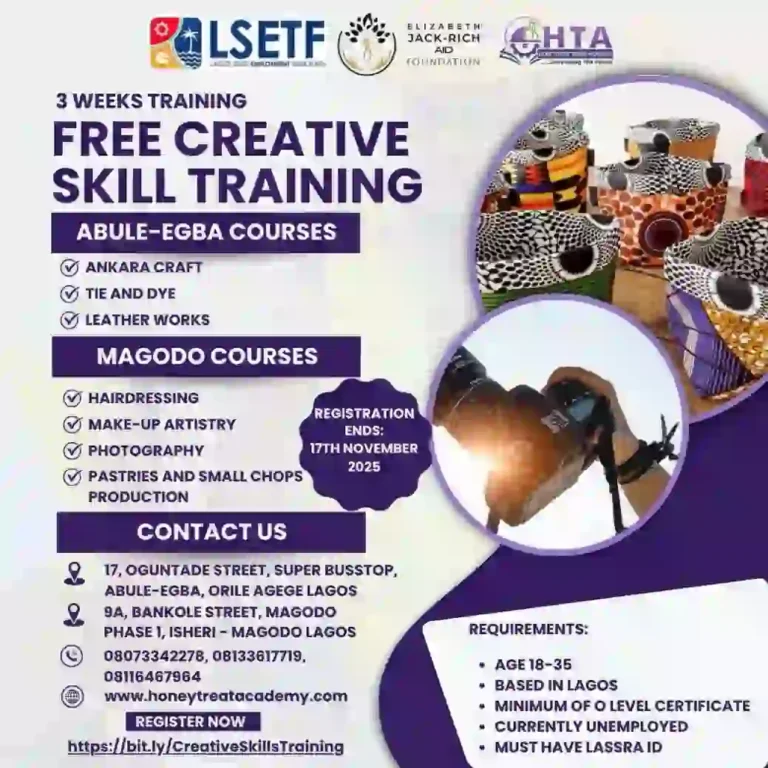
The Lagos State Employment Trust Fund (LSETF), in partnership with the Elizabeth Jack-Rich Aid Foundation and Honeytreat Trade Academy (HTA), has announced a free Creative Skills Training for Women and Girls in Lagos. The initiative aims to provide practical, hands-on skills, boost confidence, and open opportunities for personal growth and empowerment.

According to the organisers, “This free training is part of our commitment to developing the future and empowering young women across Lagos.” The three-week training offers various creative courses in two locations. At Abule-Egba, participants can learn Ankara Craft, Tie and Dye, and Leather Works, while the Magodo centre offers Hairdressing, Make-up Artistry, Photography, and Pastries and Small Chops Production.

Eligible applicants must be aged 18 to 35, reside in Lagos, have a minimum of O Level certificate, be currently unemployed, and possess a LASSRA ID. Registration ends on 17th November 2025 via the official Link.

Future-X Unilever Campus Ambassador Program opens applications

0

Unilever Nigeria has announced the launch of its Future-X Unilever Campus Ambassador (FUCA) Program, aimed at identifying and developing the next generation of leaders across Nigerian universities and polytechnics. The program is a paid opportunity designed to engage young, talented individuals and take them on a leadership journey as official liaisons between Unilever and their institutions.

According to Unilever, the FUCA Program will recognize “the top young talents around the country who have the passion to want more, do more, and contribute more to become great leaders with a positive impact.” The company explained that the initiative provides both undergraduates and recent graduates a chance to gain valuable work experience while building professional and leadership skills.

The program gives participants real-world exposure through activities such as empowerment projects, campus-based events, and skills development workshops. It also helps participants build relationships with seasoned industry professionals and expand their professional networks before entering the workforce.

The host of the program is Unilever Plc, and it falls under the category of internships and training. Eligible applicants must be Nigerian youths between the ages of 16 and 24 who are currently enrolled as undergraduate students. Applicants are expected to be resourceful, creative, and demonstrate curiosity, leadership, and a commitment to personal and professional growth.

The company noted that only 20 young leaders will be selected nationwide. Successful candidates will receive monthly stipends, access to mentorship programs, and training sessions. “The program will recognize the top 20 young talents around the country who have the passion to want more, do more, and contribute more,” Unilever said.

To apply for the 2026 Future-X Unilever Campus Ambassador Program, interested students are required to complete a series of steps, including the FUCAP LevelUp Entrepreneurship Skills Course, FUCAP LevelUp 2.0: Design Thinking from a Business Perspective, and the FUCAP 2025/2026 Closeup Brand Challenge.

Applications must be submitted through the official Online Form provided by Unilever. The deadline for submission is November 30, 2025.

NDE launches RHEI 2 to train 40,000 unemployed

0

The National Directorate of Employment (NDE) has announced the launch of the Second Phase of the Renewed Hope Employment Initiative (RHEI 2) across Nigeria. The program aims to tackle unemployment by training and empowering over 40,000 Nigerians in various skill areas.

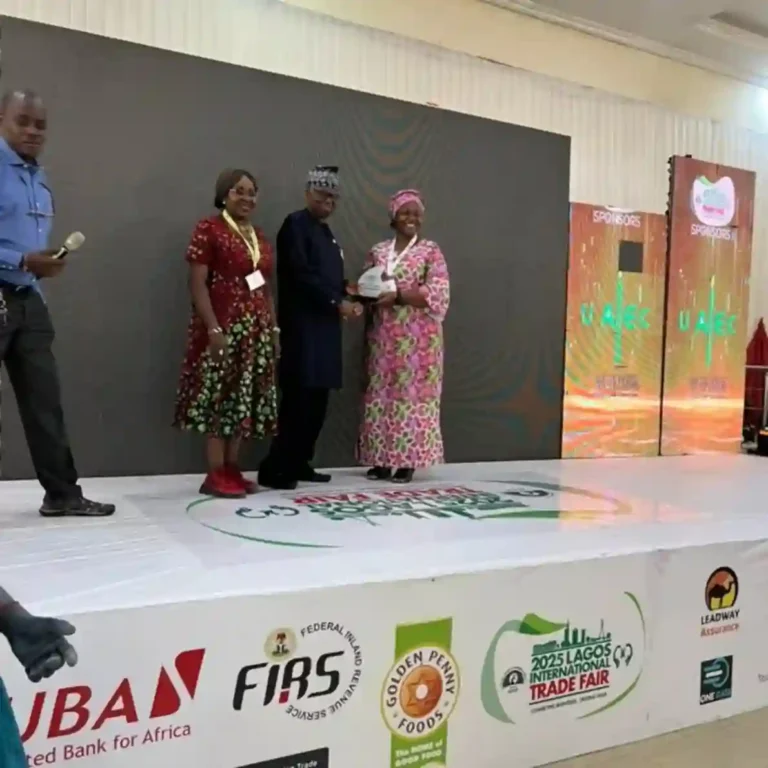
The Director-General of NDE, H.E Silas Ali Agara, represented by the Director of Inspectorate, Mrs. Steve-Ogundipe Olayinka, made the announcement during the 39th Lagos International Trade Fair held on November 11, 2025. She described the initiative as a major milestone in the agency’s employment drive, highlighting that it aligns with this year’s fair theme, “Connecting Businesses, Creating Value.”

Agara stated that the RHEI 2 targets unemployed and unskilled individuals across 8,809 electoral wards in Nigeria. The program focuses on practical skill development in over 30 areas, including agriculture, ICT, and digital marketing. He added that the initiative is designed to empower youths, women, and vulnerable groups with resources and technical knowledge to boost productivity and promote community growth.

The NDE emphasized that this effort is part of its broader mission to link talent with opportunity and promote innovation that drives sustainable development. The Director-General reaffirmed that the Renewed Hope Employment Initiative represents a key strategy under the Federal Government’s employment policy framework to reduce poverty and support self-reliance.

However, several participants took to Facebook to express concerns about unpaid training and transportation allowances. Comments from users like Juliet Ijele and John Audu requested immediate payment, while others, including David John and Dindi Dindi, criticized the delay and called for better management of the program.

In response, the NDE clarified in its official Facebook reply that payment for allowances is in progress and beneficiaries will receive their entitlements soon.