Home Blog Page 317

Social safety net benefits 19% Nigerians, only 44% reach poor – W’ Bank

The World Bank has warned that Nigeria’s social protection system remains weak, with millions of citizens left without government assistance despite worsening poverty.

In its latest report titled “The State of Social Safety Nets in Nigeria,” the Bank revealed that only 19 percent of Nigerians are covered by social safety net programs, and just 44 percent of total benefits actually reach the poor.

According to the report, about 51 percent of Nigerians, roughly 120 million people, lived in poverty in 2023, up from 84 million in 2019. The Bank said the increase was driven by slow economic growth, high inflation, and the removal of fuel subsidies. Inflation surged to 24.6 percent in 2023 and further to 33.2 percent in 2024, raising the cost of living for millions.

The report stated that about one in four Nigerians remains vulnerable and could fall into poverty when faced with shocks such as rising food prices or job losses. “Addressing this challenge requires well-designed, adequately funded, and efficiently implemented social safety net programs,” it noted.

The World Bank said public spending on social safety nets in Nigeria is among the lowest in the world. In 2021, Nigeria allocated only 0.14 percent of its Gross Domestic Product to social safety nets, compared to a global average of 1.5 percent and 1.1 percent in Sub-Saharan Africa.

The majority of federal spending goes through the National Social Investment Program Agency (NSIPA), which manages schemes such as the Household Uplifting Program and the National Home-Grown School Feeding Programme. However, these programs have faced funding gaps and suspensions, reducing coverage nationwide.

“Existing programs provide inadequate benefits, covering less than 4 percent of poor households’ consumption,” the report stated. The Household Uplifting Program, which reached about 2 million households at its peak, provided monthly transfers of N5,000 per household—roughly 10 percent of poor households’ spending.

The National Home-Grown School Feeding Programme currently covers around 10 million schoolchildren, but each meal costs only seven US cents per child, per day. “The benefits are too small to produce transformative effects,” the Bank added.

It noted that spending is heavily concentrated at the federal level, while states contribute little and operate fragmented initiatives. On average, each state manages safety net activities through 10 different ministries or agencies, leading to duplication and inefficiency.

The report also highlighted that Nigeria depends heavily on donor funding to run its social programs. Between 2015 and 2021, Official Development Assistance accounted for about 60 percent of federal social safety net spending. From 2018 to 2022, donor financing rose to about 147 million dollars annually, with the World Bank providing over 90 percent of this amount.

“This reliance poses the danger of not being able to continue large-scale flagship programs when external funding lapses,” the Bank warned, urging Nigeria to create fiscal space for sustainable financing through its own resources.

According to the report, even when programs reach the poor, benefit distribution remains uneven. “While 56 percent of beneficiaries are poor, only 44 percent of total benefits go to the poor,” the Bank said. The report blamed this on equal benefit amounts given to households regardless of size, meaning larger poor families receive less per person.

The World Bank argued that despite weak performance, Nigeria has the foundation to build a stronger system through the National Social Registry, which holds data on over 85 million individuals. The registry, the largest in Africa, identifies poor and vulnerable households across the country.

“Evidence shows that programs that actively use the Social Registry are more effective at reaching those most in need,” the report noted. The Bank urged the government to make the registry a central platform for all social welfare programs and link it with biometric identification and digital payment systems.

The report recommended that Nigeria use part of the savings from fuel subsidy removal and foreign exchange reforms to fund social protection. The Bank estimates that the country could save up to 5.2 percent of GDP from these reforms. “Allocating just one-fifth of these savings to social safety nets would align Nigeria’s spending with regional averages,” it said.

The World Bank suggested three main reforms: expanding coverage and benefit adequacy, improving spending efficiency, and strengthening institutions for better delivery. It also advised that donor funding should be used to test and scale programs, while government funds should sustain them.

The report added that well-targeted cash transfer programs have shown strong results. Among beneficiaries of the Household Uplifting Program, poverty fell by 4.3 percentage points, and inequality declined by 4.2 points.

The Bank’s simulation further showed that with N500 billion in efficient safety net spending—about 0.2 percent of GDP—Nigeria could lift 3.3 million people out of poverty. Increasing spending to 1.2 percent of GDP could lift nearly 14 million Nigerians.

The report said Nigeria’s economic reforms offer an opportunity to strengthen its social protection system if the government prioritizes efficient spending and proper coordination. It called for better budgeting, transparency, and use of data-driven tools to reach the poorest citizens.

“Investing in social safety nets is not charity; it is an investment in Nigeria’s people and future,” the World Bank said.
Advertisement

FG lists N1trn MOFI real estate fund on NGX to tackle housing deficit

0

The Federal Government of Nigeria has officially listed the N1 trillion MOFI Real Estate Investment Fund (MREIF) on the Nigerian Exchange Limited (NGX), marking a major milestone in its efforts to tackle the nation’s housing deficit and promote inclusive economic growth.

Minister of Finance and Coordinating Minister of the Economy, Wale Edun, said during the listing event in Lagos that the move represents a transformative step toward solving Nigeria’s housing challenges. According to him, the MREIF will channel private and institutional investments into the housing sector, expand access to long-term financing, and strengthen collaboration between the public and private sectors.

The Ministry of Finance Incorporated (MOFI), which serves as the Federal Government’s investment arm, manages and optimises public assets to support national development. The listing, arranged by Vetiva Securities Limited in partnership with Citi Investment Capital Limited, covers 1,000,000,000 units valued at N100 each under the N1 trillion issuance programme on the NGX Main Board.

Edun reaffirmed President Bola Ahmed Tinubu’s dedication to solving Nigeria’s housing challenges through innovative, market-driven funding models. He added that the initiative will not only increase home ownership opportunities for Nigerians but also generate thousands of jobs across the construction sector, stimulate domestic industries, and boost economic growth.

Chairman of the MOFI Board, Dr Shamsuddeen Usman, described the listing as a major step in deepening Nigeria’s capital market and unlocking the real estate sector’s full potential.

MOFI Managing Director and CEO, Dr Armstrong Ume Takang, also highlighted the organisation’s key role as the Federal Government’s investment vehicle and sponsor of the MREIF.

Zamfara Shares N40,000 Cash to 8,593 Vulnerable Residents

0

Zamfara State Government has disbursed N40,000 each to 8,593 vulnerable beneficiaries across the state. The announcement was made by the AGILE coordinator in Zamfara State, Sa’adatu Abdu Gusau, in a statement released at the weekend.

According to the statement, all beneficiaries received their payments directly into their bank accounts, with withdrawals to be made through ATMs. The statement read, “Zamfara State AGILE under the leadership of His Excellency Dr. Dauda Lawal has disbursed the sum of N40,000 each to 8,593 beneficiaries across the State.”

Ms Gusau confirmed that all ATM cards have been activated for immediate use. “All ATM cards have been activated and withdrawals can be made immediately,” she said. She further urged beneficiaries and members of the public to channel any complaints through the proper channels. “All complaints should be dropped in AGILE suggestion boxes provided in all schools, or through our GRM line 09041328888, CCT lead no. 09040528991, or through an official letter to Zamfara AGILE office,” she stated.

This development follows a similar empowerment initiative launched earlier by Governor Dauda Lawal. On September 12, 2025, the governor inaugurated the distribution of over N1 billion grants under the SABER (State Action on Business Enabling Reforms) programme at the JB Yakubu Secretariat in Gusau. The World Bank-supported initiative aims to remove barriers to business growth, enhance private enterprise, and create sustainable jobs in Zamfara State.

Under the SABER programme, N150,000 was distributed to 2,000 beneficiaries to support nano and micro businesses, while 1,000 small and medium-sized business owners received N500,000 each. In addition, 60 entrepreneurs from medium and large-scale businesses are to benefit from grants of N5 million each.

In December 2024, Governor Lawal also distributed about N5 billion under the NG-CARES program to 44,000 vulnerable individuals across the state’s 14 local government areas.

PTI launches FG TVET and NSQ Certification programme in Delta State

0

The Petroleum Training Institute (PTI), Effurun, Delta State, has officially launched the Federal Government’s Technical Vocational Education and Training (FGN-TVET) skills training and National Skills Qualification (NSQ) certification programme. The event, held at the institute’s main auditorium, marked a major step in advancing Nigeria’s technical education system.

The ceremony brought together top management staff, industry experts, and learners who expressed their commitment to improving vocational and technical skills across the country. Speaking during the launch, the Principal and Chief Executive of PTI, Dr Samuel Onoji, stressed the vital role of technical expertise in the modern job market.

“We are at a pivotal moment where technical expertise forms the backbone of the oil and gas sector. Our commitment at PTI is to ensure that our graduates are fully equipped to meet industry demands,” he stated.

The FGN-TVET initiative was designed by the Federal Government to empower young Nigerians with employable skills through structured vocational training. It aims to provide access to quality education that promotes job creation, entrepreneurship, and self-reliance. According to Dr Onoji, the NSQ certification will serve as a standardized measure of competence, helping participants gain recognition within and outside Nigeria’s oil and gas industry.

Highlighting the programme’s impact on national development, he added, “This initiative is essential in preparing our youths to excel in an increasingly competitive global job market. The FGN-TVET programme aligns with PTI’s mission to nurture a highly skilled workforce capable of meeting both local and international needs.”

The programme focuses on equipping Nigerian youths with practical knowledge, hands-on experience, and relevant industry exposure, while offering an opportunity to obtain the NSQ certification. This move aligns with the government’s efforts to promote technical education and reduce unemployment through capacity building in energy, manufacturing, and construction sectors.

Dr Onoji also recognized the strong collaboration between PTI and its industry partners, emphasizing that such partnerships are crucial for the success of the FGN-TVET programme. The event featured live demonstrations of training modules and inspiring testimonials from previous PTI vocational trainees.

Participants expressed confidence that PTI’s renewed focus on modern technology and innovative teaching will further strengthen Nigeria’s technical workforce and support sustainable industrial growth.

FG launches Nigeria Talent Accelerator Network for jobs, digital skills

0

Nigeria has officially launched the Nigeria Talent Accelerator Network, a major national initiative designed to strengthen the country’s workforce, bridge productivity gaps, speed up digital transformation, and prepare Nigerians for the future of work.

The programme forms part of the World Economic Forum’s Reskilling Revolution in Nigeria and is co-chaired by the Federal Ministry of Industry, Trade and Investment, alongside the Federal Ministry of Education. The National Talent Export Programme (NATEP) is coordinating the project, marking Nigeria’s entry into the Global Accelerators Network.

According to the organisers, the Nigeria Talent Accelerator Network aims to mobilise partnerships across government, the private sector, and education to collectively reshape global talent development and empower local professionals to meet fast-changing economic realities. The initiative supports President Bola Tinubu’s job creation agenda, which seeks to generate one million in-demand jobs across Nigeria and globally within five years.

Honourable Minister of Industry, Trade and Investment, Dr. Jumoke Oduwole, described the launch as “a decisive step towards building a globally competitive workforce that can power Nigeria’s next phase of industrialisation and innovation. The Nigeria Talent Accelerator Network represents a turning point in connecting policy, industry, and education. It creates a unified platform for driving employability, productivity, and inclusive economic growth.”

In her remarks, Honourable Minister of Education, Dr. Maruf Alausa, reaffirmed the Ministry’s commitment to aligning education and vocational training with labour market demands. She noted that “this collaboration ensures Nigerian youth are equipped with future-ready skills and remain competitive globally.”

The Accelerator Network is expected to serve as a collaborative hub for government agencies, private sector leaders, academic institutions, and civil society. Together, these stakeholders will work to reskill and upskill Nigeria’s workforce while ensuring national education and employment policies align with the realities of the modern economy.

National Coordinator of NATEP, Teju Abisoye, said, “Through this collaboration, Nigeria is not only preparing for the future of work but also helping to define it. We are developing a coordinated Action Plan to address the talent gaps and leverage the huge opportunities for talent export.”

The initiative prioritizes digital skills development, technology-driven training, and workforce redeployment into high-demand sectors such as technology, business process outsourcing, and green industries. It also focuses on strengthening public-private partnerships to fund reskilling initiatives and building data-driven systems to forecast future skill needs and guide responsive policymaking.

Managing Director of the World Economic Forum, Saadia Zahidi, welcomed the launch, stating that “The World Economic Forum is pleased to collaborate with Nigeria on advancing its skills development and workforce readiness. This initiative reflects our shared commitment to equip individuals with the capabilities needed to thrive in a rapidly changing global economy. By investing in human capital, Nigeria is positioning itself not only to meet domestic workforce needs but also to contribute talent and innovation to the global economy.”

Nigeria’s participation in this global initiative highlights its commitment to human capital development, digital inclusion, and economic diversification. The Nigeria Talent Accelerator Network is expected to position the country as a major talent hub in Africa, boosting innovation, employment, and long-term economic growth.

NADF, Cross River partner on agricultural finance expansion

0

The Executive Secretary of the National Agricultural Development Fund (NADF), Mohammed A. Ibrahim, has met with Governor Bassey Otu of Cross River State at the Government House in Calabar to discuss the development of a subnational non-ISPO de-risking mechanism aimed at expanding access to agricultural finance in the state. The NADF delegation was accompanied by its technical partners, PROPCOM+, led by Country Director Adiya Ode.

Governor Otu welcomed the initiative and directed the State Ministry of Agriculture and Irrigation to establish a technical committee to work with NADF and PROPCOM+ to review and adapt the de-risking framework. He said the move would ensure the framework meets the needs of local stakeholders and supports the state’s agricultural priorities.

In his remarks, the Executive Secretary of NADF, Mohammed A. Ibrahim, commended the Cross River State government for its forward-looking agricultural policies. He highlighted the creation of the Cross River State Agricultural Development Fund, designed to stimulate the commercialisation of agriculture and improve access to finance for both smallholder farmers and agribusinesses. He also mentioned Project Grow, which aims to empower agribusinesses, MSMEs, and smallholder farmers across the 18 local government areas of the state.

Mr Ibrahim praised Governor Otu’s commitment to research and innovation through the establishment of an Institute for Agricultural Research (IAR) substation in the state. He noted that such an initiative would strengthen evidence-based agricultural development and enhance primary production.

He reaffirmed NADF’s commitment to collaborate with subnational governments, emphasising that states play a crucial role in achieving President Bola Ahmed Tinubu’s Renewed Hope Agenda on food security and sovereignty. According to him, “NADF remains determined to support initiatives that align with national objectives while empowering farmers, strengthening value chains, and promoting sustainable agricultural transformation.”

He described Cross River’s approach as similar to the Brazilian model of agricultural transformation, combining strong leadership, innovative financing, and technology-driven farming to achieve inclusive growth and food security.

CDCFIB scheduled candidates begin online CBT on November 12

0

The Civil Defence, Correctional, Fire and Immigration Services Board (CDCFIB) has announced that the online Computer-Based Test (CBT) for its ongoing recruitment exercise will begin tomorrow, Wednesday, 12th November 2025, at 9:00 a.m.

According to the Board, only candidates who have been officially scheduled for the exercise will be allowed to log in to the exam portal. The statement read, “All candidates MUST carefully study and adhere to the examination rules to avoid disqualification.”

The CDCFIB explained that the system is built to detect and monitor all forms of malpractice, third-party interference, or device manipulation during the test. The online CBT will be AI-proctored throughout the session to ensure transparency and fairness in the recruitment process.

Candidates are advised to use a stable internet connection, have constant power supply, and use the right device, preferably a laptop, for the test. While mobile phones and tablets can be used, the Board warned that interruptions such as calls or switching between applications will trigger violation alerts. “Repeated violations will result in automatic failure,” the statement added.

The examination portal will open 30 minutes before each scheduled test period. Candidates are required to log in at recruitment.cdcfib.gov.ng using the exam window they selected during registration. After completing the photo verification process, they must stay in the virtual waiting room until the test begins automatically.

The Board further stated that candidates who experience disconnection during the test can rejoin within the allotted time and continue from where they stopped.

Nigerians are NOT poor, they suffer from lack of credit – CREDICORP CEO

0

The Managing Director and Chief Executive Officer of the Nigerian Consumer Credit Corporation (CREDICORP), Uzoma Nwagba, has said that Nigerians are not as poor as their living conditions suggest. He explained that the major problem is not low income, but the inability to turn income into a comfortable life due to lack of access to consumer credit.

In a statement shared during his reflection on his experience across the country, Nwagba said he had travelled to 33 of Nigeria’s 36 states, where he interacted with traders, teachers, young professionals, and civil servants. He said one truth became clear during those visits. “Nigerians’ deeper problem is not low income. What we lack is the ability to turn that income into a comfortable life,” he said.

According to him, most essential items that improve living conditions, such as appliances, vehicles, solar power, and education, are durable goods that should ideally be paid for over time. However, he noted that Nigerians are forced to pay for everything from their current earnings, which keeps them living below their means. “We live poor because we lack credit; consumer credit,” he stated.

To illustrate his point, he compared a Nigerian worker in Akure to an American worker in New York. He said, “Take Biodun who I met in Akure. An Assistant Director at a government agency, he earns ₦318,000 monthly. Empirically, he is middle class. Now compare him to Brandon in New York, earning Biodun’s PPP-equivalent of $1,559 monthly. On paper they have the same earning power. In reality, they are in opposite worlds.”

He explained that the New York worker can finance his lifestyle easily because of access to structured consumer credit systems. “In New York, the $1,559 earner can finance a used Toyota for $240 per month, furnish an apartment on 12–24 month plans, pay rent monthly, buy a phone through a carrier plan, spread healthcare and utility bills, and access a $1,000 credit line for emergencies. His income unlocks a life 3–4 times his income because the system gives him time,” Nwagba said.

In contrast, the Nigerian worker in Akure has to pay upfront for almost everything. “Biodun wants the same things: a used Corolla, a fridge, a small AC, a generator. But everything requires full cash upfront. A used Toyota is ₦6–₦8 million. A fridge is ₦250,000. A small generator is ₦500,000. A basic AC unit costs ₦180,000. His rent must be paid one or two years upfront, totaling ₦1.6 million to ₦2.4 million in parts of Akure,” he said.

Nwagba noted that the result is that most of these things become impossible for many Nigerians for a long time, or even forever. He added that this situation often pushes workers into unethical practices. “Little wonder he delays routine approvals at his civil service job, so contractors can ‘sort him out’,” he said.

He described the situation as “same income levels, but worlds apart in lived experience.” He emphasized that this is the real poverty Nigerians experience — “not poverty of earnings, but poverty of access.”

Sharing more stories from across the country, he explained how lack of credit affects ordinary citizens. “In Ojuwoye (Mushin), Lagos, I met Ayobami. She spends more on food each week because she has no freezer. Without ₦170,000 to buy one, she shops daily, loses perishables, and pays the poverty premium three hundred naira at a time,” he said.

He also shared the story of Yusuf in Kano, who lives in a one-room apartment with his family. “A ₦250,000 solar system would give them steady power, but there’s no one to lend to someone like him. So they sleep in heat and study in darkness many times,” he added.

According to him, the same story repeats itself everywhere in Nigeria. “In every state I visited, the story was the same: Nigerians earn better than they live. What we lack is leverage, which is very much the grease of modern life,” he said.

Nwagba further explained that other countries built systems that allow citizens to live comfortably through access to credit. “The US built a credit system where 89% of adults have credit and lenders trust borrowers. Brazil normalized installment payments — parcelado — for almost everything. South Africa built total credit reporting, allowing even taxi drivers to finance vehicles. China built an inescapable credit system covering over 1.1 billion people,” he stated.

He stressed that these countries are not necessarily richer but have better systems that help people turn their income into a more comfortable life. “These are not magically richer human beings. They simply live in systems that translate earnings into comfort,” he explained.

Speaking about the role of CREDICORP, Nwagba said the agency was established by President Bola Ahmed Tinubu to serve as a catalyst for building a functional consumer credit system in Nigeria. “We were created to drive three things: Infrastructure — galvanize all parties towards a national consumer credit plumbing system that actually works; Capital — wholesale funds and guarantees to financial institutions to make consumer credit affordable now; and Cultural Reorientation — helping citizens and lenders think differently about credit,” he said.

He revealed that CREDICORP has recorded steady progress in providing access to credit for Nigerians. “Over 187,000 Nigerians have now accessed affordable vehicles, solar systems, home upgrades, digital devices, micro enterprise tools, and life essentials via CREDICORP. They have also become the largest offtakers of locally assembled vehicles,” he said.

According to him, YouthCred, which is a youth credit intervention programme under CREDICORP, has become the most popular resettlement programme in the National Youth Service Corps (NYSC) nationwide. “Beyond corps members, over 1.6 million employed youth (ages 18 to 40) are on our backlog seeking affordable credit,” he added.

He noted that the corporation has partnered with over 30 financial institutions through the National Credit Guarantee Company to enable them to lend more cheaply and confidently. “With the Central Bank of Nigeria and industry players, we are enabling a unified credit infrastructure, with a NIN-backed credit score, that enforces responsible behaviour and empowers lenders to grow credit decisively for individuals. That is when the exponential shift happens,” he said.

However, he cautioned that government alone cannot fund or drive Nigeria’s consumer credit system. “Even with these strides, one truth remains: Government cannot drive or fund Nigeria’s credit needs alone — not today, not ever. Nigeria needs banks, MFIs, fintechs, cooperatives, investors, capital markets — the entire financial ecosystem — to lean in, together,” he stated.

Nwagba concluded by saying that CREDICORP has laid the groundwork for a new credit culture in Nigeria. “CrediCorp is re-laying the foundation and culture. But the building must be raised by all of us,” he said.

Newly appointed Minister vows to lift 60% of Nigerians out of poverty

0

The newly appointed Minister of Humanitarian Affairs and Poverty Reduction, Dr. Bernard Doro, has pledged his commitment to lifting over 60 percent of poor Nigerians out of multi-dimensional poverty using the nation’s available resources.

Dr. Doro made this known on Tuesday during a reception organized in Abuja shortly after his appointment. He emphasized the importance of teamwork, accountability, and collaboration in achieving the Ministry’s set objectives. He also noted that with the level of expertise among staff members, the Ministry can deliver on its mandate and meet the expectations of Nigerians.

According to him, the Ministry’s work is centered on ensuring that Nigerians at the bottom of the economic ladder can experience upward mobility and better living conditions. “One thing that gives me courage is the fact that I’ve got experienced individuals here. I know that you will help, you will support me, and that we’ll be able not only to get in but to walk in it comfortably,” Dr. Doro said.

He added, “I can see from the introductions the technical skills and experience here. I’ve lived in the UK for over two decades, so there will be a bit of adjustment to make, but I want to believe that leveraging on your experiences and technical knowledge — and as someone who is keen to learn, someone who is teachable — we can be able to move the ministry to greater heights.”

Dr. Doro noted that the expectations placed on him are high, and he is determined to meet and exceed them. “For some reason, there have been massive, great expectations of me. I’m not sure why, but the bar has been set so high, and I need to work extra hard to make sure that I even get to half of the bar that has been set for me. I believe that we will work together to achieve even beyond that,” he stated.

He explained that his major goal is to support the agenda of President Bola Ahmed Tinubu to renew hope among Nigerians, particularly those living in poverty. “Mr. President wants to renew the hope of Nigerians, especially those at the bottom of the economic ladder. This country by statistics has something around over 60% multi-dimensionally poor people. I’m sure we can do better with the resources that we have as a country,” he said.

The Minister emphasized that the Ministry will focus on teamwork, collaboration, accountability, and selfless service to ensure that hope becomes a reality for millions of Nigerians living in poverty. “It is our job, as the Ministry of Humanitarian Affairs and Poverty Reduction, to help those people move up from where they are — to help them achieve social mobility. We can do this because of the experience that is in this house,” he said.

He added, “We will do this by working together and by collaborating. We will do this by partnering with one another. We will do this by ensuring that we are accountable to one another. We will achieve this when we work together in unity. And I believe that, seeing the great men and women here, we will achieve this. Simply put, we want to make sure that we make hope a reality for those demographics that we are serving, and we will be selfless in doing that.”

In his remarks, the Minister of State for Humanitarian Affairs and Poverty Reduction, Hon. Yusuf Sununu, highlighted that several programs have already been initiated by the Ministry to improve the lives of vulnerable Nigerians. He explained that Nigeria currently ranks fifth in the world in maintaining a comprehensive National Social Register, which includes the details of 19.8 million households, representing over 90 million Nigerians.

He said, “We are proud to say that, worldwide, Nigeria ranks fifth in having a national social register that contains the list of 19.8 million households — which is over 90 million Nigerians — the largest in Africa.”

Hon. Sununu shared that the Ministry’s efforts have been recognized internationally. “For this program, during our study tour in Turkey, when I mentioned the figure, they were all surprised. It means all the families in Turkey — just about 85.6 million people — are equivalent to the total entries in our National Register. So we have done that,” he said.

He further noted that the Ministry has complied with the directives of President Tinubu and the Central Bank of Nigeria by integrating the National Social Register with the National Identification Number (NIN) database. “This has promoted people’s access, transparency, and accountability, and improved financial inclusion because those in rural areas now have both their NIN and bank account numbers,” he said.

Hon. Sununu also revealed that 8,804,000 Nigerians have received at least one tranche of the Conditional Cash Transfer program, with many beneficiaries receiving up to three tranches. He said, “Each tranche is paid monthly. In any moment from now, you will also flag off the next tranche to be issued. This time around, sir, we have resolved to make it public.”

He stressed that transparency and accountability would be key to future disbursements. “The President is doing a lot in reaching out through social responsibilities, but because we are short of telling the public and launching it properly, controversies often arise. So, we will make it public. Each state will know how much it is getting; each local government will know,” he said.

The Minister of State stated that the Ministry has introduced a new initiative called “School Skill 12,” targeting skill acquisition in areas such as automobile technology, computer diagnostics, and solar energy. “We have seen, even in social media, our first group of trainees going out to conduct step-down trainings, especially in Yorubaland, where their friends are now also being trained,” he said.

He also explained that the Ministry is supporting the President’s food security agenda through green farming and agricultural training programs. “We have also looked into agriculture to ensure that the food security agenda of Mr. President is sustained through green farming, by giving training in several fields,” he said.

Hon. Sununu added that the Ministry has approved a National Policy on Cash Transfer to ensure dignity and respect for beneficiaries. “Every Nigerian, whether governmental or non-governmental, giving cash assistance to Citizens, must do so with respect and dignity. People struggling or dying to access palliatives must be brought to an end — it is against the dignity of Nigerians, and the ministry truly stands by that,” he explained.

He further revealed that Nigeria has developed and implemented the National Disability Commitments, which were launched in Germany and have since been adopted at the national and state levels. “We have developed and are currently implementing the National Disability Commitments, launched in Germany, and stepped down through a National Summit. Each level of government, including states, has keyed into it,” he said.

Hon. Sununu disclosed that following the reduction in USAID funding, the Ministry is looking inward and collaborating with local and international partners to fill the gap in emergency food transfer programs previously managed by the World Food Programme. “We are working with partners to fill the gap in emergency food transfer programs, previously handled by the World Food Programme, which had covered about 1.3 million Nigerians and over 500,000 children suffering from malnutrition,” he said.

He commended President Tinubu for approving funds to cushion the impact of the funding cut and said the Ministry will soon begin delivery to affected states. “We appreciate Mr. President for approving funds for this program, and very soon, deliveries will be made to affected states to cushion the effect of that withdrawal,” he said.

The Minister emphasized that transparency and accountability remain the foundation of the Ministry’s activities. He noted that the ongoing enrollment in the National Social Register is designed to improve the accuracy and reliability of data used in social welfare programs.

Hon. Sununu also acknowledged the efforts of the National Commission for Migrants, Refugees, and Internally Displaced Persons for their collaboration with international partners. “Through this, we have repatriated over 7,000 Nigerians from the Chad Republic to Borno State. We are also working to bring back those in Niger Republic,” he said.

He stated that the Ministry, through the Commission, also commissioned the Renewed Hope Resettlement City in Nasarawa State. “Through the Commission, we were able to commission — through the First Lady — the Renewed Hope Resettlement City, named after the wife of the President, in Nasarawa State. It is a full city with electricity, water, functional education and healthcare facilities, decent housing, and a road network,” he explained.

Hon. Sununu reiterated that the Ministry’s goal is to serve the Nigerian people effectively and align with President Tinubu’s vision of ensuring that no one is left behind. “These are just a few of our achievements. But I must remind us that the aim of this ministry is to serve effectively, and we must reposition it to achieve the ambition of Mr. President — for every Nigerian to have a dignified way of living, where no one is left behind, and every Nigerian is respected,” he said.

Kano to benefit from €18.3m EU project for dairy, tomato production

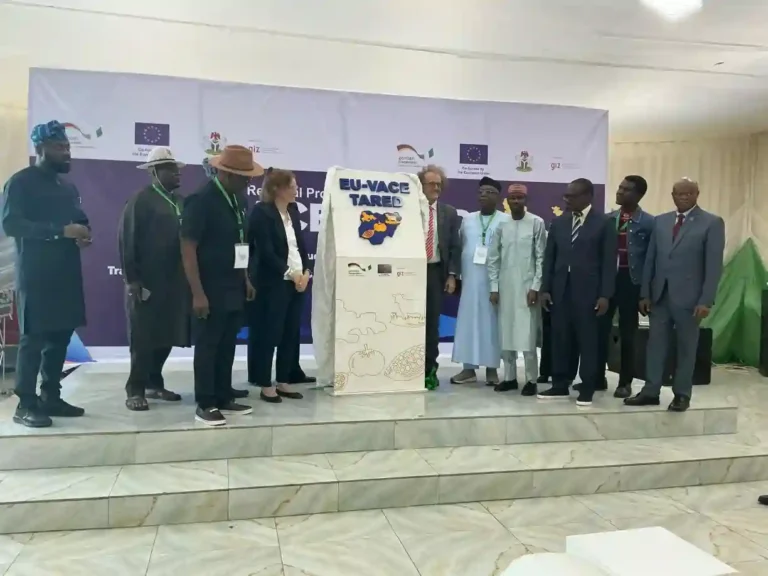
Kano State has been selected to benefit from the European Union Value Chain Enhancement through Transparent and Accountable Resource Delivery (EU-VACE TARED) project, worth €18.3 million, aimed at boosting the dairy and tomato value chains. The project, funded by the European Union and the German government, will be implemented by the German Agency for International Cooperation (GIZ).

The sub-national launch of the project took place this afternoon with the participation of key stakeholders, including Mr. Massimo De Luca, Head of Cooperation at the EU Delegation to Nigeria and ECOWAS, Honourable Commissioners of Livestock Development from other states, and other dignitaries.

Speaking at the launch, the Kano State Commissioner for Livestock Development, Dr. Aliyu Isa Aliyu, delivered a goodwill message where he reiterated the commitment of Governor Abba K Yusuf to supporting the livestock sector in the state. According to him, “Kano has great prospects in dairy production, with thousands of hectares already designated for grazing reserves and about 100 milk collection centres.”

He further noted that the EU-VACE TARED project will create decent employment and empowerment opportunities for women and youth in the agricultural sector, while also providing financial support for investment in dairy, tomatoes, cocoa, and ginger value chains. “This initiative will not only enhance market linkages but also improve productivity and strengthen economic development in participating states,” he said.

Dr. Aliyu Isa Aliyu expressed special appreciation to the European Union, GIZ, and the Federal Ministry of Livestock Development for their partnership and continued support in promoting sustainable agriculture. He emphasized that the intervention will play a vital role in boosting dairy production in Kano State and across Nigeria, enhancing food security, and supporting rural livelihoods.