Home Blog Page 333

FG appoints John Nwabueze as tax Ombudsman

0

The Federal Government has appointed Dr. John Nwabueze as the Tax Ombudsman in line with the provisions of the Joint Revenue Board of Nigeria (Establishment) Act, 2025. The appointment is part of President Bola Ahmed Tinubu’s ongoing commitment to introduce far-reaching and sustainable reforms in the nation’s tax and revenue administration system.

Dr. Nwabueze, who hails from Oshimili South Local Government Area of Delta State, brings with him many years of professional and public service experience. Before his appointment, he served as Managing Partner of a leading tax advisory firm. He also worked as Technical Adviser to the Joint Senate Committees on the Federal Capital Territory and Finance of the National Assembly and later as Technical Adviser to the Chief Economic Adviser to former President Olusegun Obasanjo.

He holds a Doctor of Business Administration (Finance) from Walden University, Minneapolis, USA, a Master of Science in Accounting from Strayer University, Washington, D.C., and dual Bachelor of Science degrees in Accounting and Mathematics from the University of Jos, Nigeria.

President Tinubu congratulated Dr. Nwabueze on his new role and expressed confidence in his ability to deliver results. “I am confident in his capacity to discharge the responsibilities of his office with integrity, diligence, and utmost professionalism,” the President stated.

According to the government, the Office of the Tax Ombudsman was established to strengthen transparency and accountability in the country’s tax system, improve confidence in tax administration, and create a fair mechanism for resolving disputes between taxpayers and revenue authorities.

The office will receive, review, and resolve complaints relating to taxes, levies, customs duties, excise matters, and other regulatory fees in line with existing laws and regulations. It is also mandated to ensure that tax-related disputes are handled in an efficient, impartial, and non-adversarial manner, protecting taxpayers’ rights from any arbitrary or abusive exercise of authority by tax officials.

Advertisement

Junior Achievement Nigeria launches SET4LYF to train teachers

0

Junior Achievement Nigeria has introduced a new initiative focused on teachers to strengthen entrepreneurship education in schools across the country. The initiative, called SET4LYF, which stands for School-to-Work Educational Transitions for Long-Term Youth Fulfilment, was unveiled during a virtual media parley held on Tuesday.

The Country Director for SET4LYF, Mr. Olaolu Akogun, explained that the programme aims to bridge the gap between education and employment while empowering educators and reaching vulnerable groups. He said the initiative was specifically designed to equip Nigerian secondary school girls, internally displaced persons, and persons with disabilities with essential skills, knowledge, and opportunities needed for a successful transition to work, entrepreneurship, or higher education.

Akogun emphasised the importance of collaboration and institutional support to achieve the goals of the programme. “We need to bring more people on board—stakeholders, government agencies, and collaborate on development partners. We have started an advocacy for this. We want to be inclusive, bridging the gap with this programme. Inclusion is very important to us,” he said.

The Country Director noted that the national convening of the programme focuses heavily on teachers, educators, and key stakeholders. According to him, empowering teachers as catalysts for entrepreneurship education is essential for equipping them with the mindset needed to transform how the next generation thinks, creates, and leads in a fast-changing economy.

Akogun explained that the initiative has a broad national reach, targeting 31 states across Nigeria. He also noted a strong commitment to equity, adding that “5% of girls with disabilities and 10% of girls who are internally displaced” will be intentionally included to ensure equal access to entrepreneurial learning opportunities.

He further highlighted the importance of government involvement to sustain the initiative. “For anything to thrive, it needs the right environment. We need the support of the government in this,” Akogun stated.

The National Convening will bring together educators, school leaders, government representatives, private sector partners, and NGOs to develop strategies that prepare students for innovation, entrepreneurship, and self-reliance in Nigeria’s evolving economy.

Cross River begins digital training to create paperless civil service

The Cross River State Government has launched a comprehensive digital literacy and capacity-building programme aimed at transforming its civil service into a fully paperless and technology-driven workforce by the end of next year. The initiative, called the Civil Service Technology Empowerment for Capacity and High Performance (CIVTECH) programme, was officially inaugurated by the Head of Service of Cross River State, Orok Okon, at Prof. Eyo Ita House in Calabar.

According to the schedule released by the government, the training began with Cohort 1, which includes Directors and Deputy Directors of Administration, and runs from November 4 to 6, 2025. Cohort 2, made up of Assistant Directors, Chiefs, and Principal Officers, will take place from November 11 to 13, while Cohort 3, featuring officers on Grade Levels 8 to 10, will be held from November 18 to 20, 2025.

Speaking during the flag-off ceremony, the Head of Service, Orok Okon, said the programme was developed in collaboration with the Cross River State CR-MEDA shortly after his assumption of office. He explained that the initiative aligns with the state government’s vision of building a modern, efficient public service through digital transformation.

“This initiative aligns with our goal of achieving a paperless civil service by the end of 2026,” Okon stated. “Every cadre of staff across state and local government services will undergo ICT training to ensure full computer literacy and digital proficiency. This is timely and crucial as we transition to e-governance.”

The Director General of CR-MEDA, Mr. Great Ogban, noted that the CIVTECH training is a reflection of Governor Bassey Otu’s commitment to civil service reform, one of the central pillars of the People’s First Blueprint. “You cannot reform the civil service without technology and education,” Ogban said. “This training translates the governor’s vision into action. Civil servants are the drivers of government policy, and this programme will enhance their efficiency, speed, and output.”

Also, the Chairman of CR-MEDA, Esessien Edet, praised the state government for introducing what he described as a paradigm shift from analog to digital operations. “This programme moves our workforce from non-ICT compliance to digital proficiency,” Edet said. “It will drastically improve turnaround time, productivity, and service delivery.”

The Permanent Secretary of the Public Service Office, Mrs. Glory Odu Oji, stated that administrators were chosen as the starting point because of their crucial role in data management and policy implementation. “Once administrators are ICT compliant, the entire system will function more efficiently,” she said. “Participation is voluntary, but over time, productivity will reflect who embraced the opportunity.”

Participants at the event described the initiative as a forward-thinking and transformative step for the Cross River State civil service. The Director of Administration in the Ministry of Human Capital and Entrepreneurship Development, Dr. Icha Mboto, described the programme as a “timely and necessary intervention” that will enhance record management and digital workflows. “This training will enhance our ability to manage records and workflows digitally,” Mboto said. “It’s a major step towards modern public administration.”

The Deputy Director of Planning in the Ministry of Industry, Dr. Pamela Ekuri, also commended the government’s commitment to digital transformation. “The government’s decision to embrace ICT will make our service delivery faster, smarter, and more sustainable,” she remarked.

Bugaje urges FG to focus on skills, says only N20bn released for TVET

0

The Executive Secretary of the National Board for Technical Education (NBTE), Prof. Idris Muhammad Bugaje, has urged a complete reorientation of Nigeria’s education system to make it more functional and skill-driven as the global economy increasingly shifts toward practical competencies rather than paper qualifications.

Speaking during a national broadcast on Channels Television, Prof. Bugaje said that countries making rapid progress in industrial and economic development are those that focus on what their citizens can do with their hands, not just what they can recite from books. “World economies are driven by skills, by what your hands can do,” he said. “Nigeria cannot afford to be different. We must refocus our educational system to produce skilled hands, not just people with degrees or diplomas who cannot be employed or create jobs.”

He explained that functional education must combine both knowledge and entrepreneurship. “Today, we are doing the complete opposite, producing graduates with certificates who cannot create jobs or fit into industries,” he said, describing this as one of the major reasons for rising unemployment among young Nigerians.

Prof. Bugaje stated that the NBTE serves as the regulatory body for technical education and also acts as the secretariat of the National Council on Skills (NCS), which coordinates skills development nationwide.

According to him, the NCS is chaired by the Vice President of Nigeria and includes six ministers, seven state governors, prominent private sector figures such as Aliko Dangote, and several development partners. “This council drives the national skills agenda,” he said. “Since the current administration came on board, we’ve had nearly four meetings, more than what we had in the past eight years. That shows clear political will to reposition the skills ecosystem.”

Highlighting the importance of standardisation, Prof. Bugaje described the Nigerian Skills Qualification Framework (NSQF) as the foundation for all skills development efforts in the country. He said the NSQF recognises qualifications from Level 1 to Level 9, covering both formal and informal learning systems.

He noted that a vital component of the framework, called the Recognition of Prior Learning (RPL), allows artisans and technicians in the informal sector — such as roadside welders, carpenters, and tailors — to be formally assessed and certified. This system, according to him, enables them to gain access to more training, compete for national projects, and receive recognition across various industries.

“Our hope is that all skills training in Nigeria must align with the NSQF,” he said. “Currently, many ministries and agencies run training outside this framework, issuing certificates of attendance that are not worth more than the paper they’re printed on. We also see outdated foreign qualifications like City and Guilds being reintroduced, relics from the colonial era. Nigeria must own and promote its own national qualification system.”

He added that the NSQF has been acknowledged by the Head of Service and included in the Federal Scheme of Service, making it valid for career progression in the civil service. The private sector is also embracing it since it is driven by Sector Skills Councils led by industry experts.

Speaking on the country’s Technical and Vocational Education and Training (TVET) sector, Prof. Bugaje described it as the foundation of industrialisation but lamented that it remains severely underdeveloped. He revealed that Nigeria has only about 130 technical colleges compared to over 15,000 secondary schools, which highlights the neglect of vocational education at the secondary level.

He stressed the need to expand technical institutions and ensure that polytechnics absorb graduates from these colleges for higher training. “The new Minister of Education is doing his best to reposition TVET,” he said. “But funding remains a serious challenge. The new TVET initiative was launched with about ₦70 billion, yet only ₦20 billion has been released. That is grossly inadequate.”

Prof. Bugaje also called for all skill training programmes, including those managed by the Ministry of Communications, the Ministry of Housing, and agencies such as NASENI, to be harmonised under the NSQF. According to him, this will ensure uniform certification and help empower Nigerian youth through practical training and entrepreneurship.

He spoke about the newly launched 3 Million Technical Talent (3MTT) programme and other federal training schemes, urging better coordination, monitoring, and evaluation. “Many of these schemes are rolled out with good intentions,” he said. “But we must interrogate them to ensure they are properly delivered. We’re talking about over five million trainees across the 3MTT, the New TVET Initiative, and the housing ministry’s NASENI scheme. That’s a huge opportunity, but only if well implemented.”

He advised that the private sector and civil society should play stronger roles in tracking programme delivery, adding that the National Council on Skills is working to improve oversight so that the programmes can truly benefit Nigerian youth and create sustainable employment.

Prof. Bugaje identified Nigeria’s neglect of technical and vocational education as a major cause of its slow industrial growth and dependence on foreign labour. “For over 30 years, Nigeria has suffered de-industrialisation,” he said. “New industries often import skilled workers because we lack the expertise locally.”

He cited the example of the Dangote Refinery, which employed thousands of foreign technicians during its construction phase. “At one point, there were about 11,000 Indian workers on that site,” he noted. “Even now, there are still around 2,000. You also find Indonesians and Filipinos doing underwater welding in the oil and gas sector. This is short-changing Nigerian youth.”

Prof. Bugaje recounted the story of a former bank manager who retrained in underwater welding and now earns over ₦1.5 million monthly, nearly three times his former salary. “That’s the power of skills,” he said. “Whatever degree you have, go and get a skill. It changes lives.”

Addressing concerns about the quality of local training, he said Nigeria now has the capacity to deliver over 80% of training needs domestically. Only a few highly specialised areas still require foreign input. “We must stop relying on foreign qualifications like City and Guilds,” he said. “They only encourage capital flight, as we must pay in foreign currency. The Nigerian Skills Qualification is already internationally benchmarked. We should be confident in it.”

He added that as the African Continental Free Trade Area (AfCFTA) expands, Nigeria should not only meet its internal skills demand but also export skilled labour to other African countries. “When we train our young people well, we can fill labour gaps across the continent,” he said.

Prof. Bugaje explained that many skilled Nigerians are already finding opportunities both locally and internationally. “There are millions of global openings for welders, drivers, healthcare assistants, and construction workers,” he said. “Bangladesh earns billions by exporting over 11 million skilled workers to the Middle East. Nigeria can do the same, but first, we must train our youth to global standards.”

He emphasised that exporting skilled labour should not be viewed as “japa” but as an opportunity for the country to earn foreign exchange, provided it is properly structured and regulated.

In his closing remarks, Prof. Bugaje proposed a major restructuring of Nigeria’s education system. “If I were to redesign it, I would convert half of our universities into polytechnics,” he said. “China converted 600 universities into technical institutions in 2017 to meet industrial demands. We should learn from that.”

He also suggested a new curriculum where 50 to 70 percent of the content is skills-based, regardless of the field of study. “Whether you study history or accounting, you must graduate with a skill qualification,” he explained. “Every student should have knowledge, skills, and character. That’s what functional education means.”

Prof. Bugaje further underlined the importance of reliable electricity supply to support small-scale industries, describing power as the backbone of technical productivity.

“Nigeria must realign with global best practices,” he concluded. “We must fix power, fund TVET properly, and make skills and entrepreneurship the heart of our education. That’s the only way to industrialise and create real jobs.”


FG launches FTIGTP to monitor TETFund, NELFund, and performance

0

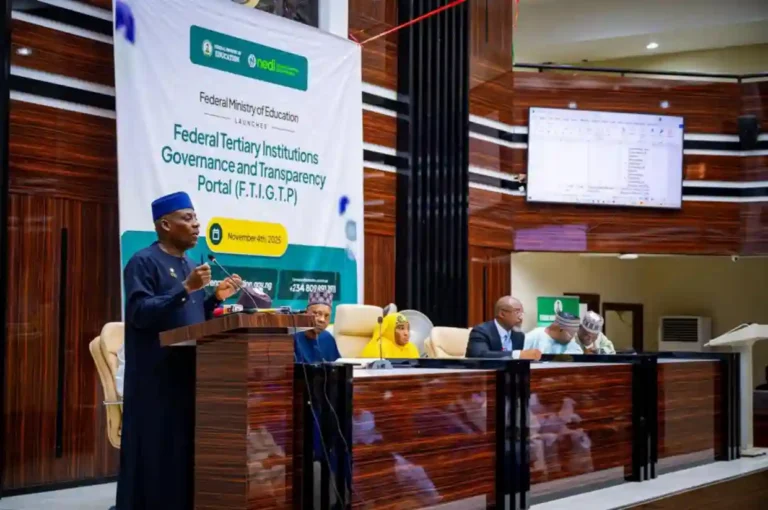
The Federal Government has launched the Federal Government Tertiary Institution Governance and Transparency Platform (FTIGTP) to strengthen accountability and transparency in Nigeria’s tertiary education system.

Minister of Education, Tunji Alausa, unveiled the new platform on Tuesday in Abuja, stating that it would promote good governance, restore public trust, and enable evidence-based policies and reforms aimed at improving performance-based funding decisions and resource allocation.

According to the Minister, the FTIGTP will serve as a single, nationwide source of accurate data and financial information about tertiary institutions. He explained that for the first time, Nigeria will have a unified platform that provides real-time visibility into students’ enrolment, government funding, research grants, and other education indicators.

Alausa said the platform will capture data on government funding such as capital, recurrent, and personnel costs, as well as local and international research grants attracted by institutions. It will also track Tertiary Education Trust Fund (TETFund) allocations, Nigerian Education Loan Fund (NELFund) interventions, and performance indicators that allow for benchmarking across institutions.

He directed all tertiary institutions to comply with the mandatory data submission schedule, which is expected every first quarter of the year, and to obtain clearance certificates from the Director of ICT annually before TETFund ICT interventions are released.

“As part of His Excellency President Bola Ahmed Tinubu’s (GCFR) commitment to enhancing accountability and good governance, the Ministry has promised to implement a transparent system that will allow Nigerians to see how resources are used and the benefits gained from investments in our tertiary education system,” Alausa said.

“This platform will enhance financial transparency, improve resource allocation, promote accountability, discourage the misuse of funds, and foster trust in the management of our tertiary system,” he added.

Addressing the heads of tertiary institutions, the Minister said: “To our Vice Chancellors, Rectors, Provosts, and the entire management of our institutions: you are vital to the success of this platform. Your cooperation, prompt reporting, and dedication will have a significant impact on how this innovation affects the sector and the nation.”

He described FTIGTP as more than just a data tool but a reform instrument that would promote transparency, efficiency, and results-based management of resources across the education sector.

“Financial reporting on the platform will be part of the institutional performance evaluation by local and international partners. Funding, support, and interventions will increasingly be tied to transparency and accountability metrics,” Alausa said.

He noted that the launch marked a bold step toward rebuilding public trust, ensuring accountability, and positioning Nigerian tertiary education as a globally competitive system rooted in transparency and quality outcomes.

“History will remember us as the administration that restored integrity, innovation, and excellence to our tertiary education system,” the Minister concluded.

NIPC to end Pioneer Status Incentive (PSI) applications November 10

0

The Nigerian Investment Promotion Commission (NIPC) has announced that it will stop receiving applications for the Pioneer Status Incentive (PSI) effective November 10, 2025. According to the Commission, the move is part of its preparation for the full transition to the new Economic Development Tax Incentive (EDTI) scheme, which will officially take effect on January 1, 2026.

In a public notice released by the NIPC, the Commission stated, “Companies seeking to benefit from the PSI are advised to submit their applications to the NIPC on or before November 10, 2025.” The notice also encouraged corporate organizations and investors to act promptly in line with the new tax incentive framework.

The NIPC further recommended that both existing beneficiaries and new applicants consult with the Commission to ensure a seamless transition and compliance with the requirements of the EDTI scheme.

FG to establish dairy development and milk marketing board

0

The Federal Government has announced plans to establish a Dairy Development and Milk Marketing Board as part of the implementation framework for the National Dairy Policy, designed to boost local milk production and regulate Nigeria’s dairy value chain.

The Special Adviser and Coordinator of the National Presidential Livestock Reforms Initiatives, Professor Attahiru Jega, revealed this during a workshop in Abuja on the Final Review and Validation of the Framework for the Implementation of the National Dairy Policy.

Represented by Professor Demo Kalla, a member of the Committee and Director of the Dairy Research and Development Centre at Abubakar Tafawa Balewa University, Bauchi, Professor Jega explained that the framework is anchored on eleven strategic pillars. He said it aligns with President Bola Tinubu’s Renewed Hope Agenda, which focuses on economic growth, food security, and job creation.

“The framework underscores the President’s commitment to reposition the livestock and dairy sectors as key drivers of food security, job creation, and sustainable economic growth,” he said. He further noted that the dairy industry is not just about milk production but also represents nutrition, empowerment, and opportunities for farmers, women, and youth across the country.

The Minister of Livestock Development, Alhaji Idi Mukhtar Maiha, emphasized the need for urgent and coordinated efforts to transform Nigeria’s dairy industry and reduce the nation’s $1.5 billion annual dairy import bill. Speaking at the validation workshop, the Minister said, “This meeting marks a shift from policy formulation to practical implementation.” He added that Nigeria has enough livestock resources to meet domestic milk demand if properly managed.

According to him, the country’s dependence on imported dairy products is unsustainable and inconsistent with President Tinubu’s vision of economic diversification and self-reliance. To stimulate local milk production, the Minister announced several incentives for investors and farmers, including tax holidays, soft loans, tariff protection, and the establishment of dairy development hubs in key production zones nationwide.

The Minister of State for Industry, Trade and Investment, Senator John Enoh, represented by his Senior Special Adviser on Policy and Governance, Dr Adedeji Adeshile, said the workshop demonstrated the government’s collective resolve to turn policy commitments into tangible results that would transform the dairy sector.

Also speaking, the Permanent Secretary of the Ministry of Livestock Development, Dr Chinyere Ijeoma-Akujobi, represented by Dr Victor Egbo, said the dairy sector has faced long-standing challenges such as low milk yield, poor breed quality, and weak market linkages. She added that the workshop was an opportunity to validate and refine strategies aimed at building a sustainable and competitive dairy industry that meets Nigeria’s growing demand for milk and other dairy products.

UN application for N1m national essay competition 2025 for schools

0

The National Essay Competition 2025 has officially opened applications for senior secondary school students across Nigeria, giving young learners a chance to express their ideas on how climate challenges can be turned into opportunities for sustainable development. The competition, organized by the United Nations Sustainable Development Solutions Network (SDSN) Nigeria in partnership with The Sterling Team, aims to nurture a generation of young thinkers passionate about environmental sustainability and innovation.

This initiative provides a platform for students to think critically, write persuasively, and share creative ideas that can inspire both local and national change. The competition’s theme, “Turning Climate Challenges in My Community into Opportunities for Growth,” encourages participants to explore real environmental issues and propose solutions that can drive green growth and community development.

The essay competition targets Nigerian students currently in SS1 to SS3 who are enrolled in public or government-owned secondary schools. Each school is allowed to submit only one entry per student. Organizers emphasized that all submissions must include accurate contact details of the student’s teacher or principal for verification.

Entries will be evaluated based on originality, creativity, clarity, and alignment with the theme. To maintain transparency, applicants must also submit a two to three-minute video presentation of their essay. “Entries proven to be AI-generated or plagiarized will be disqualified,” the organizers stated.

The competition is open to students across Nigeria only, and winners will be announced during the National Sustainability Week 2025. Three national winners will receive cash prizes amounting to ₦1,000,000, with ₦500,000 for the first prize, ₦300,000 for the second prize, and ₦200,000 for the third. Additional benefits include national recognition, media visibility, and mentorship opportunities with sustainability experts.

Students are required to write a typed, original essay of not more than 1,000 words on the given topic, record a short vertical video summarizing their essay, and complete the official submission form available online. The deadline for submission is November 14, 2025, at 11:59 PM WAT.

Interested participants can apply through the official National Essay Competition 2025 Form hosted by UN SDSN Youth Nigeria.

NSDC launches sugarcane outgrower programme

0

The National Sugar Development Council (NSDC) has launched the Sugarcane Outgrower Development Programme (SODP), a major initiative aimed at boosting local sugar production and helping Nigeria move closer to achieving self-sufficiency.

According to Kamar Bakrin, the Executive Secretary and CEO of NSDC, the programme is an important part of the Nigeria Sugar Master Plan (NSMP II). He explained that it is designed to expand sugarcane cultivation, reduce dependence on imported sugar, and create jobs that support economic growth in rural areas.

“The SODP is designed to boost local sugarcane cultivation, reduce Nigeria’s dependence on sugar imports, and create opportunities for inclusive economic growth by integrating outgrower farmers into the industry’s supply chain. This programme will complement the output of existing large-scale sugar estates and help close the national supply gap,” Bakrin said.

In a statement, he added that the SODP marks a new phase in Nigeria’s sugar sector as it introduces a structured outgrower development model that formally includes farmers at all levels in the national sugar value chain. “This campaign is about reaching every stakeholder, from large-scale operators to smallholder farmers, and ensuring that everyone has a fair opportunity to contribute to Nigeria’s journey towards self-sufficiency in sugar production,” he explained.

The NSDC boss also noted that the SODP will support participating farmers with guaranteed offtake agreements that ensure market access, provide quality seedcane and essential inputs, and deliver technical support and structured training. The programme also promotes sustainable land and water use practices to maintain environmental balance.

Speaking on how the programme will work, Lade Offurum, Head of Out-Grower Management at NSDC, said that the SODP will target three groups of participants. These include agribusinesses and commercial farmers cultivating between 50 and 500 or more hectares, farming cooperatives that operate as clusters of 30 to 50 hectares, and individuals or groups of friends willing to jointly farm clusters of 30 or more hectares.

The council stated that with the introduction of the SODP, it is taking another major step under the NSMP II to attract investments, empower local farmers, and build a globally competitive sugar industry in Nigeria.

IDEAS TVET to train 25,000 Nigerians in vocational skills

0

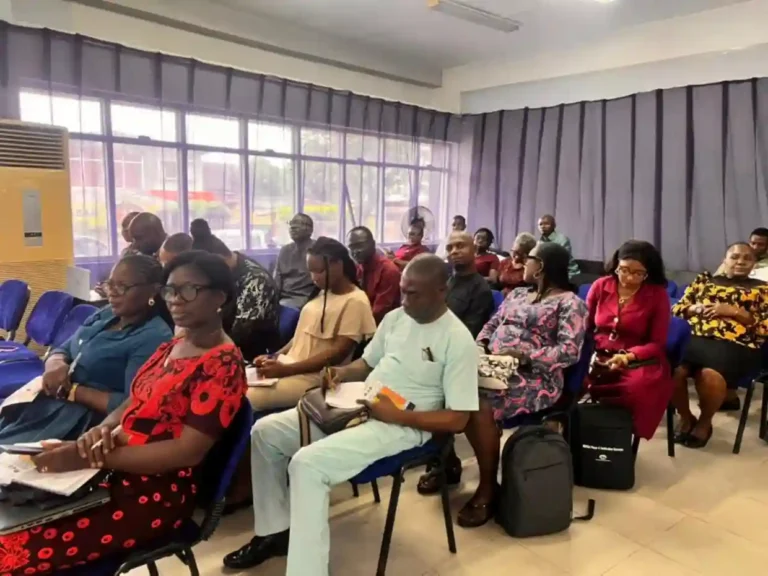
The Innovation Development and Effectiveness in the Acquisition of Skills (IDEAS) TVET Initiative of the Federal Ministry of Education has engaged another set of 217 Training Service Providers to train 25,000 Nigerians in various vocational skills aimed at improving the country’s skills sector.

The project, supported by the World Bank, had earlier engaged 91 Training Service Providers who are currently training about 15,000 youths across different parts of the country.

Speaking at the Negotiation and Contract Signing Workshop for the new cohort held on Tuesday in Abuja, the National Project Coordinator, Mrs. Blessing Ogwu, said the initiative marks another milestone in strengthening Nigeria’s Technical and Vocational Education and Training (TVET) ecosystem.

Ogwu disclosed that by Friday, November 7, the project would advertise for the engagement of additional service providers to train another 30,000 trainees, expanding the impact of the programme. She noted that the IDEAS Project is designed to improve the quality, relevance, and efficiency of skills development in Nigeria through partnerships, innovation, and targeted investments in training institutions.

“This partnership is not just a contractual obligation; it is a national calling,” Ogwu said. “The work you will be doing touches directly on the heart of national development—building human capital and equipping our youth with market-relevant skills.”

She urged the newly engaged Training Service Providers to demonstrate professionalism, innovation, and accountability in their assignments, noting that their performance would determine the project’s overall success and sustain the confidence of development partners.

Ogwu emphasized that the Ministry remains committed to promoting excellence, transparency, and inclusivity in skills development across the country, adding that each trained youth represents “a step toward reducing unemployment, boosting productivity, and promoting sustainable national development.”