Home Blog Page 344

Fubara partners NDE to boost jobs, youth empowerment in Rivers

0

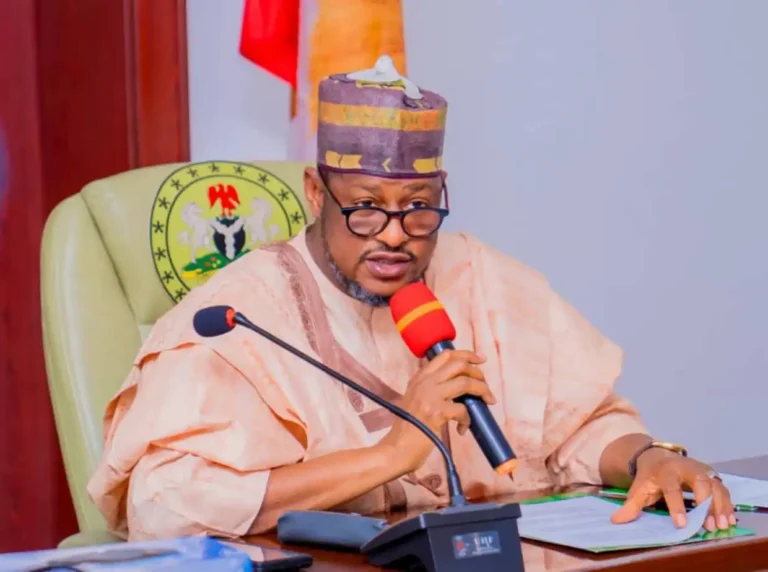
Rivers State Governor, Sir Siminalayi Fubara, has reaffirmed his administration’s commitment to job creation and youth empowerment through a strong partnership with the National Directorate of Employment (NDE).

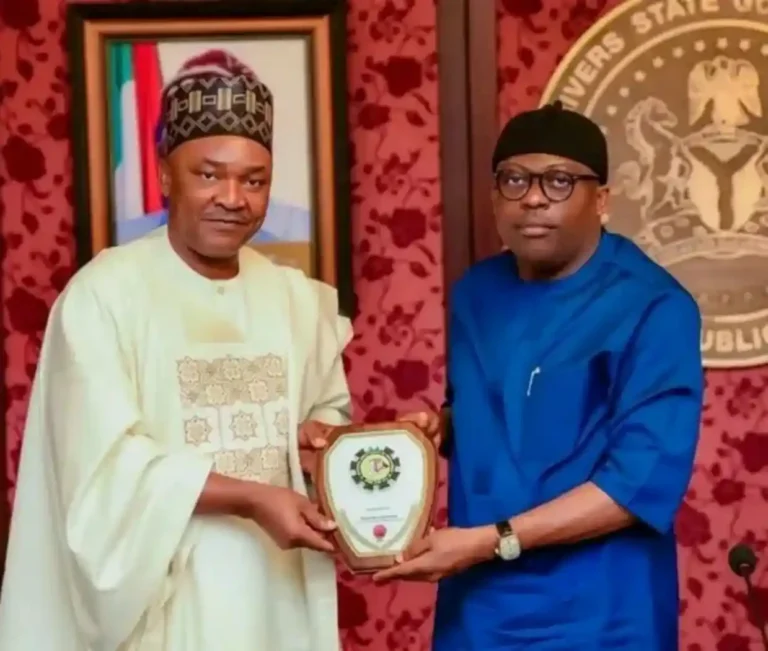
Governor Fubara made this known when he received the Director-General of the NDE, Silas Ali Agara, and his delegation during a courtesy visit to the Government House in Port Harcourt. He emphasized that job creation remains at the center of his administration’s development agenda, describing it as a crucial step in reducing crime and promoting social peace across the state.

The governor explained that the collaboration with the NDE would help tackle the rising unemployment rate, especially as more people migrate from rural areas to urban centers like Port Harcourt in search of better opportunities. He urged closer cooperation between the NDE and the state’s Ministry of Employment to ensure that residents of Rivers State fully benefit from ongoing federal employment programs.

“Everybody is leaving the rural area for the urban area in search of a job. The only way we can help both groups is by creating opportunities for them,” Governor Fubara said.

He commended the NDE for its transparent and technology-driven approach, which provides citizens with equal access to employment and entrepreneurship opportunities. According to him, the agency’s efforts in supporting small businesses and improving skills development align with his administration’s goals of inclusive growth and poverty reduction.

Governor Fubara also praised the NDE’s agricultural empowerment program for rural women, calling it essential in sustaining households where men have moved to urban centers. He said such programs strengthen food security and promote gender inclusion in rural economic activities.

Highlighting a major economic discovery, the governor announced the identification of a new shoreline at Ngo in Andoni Local Government Area. He described the discovery as a strategic asset for Rivers State’s emerging Blue Economy. “On our way, we discovered a new shoreline that is even more attractive and economically viable than Oyorokoto. We call it the Ngo shoreline… Just imagine the jobs and opportunities it will create,” he said.

Governor Fubara expressed pride in this achievement, describing it as part of his administration’s legacy that will boost tourism, marine investments, and job creation.

In his remarks, NDE Director-General Silas Ali Agara commended Governor Fubara’s dedication to youth empowerment and economic development. He revealed that over ninety thousand young Nigerians have benefited from President Bola Tinubu’s Renewed Hope Employment Initiative, with more than one thousand youths from Rivers State currently enrolled.

“Our programs are open and IT-driven. You don’t need to know anyone in NDE to benefit. We’re focusing on rural women and introducing new trainings, including underwater welding for oil and gas opportunities,” Agara said.

Advertisement

Katsina launches N250m innovation fund, first to implement startup law

0

Katsina State Governor, Malam Dikko Umaru Radda, has inaugurated the Katsina State Council for Digital Innovation and Entrepreneurship, positioning the state as the first sub-national government in Nigeria to fully domesticate and institutionalize the Startup Law.

Speaking at the inauguration ceremony held at the Government House on Thursday, Governor Radda announced the establishment of a Startup Grants and Investment Fund with a guaranteed minimum of N250 million annually to help innovative businesses grow, scale, and compete globally. He described the event as a significant milestone in the state’s journey toward building a modern and inclusive digital economy.

“The Katsina Startup Law is not just another policy document; it is an engine for growth. It provides a solid framework to create an enabling environment, streamline regulations, promote research and development, support incubation and acceleration, and connect startups with investment and markets,” Governor Radda stated.

The governor explained that creating the council aligns with his administration’s broader vision to modernize governance, diversify the economy, create jobs, and promote shared prosperity across all local government areas. He emphasized that this vision has already produced key institutions such as the Katsina State Directorate of Information and Communication Technology (KATDICT) and the Katsina Development and Management Board (KDMB), both of which play vital roles in advancing the state’s technology and innovation agenda.

Radda noted that Nigeria’s ICT sector currently contributes about 18 percent to the national GDP, highlighting the growing importance of technology in shaping the future of work and industry. “Katsina must not stand behind; we must lead. We are sending a clear message that this state is ready to build a strong innovation economy capable of nurturing globally competitive startups and creating meaningful jobs for our youth,” he declared.

The Director General of the Katsina Directorate of Information and Communications Technology, Naufal Ahmad, explained that the Startup Bill establishes a complete end-to-end innovation support system. This includes incubators, accelerators, venture-building programmes, and a Credit Guarantee Scheme that allows startups to access capital using intellectual property, shares, and chattel assets as collateral.

Ahmad noted that Governor Radda’s commitment to digital innovation began even before the bill’s passage, as he initiated and funded the first state-backed startup incubation programme in partnership with Katsina’s first technology hub. “At the Arewa Tech Festival, startups from Katsina took home every prize, and many went on to win at national and international stages. That success was not luck—it was deliberate leadership,” Ahmad said.

He revealed that the state would soon launch a Startup Support and Engagement Portal—a one-stop platform for registration, incentives, market access, procurement, and investment opportunities. Alongside the portal, a Startup Consultative Forum will be established to ensure ecosystem participation in decision-making.

Ahmad added that the state plans to set up innovation clusters, technology parks, and enterprise centres across all local government areas to attract investments and support digital entrepreneurship. He explained that the aim is to distribute innovation and economic growth evenly across the state through talent development centres and Technology Development Zones that will encourage exports and create sustainable employment.

The KATDICT Director General said the new council integrates a triple-helix model of innovation that brings together government, academia, and industry, ensuring collaboration and shared responsibility in driving technological progress.

Governor Radda also announced that he would personally chair the council to ensure effective implementation and accountability. The council includes his Economic Adviser, the Director-General of the Katsina State Enterprise Development Agency (KASEDA), the Executive Secretary of the Katsina Development and Management Board (KTDMB), and the Commissioners for Budget and Economic Planning, Finance, and Justice. In addition, there will be two representatives from academia, two from the ICT ecosystem, and three from the Startup Consultative Forum, including two women.

“I have chosen to chair this council myself to ensure our goals are achieved with urgency and precision. Together, we will build an economy where young people turn ideas into enterprises, where businesses grow with confidence, and where technology becomes a true tool for prosperity, peace, and progress,” the governor said.

Ahmad assured that KATDICT, as the council’s secretariat, will coordinate programmes, manage the startup portal, and support capacity building while ensuring every founder has access to the resources needed for success.

Dignitaries at the event included the Chief of Staff to the Governor, Alhaji Abdulkadir Mamman Nasir; Principal Private Secretary, Hon. Abdullahi Aliyu Turaji; Executive Secretary of KTDMB, Dr. Mustapha Shehu; representatives of the Director-General of NITDA; Commissioner for Women Affairs, Hajiya Aisha Aminu Malumfashi; Director-General of KASEDA, Dr. Babangida Ruma; Economic Adviser, Khalil Nura Khalil; and Commissioner for Justice, Barrister Fadila Muhammad Dikko.

Shortlisted applicants released for Petty Traders Grant batch C

0

The management of the Petty Traders Grant Support Programme has officially released the shortlist of beneficiaries for Batch C, dated October 30, 2025. According to the organisers, Batch D of the programme will be announced soon.

The initiative was created to empower hardworking petty traders across the country by providing financial grants to help them start new businesses, expand existing ones, improve their livelihoods, and strengthen local communities. Over the past few months, thousands of petty traders submitted their applications to benefit from the grant. After a thorough review process, the first, second, and third batches of qualified applicants have now been shortlisted based on the eligibility criteria. Officials confirmed that another list will be released later.

Speaking on the significance of the support, the organisers stated, “This grant is more than just financial assistance — it is an opportunity for petty traders to start a business, grow their businesses, improve access to essential goods and services in their communities, and achieve greater financial stability and independence.”

Shortlisted applicants are advised to follow the next steps carefully. The management explained that “all shortlisted beneficiaries will undergo a final verification process to confirm their identity.” Beneficiaries will also receive notifications and further instructions through their registered email addresses. After verification, approved grants will be disbursed directly into beneficiaries’ accounts.

For applicants who were not shortlisted, the organisers encouraged them not to lose hope, noting that new opportunities are coming. “The Petty Traders Grant Support Programme will be opened for application again this year,” they said. More empowerment programmes are expected to follow to reach even more people.

Applicants are urged to check the published shortlist carefully, as names are not arranged in order, and email addresses are partially hidden for privacy.

18 states join federal plan to boost livestock, dairy production – Tinubu

0

Nigeria’s President, Bola Ahmed Tinubu, has reaffirmed his administration’s commitment to revitalising the nation’s livestock sector through renewed investments in dairy production, farmer empowerment, and innovation for sustainable growth.

Speaking at the 2025 Arla-Dano Open Day held in Kaduna, President Tinubu, represented by the Minister of Livestock Development, Idi Mukhtar Maiha, said the establishment of the Federal Ministry of Livestock Development reflects a deliberate effort to give focused attention to the livestock industry, particularly the dairy sub-sector, where Nigeria spends significant amounts on imports.

The President stated that his administration is determined to transform the livestock sector into a modern, resilient, and globally competitive industry. “Today, 18 states have already keyed into this vision by focusing on livestock development to unlock the sector’s potential for food security, nutritional sovereignty, job creation, rural empowerment, and poverty reduction,” he said.

He added that the Ministry’s mandate is to create an enabling environment for both international investors like Arla-Dano and local stakeholders to contribute meaningfully toward meeting Nigeria’s growing demand for dairy products. “The ease of doing business in Nigeria is improving. Investors are encouraged to come in; we will guide, advise, and connect them with willing state governments ready to allocate land for livestock development,” he noted.

President Tinubu further disclosed that government interventions will also extend to other livestock value chains, including small ruminants, goats, sheep, and red meat production. While commissioning Arla-Dano’s new yoghurt factory, he commended the company’s investment drive and its role in creating jobs, building local capacity, and strengthening rural economies, all in alignment with the Renewed Hope Agenda.

“Behind every glass of milk is a network of hardworking farmers, dedicated professionals, and robust systems that deserve our respect and support,” President Tinubu said, assuring Arla Foods of continued government collaboration to reduce Nigeria’s dependency on dairy imports.

In his goodwill message, Kaduna State Governor, Senator Uba Sani, represented by the Secretary to the State Government, Dr. Abdulkadir Mua’zu Meyere, reaffirmed that agriculture employs over 51 percent of Kaduna’s population. He noted that the state government has demonstrated its commitment to food security by allocating over 10 percent of its 2025 budget to agriculture.

Earlier, the Managing Director of Arla Foods Nigeria, Mr. Peder Petersen, said the Open Day was designed to foster knowledge sharing among farmers, partners, and stakeholders to boost dairy productivity and sustainability.

The event drew participation from representatives of the United Nations, the Danish Embassy, Ahmadu Bello University, Zaria, government officials, and other key stakeholders in the agricultural sector.

FG launches national waste marketplace to create 10 million jobs

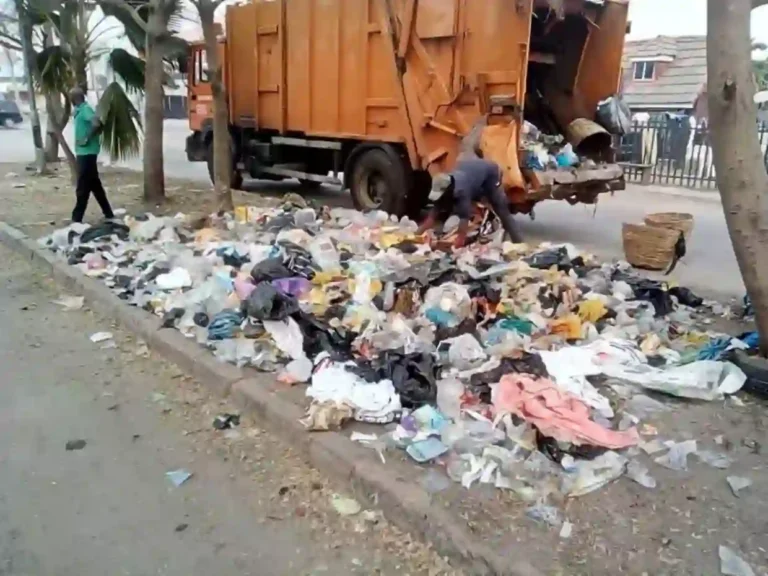
The Federal Government on Thursday launched an innovative digital platform aimed at formalising Nigeria’s waste value chain by connecting waste generators, collectors, aggregators, recyclers, and end-users through a transparent and traceable system.

The platform was unveiled at a sensitisation workshop during the launch of the National Waste Marketplace Programme held in Abuja. The event, themed “Digitising and formalising the circular economy through technology,” was organised by the National Environmental Standards and Regulations Enforcement Agency in collaboration with Recycle Stack Limited. It brought together key players from the waste management and recycling sectors to discuss strategies for advancing a circular economy in Nigeria.

The new platform is designed to leverage digital technology to create economic linkages across the recycling ecosystem while promoting environmental compliance, material recovery, and sustainable consumption and production patterns. It aims to formalise and scale the circular economy with a target of empowering 10 million Nigerians by 2035.

Speaking at the event, the Minister of Environment, Balarabe Lawal, noted that Nigeria faces serious waste management challenges, with millions of tonnes of recyclable materials lost to indiscriminate disposal each year, resulting in harm to the environment, public health, and economic growth.

Lawal, who was represented by Yunus Abdulganiyu, a director in the Department of Pollution Control and Environmental Health, said, “This programme is therefore an apt opportunity for closing the capacity gap by advancing circular economy principles in the national waste management system and modernising the sector’s operational standards, in which waste materials are valorized, reused, repurposed, and reincorporated into production cycles. This approach mitigates the linearity of conventional waste while ensuring traceability and transparency of transactions.”

He added that the initiative aligns with Nigeria’s environmental policies and international commitments. “This initiative is consistent with the implementation framework of the National Policy on Solid Waste Management, the Extended Producer Responsibility Programme, and the National Circular Economy Roadmap. It also aligns with Nigeria’s commitments under global environmental agreements such as the Basel Convention, the Paris Agreement, and the 2030 Agenda for Sustainable Development. In particular, it supports Sustainable Development Goals 12, 13, 14, and 15, which focus on responsible consumption and production, climate action, and sound governance for land and oceans.”

The Minister stressed that environmental protection must be viewed as both a regulatory responsibility and an opportunity for innovation and economic growth. “As we advance towards a circular economy, it is essential to recognise that environmental protection is not only a regulatory obligation but also a driver of innovation and green growth.”

He explained that the National Waste Marketplace will enhance transparency, improve environmental planning, and boost investor confidence in Nigeria’s recycling sector through regulatory reform, private sector participation, and technological innovation.

“Environmental issues are best handled with the participation of all concerned citizens, at the relevant level (Principle 10 of the Rio Declaration). Without prejudice, sustainable resource development revolves around a multi-tiered, cohesive effort and a willingness to achieve transformative change,” Lawal stated.

“Specifically, we are collectively obligated to translate our burdens of sustainable natural resource management into practical actions and innovative solutions, with the inclusive participation of all critical actors,” he added.

In his welcome address, the Director-General of NESREA, Prof. Innocent Barikor, said the National Waste Marketplace Programme represents a significant step in promoting an inclusive circular economy and addressing the country’s waste management challenges through digital innovation.

“The launch of the NWMP represents a bold and innovative initiative by NESREA to harness digital technology in solving one of the country’s most pressing environmental challenges: the effective management of waste as a resource rather than as a liability,” he said.

He explained that the programme is a digital system designed to connect all players in the waste management chain. “The National Waste Marketplace Programme is a digital platform designed to connect waste generators, collectors, recyclers, aggregators, and end-users within a transparent and traceable system. It seeks to formalise the waste value chain, curb illegal disposal practices, and promote accountability in waste trading and recycling across the country.”

Prof. Barikor noted that the programme is not just about technology but also about building a vision for sustainability and youth empowerment. “Beyond technology, the NWMP embodies a vision—a vision of Nigeria where waste management becomes a driver of innovation, youth empowerment, and green enterprise. The Programme aligns with the objectives of the Extended Producer Responsibility framework implemented by NESREA, ensuring that producers, recyclers, collectors, and consumers play defined roles in safeguarding our environment and conserving natural resources.”

He also pointed out the economic benefits of the initiative. “The Programme will also create new economic opportunities by providing verified market linkages, improving traceability in recycling activities, and supporting the establishment of a regulated secondary materials market. Through this initiative, we aim to train and certify thousands of Nigerian youths and micro-enterprises in circular business models, thereby creating decent green jobs and stimulating sustainable growth.”

On his part, the Founder and Chief Executive Officer of Recycle Stack Limited, Nkem Orakwe, said the initiative is designed to transform Nigeria’s waste management system by introducing a digitised and traceable marketplace.

According to him, “Waste is becoming wealth, and that is why we are introducing this programme. The initiative intends to revolutionize Nigeria’s waste management ecosystem through a digitised national waste marketplace by enabling skills training, certification, and data-driven insights.”

He added that the platform seeks to empower millions through inclusion and innovation. “The platform seeks to formalise and scale the circular economy with a vision to empower 10 million Nigerians by 2035. This initiative aligns with the Renewed Hope Agenda, promoting green jobs, sustainable urban development, and environmental stewardship across the country.”

Orakwe explained that the National Waste Marketplace will digitally connect all stakeholders, ensuring fairness and transparency across the waste value chain. “The National Waste Marketplace connects every actor in Nigeria’s waste value chain through a digitised, transparent, and data-driven platform. The key actors will be the waste pickers. Through this programme, we will formalize them, and in a few years, there will be deep mutual respect for waste pickers in Nigeria. When we bring them into the formal sector, they will be empowered. With financial inclusion, they will be insured, trained, and certified.”

He further stated that the programme would not only monetise waste but also inspire creativity and job creation among young people. “The programme will not only monetise waste but also foster innovation, youth entrepreneurship, green job creation, and position Nigeria as a leader in Africa’s circular economy.”

UN, Nigeria $159m aid appeal only 49% funded, 4.6 million face hunger

Conflict-affected communities in north-east Nigeria are facing a worsening hunger crisis, according to a new report by the United Nations Humanitarian Office. The UN said that despite ongoing efforts by humanitarian agencies, funding shortages are forcing aid providers to scale back life-saving support, leaving millions at risk.

In Borno, Adamawa, and Yobe States, known as the BAY states, hunger and malnutrition have reached critical levels. The 2025 Lean Season Multisectoral Plan shows that about one million children are at risk of severe acute malnutrition, double the number recorded in 2024. Between June and August 2025, over 600,000 children were projected to face life-threatening conditions without access to emergency nutrition services.

Fatima Mohammed, 24, from Dipchari village in Borno State, represents the growing number of families struggling to survive. After fleeing her home in 2019 due to attacks by non-state armed groups, she resettled in Maiduguri. However, years later, her family continues to face hardship, worsened by the shutdown of internally displaced persons (IDP) camps and floods that destroyed their shelter and food reserves.

“We lost everything,” Fatima said. “There were days we had nothing to eat.”

At the stabilization centre in Mashamari, Jere Local Government Area, managed by the International Rescue Committee (IRC) with support from the Nigeria Humanitarian Fund (NHF), Fatima’s two daughters, aged two and one, are being treated for severe acute malnutrition. According to Dr. Muhammad Goni, who oversees treatment at the facility, the children were diagnosed with severe anaemia and intractable vomiting.

“We were able to stabilize them, and now their condition is improving,” Dr. Goni said. Fatima added that her children have regained appetite and strength after weeks of treatment.

Humanitarian agencies have warned that her experience reflects a much larger crisis across the region. The Cadre Harmonisé analysis released in March 2025 projected that about 4.6 million people in the BAY states would experience acute food insecurity during the lean season.

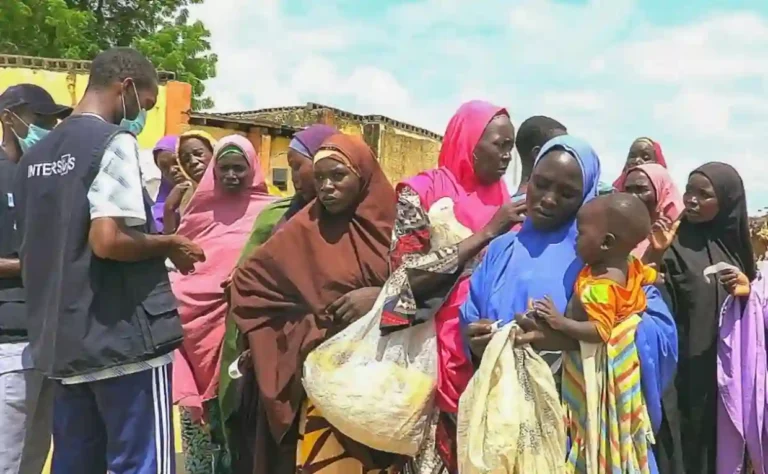
However, humanitarian assistance is shrinking fast. “The number of people in need is greater than the resources we have,” said Jacob Sulisma, Field Coordinator with INTERSOS in Dikwa. He explained that their food distribution programme, supported by the World Food Programme (WFP), currently reaches only about 20 per cent of those in need.

The situation has led some displaced persons to resort to dangerous survival strategies. “Some IDPs are engaging in commercial sex work, petty theft, and ‘survival sex’. Others are reducing their food intake and relying on less nutritious options,” said Alhaji Ali Abani, Field Coordinator with the Grassroot Initiative for Strengthening Community Resilience.

Environmental and economic challenges are compounding the crisis. The UN Food and Agriculture Organization reported that floods in 2024 submerged over 1.6 million hectares of farmland, causing crop losses valued at nearly one billion dollars. Although food prices slightly dropped in August 2025, insecurity, limited farm access, and high costs of agricultural inputs continue to limit food availability for both displaced families and host communities.

In May 2025, the Federal Government of Nigeria and the United Nations launched a $159.3 million appeal to address severe food insecurity and malnutrition during the lean season. The six-month plan aimed to support two million vulnerable people with food, nutrition, and health services. Yet, by September 2025, only $77.25 million—49 per cent of the target—had been received.

According to WFP Nigeria’s latest country brief, the agency is facing an 89 per cent shortfall in resources needed to sustain emergency food assistance between September 2025 and February 2026. The shortage has already forced WFP and UNICEF to suspend operations in 150 malnutrition clinics, placing nearly 300,000 children at higher risk of severe wasting.

“This is no longer just a humanitarian crisis,” said WFP Country Director David Stevenson. “It’s a growing threat to regional stability as families pushed beyond their limits are left with nowhere to turn.”

Despite these challenges, the Nigeria Humanitarian Fund allocated $14.5 million to support 67 projects targeting 385,000 people in the BAY states during the lean season, thanks to contributions from donors such as the United Kingdom, Germany, Sweden, Canada, Switzerland, Ireland, Qatar Charity, Norway, and Luxembourg. The Central Emergency Response Fund also provided $6 million in July 2025 for early interventions on acute malnutrition and food insecurity. Together, these funds covered about 13 per cent of the total appeal.

Humanitarian organizations are now calling on the Nigerian government, donors, and international partners to increase support to prevent further deterioration. They warn that without urgent funding, millions of children like Fatima’s daughters could face a future of hunger, malnutrition, and uncertainty in one of Nigeria’s most fragile regions.

FG, IFAD warn 630 C’ River beneficiaries against misusing LIFE-ND

0

The Federal Government and the International Fund for Agricultural Development (IFAD) have advised 630 newly selected beneficiaries of the Livelihood Improvement Family Enterprise in the Niger Delta (LIFE-ND) project in Cross River State not to see their inclusion as a share of the “national cake,” but as a life-changing opportunity for agribusiness development and youth empowerment.

National Project Coordinator of LIFE-ND, Dr. Sani Abiodun, gave the advice in Calabar during a one-day orientation program for the new beneficiaries under the FGN/NDDC/IFAD-assisted LIFE-ND additional financing scheme. Represented by Dr. Chinwe Onyegbula, Liaison Officer of the FGN/IFAD Country Programme Advisory Team, Abuja, Abiodun urged participants to be disciplined and committed in their approach to agribusiness.

“We want you to see agriculture as a business, not subsistence farming. Produce to sell, improve productivity, and grow your local economy,” he said. Abiodun stressed that success in agribusiness requires patience, consistency, and time, adding that the project’s goal is to build a generation of entrepreneurs who will contribute to food security and economic growth.

The LIFE-ND initiative, a collaboration between IFAD, the Niger Delta Development Commission (NDDC), and the Federal Ministry of Agriculture, has been operational for six years in Cross River State. It has so far empowered over 4,370 rural youths and women through training, mentorship, and agribusiness funding. With new financial support, the project will continue until 2028, focusing on agricultural productivity, job creation, and rural development.

Declaring the session open, the Commissioner for Agriculture and Irrigation Development, Mr. Johnson Ebokpo, encouraged the beneficiaries to drop the perception of agriculture as “a dirty job,” describing it instead as a profitable and modern enterprise. He compared the LIFE-ND model to the Igbo apprenticeship system, where learners gain skills through mentorship before becoming business owners.

Ebokpo announced a ₦500,000 prize for the best-performing participant to motivate commitment and excellence. “Your success stories will become a beacon for other Niger Delta states. Let us make Cross River the best-performing state,” he said.

State Project Coordinator, Mr. Innocent Ogbin, explained that the new phase, known as the Additional Financing Component, targets youths, women, and persons with disabilities in Biase, Akpabuyo, Yakurr, Obubra, Ogoja, and Yala local government areas. He warned the participants against selling farm inputs or abandoning their projects, stressing that the government will not tolerate misuse of project resources.

Programme Manager of the Agricultural Development Programme (ADP), Mr. Bassey Emogor, described LIFE-ND as “an apolitical initiative focused on empowering real farmers.” He urged the participants to take the opportunity seriously, saying, “This project is not about giving millions in cash, it’s about giving you knowledge, tools, and opportunities to grow, use them wisely.”

Kwara Gov reaffirms support for young tech innovators

The Kwara State Governor, AbdulRahman AbdulRazaq, has restated his administration’s commitment to empowering young techies and transforming the state into a hub of technological innovations.

Mr AbdulRazaq praised the growing interest and achievements of young Kwarans in the technology sector, a development that was again showcased at the just concluded Kwara Coding and Digital Literacy Programme, tagged Kwara Futures Exhibition 2025.

The digital programme was organised by the Office of the Special Assistant to the Governor on Digital Innovation, Kayode Ishola, with the theme “Kwara Futures: Empowering a Digitally Ready Generation”.

The governor said his administration is determined to position Kwara on the global map by creating seamless pathways for collaboration with international tech accelerators and cross-border funding opportunities.

“Our administration is unwavering in its commitment to transform Kwara into a beacon of technological excellence and empower our youth to lead the digital revolution,” he said.

“By investing in cutting-edge infrastructure and fostering a supportive ecosystem, we are equipping you – our brilliant young techies – with the tools to turn bold ideas into global realities. For the first time in our state’s history, Kwara is etching its name on the world map of digital startups, thanks to the innovative spirit of our entrepreneurs and the strategic policies we’ve implemented.”

Mr AbdulRazaq said the milestone is not just a statistic but a testament to how creativity is driving young techies from local innovators to international players, attracting global investors and partnerships.

He commended Mr Ishola and his team for their dedication to achieving the programme’s objectives.

“As sponsors of this Kwara Futures Exhibition 2025, we stand with you in this journey—let’s harness this momentum to drive sustainable growth and innovation,” he said.

“Young techies, your vision is our blueprint; together, we’ll ensure Kwara doesn’t just appear on the map—we’ll redefine it as a global hub of tomorrow’s solutions. The future is here, and it’s Kwara’s to claim!”

The event was attended by top government officials, the Emir of Shonga, Haliru Yahaya, leaders in the telecom sector, and students.

It featured innovative exhibitions by students, a panel discussion, and presentations of prizes to outstanding schools.

At least 10 schools made presentations that focused on the design and processing of Smart School Attendance System, Universal Report Card Generator, Weather Forecast Application, Python-Based Banking Simulation Project, Expense Visualizer, Web Dictionary App, and Igbaja Farm Expense Tracker (IFET) App.

United Junior Secondary School, Ilorin, emerged overall winner with the highest points, earning a cash prize of N1 million. Ilorin Grammar School (IGS), Ilorin, came first runner-up with N500,000, while Government Girls’ Day Secondary School, Pakata, came second runner-up with N250,000.

Mr Ishola said the programme aims to bridge the digital divide, empower young minds, and prepare the next generation of Kwarans for opportunities in a world driven by technology.

Between August 2024 and October 2025, his office has trained 5,604 students across 50 public secondary schools and engaged over 120 instructors, including NYSC members, digital volunteers, and ICT teachers, he said.

Mr Ishola commended Governor AbdulRazaq for his consistent support for the programme and others.

The Commissioner for Education and Human Capital Development, Lawal Olohungbebe, said the government has shown more dedication to education than any recent administration in the state.

He explained that the Kwara Coding and Literacy Programme was designed to give young people a fair chance to assert themselves in the digital economy.

“By the time you look at the budget provision for education, the highest we met on the ground was just 5.2 per cent or thereabouts. I am so proud to tell you that we have moved from that 5 per cent to something around 14 per cent allocation for education in the state,” he said.

Funmilayo Obi of the Nigerian Communication Satellite Limited (NIGCOMSAT) also commended the governor’s efforts.

“Your Excellency, you are indeed showing Nigeria and the world that when we invest in our youth, we invest in the future that is timeless, inclusive, and extraordinary,” she said.

FG begins phase 2 of CNG training for military, police technicians

0

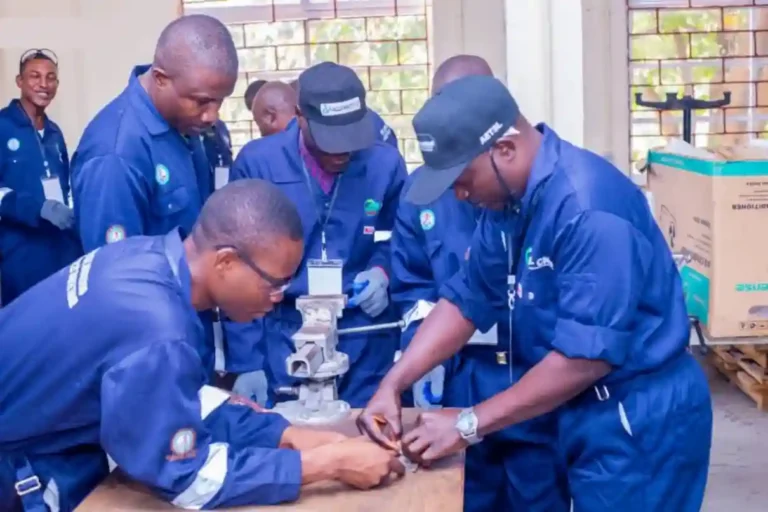
The Presidential Compressed Natural Gas Initiative (PCNGI) has launched the second batch of the Pi-CNG Skilled Awareness Training (PSAT) – Train-the-Trainers Program, in partnership with the Office of the Chief of Defence Staff.

The initiative aims to equip 150 technicians, auto-mechanics, and vocational trainees from the Nigerian Army, Navy, Air Force, Defence Headquarters, and Police Force with practical training on CNG conversion and safety protocols.

According to the organisers, “This marks another step in building local expertise for a cleaner, more sustainable Nigeria,” reflecting the government’s commitment to clean energy, green technology, and economic empowerment.

MTN shortlists 100 innovators for Nigeria PachiPanda challenge

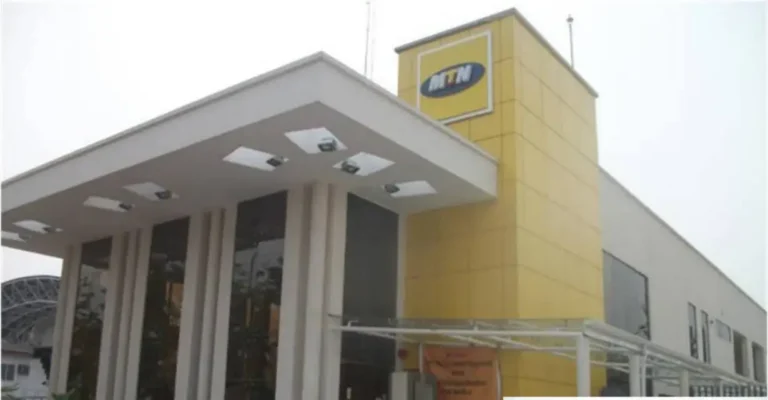
MTN Nigeria Communications Plc, in partnership with the Worldwide Fund for Nature (WWF) through the Nigerian Conservation Foundation (NCF) and the United Nations Development Programme (UNDP) Nigeria, has shortlisted 100 young Nigerian innovators for the second phase of the Nigeria PachiPanda Challenge. The initiative focuses on home-grown solutions to the country’s most pressing environmental issues, including climate change, pollution, community conservation, and environmental sustainability.

The top 100 innovators were selected from over 2,169 applications received nationwide. The multi-stage screening and evaluation process was conducted by 20 expert assessors and guided by a robust set of criteria to ensure fairness, equity, and consistency in assessing all entries. The framework provided a comparative basis for scoring, helping the assessors objectively identify the most promising submissions.

The selection of the nation’s brightest minds underscores MTN’s commitment to empowering change-makers dedicated to environmental resilience. Launched in Nigeria in 2024 to accelerate digital transformation, PachiPanda offers participants world-class mentorship, specialised technical workshops, seed funding, and direct access to a broad network of mentors and industry experts. The selected cohort spans high-impact sectors, with solutions aimed at addressing environmental challenges both in Nigeria and across the continent.

Following the announcement of the Top 100 shortlist, a detailed evaluation of the entries will determine the final Top 10 finalists. The finalists will be unveiled ahead of a 3-day sprint pitch event and masterclass scheduled to take place in Lagos in November 2025. During the event week, finalists will participate in masterclass sessions designed to sharpen their business acumen, enhance presentation skills, and refine their solutions for greater impact on the continental stage.

The winners of the Nigeria PachiPanda Challenge will progress to the Africa PachiPanda Contest, competing against other national champions from across the continent.

The Nigeria PachiPanda programme is part of MTN Nigeria’s commitment to protecting the planet through eco-entrepreneurship and environmental sustainability. By cultivating a pipeline of innovative African green enterprises, the initiative empowers youths and youth-led SMEs to develop solutions that tackle local environmental challenges and advance sustainability across the continent.

For more on how MTN is Doing for tomorrow, today, visit https://www.mtn.ng/sustainability/, follow MTN Nigeria’s social media channels, or contact the Sustainability and Shared Value Team at sustainability.ng@mtn.com.