Home Blog Page 586

Cross River Govt Launches Student Database Form

0

The Office of the Special Assistant to the Governor of Cross River State on Student Affairs has officially launched a comprehensive Student Database Form aimed at gathering accurate and detailed data on students and graduates of Cross River origin.

This new initiative supports the data-driven governance approach of the Bassey Edet Otu-led administration, which places strong emphasis on youth empowerment, inclusive education planning, and targeted state intervention.

According to Joseph-Kelvin Enyam, the Special Assistant to the Governor on Student Affairs, “The form is a strategic effort to centralize and manage information about Cross Riverians in universities, polytechnics, colleges of education, and other tertiary institutions both within and outside Nigeria. It also captures data from recent graduates, including those in the National Youth Service Corps.”

The database is expected to serve as a vital planning tool for youth-focused programmes. It will enable the state to provide tailored student interventions such as bursaries, training schemes, mentorship opportunities, and job placement initiatives.

Enyam emphasized that “This database aligns with the ‘People First’ agenda of His Excellency Governor Otu, especially in the areas of human capital development and social investment.”

The form is easily accessible online by clicking the link titled Cross River Student Database Form 2025. It collects vital biodata including full name, local government area of origin, school name, academic programme, level of study or graduation status, contact details, and in some instances, next of kin. The information gathered will help the government identify and engage students in education support schemes and community development projects.

Participation in the database is entirely voluntary and free. All Cross River students, regardless of whether they are schooling within the state or outside, are encouraged to take part. Graduates currently serving in NYSC or who have recently concluded their service are also eligible.

The form is currently hosted on a Google Forms platform, but the Office of the Special Assistant has assured the public of data protection. “Confidentiality is our priority,” Enyam said. “This data will only be used for planning, engagement, and documentation within the state government. We are also exploring more secure, government-managed platforms for hosting in the near future.”

The initiative is also designed to improve emergency response and communication involving students during national mobilizations, crises, or relocation exercises.

It will also serve as a tool for planning internship and mentorship programmes that align with opportunities in both the public and private sectors.

To ensure wide awareness and participation, the Office is partnering with student unions, youth groups, and media outlets across the state. This includes collaborations aimed at helping students understand the form’s importance and how it fits into the state’s long-term development strategy.

Enyam urged all students and graduates of Cross River origin to fill out the form as soon as possible. “We want everyone to be captured in this critical educational database,” he said. “This effort will shape future education policies and youth-focused programmes.”

For further inquiries or support, students are advised to contact the Office of the Special Assistant to the Governor on Student Affairs. Communication channels will be made available through student bodies and official press releases.

Advertisement

Apply: National Green Energy Hackathon 2025 (Win Cash and Laptop)

August 2, 2025 – Innovators, developers, engineers, and students passionate about clean energy are invited to apply for the National Green Energy Innovation Hackathon. This event is part of the 3rd edition of the Technology Ecosystem Dialogue (TED 2025) and will be held from September 24 to 25 at the NASENI Innovation Hub, Idu Industrial Area, Abuja.

Organizers say the 2-day hackathon will bring together creative minds from across Nigeria to develop clean energy and climate resilience solutions. “Whether you’re working on renewable energy, smart grids, or sustainable digital tools, this is your moment to make real impact,” the announcement stated.

Participants will be guided by mentors and have access to technical support during the sprint. They’ll also get the opportunity to present their ideas to top investors, policymakers, and industry leaders.

i. Build real-world solutions
ii. Access mentorship and technical support
iii. Network with ecosystem enablers
iv. Stand a chance to showcase at TED 2025

1. Cash Prize
2. Laptop
3. Mentorship

The deadline for application is August 21, 2025.

The hackathon is open to all innovators in Nigeria looking to contribute to green energy development.

How to apply:

To apply, interested candidates should visit and complete the application form Here. This opportunity offers access to high-growth networks, innovation funding prospects, and career advancement in clean tech.

ZITDA Shortlist to Be Out Soon as 7,017 Applied

0

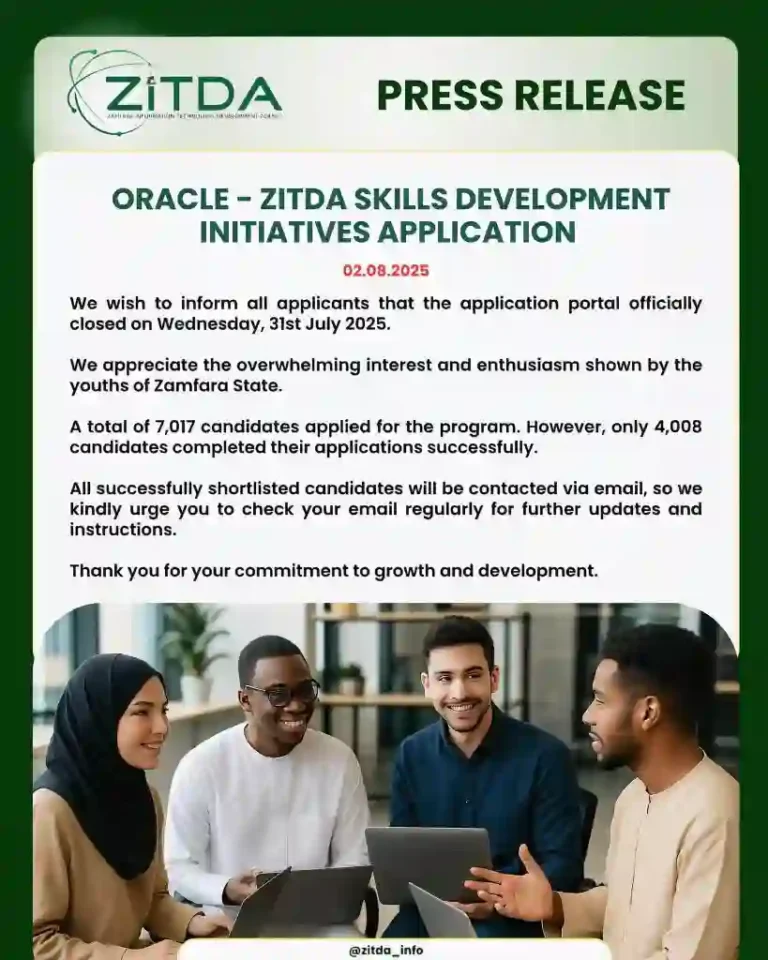
Zamfara Information Technology Development Agency (ZITDA) has officially closed the application portal for the Oracle-ZITDA Skills Development Initiatives. The portal closed on Wednesday, 31st July 2025.

In a press release dated 2nd August 2025, ZITDA announced, “We appreciate the overwhelming interest and enthusiasm shown by the youths of Zamfara State.” According to the agency, a total of 7,017 candidates applied for the program, but only 4,008 completed their applications successfully.

“All successfully shortlisted candidates will be contacted via email,” the statement said, urging applicants to check their email regularly for updates.

Gov Bago Urges Niger Poly to Partner Niger Foods for Large-Scale Farming Initiative

0

Niger State Governor, Mohammed Umaru Bago, has called on the management of Niger State Polytechnic, Zungeru, to collaborate with Niger Foods and sign a lease agreement that will allow the cultivation of the school’s vast land.

The governor made this known during a meeting with members of the Academic Staff Union of Polytechnics (ASUP), Zone A, led by its Zonal Coordinator, Dr. Abdulaziz Ibrahim Badaru, who presented him with an award of excellence in recognition of his efforts toward human capital development in technical and vocational education.

Governor Bago, a known advocate for agricultural investment, said the Polytechnic has large portions of land that are not being used productively. He encouraged the institution to take full advantage of the opportunity to engage in agriculture by partnering with Niger Foods.

According to him, “This move will not only increase agricultural production in the state but also benefit students studying agric-related courses by giving them practical experience.”

He also mentioned that the recent partnership with the Dangote Group is another strategic investment aimed at improving the standard of living in Wushishi and neighboring communities. “This investment will serve as a platform for people in the area to benefit economically,” Bago said.

The governor praised both Niger State Polytechnic, Zungeru and Federal Polytechnic, Bida for their continuous technical support, noting that their expertise has contributed to the overall development of the state. “Polytechnics are the real hubs for developing technicians and scientists in our country,” he added.

Governor Bago expressed gratitude to ASUP for the award and assured the union of his administration’s unwavering commitment to education and workforce development. He said, “I appreciate the recognition and assure you that we will continue to support education at all levels.”

Speaking on behalf of ASUP, Dr. Badaru said the union decided to honor Governor Bago for his significant contributions to human capital development.

He highlighted that the governor has been consistent in employing qualified personnel to improve the quality of education at Niger State Polytechnic. “The governor has helped in the spread of knowledge across the state,” he said.

Dr. Badaru also applauded the governor’s impact in areas of agriculture and technology, stating, “Governor Bago has rescued Nigeria through his investment in farming and technology, two critical sectors for national progress.” He further commended the administration for prompt salary payments and timely staff promotions.

He concluded by calling on the governor to set up a Governing Council for the Polytechnic to further enhance its operational capacity.

FG Renewed Hope Ward Development Programme to Empower 8.8m in 8,809 Wards

The federal government has launched a bold initiative aimed at empowering over 8.8 million Nigerians through the Renewed Hope Ward Development Programme (RHWDP), targeting all 8,809 electoral wards across the country.

Unveiled during the 150th meeting of the National Economic Council (NEC) at the State House in Abuja, the RHWDP is designed as a grassroots economic stimulus plan that aligns federal, state, and local government development efforts. The programme is one of the most comprehensive attempts to stimulate local economies, boost employment, and improve the overall standard of living in rural areas.

Speaking at the NEC meeting on Thursday, President Bola Tinubu described the economy as “working” and “on the path of recovery,” but stressed the need for deeper investment in the rural economy. He said, “The economy is working. We are on the path of recovery, but we need to stimulate growth in the rural areas. We know the situation in the rural areas, let us collaborate and do what will benefit the people.”

The RHWDP was presented to the council by the Minister of Budget and Economic Planning, Atiku Bagudu. According to Bagudu, the initiative aims to drive double-digit economic growth through direct intervention in all wards, using Nigeria’s local governance framework.

Bagudu said, “Today Mr President attended the NEC meeting and he commended the state governors for the cooperation they have extended to him and to the federal government. And today, in a very historic next step, Mr President witnessed the presentation of the memo on Renewed Hope Ward Development Programme, which is a strategy to support the macroeconomic reforms being undertaken by the administration.”

He explained that the government, having stabilised the macro economy, now seeks to “drill down development to the lowest levels” by supporting 1,000 economically active persons in each ward, rising to 2,000 in larger wards.

“We believe this will generate employment, reduce poverty, enhance food security and even enhance social protection,” he stated.

Bagudu said the legal foundation for the programme draws from Chapter 2 of the 1999 Constitution and the Fifth Alteration Act, which mandate all tiers of government to harness resources and promote national prosperity.

“This can only be done cooperatively. Mr President as an ardent believer in federalism today, presented the Renewed Hope Ward based development programme as a collaboration between federal, state and local governments, a Federation project and to be funded with the increased revenues accruing to the Federation Account, as well as other programmes that the federal government and states are undertaking,” he explained.

He added, “Equally, it is to identify in each ward at least 1000 economically active persons that will be supported so that economic activity will be boosted in each ward of the Federation. The idea is to utilize this unique feature of our economy to generate double digit growth in most of the wards as we march towards a one trillion dollar economy.”

A National Steering Committee with representatives from the six geopolitical zones will oversee the implementation, with the Ministry of Budget and Economic Planning serving as the secretariat.

Bagudu also referenced a recent International Monetary Fund (IMF) Article IV consultation, which backed Nigeria’s macroeconomic direction. He said, “The IMF acknowledged that the bold reforms have improved stability and enhanced resilience, liberalising and strengthening the function of the foreign exchange market, removing foreign subsidies, ending monetary policy, strengthening revenue administration and raising hydrocarbon production, which all have contributed to improve macroeconomic stability.”

He noted that the Renewed Hope programme directly responds to these macroeconomic improvements by shifting focus to the grassroots, investing in people and local enterprise.

“Mr president that always believes that to reduce poverty and food insecurity, we must invest collaboratively with federal and state in the creative energy of Nigerians and the geographical wards and having achieved the successes at the macroeconomic level, that is why this programme is unfolded today at the National Economic Council, which graciously approved the programme,” Bagudu said.

Echoing this sentiment, Governor Hope Uzodimma of Imo State praised the federal government’s revenue generation efforts, but emphasised the need to translate financial gains into real-life benefits at the local level.

“We acknowledged Mr. President’s efforts in driving increased revenue generation and the positive results already being recorded. But the real challenge now is how this additional income will improve the lives of people at the grassroots,” Uzodimma said.

He described the programme as one designed to decentralise development, empower local communities, and create jobs within rural economies.

“The meeting presented an opportunity for him to brief the governors and the need for the national government and subnational government to work together for the overall interest of our people and country, Nigeria.

“Well, we acknowledged his triumphs for revenue generation and the results already recorded as a result of the various reform policies of his administration. The country is earning more money now, the subnational governments are also earning more money,” he added.

Uzodimma noted that the president’s new grassroots development model will help fast-track the impact of increased revenue by ensuring funds reach the people directly through projects and support systems in each ward.

“The president came up with a programme that will fast-track the process of this additional money creating a bigger impact on Nigerians by making sure that it trickles down to the grassroots. For that reason, they brought a programme to stimulate economic activities at the ward level,” the governor stated.

President Tinubu also called on state governors to increase their investment in rural infrastructure, agricultural mechanisation, education, and poverty reduction efforts.

“We have to embrace mechanisation in agriculture, fight insecurity and improve school enrolment through school-feeding,” Tinubu urged.

According to a statement by Stanley Nkwocha, media assistant to the Vice President, the president’s comments followed the presentation of the RHWDP by Minister Atiku Bagudu.

The Renewed Hope initiative is being positioned as a vital link between federal reforms and real-time economic transformation at the grassroots. It comes at a time when Nigeria is striving to build a $1 trillion economy, improve food security, increase employment, and strengthen the country’s microeconomic fundamentals.

By targeting economically active people in each ward, the government hopes to stimulate entrepreneurship and local production, areas identified as key for inclusive growth and sustained economic recovery.

The launch of the RHWDP follows broader policy changes including subsidy removal, foreign exchange reforms, and tighter fiscal measures—steps that have generated more funds for government spending but also placed increased pressure on ordinary Nigerians.

The programme’s implementation will rely heavily on cooperation between the three levels of government, and will depend on how effectively state and local officials engage with community members, monitor progress, and ensure that support reaches the intended beneficiaries.

The initiative is also expected to serve as a model for how increased government revenue can be converted into tangible economic gains that uplift communities, promote self-reliance, and provide long-term benefits for the country as a whole.

The use of targeted funding for job creation, rural electrification, agriculture, and small business development within each ward offers a way to connect macroeconomic reforms to microeconomic realities, reducing poverty and expanding opportunity for millions.

With backing from both the National Economic Council and the President, and reinforced by legal frameworks, the RHWDP represents a new phase of economic decentralisation. It prioritises inclusivity, local ownership, and practical results, reinforcing the federal government’s shift toward people-centred economic growth.

The federal government’s goal of transitioning into a trillion-dollar economy relies not just on large-scale reforms but on policies like the RHWDP that aim to change daily life for everyday Nigerians, especially those in underdeveloped and underserved communities.


Cross River Begins Distribution of Subsidized Arabica and Robusta Coffee Seedlings

0

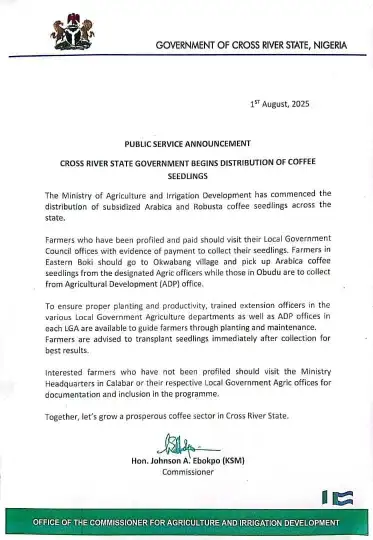
Aug 1, 2025 – The Cross River State Government has officially begun the distribution of subsidized Arabica and Robusta coffee seedlings to local farmers, as announced by the Ministry of Agriculture and Irrigation Development on August 1, 2025.

According to the public announcement, farmers who have already completed profiling and made the required payments are to proceed to their Local Government Council offices with proof of payment to collect their seedlings.

Specific arrangements have also been made for farmers in certain areas. “Farmers in Eastern Boki should go to Okwabang village and pick up Arabica coffee seedlings from the designated Agric officers,” the statement noted. “Those in Obudu are to collect from Agricultural Development (ADP) office.”

To boost productivity and support sustainable agriculture, trained extension officers are present across Local Government Agriculture departments and ADP offices to assist farmers in the planting and maintenance process. The Ministry encouraged immediate transplanting after collection for maximum yield.

“Interested farmers who have not been profiled should visit the Ministry Headquarters in Calabar or their respective Local Government Agric offices for documentation and inclusion in the programme,” said Hon. Johnson A. Ebokpo (KSM), Commissioner for Agriculture.

This initiative is part of the government’s drive to expand the coffee sector and support long-term agribusiness development in Cross River State.

NDE to Partner Katsina to Engage Trained Artisans in State Projects

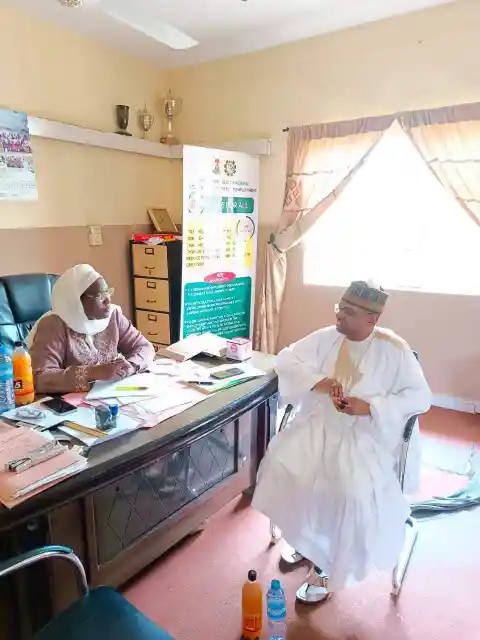
1st August 2025—The National Directorate of Employment (NDE), Katsina State Office, hosted the Honourable Commissioner of the Ministry of Works and Housing, Engr. Dr. Sani Magaji Ingawa. The visit marked a significant step toward enhancing youth empowerment and technical job creation in Katsina State.

The State Coordinator of NDE, Hajiya Halima Isa Ingawa Gimbiyar Yandoma, welcomed the Honourable Commissioner and commended his interest in the Directorate’s mandate. “We are honoured to receive you today. Your presence shows a strong commitment to tackling unemployment through practical skills development,” she stated.

Hajiya Halima provided a detailed presentation on NDE’s programmes and ongoing initiatives aimed at creating employment opportunities and supporting entrepreneurship.

She emphasized that the Directorate’s focus areas, such as Vocational Skills Development (VSD), Small Scale Enterprises (SSE), Special Public Works (SPW), and Rural Employment Promotion (REP), are designed to promote economic self-reliance among youths.

Heads of departments under the NDE were also present to offer updates on their respective sectors, highlighting achievements and future plans to expand skills acquisition, self-employment support, and access to small business funding.

In his response, Engr. Dr. Sani Magaji Ingawa applauded the Directorate’s efforts. “The NDE is a key institution. We look forward to working with you in fields like plumbing, carpentry, and other technical trades,” he said.

The Commissioner pledged that the Ministry of Works and Housing will engage NDE-trained artisans and technicians in state infrastructure projects.

He described this as a practical way to boost youth employment and encourage sustainable income generation.

The visit ended with a renewed promise of collaboration. “We are ready to partner with the Ministry to advance our shared goals,” the State Coordinator affirmed, underscoring the Directorate’s commitment to reducing unemployment in Katsina through strategic partnerships.

Developer Foundry Enters Second Screening Phase as 1,494 Apply

Tech4Dev has expressed excitement over the large number of applications received for its Developer Foundry Program. “We’re thrilled by the overwhelming response,” the organization stated, while thanking every aspiring tech talent who applied.

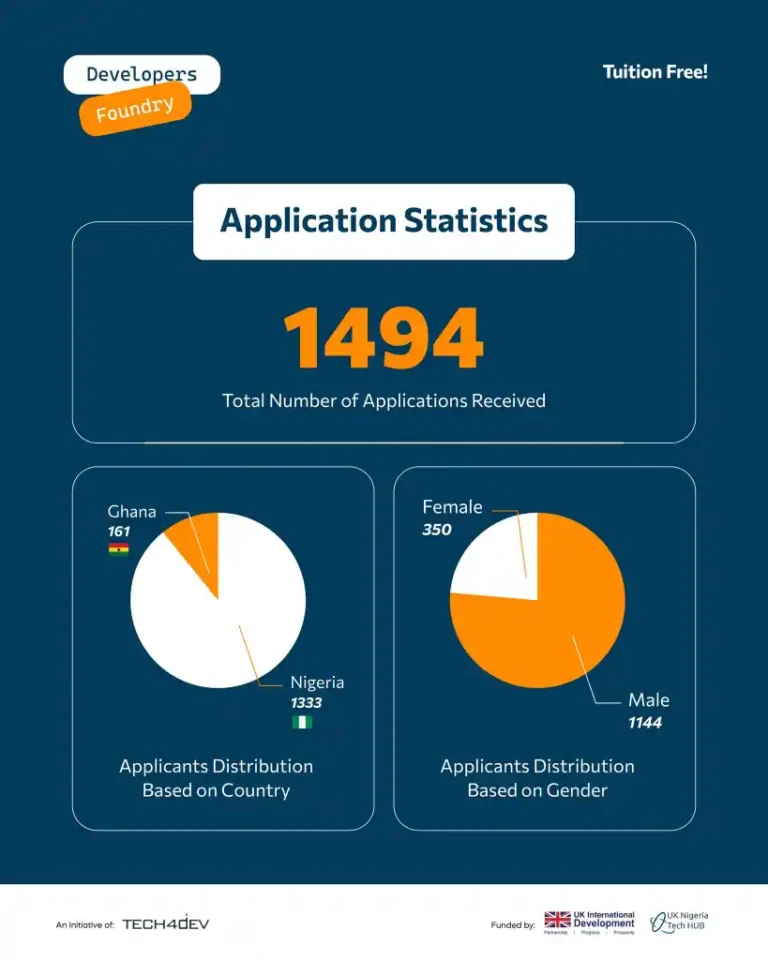
A total of 1,494 applications were submitted, with the majority coming from Nigeria at 1,333, and 161 from Ghana. This strong interest shows growing demand for digital skills across West Africa.

The applicants chose different tech learning tracks, with 388 people (25.9%) selecting frontend development. Artificial intelligence attracted 318 (21.3%), while cybersecurity followed closely with 312 (20.9%). Backend development had 243 applicants (16.3%), DevOps saw 146 (9.8%), and mobile development received 87 applications (5.8%).

“We’re excited to announce that we’ve officially moved into the second phase of the screening process,” Tech4Dev confirmed.

All shortlisted candidates have been contacted via email. Tech4Dev advised applicants to check their inbox and spam folders immediately, adding, “This phase is a crucial part of your journey into the program.”

The organization emphasized that this stage will assess each applicant’s skills, passion, and readiness to grow within the technology industry.

FG, NNDC Move to Cut $1.5bn Milk Imports Bill

0

Nigeria’s livestock sector may soon experience a major shift as the Federal Ministry of Livestock Development partners with the New Nigeria Development Company (NNDC) to reduce the country’s over $1.5 billion annual milk import bill. This move is part of a broader plan to stimulate local production, increase agricultural investment, and drive national economic growth through the dairy value chain.

The development emerged during a high-level meeting held on Friday, August 1, 2025, at the Ministry’s headquarters in Abuja. The session focused on aligning both institutions under the National Livestock Growth Acceleration Strategy (NL-GAS), a government initiative aimed at transforming the livestock industry.

Speaking at the meeting, the Honourable Minister of Livestock Development, Idi Mukhtar Maiha, praised NNDC for its proactive interest in livestock development. He described the initiative as timely and necessary for changing the structure of the dairy value chain in Nigeria.

“The truth is, we are where we are because we’ve lacked the right investors; those who truly understand the dynamics of livestock production and can fill critical gaps in genetics, feeding systems, infrastructure, and market access,” Maiha said.

The Minister added that the Ministry has identified several priority areas needing investment, including genetics improvement, cold-chain logistics, extension services, and structured market systems. These sectors present opportunities for agricultural investors and stakeholders in the livestock business.

“Your proposal resonates strongly with our mandate. We welcome NNDC’s interest in catalysing change within the livestock sector. This collaboration has the potential to unlock dormant value chains, especially in dairy, and help us meet our national targets,” he said.

He further explained that the success of the National Livestock Growth Acceleration Strategy depends on partnerships, co-investment, and strong coordination between stakeholders. He also noted that commercially oriented livestock clusters, which include pastoralists, herders, and processors, are vital for the strategy to work.

“The National Livestock Growth Acceleration Strategy is our roadmap, but we need credible partners like NNDC to give it flesh. It’s not just about policy; it’s about implementation through viable investments,” the Minister added.

He stated that Nigeria can reduce milk imports and generate jobs if smallholder farmers are supported with modern infrastructure and inclusive financing systems. According to him, commercialising the dairy value chain will not only help achieve food security goals but will also position livestock as a critical contributor to economic development.

On his part, the Group Managing Director of NNDC, Shehu Mai-Borno, said the company is ready to invest in the dairy sector and contribute to national development through the livestock industry.

“We intend to establish integrated dairy hubs that empower smallholder farmers, create jobs, and increase local milk supply, especially across northern Nigeria,” Mai-Borno stated.

He emphasised that NNDC is adjusting its investment strategy to focus on sectors with strong potential for high returns and socio-economic impact, adding that livestock development is now one of the company’s top priorities.

The New Nigeria Development Company was originally created in 1949 as the Northern Regional Production Development Board. It evolved into the Northern Regional Development Corporation in 1956 and was later incorporated as a private company in 1965. Following the creation of states in 1976, it was renamed the NNDC, with a long-standing mission to support economic development across the 19 northern states of Nigeria.

This renewed partnership with the Federal Ministry of Livestock Development is expected to open new doors for agri-investment, encourage local milk production, and reduce Nigeria’s dependency on expensive dairy imports.

Apply: ABU NRF 2025 Grant Cycle Training Workshop

0

August 1, 2025 – Ahmadu Bello University (ABU) has announced a university-wide training workshop to support researchers applying for the 2025 National Research Fund (NRF) Grant Cycle. This follows the recent call for Concept Note submissions by the Tertiary Education Trust Fund (TETFund).

The Directorate of Research and Innovation, which is organizing the workshop, said the event aims to guide staff through the entire grant process. “This training is meant to help researchers improve their applications and increase their chances of success,” a statement from the Management noted.

The workshop will focus on:

a. NRF Grant eligibility, requirements and general structure
b. Crafting successful Concept Notes-salient points and best practices
c. Full Proposal writing-basic components and practical tips
d. Navigating the Oral defence and interviews
e. Patenting and commercialisation of Research output
f. Hands-on practical session on crafting Concept Notes based on Thematic Areas of the NRF Grant

All members of the university community are encouraged to attend. The training will hold at the Main Auditorium of the Postgraduate College on Thursday, 7th August, 2025, beginning at 8:30am.

How to apply:

To register, interested applicants should fill the online form available Here.