Home Blog Page 60

SereniMind Launches Africa Wellness Voices Initiative

0

A Nigerian healthtech startup, SereniMind, has launched a continent-wide digital campaign aimed at changing how mental wellness is discussed among African youth.

Tagged “Africa Wellness Voices Initiative”, the project is a pan-African effort that uses digital platforms to normalise conversations around mental health and emotional wellbeing. The campaign is designed to engage young people directly and reduce the stigma often associated with mental health discussions.

The founder of SereniMind and coordinator of the campaign, Ridwan Oyenuga, said the initiative focuses on amplifying real voices of young Africans instead of relying only on institutional messaging. According to him, this approach helps to address stigma in a more relatable and effective way.

Oyenuga explained that the campaign features youth leaders, counsellors, advocates, and organisations from different African countries who share daily reflections on resilience, stress, healing, and hope. He said the strategy is to meet young people where they already spend their time — online — by using social media, storytelling, and community participation to drive large-scale awareness.

“Unlike traditional awareness campaigns led solely by institutions, AWVI centres lived experience,” Oyenuga said.

He noted that the digital structure of the campaign has allowed it to spread quickly across borders, creating what he described as a shared continental narrative that mental health is a collective concern and not a personal weakness.

The SereniMind founder added that the initiative represents a new model of youth-led public health advocacy that is decentralised, tech-driven, and culturally grounded.

“Too many young Africans are struggling silently,” he said. “By spotlighting real voices from different countries, we are showing that mental health conversations belong in our communities, our schools and our daily lives.”

Beyond raising awareness, the campaign also highlights the growing role of African healthtech startups in public health communication by combining technology, youth networks, and storytelling.

Advertisement

Wimbart Launches Wimbart Lite for Pre-Seed and Early-Stage Startups

0

Wimbart, an award-winning public relations agency specialising in business and technology sectors across Africa and emerging markets, has launched Wimbart Lite, a new service created specifically for pre-seed and early-stage startups.

The agency announced in an email on Monday that the new division will be led by Maria Adediran, Associate Director and founding team member, who has been appointed Head of Wimbart Lite.

For nearly a decade, Wimbart has navigated some of Africa’s most complex news cycles and built a strong reputation across key markets including Nigeria, Kenya, South Africa, and Egypt. As Africa’s technology ecosystem continues to mature, competition for media attention has intensified, making clear and credible communication more important for startups.

The company said early-stage businesses now require effective communication across online, broadcast, and print media to stand out. Wimbart Lite is designed to bridge this gap by offering focused and fast-turnaround support to startups, venture capital portfolios, and global partners seeking trusted storytelling.

Founder and CEO at Wimbart, Jessica Hope, said the new service responds to the changing needs of Africa’s startup ecosystem.

“Wimbart was built in the trenches with African tech founders before the market had fully caught up with their vision. Wimbart Lite has been in development for some time, as a service for early-stage companies who may not require full-blown month-on-month public relations support, but do need to get a news story out there,” she said.

According to the agency, the service is curated for African companies that have raised under $1m. It follows a service-led, menu-based model built around three core strategic routes.

The Milestone Announcement Pack offers press releases and strategic media outreach for key launches, partnerships, and company updates. The Founder Profile Pack focuses on elevating leadership voices and industry perspective through op-eds and interview pitching. The Fundraise Pack manages funding communications for early-stage rounds and venture capital portfolios, and includes a 15 per cent discount for portfolio companies.

Adediran brings over a decade of experience in consumer and corporate PR to her new position. She has led multi-market campaigns for venture capital firms and high-growth companies, ranging from early-stage ventures to unicorns, including Andela, M-KOPA, TLcom, and Kobo360.

Speaking on her appointment, Adediran said: “I joined Wimbart at a time when African tech was still small enough that a $1m raise felt like a massive milestone for the whole ecosystem. Now that the market has matured, early-stage teams are put under the microscope much earlier. Wimbart Lite exists to turn real work and traction, early milestones, partnerships, and fundraises, into a clear, credible story the ecosystem can understand and trust.”

Since its inception, Wimbart has supported more than 180 companies across 20 African countries. The launch of Wimbart Lite comes ahead of the agency’s 10-year anniversary and marks the next step in its mission to professionalise communications across Africa’s tech ecosystem.

By offering tailored support for startups, Wimbart Lite provides an alternative to traditional full-scale PR campaigns. It enables early-stage companies to access strategic communications support without long-term contracts, helping them gain visibility, attract investment, and establish their brand in a competitive market.

Hope emphasised the value of storytelling, stating: “Maria is Wimbart’s day one and has grown with the company, and with dozens of African tech startups over the past decade; she understands exactly how to turn a good story into something that actually travels.”

Delta40 Secures $20m to Expand Venture Studio and Early-Stage Fund in Africa

0

Delta40 has secured $20 million in funding to support its integrated Venture Studio and Fund, marking what it describes as Africa’s first institutional raise linking venture building with early-stage capital.

The milestone merges investment with hands-on studio support from experienced operators to help build and scale startups across the continent. Delta40 brings together 54 investors from 13 countries, including global institutions, high-net-worth individuals, development finance institutions (DFIs), family offices, and foundations.

The raise includes investors from across Africa to Silicon Valley, with 25 Founders participating to create what the company calls a “founders backing founders” ecosystem. Several founders have also invested their own capital into the studio to empower the next generation of African entrepreneurs building transformative and scalable ventures.

Delta40 initially launched its venture studio model in Kenya and has since expanded to Lagos, Nigeria. The expansion provides portfolio companies with direct, on-the-ground support as they scale across the continent. The organisation pioneered a Venture Studio and Fund model that combines early-stage capital with embedded product, fundraising, commercial, finance, legal, growth, and exit expertise.

Through this model, Delta40 partners with founders from idea to scale across energy and mobility, agriculture, and fintech sectors, with a goal to integrate AI across all sectors.

“Through Delta40, we’re building and scaling innovations that transform lives, economies, and planetary health across Africa, with solutions that can power and feed the world. What sets this model apart is our community of innovators, investors, and business leaders who provide hands-on support from idea to pan-African scale and impactful exits. Over 75% of our investors and team have built ventures in Africa, bringing deep experience, networks, and lessons from successful exits across the continent and beyond,” said Lyndsay Holley Handler, founder and CEO of Delta40.

As a venture studio, Delta40 invests initial checks ranging from $100,000 to $500,000 at the idea-to-Seed stage, with the potential for follow-on investment. Beyond providing capital, the team acts as a long-term extension of startup teams. It supports commercial growth and fundraising execution, including investor materials, financial modeling, strategy development, exit opportunities, and targeted introductions to help founders secure subsequent rounds of funding.

According to global benchmarks cited by the firm, venture studios help startups raise capital two times faster and achieve IPO and M&A exits 30 percent faster than traditional models. Additionally, venture capital funds that provide significant post-investment support have been shown to achieve 50 percent greater net internal rates of return.

Delta40 said it was designed to address persistent gaps in Africa’s innovation ecosystem. It noted that less than 2 percent of venture funding currently goes to female founders, and less than 30 percent goes to African founders. This is despite data showing that locally led ventures and diverse founding teams often generate stronger financial returns and outsized impact.

The company also pointed out that many ventures fail to reach scale or achieve an exit, often due to limited access to the right capital, technology, or talent. Its combined fund and venture studio model was built to support founders at the ideation stage, accelerate innovation and execution, and help grow resilient, scalable businesses across Africa.

The investor and strategic partner base includes institutional players such as the Soros Economic Development Fund, FMO, GIZ, Autodesk Foundation, The Rockefeller Foundation, Allan & Gill Gray Philanthropies, Livelihood Impact Fund, Small Foundation, Lemelson Foundation, Factor(E) Ventures, and Skoll Foundation. The raise also features strong African participation and on-the-ground champions.

Delta40 worked with global law firm Wilson Sonsini, which helped design the legal and financing structure for the model and also invested in the fund.

“Delta40 exemplifies the kind of bold, locally-led innovation that is essential to building inclusive economies and environmental resilience across Africa. At SEDF, we are proud to support visionary founders who are solving urgent challenges – and shaping a more just and sustainable future,” said Georgia Levenson Keohane, CEO of Soros Economic Development Fund.

Andrew Shaw, manager, Impact FMO, said the partnership aligns with FMO’s long-term strategy. “At FMO, market creation sits at the core of our 2030 strategy, tackling the systemic barriers that limit capital deployment and entrepreneurs’ access to the right finance to scale. Delta40’s venture studio model reflects this approach, pairing appropriate capital with hands-on support to help founders build resilient businesses across energy, food systems, and financial inclusion. Through our Market Creation programme, we are proud to back initiatives that unlock innovation and deliver lasting impact for people, economies, and the planet,” he said.

To date, Delta40 has invested in and supported 16 companies, including five ventures built directly within its studio. The organisation said it has catalyzed a 5.5 times leverage on its capital.

These ventures, operating in clean energy, agriculture, and fintech, are increasing incomes and advancing planetary health across more than 30 African countries. The portfolio has also created over 5,000 direct and indirect jobs.

The final close of the $20 million fund will allow Delta40 to expand its portfolio and deepen its venture studio support across Africa.

“As an investor and operator, I’ve seen how difficult it is for founders to access both bold capital and hands-on support. Delta40 delivers both, and that’s why I’m confident that future funds will only accelerate the momentum we’re already seeing,” said Biola Alabi, partner, Investments, Delta40.


NYSC Digital Champions Train Over 500,000 Nigerians Under DL4ALL

0

Members of the National Youth Service Corps (NYSC) enlisted as digital champions under the Federal Government’s Digital Literacy for All (DL4ALL) programme have trained over 500,000 Nigerians in basic digital skills since the initiative began.

The Director-General of the National Information Technology Development Agency (NITDA), Kashifu Inuwa Abdullahi, disclosed this today at the NYSC Headquarters in Abuja while presenting eight laptop computers to Corps Members adjudged outstanding in their training and field performance at the national level.

Abdullahi recalled that DL4ALL stemmed from a Presidential mandate directing NITDA to achieve 95 percent digital literacy by 2030, with a mid-term target of 70 percent by 2025. He said that in collaboration with the NYSC, the agency trained 17,760 Corps Members across the country on digital literacy within one year.

In his words, “Approximately 80 champions per state are trained in each batch, amounting to nearly 17,760 champions annually nationwide. Each champion is tasked with training at least two Nigerians daily, translating to a minimum of 60 persons monthly.”

He said the collaboration between NITDA and the NYSC had also supported accelerated diversification through industrialisation, digitisation, creative arts, manufacturing and innovation.

“We have a large size of our population, who are not actively in the formal sector, which are doing petty businesses.

“We have our senior citizens, who are not digitally literate, but we want them to be part of this digital economy we are building,” he said.

The NITDA DG disclosed that the agency had developed a national digital literacy framework in collaboration with the NYSC and would continue to empower Corps Members with information technology skills to enable them educate the public on basic digital skills.

He explained that the target was for each champion to train at least two people daily and 60 people monthly, adding, “this training is going to be one-on-one, in the marketplaces, religious places and motor parks, because these people are mostly the vulnerable groups and victims of online fraud.”

In his remarks, the Director-General of the NYSC, Brigadier General Olakunle Nafiu, commended NITDA for promoting digital literacy nationwide.

Nafiu said that with over 400,000 graduates passing through the Scheme annually, the NYSC was sending refined Corps Members equipped with skills and empowerment tools back to society as job creators and employment ambassadors.

He added that the Corps Members were the perfect channel to drive the critical national objective of digital empowerment for all Nigerians.

Another highlight of the event was the presentation of a dummy cheque of N3.5 million by the NITDA DG to his NYSC counterpart for the Corps digital champions.

The initiative continues nationwide with monitoring and evaluation mechanisms to ensure quality delivery, accountability, inclusion, and sustained community-level impact across all states.

LASTVEB awards ICT certificates to 1,200 Lagos technical college students

0

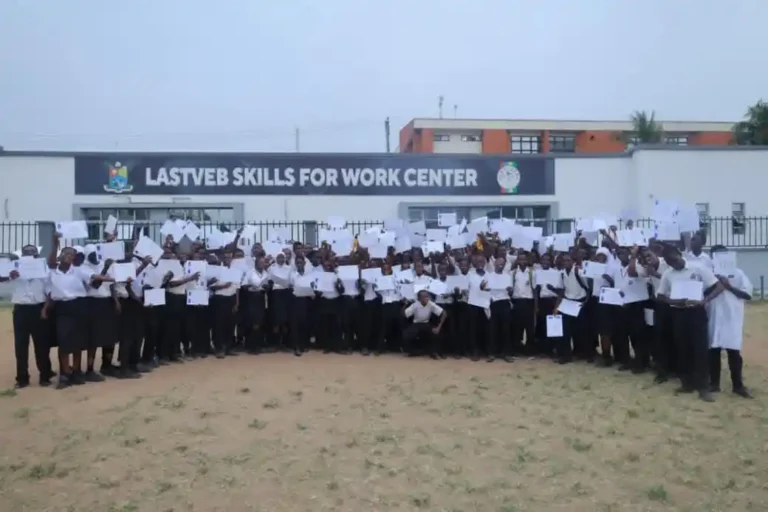
The Lagos State Technical and Vocational Education Board (LASTVEB) has presented internationally recognised ICT certificates to over 1,200 Computer Craft Technology students of Government Technical College, Agidingbi, Lagos, as part of efforts to equip students with digital and technical skills required for the modern workforce.

The certificates were presented at a ceremony held at the college, where the Executive Secretary of LASTVEB, Ms Moronke Azeez, said the programme was designed to prepare technical college students for opportunities in the digital economy.

According to Azeez, the programme, which is supported by key partners, began about two years ago as a pilot initiative. She explained that the training exposes students to Python, networking, coding, web development and other ICT-related competencies that are demanded by employers.

She recalled that when the programme was introduced, questions were raised about its suitability for Tech 1 students because it is outside the Technical College Tech 1 curriculum. However, she said the Board decided to proceed after review, believing the students could succeed with support.

“I am extremely pleased and proud of our students,” Azeez said. “Today, more than 1,200 Tech 1 students across the five technical colleges, many of whom are just 15 or 16 years old, have completed this specialised training alongside their regular college work. They did not just participate; they exceeded expectations.”

She disclosed that as the students progress to Tech 2 and higher levels, they will continue to earn additional international certifications every year. By graduation, she said the students would hold both National Technical qualifications and globally recognised Cisco certifications, giving them an advantage in the labour market.

Azeez added that students currently in Tech 2 who participated in the programme last year are continuing their training and are expected to receive another certificate before the end of the academic session.

She also pointed out the limited number of girls enrolled in the Computer Craft Technology course, which led to discussions on how to increase female participation. She said the boys pledged to support efforts to encourage more girls to join.

One of the beneficiaries, Oluwafikayomi Shittu, thanked the Lagos State Government for the opportunity, saying learning programming was difficult at first, but regular training and guidance helped her build confidence.

The certificate presentation ceremony reaffirmed the commitment of the Lagos State Government, through LASTVEB, to empowering young people with skills.

NITDA presents laptops and cash prizes to selected corps members

National Information Technology Development Agency (NITDA) has presented laptops and cash prizes to selected corps members who have demonstrated exceptional commitment as Digital Literacy Champions, as part of efforts to deepen digital inclusion nationwide.

From classrooms and campgrounds to markets and motor parks, Nigeria’s digital transformation is being driven by corps members with communities. To consolidate Nigeria’s Digital Literacy for All Initiative (DL4All), the Director General of NITDA, Kashifu Inuwa, visited the National Youth Service Corps Headquarters to recognise corps members promoting digital skills across the country.

Inuwa was received by the Director General of NYSC, Brigadier General Olakunle Oluseye Nafiu, during the visit. He praised the corps members for going beyond their traditional service roles to deliver digital knowledge to grassroots communities and vulnerable groups.

According to Inuwa, their work is helping everyday Nigerians use digital tools “safely and responsibly,” while opening access to economic opportunities and reducing exposure to online fraud and digital risks. He said the initiative shows how people can lead change at the community level.

As a show of appreciation and empowerment, the NITDA Director General presented laptops and cash prizes to selected corps members who stood out as Digital Literacy Champions. He described the gesture as “an investment in youth leadership” and a strategic step to strengthen grassroots digital literacy training across Nigeria.

He further reaffirmed that digitalisation and inclusivity remain central to President Bola Ahmed Tinubu’s economic vision, adding that digital literacy is the foundation of a diversified and inclusive economy.

Inuwa also assured that NITDA would continue to collaborate with NYSC under the leadership of Brigadier General O. O. Nafiu to ensure that “every Nigerian, regardless of age, location, or background, can participate in the digital economy.”

Kwara State to Pilot Nigeria’s National Ranching Policy

0

Kwara State is set to pilot Nigeria’s national ranching policy as the federal government moves to modernise the livestock sector, improve productivity, and reduce recurring farmers-herders conflicts across the country.

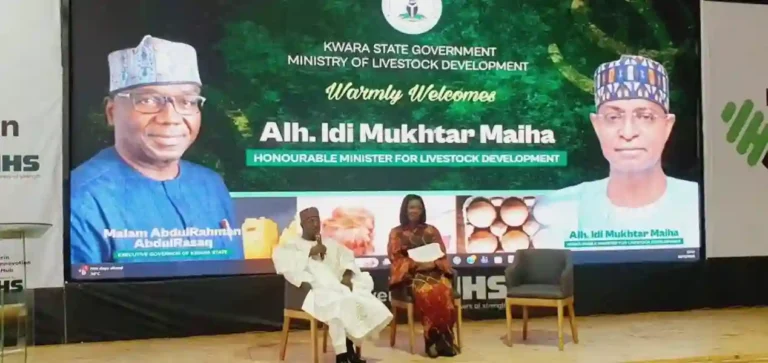
The Minister for Livestock Development, Idi Mukhtar Maiha, disclosed this on Tuesday during a high-level stakeholders’ engagement held in Ilorin, the Kwara State capital. He said the choice of Kwara was deliberate, given its land availability, farming culture, and readiness to support reforms in livestock production.

Maiha urged Nigerians to move away from the belief that ranching requires huge capital to begin. “Forget about the idea that you can’t do ranching. Start with two goats, cows, sheep, or pigs; they reproduce,” he said. According to him, even small-scale efforts can grow into profitable ventures over time.

He explained that fodder production alone presents major economic opportunities for farmers and young entrepreneurs. “Think of fodder. It’s just growing grass. Imagine wide lands in Kwara where varieties of grass can be planted. In Qatar, UAE, and Saudi Arabia, they all want to import grass from Nigeria. These are huge opportunities if we explore them,” Maiha said.

The minister noted that the federal, state, and local governments are already creating an enabling environment to support investors and farmers in the livestock value chain. He revealed that discussions were ongoing with the Kwara State Government on the establishment of feedlots to support livestock owners. “We have to establish feedlots where young boys and girls can bring their bulls, sheep, and pigs. The arrangement will be structured to improve productivity,” he said.

Announcing Kwara as the pilot state for the national ranching policy, Maiha said the programme would demonstrate that settled ranching is possible and effective. “We are going to show that nomadic people can be settled, infrastructure can be built for them to remain in one place, improve productivity, and address farmers-herders conflicts. This solution will come from us, and Kwara State will be the pilot for this programme,” he stated.

Speaking on broader sector reforms, the minister lamented that nearly half a billion poultry businesses currently operate outside the formal economy, limiting growth and access to support. He stressed that livestock remains Nigeria’s most important source of animal protein and said the creation of the Ministry of Livestock Development would help the sector become vibrant, resilient, sustainable, and globally competitive.

Maiha also highlighted untapped opportunities within the livestock sub-sector, citing honey production as an example. “By 2022, Nigeria imported N800 billion worth of honey. As I moved around some farms in Ilorin, I saw forested honey and its huge potential in Kwara State,” he said.

He encouraged farmers to adopt technology-driven practices and strong biosecurity systems, referencing Brazil’s model where large processors support small-scale farmers with chicks, feed, and veterinary services. “We are in a digital era where Gen Z are tech-savvy. If I were young again, I would not look for a government job or go into oil and gas; I would go into agriculture, particularly livestock,” he added.

Reacting, Kwara State Governor AbdulRahman AbdulRazaq, represented by the Commissioner for Agriculture and Rural Development, Afeez Alabi, assured stakeholders of sustained government support. “Poultry production is not just an agricultural activity; it is a strategic pillar of food security, job creation for youth and women, and economic growth,” he said, adding that livestock remains central to the state’s development agenda.

Earlier, the Commissioner for Livestock Development in Kwara State, Oloruntoyosi Thomas, said the initiative prioritises youth empowerment and productivity. “There is no room for Nigerian students to graduate unemployed. Livestock is positioned to achieve that in Kwara,” she said, noting that the engagement was designed to shift attention from conflict to production. “We are going to turn machine guns into milking machines and armoured tanks into tractors,” she added.

Nigeria to launch BOGA Fund Programme for economy beyond oil and gas

0

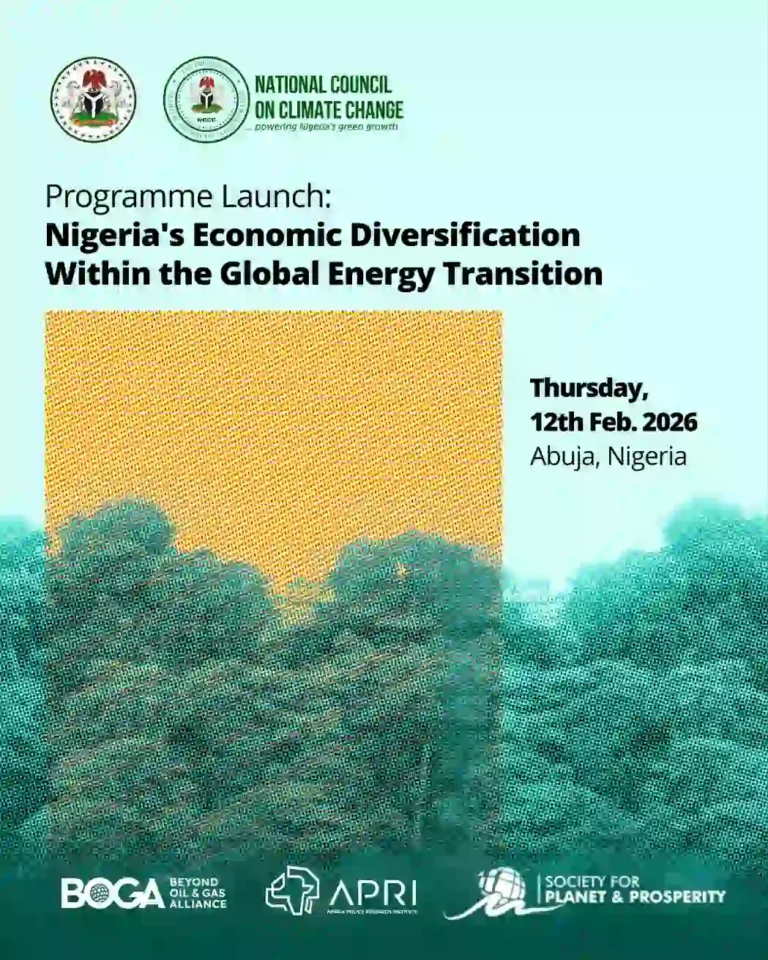
The Africa Policy Research Institute (APRI) has announced the upcoming launch of the Beyond Oil and Gas Alliance (BOGA) Fund Programme in Nigeria, a two year initiative supporting Nigeria’s economic diversification beyond oil and gas within the context of evolving global energy transition dynamics.

The programme, titled Nigeria’s Economic Diversification Within the Global Energy Transition, will be led by the National Council on Climate Change (NCCC) on behalf of the Federal Government of Nigeria and implemented by APRI.

In the announcement, organisers stated, “we are pleased to announce the upcoming launch of the Beyond Oil and Gas Alliance (BOGA) Fund Programme in Nigeria,” describing it as a policy focused intervention for economic diversification.

The programme is designed to strengthen evidence based policymaking, enable coordinated policy dialogue, and translate analysis into actionable recommendations aligned with Nigeria’s climate and development priorities, including its Nationally Determined Contribution (NDC).

The official launch is scheduled for Thursday, 12 February 2026, by 9:00am in Abuja, Nigeria.

APRI is an independent and nonpartisan Africa think tank with offices in Berlin, Germany and Abuja, Nigeria, conducting research on key policy issues affecting African countries and the African continent.

The institute aims to provide insights to policy making processes on Africa and develop policy options for African policymakers and civil society actors.

With strong institutional African partnerships, APRI links rigorous evidence based research to policy and practice, amplifies existing work, and co creates new initiatives.

As a public facing institute, APRI offers a platform where policymakers, businesses, media, civil society organisations, and research communities from Africa and Europe engage on shared policy priorities.

The programme reflects growing efforts to align national policy planning with climate responsive economic strategies nationwide.

Egbin Power Plc Launches Tech Empowerment Programme

0

Egbin Power Plc has launched a tech-based empowerment programme aimed at equipping young people from its host communities of Egbin, Ijede and Ipakan with relevant digital skills to compete in today’s economy.

The initiative, which is part of the company’s Personal Corporate Social Responsibility (PCSR) efforts, is designed to improve employability, encourage entrepreneurship and expand access to opportunities within the growing digital economy.

Speaking at the launch, Mokhtar Bounour, Chief Executive Officer of Egbin Power Plc, said the programme reflects the company’s commitment to inclusive and sustainable development, stressing that its responsibilities go beyond electricity generation.

“In today’s digital age, technology is no longer optional but a critical driver of economic inclusion and growth,” Bounour said. He added that deliberate action is required to bridge digital gaps and prevent uneven development across communities.

According to him, when communities are excluded from the digital economy, development becomes uneven and unsustainable, making targeted interventions necessary to close existing gaps.

“The Empowerment Programme is designed to address this gap by providing young people in Egbin, Ijede and Ipakan with access to practical and in-demand digital skills that can improve employability, foster entrepreneurship, and create new economic opportunities within their communities,” he noted.

The first cohort of the programme brings together beneficiaries from the three host communities for structured training sessions covering ICT fundamentals, graphic design, full-stack web development, digital marketing, cybersecurity and data analytics. The training combines classroom instruction with hands-on practical learning.

Egbin Power Plc said participants were selected through a screening process that assessed curiosity, determination and willingness to learn. In addition to technical knowledge, beneficiaries are also being trained in workplace skills such as ethics, problem-solving, collaboration, professionalism and digital responsibility.

Bounour urged participants to act as ambassadors of the initiative and uphold values of integrity, discipline and service, noting that their progress would demonstrate how strategic corporate responsibility can deliver measurable results.

He encouraged the beneficiaries to recognise their wider responsibility to their communities, urging them to learn with character, share their knowledge, mentor others and apply their skills to solving real local problems.

The company stated that the true legacy of the programme will be seen in ripple effects created through shared success and communal growth. It added that the launch underscores Egbin Power Plc’s commitment to sustainable community development, trust-building and value creation, while reaffirming its dedication to investing in people and contributing to Nigeria’s economic future.

FG Distributes 1.44m Free Reading Glasses to Nigerians in One Year

0

The federal government’s Effective Spectacle Coverage Initiative Nigeria, also known as Jigi Bola 2.0, has distributed free reading glasses to about 1,444,581 Nigerians within one year, the Minister of State for Health and Social Welfare, Dr Adekunle Salako, has said.

Salako disclosed this on Tuesday while briefing newsmen at the State House, Abuja, explaining that the initiative is implemented through the National Eye, Ear and Sensory Functions Programme (NESHP) of the Federal Ministry of Health and Social Welfare in collaboration with the Clinton Health Access Initiative (CHAI).

According to him, the programme is part of the presidential plan to deliver five million free pairs of eyeglasses to needy Nigerians. He said that within one year, the initiative also screened 1,541,325 Nigerians aged 40 years and above for presbyopia across 16 states, describing the rollout as “one of the largest vision-care distribution efforts.”

He listed the states implementing the initiative as Lagos, Jigawa, Bayelsa, Delta, Ekiti, FCT, Gombe, Imo, Kaduna, Kano, Katsina, Plateau, Ogun, Kwara, Benue and Sokoto.

The minister said the programme recorded a 94 per cent utilisation rate of donated glasses, adding that 65 per cent of beneficiaries received their first-ever pair. He also noted that the initiative helped to close gender gaps in access to care, with women accounting for 53 per cent of recipients.

Salako explained that the programme strengthened primary eye care delivery by training 2,216 primary healthcare workers and activating 811 PHC facilities. He said the facilities now provide basic eye services, including screening, counselling, first aid, dispensing of reading glasses and referral of advanced cases.

He further disclosed that three vision centres had been equipped under the sustainability arm to provide glasses at subsidised rates. According to him, the centres are located at Alimosho General Hospital, Lagos; Ijebu-Ode General Hospital, Ogun; and Idanre General Hospital, Ondo.

On monitoring, Salako said a real-time digital dashboard using Kobo Collect software was deployed to track screenings and glasses dispensed.

On funding, he said the Livelihood Impact Fund is supporting operations and covering the cost of one million pairs of glasses for 2026, while Founders Pledge funded Restoring Vision is to cover the cost of two million pairs, with one million already provided to NESHP and 200,000 to CHAN.

According to him, faith-based networks played a major role, noting that “the Christian Health Association of Nigeria alone dispensed 201,960 glasses.” He announced that the philanthropic arm would expand next year to Nasarawa, Rivers, Oyo, Enugu, Taraba, Osun, Ogun and Edo, while four new vision centres have been earmarked for Edo, Enugu, Nasarawa and Sokoto.

Salako said beyond Jigi Bola 2.0, the president’s commitment has attracted additional investments, including the €15 million Christian Blind Missions VisionQuest Nigeria programme and the $5 million Bloomberg Focus on Vision Project, expected to reach 1.6 million school-aged children, provide 81,000 glasses, and train 7,500 teachers and healthcare workers over the next two years.