
Home Blog Page 75

UNILAG announces N5m business ethics research grant competition

The Faculty of Management Sciences, University of Lagos (UNILAG), in collaboration with the Board of Trustees of the First Bank Samuel Oyewole Asabia Annual Lecture in Business Ethics, has announced a call for entries for the 1st Research Grant Award Competition in Business Ethics.

The initiative is designed to support high-quality research that promotes ethical standards in business practices and corporate governance. Researchers whose work contributes to the development and understanding of business ethics are encouraged to apply.

  1. The Board of Trustees of the First Bank Samuel Oyewole Asabia Annual Lecture in Business Ethics awards a limited number of research grants each year, with funding of up to N5 million.
  2. The grant is intended primarily for the applicant’s research work.

A. The research project must be carried out mainly by the applicant.
B. However, non-essential aspects of the work may be handled by other parties if necessary.

The Trustees’ main research interest may vary from year to year, and this will be clearly communicated when the grant is announced.

  1. The grant is expected to support research-related needs such as the purchase of equipment, services, supplies, and other necessary expenses connected to the project.
  2. Under the usual funding conditions, the grant cannot be used for personal expenses. This includes payments to assistants or research students. The funds are also not typically meant for purchasing books or subscribing to journals and magazines.

However, in exceptional circumstances, part of the grant may be used for travel if it directly supports the research programme. Such travel must be clearly explained and justified in the application.

  1. A publication fee may be included in the grant budget. The maximum allowable amount is N50,000 for local journal publications and N200,000 for international journal publications.
  2. The grant is strictly non-transferable.
  3. Applicants must be affiliated with a university, research institution, or other recognised establishment conducting independent research in Nigeria.
  4. Individuals employed as research students are not eligible for funding under this programme.
  5. Applicants conducting research under supervision must ensure that their application is signed by their supervisor before submission.
  6. All applicants must provide the names of two referees. Where Regulation 9 applies, the supervisor’s name will be in addition to these referees. At least one referee should normally be from a different institution.

Referees are expected to submit references that evaluate the quality, relevance, and feasibility of the proposed research.

  1. Each successful grantee must submit a progress report of approximately 1,000 words after six months. The report must also include a detailed statement of expenditure.

The report should begin with a brief summary of the key conclusions of the research. It should also cover the following areas:

i. An outline of the work carried out
ii. Techniques and methods used
iii. Results obtained
iv. Conclusions reached
v. An assessment of the success or limitations of the project, including prospects for further development

  1. The applicant will be responsible for receiving and managing the grant funds. This includes disbursing the funds appropriately and overseeing the overall conduct of the research.
  2. Each applicant must include plans for a public awareness programme in the research proposal. The programme should help communicate the research findings to relevant beneficiaries and stakeholders. The cost of this activity should also be included in the proposed budget.
  3. Any paper or publication arising from research supported by the First Bank Samuel Oyewole Asabia Annual Lecture in Business Ethics Research Grant must clearly acknowledge this support.

A copy of each publication must also be submitted together with the final report described in paragraph 11, or as soon as possible thereafter.

  1. A grant will normally not be awarded to the same applicant for more than two consecutive years.
  2. The Trustees reserve the right to adjust the size of the grants depending on the funds available each year.
  3. The Trustees also reserve the right to modify these regulations or introduce additional conditions whenever necessary.
  4. The Trustees may decide to withhold the grant in any year if the submitted applications do not meet the required standard.
  5. The decision of the Trustees is final. Applications that are unsuccessful cannot be resubmitted or reconsidered in the same round.

Interested applicants are required to download and complete the application form at the link below:

http://unilag.edu.ng/wp-content/uploads/2026/03/1ST-RESEARCH-GRANT-AWARD-COMPETITION-IN-BUSINESS-ETHICS-%E2%80%93-2026-CALL-FOR-ENTRIES.docx

Completed application forms should be sent to the following email addresses: advancement@unilag.edu.ng
deanfms@unilag.edu.ng

Applications close on Friday, May 1, 2026.

Advertisement

ACCI to provide 50 free Exhibition Booths for women entrepreneurs

The Abuja Chamber of Commerce and Industry (ACCI) has announced plans to provide 50 free exhibition booths to women entrepreneurs to help them promote their businesses during the 2026 International Women’s Day celebrations.

The initiative is part of activities lined up by the chamber to mark the global event celebrated annually on March 8 to recognise the social, economic, cultural and political achievements of women.

ACCI President, Chief Emeka Obegolu, disclosed this on Friday in Abuja during a news conference, explaining that the exhibition booths will give women business owners the opportunity to showcase their products and services to a wider audience.

According to him, the move is designed to support women-led enterprises by creating market visibility and connecting them with potential customers and business partners.

“The initiative underscores the chamber’s unwavering commitment to advancing women’s economic empowerment and fostering inclusive growth in Nigeria,” Obegolu said.

He explained that the 2026 International Women’s Day celebration organised by the chamber will be guided by the theme “Give To Gain”, which focuses on investing in women through better access to finance, mentorship, market opportunities and supportive policies.

Obegolu noted that empowering women entrepreneurs plays a critical role in national economic development.

“Empowering women entrepreneurs strengthens businesses, stabilises families and drives national prosperity,” he said.

He, however, acknowledged that many women entrepreneurs still face challenges that limit their full participation in the economy.

According to him, barriers such as limited access to affordable financing, regulatory bottlenecks and socio-cultural factors continue to restrict women from achieving their full potential in business and economic decision-making.

The ACCI President said the free exhibition booths would form part of a broader programme organised to celebrate International Women’s Day.

He disclosed that the chamber would also organise a two-day Women Entrepreneurs Workshop and a Small and Medium Enterprises (SMEs) exhibition aimed at building capacity and expanding opportunities for women in business.

“These activities will feature panel discussions focused on sustainable financing and protection from predatory lending,” he said.

“Also, a social media marketing master-class designed to equip participants with practical digital skills.”

According to Obegolu, the exhibition component of the programme will serve as a strategic platform for women entrepreneurs to promote their products while expanding their professional networks.

“The business exhibition will provide women entrepreneurs with a strategic platform to showcase their products and services, connect with potential customers, and expand their professional networks,” he explained.

ACCI Vice President for Women and Gender Matters, Mrs Lawunmi Ismail, said the initiative was intentionally designed to strengthen women’s participation in business and economic development.

She stressed that empowering women entrepreneurs has a direct impact on economic growth.

“When women succeed in business, families prosper, communities grow stronger and the broader economy benefits,” Ismail said.

Also speaking, the Director-General of the ACCI, Mr Agabaidu Jideani, described the free exhibition booths as a practical step toward supporting women-led businesses.

According to him, sustainable economic growth can only be achieved when women are positioned at the centre of enterprise development.

“The free exhibition booths is a practical demonstration of the ACCI’s strategic commitment to women-led businesses,” he said.

Jideani also called on stakeholders in both the public and private sectors to support efforts aimed at removing barriers that hinder women entrepreneurs.

Tinubu Group launches grant programme for Petty Traders in Northern Nigeria

0

The Tinubu Northern Women Support Group (TNWSG) has launched a grant programme designed to provide financial support to 100,000 petty traders across the 19 northern states and the Federal Capital Territory (FCT), with the aim of helping small businesses grow through access to working capital.

The initiative, unveiled in Abuja by leaders of the group, focuses primarily on women who operate small trading businesses in local markets and neighbourhood communities across the northern region.

According to the organisers, the programme will provide financial grants rather than loans, allowing beneficiaries to expand their existing businesses without the burden of repayment.

National Coordinator of TNWSG, Hon. Aisha Aliyu Obalim, said the programme was designed to address one of the biggest challenges faced by petty traders in northern Nigeria—limited access to capital needed to grow their businesses.

She explained that many women already operate small trading activities but struggle to expand due to lack of funds.

“This programme is about giving hardworking women the opportunity to grow what they already have. Many petty traders have viable businesses, but they remain small simply because they lack the capital to increase their stock or expand their reach,” Obalim said.

She added that the initiative would focus on traders involved in everyday commercial activities such as food items, household goods, clothing and other small-scale market products.

Under the programme structure, beneficiaries will receive financial support intended strictly for business expansion. The funds are expected to help traders increase their inventory, improve product availability and reach more customers.

Obalim noted that petty trading remains one of the most important sources of income for families across northern Nigeria and empowering traders could have wider economic benefits.

“These women form the backbone of many local markets. When you support them with capital, you are not just helping an individual trader; you are strengthening entire household economies,” she said.

To ensure accountability and proper utilisation of the grants, the group said beneficiaries will be organised into clusters of 50 traders.

Each cluster will be supervised by a designated leader who will monitor how the funds are used and track the progress of the businesses within the group.

According to the organisers, the cluster system is expected to encourage collaboration among traders while also ensuring transparency in the programme.

Obalim explained that the monitoring framework would help the group ensure that the grants translate into real business growth for beneficiaries.

“We are putting in place a structured monitoring system so that the funds truly serve their purpose as working capital for small businesses,” she said.

“This is not a loan programme. It is a grant designed to empower petty traders who already have businesses but need financial support to expand their operations.”

The group said the programme will cover traders across the North-central, North-east and North-west zones, reaching beneficiaries in all 19 northern states as well as the Federal Capital Territory.

Obalim emphasised that the initiative is open to traders regardless of political affiliation, noting that the focus of the programme is economic empowerment and grassroots business development.

“Our objective is to support women who are already contributing to their communities through small businesses,” she said.

“Supporting 100,000 petty traders has the potential to expand market activity, strengthen local commerce and improve the economic stability of many families across northern Nigeria.”

FG to reward Undergraduate, Master’s, PhD Theses with up to ₦20m

The Federal Government has announced plans to reward the best undergraduate, Master’s and doctoral theses in Nigeria with prizes ranging from ₦5 million to ₦20 million, starting from November 2026.

Minister of Education, Dr. Tunji Alausa, disclosed this in Abuja during the 2026 national capacity building programme on the implementation and enforcement of the Nigeria Education Repository and Data Bank policy.

According to the minister, the initiative will be implemented through the newly approved NERD Annual National Laureate Prize and Awards Programme, which will recognise outstanding academic research across Nigerian tertiary institutions.

He explained that the awards are designed to encourage academic excellence, strengthen research culture in Nigerian universities and ensure that high-quality academic work receives national recognition.

“To further promote academic excellence, I have approved the establishment of the NERD Annual National Laureate Prize and Awards Programme, which will reward outstanding Undergraduate, Master’s, and Doctoral theses with prizes ranging from ₦5 million to ₦20 million,” Alausa said.

“The maiden edition will hold in November 2026.”

The awards will be organised under the Nigerian Education Repository and Data Bank, a federal government platform created to digitise, store and verify academic records across tertiary institutions in the country.

The minister said the programme will highlight students whose verified academic work reflects integrity, originality and quality research.

He noted that the government’s aim is not only to reward brilliance but also to strengthen trust in Nigeria’s academic system through proper documentation and verification of academic records.

Alausa said the repository has already connected more than 350 universities, polytechnics, monotechnics and colleges of education across the country.

Through the system, institutions issue national credential numbers and run real-time verification of academic records, helping to reduce certificate forgery and academic fraud.

He stressed that the NERD platform represents the government’s broader strategy to modernise Nigeria’s education sector through digital record keeping and transparent academic verification.

“It represents the Federal Government’s firm commitment to education data ownership, zero tolerance for academic fraud, and the preservation of our national academic history,” he stated.

The minister also explained that participation in the repository has become mandatory for several education-related processes in the country.

According to him, compliance with the system is now required for participation in the National Youth Service Corps as well as access to funding and services from agencies such as the National Universities Commission, the National Board for Technical Education, the National Commission for Colleges of Education and the Tertiary Education Trust Fund.

Within four months of enforcement, the repository has already preserved nearly 100,000 digital student submissions that might otherwise have been lost.

More than 133,000 students and over 6,800 lecturers are currently enrolled on the platform, supported by more than 665 focal persons across the country.

BOA recovers 35% of unpaid farmer loans with CBN, EFCC, DSS, ICPC

The Bank of Agriculture (BOA) says it has begun recovering unpaid loans from farmers across the country, working with several federal agencies, and has already recovered about 35 per cent of outstanding debts.

The recovery effort, according to the bank’s Managing Director and Chief Executive Officer, Ayo Sotirin, is part of a broader reform agenda aimed at restoring financial discipline within the institution and repositioning it as a stronger development finance bank for Nigeria’s agricultural sector.

Sotirin said loan recovery became a priority shortly after he assumed office in May 2025, as the bank moved to address years of accumulated non-performing loans that weakened its balance sheet and limited its ability to finance farmers and agribusinesses.

“Loan recovery became a top priority immediately after my appointment in May 2025,” he said.

“We launched aggressive recovery campaigns nationwide, publishing lists of chronic defaulters, issuing repayment notices and collaborating with credit bureaus and regulatory agencies.”

According to him, the bank has already recovered more than a third of the debts owed by borrowers.

“So far, we have recovered over 35 per cent of non-performing loans,” Sotirin said.

The BOA chief explained that many of the debts were legacy loans accumulated over several years, with a large portion linked to government-backed intervention programmes.

He noted that legacy impaired loans account for about 16 per cent of the bank’s portfolio, while facilities connected to the Anchor Borrowers’ Programme represent nearly 60 per cent of its non-performing loan exposure.

To accelerate recovery, the bank is working with key financial regulators and security agencies, including the Central Bank of Nigeria (CBN), the Economic and Financial Crimes Commission (EFCC), the Department of State Services (DSS), and the Independent Corrupt Practices Commission (ICPC).

“We are working closely with the Central Bank of Nigeria, the EFCC, the ICPC and the DSS to recover these funds,” Sotirin said.

The collaboration with these institutions, he said, is designed to strengthen enforcement, improve accountability and ensure that borrowers meet their repayment obligations.

The BOA boss said the bank aims to significantly reduce the level of bad loans on its books in the coming years as part of efforts to stabilise its financial position and expand lending to the agricultural sector.

“Our target is to reduce legacy NPLs to below five per cent, ensuring a clean and healthy balance sheet that supports sustainable lending growth,” he said.

The recovery drive forms part of a wider reform programme being implemented at the bank, which includes restructuring operations, recapitalising the institution and modernising its systems.

Sotirin explained that when he assumed office, the bank faced several structural challenges, including outdated infrastructure, weak technology systems and low staff morale.

“The Bank of Agriculture was originally established as a development finance institution to drive agricultural growth,” he said.

“However, for nearly two decades, the bank suffered neglect. Staff salaries became extremely low, infrastructure deteriorated, technology systems became obsolete, and the institution gradually lost relevance.”

According to him, successive government interventions in agriculture were often implemented through parallel programmes outside the BOA, which weakened the institution’s central role in agricultural financing.

“As a result, the bank accumulated massive non-performing loans and struggled operationally,” he said.

The current administration led by Bola Ahmed Tinubu has since approved a ₦1.5 trillion recapitalisation plan for the bank as part of efforts to strengthen agricultural financing and boost food security.

Sotirin said the recapitalisation initiative demonstrates the government’s commitment to repositioning agriculture as a key driver of economic diversification and poverty reduction.

“The federal government has approved a ₦1.5 trillion recapitalisation plan for the BOA, translating to over $1.1 billion,” he said.

“This decision reflects the government’s recognition of agriculture as a critical tool for lifting Nigerians out of multidimensional poverty.”

He added that beyond loan recovery and recapitalisation, the bank is implementing reforms aimed at transforming it into a modern, technology-driven development finance institution capable of supporting farmers, agribusinesses and exporters across the agricultural value chain.

“These reforms are designed to create a resilient, transparent and impactful institution,” Sotirin said.

The BOA chief stressed that improving loan repayment culture among farmers and agribusinesses will be essential for sustaining agricultural financing and ensuring that intervention funds continue to reach those who need them.

“Ensuring that loans are repaid allows the bank to recycle funds and extend credit to more farmers across the country,” he said.

4 Ongoing Federal Government recruitment opportunities to apply

There are some ongoing Federal Government recruitment for Nigerians in March 2026. These opportunities are designed to create jobs, support youth development, and strengthen technical and vocational skills across the country. The programmes target graduates, skilled professionals and young entrepreneurs seeking employment, practical training or financial support. Some focus on direct recruitment, while others provide empowerment, vocational training and workplace experience. Nigerians interested in participating are expected to apply through the official portals provided for each programme. Below are four federal opportunities currently open for applications this March across different sectors.

Federal Ministry of Education – Technical Facilitators Recruitment is a nationwide recruitment designed to engage Technical Facilitators in Federal Technical Colleges across Nigeria. The programme is a one-year ministerial intervention focused on strengthening Technical and Vocational Education and Training while improving the quality of technical instruction. It aims to bridge Nigeria’s skills gap and equip students with practical industry-relevant skills needed in modern workplaces. Applicants must possess OND, NCE, HND or a Bachelor’s degree in a relevant technical discipline and should also have experience in vocational training or technical instruction. Successful applicants will contribute to national skills development while gaining experience in a federal education programme. Interested candidates must complete the online application through the official Federal Ministry of Education recruitment portal. The application deadline is 16 March 2026 by 11:59 pm.

YEIDEP – Youth Economic Intervention and De-Radicalisation Programme (Batch B) is a federal youth empowerment programme created to support Nigerian youths through funding, entrepreneurship training and mentorship opportunities. The initiative aims to reduce youth unemployment while encouraging young people to build and expand small businesses across the country. Selected participants may receive business grants, entrepreneurship training and mentorship support to strengthen their ventures. Applicants must be Nigerian youths within the working-age bracket and must possess valid identification such as a National Identification Number. Candidates are also expected to present a business idea or an existing small business. Applications are submitted through the official YEIDEP online registration portal. No official deadline has been announced yet as the portal remains open for Batch B applicants.

Nigeria Jubilee Fellows Programme (NJFP) 2.0 is a Federal Government initiative implemented in partnership with development partners to address graduate unemployment in Nigeria. The programme places young Nigerian graduates in organisations for 12 months of paid professional work experience to help them develop employability skills. Participants receive a monthly stipend of about ₦150,000 while gaining mentorship and workplace exposure during the fellowship period. Applicants must be Nigerian graduates with BSc or HND and must have completed the National Youth Service Corps or possess an exemption certificate. Applicants are also required to provide documents such as CV, NIN slip, BVN and degree certificate. Applications are completed through the NJFP online portal where candidates undergo registration and screening assessments. The deadline for the current application round has not been clearly specified.

TVET Training Centre Programme (FG Skills Training) is implemented by the Federal Ministry of Education through the National Board for Technical Education to expand access to technical and vocational skills training across Nigeria. The programme allows Nigerians to enrol in accredited training centres to learn industry-relevant skills that support employment and entrepreneurship. Participants may benefit from fully funded vocational training, monthly training stipends and recognised skills certification after completion. Applicants must be Nigerian citizens who are interested in vocational or technical skills training and must provide identification such as NIN during registration. Candidates are required to register through the NBTE TVET application portal where they select available accredited training centres. The programme currently has no fixed deadline as the application portal remains open for interested Nigerians.

Dufil Prima Foods opens 2026 Indomie Heroes Awards nominations

0

Dufil Prima Foods, makers of Indomie instant noodles, has opened entries for the 18th edition of the Indomie Heroes Awards, inviting Nigerians to nominate children who have demonstrated bravery, kindness, creativity or service to their communities.

The annual initiative celebrates extraordinary Nigerian children whose actions have made a positive impact on people around them. Parents, guardians, teachers and community leaders across the country are encouraged to submit nominations for children whose stories reflect courage, compassion and innovative thinking.

According to the organisers, the awards continue to provide a national platform for recognising young Nigerians who have stepped forward to help others, solve problems or show remarkable character in difficult situations.

This year’s edition also introduces key updates aimed at expanding participation and encouraging more inspiring stories from across Nigeria. One of the major changes is the expansion of the eligibility age to include children from 0 to 16 years, compared to the previous limit of 15 years.

The organisers explained that the adjustment was made to ensure that more deserving children can be recognised. By widening the age bracket, the programme hopes to capture a broader range of inspiring stories involving younger children who are already making meaningful contributions in their communities.

Group Corporate Communications and Events Manager at Dufil Prima Foods, Temitope Ashiwaju, said the programme reflects the company’s belief that courage and kindness can come from children of any age.

“Our goal has always been to shine a light on young Nigerians whose actions inspire hope and encourage positive change. By expanding the eligibility age and opening nominations early, we are giving communities across the country more opportunity to share these powerful stories,” Ashiwaju said.

Submissions for the awards have also opened earlier than usual, giving Nigerians several months to submit nominations before the deadline in June 2026. The organisers believe the early call for entries will increase awareness and encourage more communities to participate in identifying young heroes.

“All around us are children doing incredible things — helping neighbours, saving lives, standing up for what is right and creating solutions to real problems. These are the stories we want Nigerians to bring forward,” Ashiwaju added.

After nominations close, all submissions will undergo a screening and adjudication process by a panel of judges, with winners to be unveiled at a grand awards ceremony scheduled for October 2026.

Nomination guidelines and entry details are available at https://heroesofnigeria.com/.

Jigawa launches 100,000-hectare alfalfa to produce livestock feed

The Jigawa State Government has launched a large-scale alfalfa production initiative aimed at growing the grass on 100,000 hectares of farmland to produce quality livestock feed, improve livestock productivity, create jobs, support exports and reduce farmer–herder conflicts.

The Commissioner for Livestock Development, Prof. Salem Abduraman, disclosed the initiative while speaking with journalists, explaining that the programme is designed to tackle the long-standing shortage of high-quality animal feed across the state and Nigeria at large.

According to him, the initiative follows a Memorandum of Understanding signed in December 2025 between the Jigawa State Government and Elmina Farms for the cultivation and processing of alfalfa grass for both domestic use and export markets.

“The goal is to produce high-quality forage that will support livestock productivity while positioning Jigawa State as a major supplier of animal feed in both local and international markets,” Abduraman said.

He explained that the project would operate through a Special Purpose Vehicle structure that brings together the state government, private investors and host communities.

Under the arrangement, the Jigawa State Government will hold a 35 per cent equity stake, private investors will control 45 per cent, while host communities will hold 15 per cent. Other stakeholders will own the remaining shares.

To ensure community participation and benefits, Abduraman said an additional 200 hectares of farmland would be reserved during the pilot phase specifically for surrounding communities.

He added that corporate social responsibility initiatives would also be implemented to support women and young people in the host communities.

The commissioner described feed as one of the most important components of livestock production, noting that the government is prioritising pasture development to improve animal nutrition and productivity.

“Feed remains one of the most critical inputs in animal production after improved genetics,” he said.

He revealed that preliminary research conducted at Matura Agro Farms with support from PropCom+ showed that alfalfa grass grown in Jigawa can contain up to 24 per cent protein, a level he described as highly competitive by global standards.

According to him, the state’s soil type and water resources make it suitable for both rain-fed and irrigation-based alfalfa cultivation.

He identified Gumel, Gagarawa and Sule Tankarkar as areas suitable for rain-fed production, while Hadejia, Malam Madori and parts of the southern axis of the state would support irrigation farming.

The project will begin with a 1,000-hectare pilot phase that will utilise 20 pivot irrigation systems, each covering 50 hectares of farmland.

Abduraman said soil evaluation is currently ongoing ahead of land preparation and cultivation.

He explained that teams of soil scientists from the Centre for Dryland Agriculture are conducting soil and water assessments, while irrigation specialists from the centre are expected to provide additional technical evaluations.

Technology will also play a role in monitoring and protecting the project.

The National Information Technology Development Agency has deployed digital monitoring systems and security infrastructure to support the initiative.

Abduraman said land clearing will commence once soil testing is completed, while full-scale production is expected to begin by November.

He stressed that the initiative would generate thousands of jobs across the state while strengthening the livestock value chain.

“With reliable access to nutrient-rich forage, livestock farmers will be able to improve milk production and overall animal productivity,” he said.

The commissioner added that improved availability of quality feed would reduce open grazing pressure on farmland, helping to minimise tensions between farmers and pastoralists.

“Providing adequate forage will discourage cattle from grazing on cultivated crops and will significantly reduce farmer–herder conflicts,” he said.

He also revealed plans to train selected youths from the state in Argentina through a partnership with the government of Córdoba to build technical expertise in forage production and livestock development.

According to him, the state government is also working with experts to establish specialised processing centres that will support dairy and poultry value addition within Jigawa.

Nigeria Ports Authority Says No Recruitment Is Ongoing

Searches for Nigeria Ports Authority recruitment have recently increased online, with many people asking whether the agency has opened applications for new jobs. Several posts and recruitment guides circulating on social media and some websites claim that the Nigerian Ports Authority is currently recruiting.

However, checks show that there is no official announcement of recruitment from the authority.

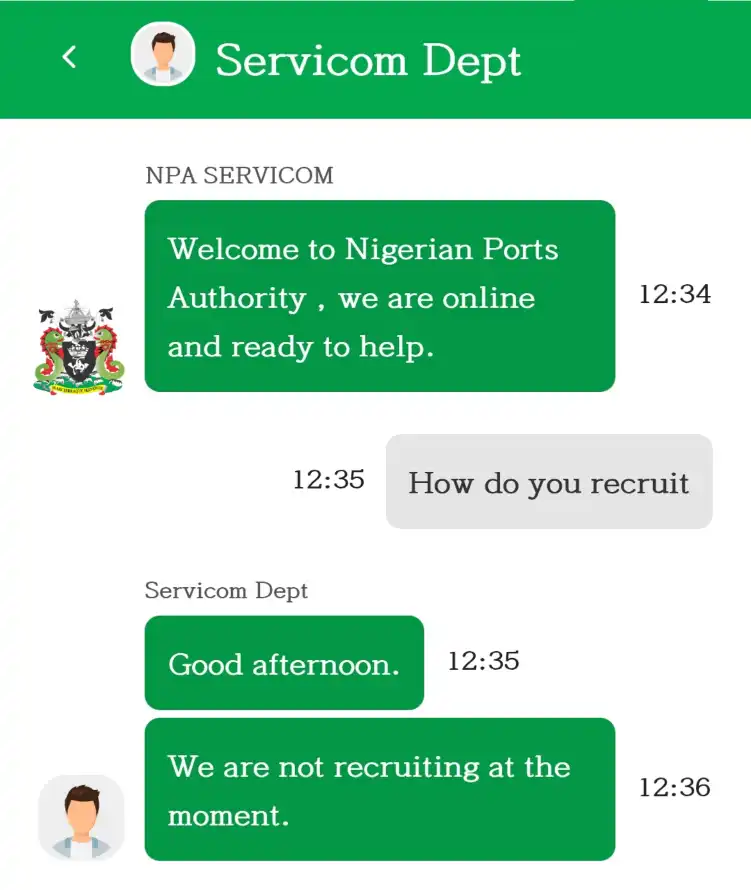
Nigeria Startup News contacted the Nigerian Ports Authority on Friday to verify the claims and clarify whether any recruitment exercise is currently ongoing.

In response to the enquiry, the authority stated clearly that it is not recruiting at the moment.

“We are not recruiting at the moment,” the agency said in its response to Nigeria Startup News.

The clarification comes as the keyword Nigeria Ports Authority recruitment continues to trend online, with many Nigerians searching for information about possible job openings at the federal government agency.

Many of the posts circulating online appear to be speculative recruitment guides or recycled information from previous years, which often causes confusion among job seekers.

The Nigerian Ports Authority is responsible for managing and operating Nigeria’s seaports and related port infrastructure. Because it is a federal government agency, job opportunities within the organisation are highly sought after.

When the authority conducts recruitment, vacancies are usually announced publicly through official channels, particularly on the careers section of its website.

Applications are typically submitted online, after which shortlisted candidates may be invited for screening, tests or interviews depending on the position.

The last widely documented recruitment exercise by the Nigerian Ports Authority took place in 2016, when the agency advertised several technical and trainee positions related to port and marine operations.

Some of the roles advertised at the time included trainee seamen, marine engineering trainees, pilot trainees and other maritime related positions required for port operations.

Since that recruitment cycle, there have been no widely confirmed large scale hiring announcements from the authority.

For now, the Nigerian Ports Authority has confirmed that it is not conducting any recruitment exercise. Any future recruitment opportunities will likely be announced through the authority’s official website and other verified communication channels.

Job seekers are therefore advised to rely on official updates from the Nigerian Ports Authority rather than unverified posts circulating online.

Benue to distribute 2 million clean cookstoves to households, with incentives

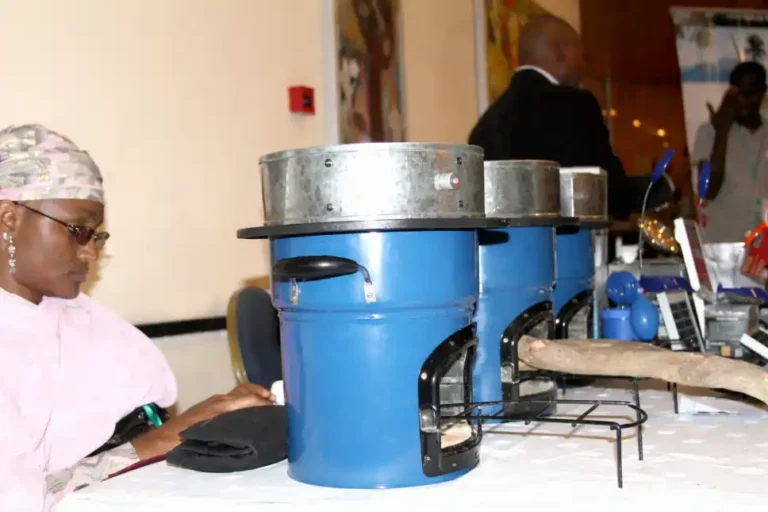
The Benue State Government has announced plans to distribute two million clean cookstoves to households across the state as part of efforts to reduce dependence on firewood, cut carbon emissions and improve household welfare.

The initiative is being implemented through a partnership with Greenplinth Africa and was formalised through a Memorandum of Agreement signed during the Green Conference held in Lagos.

The programme is expected to reach millions of households, particularly in rural communities where firewood remains the primary cooking fuel.

According to stakeholders, the large-scale cookstove distribution will help reduce environmental damage caused by deforestation while also addressing indoor air pollution that affects many households.

Director-General of the Benue State Council on Climate Change, Dr Daniel Mailumo, said the initiative would provide safer cooking alternatives while supporting the state’s environmental goals.

“The deployment of clean cookstoves to Benue means rural women will no longer rely on firewood but on low-emission alternatives. This will help us protect our environment as we drive towards net-zero emissions,” Mailumo said.

Under the programme, each beneficiary household will receive two clean cookstoves designed to burn cleaner fuels and reduce smoke emissions during cooking.

In addition to the cookstoves, households will also receive stainless steel cooking pots and 40 kilograms of farm waste briquettes produced from agricultural residues such as rice husks.

Officials said the briquettes will serve as an alternative fuel source, reducing the need for firewood while creating economic value from agricultural waste.

Deputy Managing Director and Chief Finance Officer of Greenplinth Africa, Babatunde Aina, said the agreement reflects a firm commitment to delivering the project.

“A memorandum of agreement means we are going to do it,” Aina said, explaining that the programme would also generate economic opportunities while reducing carbon emissions.

Aina further revealed that households participating in the initiative will receive monthly financial incentives in addition to the cooking equipment provided.

He also noted that beneficiary families will be enrolled in a health insurance scheme aimed at improving access to healthcare.

“We want to ensure the girl-child has more time to study and mothers are protected from respiratory ailments caused by smoke inhalation,” Aina said.

According to him, the project addresses several social and environmental challenges at once, including rural poverty, indoor air pollution and deforestation.

Women and girls are expected to benefit significantly from the programme because they are often responsible for gathering firewood and cooking in many households.

The introduction of cleaner cookstoves is expected to reduce the health risks associated with inhaling smoke from traditional firewood stoves.

A member of Greenplinth Africa’s management team, Salisu Dahiru, said the initiative forms part of a broader effort to expand climate solutions across Nigeria.

Dahiru explained that similar programmes are being developed to distribute millions of cookstoves and expand large-scale tree planting projects linked to carbon credit systems.

He also noted that Nigeria’s climate governance framework, including the Climate Change Act, provides legal backing for emission reduction efforts across federal, state and local governments.

According to him, partnerships between governments and private sector organisations are helping accelerate climate action and deliver practical environmental solutions.

Stakeholders at the conference said the Benue initiative could become a model for other states seeking to promote cleaner energy use while improving the livelihoods of households.