Home Blog Page 85

AGESI Launches 2026 Executive Green Economy Training for Africans

0

The (AGESI) has unveiled a new set of programmes aimed at equipping Africa’s top leaders with the tools required to drive the continent’s transition to a green economy. The institute disclosed this in its 2026 Executive Training Catalogue, describing the initiative as a strategic response to what it called the defining economic and geopolitical opportunity of this generation.

According to the catalogue published on its website, the new curriculum goes beyond traditional academic instruction. Instead, it adopts what AGESI describes as a “practice-driven” format tailored for senior decision-makers, including cabinet ministers, chief executives, and investment leaders. The institute explained that the goal is to provide leaders with actionable strategies that can be applied directly within government, finance, and industry.

Courses are built around a structured concept known as the Leadership Pillar. Under this model, each programme is guided by a senior expert responsible for ensuring that discussions and lessons remain connected to real-world policy and market realities. This approach is designed to keep participants focused on solving practical challenges rather than theoretical debates.

AGESI’s Programme Director, Prof. Folake Anjorin, noted in the opening message of the catalogue that the global economy is undergoing a transition of historic proportions. She stated that for Africa, the shift represents more than an environmental obligation. It is, in her words, the defining economic and geopolitical opportunity of the continent’s generation.

The 2026 training schedule includes 16 week-long modules. These will be delivered both physically at AGESI’s Lagos campus and through a virtual learning platform, allowing flexibility for participants across different regions. The Chief of Patrons, Prof. Babatunde Alo, said each programme was carefully designed to reflect the realities of African governance, finance, industry, and community development. He explained that the curriculum combines global expertise with African experience to prepare leaders who can manage complexity, negotiate effectively, and deliver sustainable outcomes.

The Executive Director of AGESI, Dr. Eugene Itua, described the courses as immersive and grounded in everyday leadership challenges. He said they cover issues ranging from climate finance and industrial policy to natural capital valuation, urban resilience, and inclusive governance. According to him, every module is structured to strengthen decision-making capacity, sharpen strategic thinking, and build the confidence required to lead transformative change.

Key courses include The Green Economy: A Strategic Imperative; Green Finance & Climate Budgeting: From Strategy to Execution; Sustainable Aviation & Green Transport: Policy for a Connected Continent; Blue Economy Strategy: Maritime Governance & Ocean Wealth; and High-Stakes Negotiation: Strategy & Deal-Making for National Development. These topics are aimed at translating policy vision into measurable economic and developmental results.

AGESI emphasised that its approach is distinctly African. Dr. Itua stated that the institute does not import external models but instead co-creates solutions suited to Africa’s unique context and aspirations. Training delivery combines expert-led sessions with negotiation simulations, policy labs, and case studies to enhance practical learning.

Participants who complete three courses will qualify for an AGESI Executive Certificate. A 15 percent discount is available for advance registrations within this pathway, while teams of three or more from the same organisation can access a 10 percent group discount.

As Africa faces growing pressure to balance economic growth with climate resilience, AGESI positions its 2026 programme as a strategic investment in leadership capacity, aimed at enabling the continent to shape its own future in a rapidly changing global order.
Advertisement

UNDP, BOA to Launch One Million Hectare Tree Crop Programme

0

The United Nations Development Programme and the Bank of Agriculture have signed a Memorandum of Understanding aimed at transforming Nigeria’s agricultural financing architecture and launching a One Million Hectare Tree Crop Programme.

The agreement was signed on Thursday at the UN House in Abuja. The event also featured the symbolic handover of ICT equipment to strengthen BOA’s institutional capacity and improve its operational systems.

Speaking at the ceremony, UNDP Resident Representative, Ms Elsie Attafuah, said Nigeria’s ongoing economic reforms must produce real and visible benefits for citizens.

“Nigeria is in the middle of one of the most consequential reform cycles in decades,” she said, citing foreign exchange reform, fuel subsidy removal, fiscal restructuring and energy liberalisation.

“But reforms only matter when they are felt by households when they translate into food on the table, incomes in rural communities, jobs for young people, and exports that stabilise the naira,” she added.

Attafuah stressed that agriculture remains central to delivering the dividends of reform. She noted that food systems are Nigeria’s largest employer and also a major driver of inflation.

“If we get agricultural transformation right, we strengthen economic stability, social cohesion, and public confidence all at once,” Attafuah stated.

She commended President Bola Ahmed Tinubu for what she described as bold leadership that has brought the Bank of Agriculture back onto a reform and delivery pathway.

According to her, the new partnership goes beyond symbolic cooperation and is designed to rebuild the country’s agricultural financing structure.

“This partnership with the Bank of Agriculture is therefore not about cooperation in principle. It is about rebuilding Nigeria’s agricultural financing architecture,” she said.

Attafuah explained that the MoU would anchor BOA’s institutional transformation within a national delivery and financing framework. She said the structure is designed to crowd in climate finance, development finance and private capital into the agricultural sector.

She also highlighted the importance of the ICT support provided during the event.

“The symbolic handover of ICT equipment today is not trivial. Institutions deliver development. Without modern systems, data, and operational tools, no financing architecture can work,” she said.

Outlining what success would look like, Attafuah said, “Success is not an MoU on the shelf. Success is bankable investment pipelines in priority states and regions; blended finance vehicles absorbing climate and private capital; functioning farmer registries and credit systems; PPPs delivering processing capacity; and measurable gains in food security, rural incomes, exports, and jobs within the next 24–36 months.”

In his remarks, BOA Managing Director and Chief Executive Officer, Mr Ayodeji Sotinrin, said the partnership would be judged strictly by results.

“We did not come here today for the photographs, the handshakes, or the press releases. Nigeria has had enough of those. Our farmers have had enough of those. What our people need, and what this country deserves are results,” he said.

“The value of this MOU will be measured not in the elegance of its language, but in the number of farmers who access finance for the first time; in the hectares brought under cultivation; in the jobs created for our young people; in the dollars of foreign exchange earned from agricultural exports; and in the communities transformed.”

Sotinrin described the partnership as a strong signal of confidence in what he called BOA 2.0.

“When UNDP chooses to anchor a flagship agricultural transformation partnership with an institution, it is making a statement. That statement, today, is this: the United Nations believes in BOA 2.0,” he said.

At the centre of the partnership is the One Million Hectare Tree Crop Programme, described as a presidential initiative to cultivate economic tree crops such as cashew, oil palm, coffee and rubber across the federation.

“This is not a feasibility study. It is not a pilot. This initiative is a commercially designed, nationally scaled programme to put one million hectares of productive economic tree crops into the ground with the financing, the technical frameworks, the performance monitoring, and the partnership ecosystem to back it up,” Sotinrin said.

He explained that the programme would be rolled out in phases. The first phase will cover 200,000 hectares through nucleus estates and cooperatives. The second phase will scale to 400,000 hectares supported by processing centres. The final phase will reach one million hectares integrated into export value chains and carbon credit frameworks.

Sotinrin said 70 per cent of the programme would be allocated to commercial entities under performance-based concessions, while 30 per cent would support citizens, including smallholders, schools, cooperatives and members of the National Youth Service Corps.

“The expected outcomes are clear: over 2 million direct and indirect jobs created through nurseries, planting, processing, and export. Five national tree crop value chains established. Significant foreign exchange earnings, Reforestation of degraded lands, Carbon sequestration certified and monetised,” he stated.

He called on commercial banks, impact investors, processors and development partners to co-finance and support the initiative to ensure its successful implementation across the country.

Zamfara distributes 3,920 bags of NPK, 1,956 urea for farming

0

Governor has distributed fertilisers, farm inputs and equipment to support dry-season farming across Zamfara State, as part of efforts to boost food production and strengthen livelihoods.

The distribution was officially launched on Thursday at the Fadama III facility of the Ministry of Agriculture in Gusau.

According to a statement issued by the governor’s spokesperson, Sulaiman Idris, the items provided are critical to improving crop yields, cutting post-harvest losses and encouraging sustainable farming practices in the state.

The materials distributed include 3,920 bags of NPK fertiliser, 1,956 bags of urea fertiliser, 3,920 litres of herbicide, 1,956 litres of insecticide and 3,920 sachets of seed-dressing chemical. These inputs are expected to support farmers during the dry season and help them increase productivity.

Speaking at the event, the governor said the programme forms part of wider steps his administration is taking to grow agricultural output, improve food security and raise living standards in Zamfara.

He said, “We are all aware that farming is the backbone of our economy, and it is our responsibility to support farmers with the necessary resources to thrive.

“The distribution of these fertilisers, inputs and other farm equipment is to bolster dry-season farming across the nation, including Zamfara State.

“NG-CARES programmes have provided the foundation for the state government to achieve remarkable milestones in the agricultural sector.

“Farm input support programmes conducted in preceding years for dry-season farming in the state have reached tens of thousands of smallholder farmers, who also benefited from improved seeds, agrochemicals and agronomic guidance.”

The governor urged beneficiaries to make proper use of the items and ensure they are applied effectively on their farms.

“It is our ardent hope that these initiatives will provide the necessary impetus for sustainable agricultural development not only in Zamfara State but across the nation.

“Our administration will continue to leverage these programmes to sustainably produce food and reduce the country’s heavy reliance on food imports.

“It is a known fact that our challenges today are mostly associated with insecurity.

“As we provide our farmers with these items, we will also continue to strengthen the security architecture of our communities to achieve our goals.

“We will also continue to provide similar interventions and develop new policies and programmes to address emerging challenges.

“Let us work together to secure our environment, cultivate and harvest more, and build a prosperous Zamfara State,” he said.

Governor Lawal also acknowledged the backing of development partners and the Federal Government in driving the NG-CARES programme in the state.

“Finally, I want to acknowledge the support of our development partners and the Federal Government for their commitment to the NG-CARES programme.

“There is no doubt that the NG-CARES programme has significantly improved yields, incomes and food security by combining inputs with behavioural enablers, including seed adoption, advisory services and peer learning.

“We are committed to cooperating with you to ensure seamless implementation of developmental policies and programmes initiated, particularly in the agricultural sector, for the overall development of our dear state,” he said.

FG to establish ranches, livestock service centres to end Benue conflicts

0

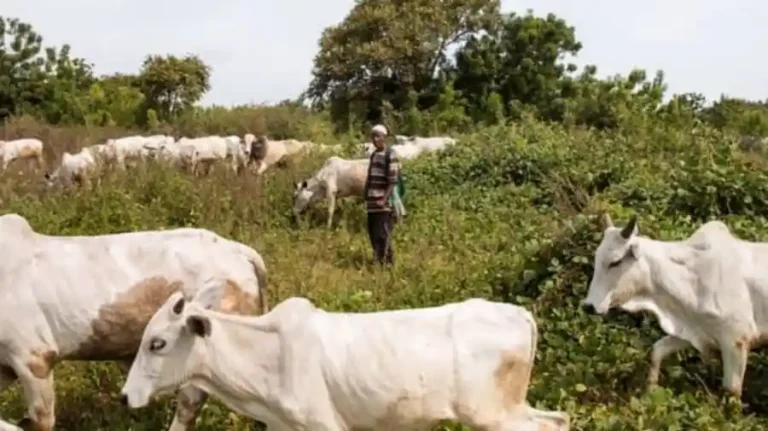
The Federal Government says it plans to establish ranches and modern Livestock Service Centres in Benue State as a major strategy to curb persistent farmer-herder conflicts and restore stability to rural communities.

This position was restated by the Minister of Livestock Development, Idi Mukhtar Maiha, during the inauguration of the Benue State Commission for Peace and Reconciliation at the Benue Peace Summit held in Makurdi on February 25, 2026. Speaking on behalf of President Bola Ahmed Tinubu, the minister acknowledged the deep pain and disruption caused by years of violent clashes.

“We acknowledge the immense pain and loss that the people of Benue have endured,” he said, noting that farmer-herder conflicts and insecurity have claimed lives, displaced families, and threatened the state’s reputation as the “Food Basket of the Nation.”

According to him, recurring violence linked to open grazing, cattle rustling, reprisals, and the breakdown of traditional dispute resolution mechanisms cannot be solved by temporary measures alone. He stressed that structural solutions rooted in economic collaboration are required. “What we are preaching today is that part of the mission of this Peace Commission is to stabilise the countryside through practical mechanisms and frameworks that transform livestock into a vehicle for prosperity, not conflict,” he said.

A key part of that plan is to move away from uncontrolled grazing and instead promote organised ranching systems supported by modern infrastructure. The minister disclosed that more than 13 livestock facilities across Benue, many built over four decades ago, are currently in disrepair. The Federal Government is ready to partner with the state under a Public-Private Partnership model to rehabilitate and modernise these facilities into fully functional Livestock Service Centres.

The facilities listed include the Yandev Pig Progeny Centre, small ruminant ranches, abandoned abattoirs, pasture development areas, and other livestock production assets. Once revived, they are expected to serve as structured hubs for breeding, processing, feed production, and animal health services.

Maiha described Benue as a land blessed with fertile soil but burdened by recurring violence. He said the livestock value chain presents opportunities to engage young people in productive work. “From pig breeding to small ruminant fattening, from modern abattoirs to feedlot estates and pasture cultivation, the value chain is vast,” he stated, adding that organised livestock development could create decent jobs and reduce tensions.

Governor Hyacinth Alia, represented by Deputy Governor Sam Ode, said the Benue State Strategic Plan for Peace and Reconciliation (2026–2030) provides a homegrown framework for dialogue, justice, and early warning systems to prevent conflict. Development partners, including CARE International and International Organization for Migration, also called for sustained support to help stabilise affected communities and enable displaced persons to return home safely.

APC Donates ₦100m to Akwa Ibom State University for Research

0

The National Chairman of the All Progressives Congress (APC), Professor Nentawe Goshwe Yilwatda, has announced a personal donation of ₦100 million to Akwa Ibom State University to support cutting-edge research with direct societal and economic impact.

He also pledged to link the Vice Chancellor of the University with appropriate authorities in the United States of America to facilitate the establishment of a world class institute on the university campus. According to him, this will position students of the institution to become globally competitive.

Professor Yilwatda made the announcement as part of his advocacy for repositioning Nigerian universities as engines of innovation, national development, and global competitiveness. He stated that the grant is dedicated to strengthening research output that addresses pressing national challenges and converts academic knowledge into practical solutions.

According to him, research is the soul of a world-class university, but research without impact remains ineffective unless it illuminates society, informs policy, and fuels innovation.

He noted that Nigeria’s investment in research remains below 0.5 per cent of GDP, far below the OECD benchmark of 2 per cent. He described this gap not as a limitation, but as a clear opportunity for visionary intervention and strategic investment.

Professor Yilwatda explained that the research fund is expected to prioritise high-impact areas critical to Nigeria’s present and future. These include flood modelling in coastal regions, climate adaptation strategies in the Niger Delta, optimisation of offshore oil production, sustainable fisheries management, and renewable energy integration.

He emphasised that emerging technologies such as artificial intelligence-driven modelling, big data analytics, and global digital research platforms must be deployed to move research from abstract theory to tangible societal impact. He added that this is particularly important in resource-rich and environmentally sensitive regions like Akwa Ibom State.

Drawing lessons from global best practices, the APC Chairman referenced leading institutions such as the Massachusetts Institute of Technology and Stanford University, where interdisciplinary research and strong industry linkages have driven regional development and global innovation ecosystems.

He stressed that Akwa Ibom State University has the potential to replicate such success by aligning research with local strengths while maintaining a global outlook.

In addition to the financial donation, Professor Yilwatda proposed to increase the research grant if the initial ₦100 million is transparently and effectively utilised. He further pledged to personally supervise and monitor the implementation of the research projects to ensure accountability, excellence, and measurable outcomes.

He also highlighted the importance of international collaboration and digital connectivity, noting that modern universities must operate locally while competing globally. Through virtual research clusters, co-supervised doctoral programmes, and online visiting scholars, Akwa Ibom State University, he said, can position Uyo as a visible node in the global knowledge network.

Professor Yilwatda reaffirmed that strengthening research must go hand in hand with improving the quality of teaching and learning.

He advocated the adoption of blended learning models, AI-driven adaptive systems, virtual laboratories, and immersive simulations, especially in marine biology, offshore engineering, and energy analytics, to prepare students for a technology-driven global economy.

Describing the donation as both a commitment and a challenge, he urged the university community to see research funding not as an entitlement, but as a responsibility to deliver solutions that uplift society, strengthen industry, and advance national development.

“This intervention is about building capacity, credibility, and confidence in Nigerian research. When research is impactful, universities become catalysts of development, and nations become globally competitive,” he said.

The donation marks a significant milestone in the partnership between leadership, academia, and national development, reinforcing the shared vision of transforming Akwa Ibom State University into a globally relevant centre of excellence.

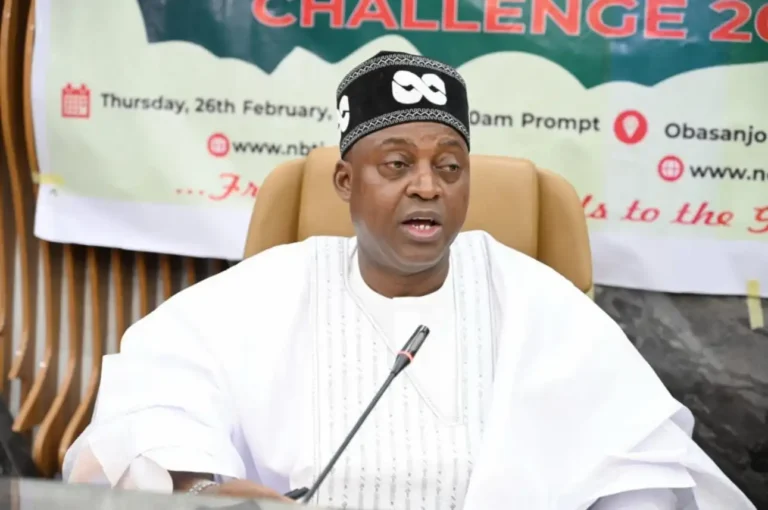
NBTI Launches NextGen Innovation Challenge 2026, Portal Opens Nationwide

0

The National Board for Technology Incubation (NBTI) has officially unveiled the NextGen Innovation Challenge 2026 in Abuja, describing it as a defining moment in Nigeria’s push toward a globally competitive and innovation-driven economy.

The initiative, launched under the leadership of the Director General and Chief Executive Officer, Dr. Kazeem Kolawole Raji, marks the opening of the application portal for innovators across the country.

According to NBTI, the NextGen Innovation Challenge 2026 is calling on Nigeria’s brightest innovators, researchers, startups, inventors, academics, students, entrepreneurs, and technology-driven enterprises to submit market-ready and scalable solutions with clear commercial value and strong investment potential.

The board stated that this year’s edition has been deliberately structured to move beyond concepts and pitch decks. It focuses on validated innovations capable of real-world deployment, revenue generation, job creation, and global competitiveness. NBTI described NextGen 2026 as “not merely a competition—it is a structured commercialization pipeline aligned with NBTI’s statutory mandate to nurture, incubate, and accelerate indigenous technologies into viable enterprises.”

The agency added that “Nigeria’s next global technology champions will emerge from this platform.”

Entries are invited across critical high-impact sectors aligned with Nigeria’s development priorities and emerging global technology frontiers. These include Artificial Intelligence and Robotics; Advanced Semiconductors and Digital Infrastructure; Software Engineering and Advanced Design; Telecommunications with 6G and AI Integration; Green and Renewable Energy Technologies; Climate Resilience and Flood Detection Systems; Climate-Smart and Environmental Solutions; Safety, Surveillance and Smart Tracking Technologies; Agri-tech, Health-tech and Edu-tech; 3D Automation and Additive Manufacturing; Virtual Reality and Immersive Technologies; as well as Women-in-Tech and Gender-Inclusive Innovations.

NBTI noted that these domains reflect Nigeria’s ambition to strengthen industrial capacity, deepen technological sovereignty, enhance climate resilience, and expand inclusive economic participation.

The 2026 edition is also reinforced by strategic global partnerships, including Innovate UK, Teesside University in the United Kingdom, Google, Cambridge Alternative Finance, the Commonwealth Investment Network (CIN), and international climate-finance partners. These institutions are expected to provide structured mentorship, commercialization pathways, investor matchmaking, and access to global markets and financing ecosystems.

Programme milestones include Innovation Boot Camps scheduled for July 2026 in Abuja, where participants will undergo intensive training, product validation, commercialization refinement, and investor-readiness acceleration. This will be followed by a Global Grand Finale in October 2026 in London, where selected innovators will pitch before international investors, policymakers, development institutions, and global industry leaders.

NBTI stated that all submissions will be assessed using the Technology Readiness Level (TRL) framework to ensure objective and transparent evaluation based on technological maturity, functionality, scalability, and market readiness. The board emphasized that “the 2026 edition is strictly merit-driven.”

As part of its commitment to investment-ready innovation, NBTI has secured 20 exclusive Innovate UK-backed commercialization slots for advanced innovations with Minimum Viable Products (MVPs). These slots are reserved for technologies that have successfully passed proof-of-concept, demonstrated operational functionality, and reached early-stage commercial deployment. Selected innovators will receive accelerated incubation support, priority investor exposure, and structured pathways to international markets.

The application deadline is 28 March 2026, and innovators are encouraged to apply early through the official portal at nextgeninnovation.ng.

World Bank Plans $500m Agriculture Loan for Nigeria in March 2026

0

The World Bank plans to approve a new $500 million loan to Nigeria in March 2026, targeting the agriculture sector as part of efforts to improve food production and strengthen value chains across the country.

The proposed funding will come from the International Development Association (IDA), the concessional lending arm of the World Bank that provides low-interest loans to developing countries. With the Federal Government as the borrower, the project is expected to be implemented by the Federal Ministry of Agriculture and Food Security in collaboration with participating states.

According to details of the plan, the $500 million facility is designed to boost agricultural productivity, improve access to inputs and infrastructure, support value chain development, and create jobs in farming and agribusiness. The intervention is also expected to contribute to food security and reduce pressure on food prices if properly executed.

Farmers and agriculture experts in Lagos have reacted to the proposed loan with cautious optimism. The acting chairman of the All Farmers Association of Nigeria (AFAN), Lagos chapter, Shakin Agbayewa, described the development as positive but stressed the need for transparency and proper implementation. He noted that while funding is important, execution has often been the major challenge in past interventions.

An agriculture analyst and farmer, Omotunde Banjoko, also emphasized the importance of accountability in the disbursement process. He said the loan could make a real impact if properly managed, but raised concerns about how similar funds were allocated in the past. According to him, stakeholders are waiting for full details of the programme to understand which subsectors and regions will benefit.

As March 2026 approaches, attention is now on how the proposed World Bank loan will be structured, monitored, and implemented to ensure that it delivers measurable results for farmers across Nigeria.

FG launches 6 million youth agriculture training programme

The Federal Government has officially launched a new initiative to train over six million Nigerian youth in modern agriculture and agribusiness following a landmark partnership with the International Institute of Tropical Agriculture (IITA).

The Honourable Minister of Youth Development, Comrade Ayodele Olawande, unveiled the strategic collaboration between the Federal Ministry of Youth Development and IITA, describing it as a transformative step toward building a new generation of skilled young agriculturists across the country.

The programme is designed to expand access to land through selected National Youth Development Centres, which will now serve as Agriculture Hubs under the Youth in Agriculture Programme. These hubs are expected to function as integrated platforms for training, production, innovation, and market access. The initiative also aligns with the Ministry’s One Youth, Two Skills agenda, which seeks to create sustainable pathways to employment and entrepreneurship.

Under the partnership, young Nigerians will receive practical and climate-smart agricultural training, with a strong focus on digital innovation in agribusiness. The goal is not just to teach farming techniques but to equip youth with modern tools, business knowledge, and technology-driven solutions that will enable them to compete locally, regionally, and globally.

Before the formal launch, the Minister had visited Ibadan, Oyo State, to engage IITA in discussions aimed at firming up the partnership and designating selected National Youth Development Centres as Agriculture Hubs. According to him, agriculture remains one of Nigeria’s most powerful tools for economic diversification, food security, and wealth creation.

He emphasized that young people must not be seen merely as beneficiaries of government programmes but as drivers of innovation, productivity, and sustainability within the agricultural value chain. By positioning youth at the centre of agricultural transformation, the initiative aims to unlock enterprise development opportunities and strengthen national prosperity.

The programme is aligned with the Renewed Hope Agenda of President Bola Ahmed Tinubu and brings together state governments, development partners, research institutions, and the private sector to ensure inclusive participation across all geopolitical zones.

With over 60 percent of Nigeria’s population made up of young people, the government sees agriculture as a major pathway for job creation and economic growth. Through structured training, access to land, and exposure to innovation, the initiative seeks to build a resilient agricultural ecosystem that supports youth-led enterprises.

The Federal Government maintains that the future of agriculture in Nigeria is youth-driven, and this partnership with IITA marks a significant step toward securing the country’s food future while creating millions of opportunities for young Nigerians.

CREDICORP Disburses ₦37bn Consumer Credit to 200,000 Nigerians

0

The Nigerian Consumer Credit Corporation (CREDICORP) has disbursed over ₦37 billion in consumer credit to more than 200,000 Nigerians, with more than half of the beneficiaries accessing formal credit for the first time.

This milestone was highlighted in Abuja during the inauguration of the Board of CREDICORP by Vice President Kashim Shettima on behalf of President Bola Ahmed Tinubu. The event marked a significant step in strengthening Nigeria’s consumer credit system and expanding financial access to working citizens across the country.

Speaking at the ceremony, the Vice President said the progress recorded by CREDICORP within its first year of operations shows that structured consumer credit can play a major role in improving the quality of life for Nigerians. He noted that access to affordable credit is essential to the country’s ambition of building a one-trillion-dollar economy.

According to him, the establishment of CREDICORP is aimed at creating a trusted credit infrastructure, reducing borrowing costs through catalytic capital, and addressing long-standing cultural resistance to credit usage. He explained that many hardworking Nigerians struggle to meet important needs because they must pay for major expenses upfront.

“A civil servant who earns honestly does not have to chase sudden wealth just to buy a vehicle, or save for ten years to buy one. A young professional should not remain in darkness simply because solar power must be paid for all at once,” he said.

The Vice President emphasized that closing the gap between access to capital and human dignity is necessary for sustainable economic growth. He added that CREDICORP has been specifically tasked with bridging the trust gap between lenders and borrowers by building strong credit infrastructure and offering wholesale capital and credit guarantees through its portfolio company.

He further stated that the goal is to enable access to consumer credit for at least 50 percent of working Nigerians by 2030.

Addressing members of the newly inaugurated board, the Vice President said their role is not ceremonial. He described them as custodians of the institution’s mission and stressed that the long-term strength of CREDICORP will depend on their vigilance, integrity, sacrifice, and commitment.

He directed the board to strictly uphold Public Service Rules, the Board Charter, and all applicable governance frameworks, noting that accountability and responsible management of public resources are non-negotiable.

Chairman of CREDICORP, Otunba Aderemi Abdul, thanked President Tinubu for his vision in establishing the corporation and for the confidence placed in the board. He described the creation of CREDICORP as an important step toward strengthening Nigeria’s financial architecture.

He assured that the board understands its responsibility and will guide the institution to deliver meaningful benefits to Nigerians.

Managing Director and Chief Executive Officer of CREDICORP, Engr. Uzoma Nwagba, said the vision behind consumer credit has been consistent for years. He noted that within 18 months, the institution has impacted more than 200,000 Nigerians, including students.

He added that the team views their appointments as a rare opportunity to contribute to a system that can transform financial access across the country.

FG opens NiYA Gigs for employers to hire over 40,000 Nigerians

0

The federal government has officially opened NiYA Gigs to employers, giving access to more than 40,000 skilled Nigerian youths ready to work. The platform is designed to empower Nigerian freelancers and help them earn through both local and global opportunities, while allowing clients from anywhere in the world to hire with ease.

NiYA Gigs is part of the broader NiYA Ecosystem, an initiative powered by the Federal Ministry of Youth Development to create real work opportunities and income streams for young Nigerians. The platform serves as a national gateway for youths to access freelance jobs, gain global exposure, and actively contribute to Nigeria’s growing digital economy.

Backed by the Federal Ministry of Youth Development, NiYA Gigs reflects the government’s commitment to youth employment, digital participation, and financial independence. The initiative removes traditional barriers to entry and allows young Nigerians, from major cities to rural communities, to access quick work opportunities and earn in their local currency without leaving their homes.

The federal government explained that NiYA Gigs strengthens digital workforce participation, offers safe and secure payments, supports all skill levels, and is built for the future of work. They described it as more than just a freelance marketplace, calling it “a national movement to elevate Nigerian talent and channel youthful energy into productivity, innovation, and income generation.”

Employers can hire verified talent in tech, creative services, finance, and other sectors nationwide and globally. Clients on NiYA Gigs can come from Nigeria, across Africa, or anywhere in the world. Individuals, startups, and large organisations can post gigs, hire freelancers, and make secure payments directly through the platform.

On client protection, the platform stated, “Payments are held securely in escrow until the freelancer delivers the work and you approve it. If the work isn’t delivered as agreed, you can request a refund.” It also added, “Our support team is available to mediate fairly in case of disputes.” Verified profiles, ratings, and reviews are also provided to ensure trust and transparency.

Employers are encouraged to join the movement and hire a youth through gigs.niya.gov.ng.