Home Blog Page 93

DBN entrepreneurship training programme (ETP) with grant for MSMEs

0

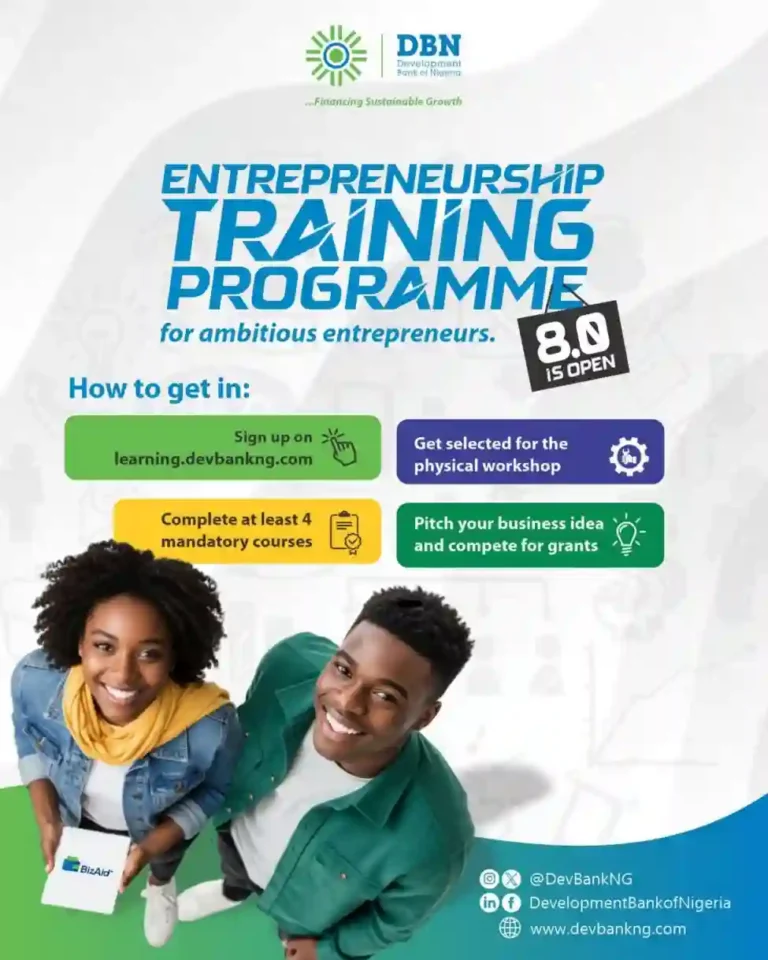
Applications are now open for the DBN Entrepreneurship Training Programme (ETP) 8.0, offering free online courses and the opportunity to access grants after successful completion.

Every business has potential, and every entrepreneur deserves the right support to grow and scale. Since 2019, the Development Bank of Nigeria (DBN) Entrepreneurship Training Programme has empowered thousands of MSMEs across Nigeria with practical business skills. The programme helps entrepreneurs formalise their enterprises, improve access to finance, increase revenue, and expand their market reach.

With DBN ETP 8.0, participants stand a chance to win weekly prizes and compete for business grants. All courses are completely free. Participants can learn at their own pace, gain practical insights from industry experts, and join a community of growth-driven entrepreneurs.

The mission of the programme is to be a leading platform that empowers Nigerian MSMEs by providing access to financial resources, business knowledge, and networking opportunities. It aims to foster sustainable growth and innovation within the business community.

Interested applicants are encouraged to sign up on the portal, enrol in the courses, and begin learning immediately. To qualify for the next stage, participants must complete at least four mandatory courses. Successful candidates may then be selected for a physical workshop, where they will pitch their business ideas and compete for grants.

To apply, interested applicant should visit https://learning.devbankng.com/ and submit application online.

Advertisement

Ekiti strengthens NFWP-SU collaboration for grassroots women empowerment

The Ekiti State Ministries of Women Affairs and Social Development, and Trade, Industry, Investments and Cooperatives have strengthened collaboration under the Nigeria for Women Programme Scale-Up (NFWP-SU) to enhance women’s economic empowerment at the grassroots.

The commissioners, Mrs Olapeju Babafemi and Mrs Tayo Adeola, made this known at a strategic meeting held in Ado-Ekiti. They explained that the partnership is being driven through the World Bank-assisted Nigeria for Women Programme Scale-Up.

Babafemi reaffirmed Gov. Biodun Abayomi Oyebanji’s commitment to women’s economic empowerment in the state. She noted that women play critical roles in local commerce, especially in agriculture, trading and small-scale enterprises.

According to her, the programme’s multi-sectoral coordinating structure, which includes cabinet members from relevant ministries, reflects its multi-dimensional impact. She explained that under the initiative, women are organised into Women Affinity Groups (WAGs) to access mentorship, funding, markets and other economic opportunities.

Babafemi also commended the contributions of the governor’s wife to women’s empowerment initiatives across communities, describing the efforts as impactful.

In her remarks, Adeola expressed her ministry’s readiness to collaborate with the Ministry of Women Affairs in implementing policies and programmes under the initiative. She said the goal is to strengthen women’s economic capacity across the state.

She added that the meeting focused on improving financial literacy and business management skills of women entrepreneurs in line with programme guidelines.

Top officials at the meeting included the State Project Coordinator, Mrs Toyin Familoni; the Permanent Secretaries of the two ministries, Mrs Olusola Adeluyi-Femi and Mr Bunmi Ejimokun; as well as directors from both ministries. The meeting ended with the adoption of a joint action plan.

FG transforms root and tuber programme into RTIED for export growth

0

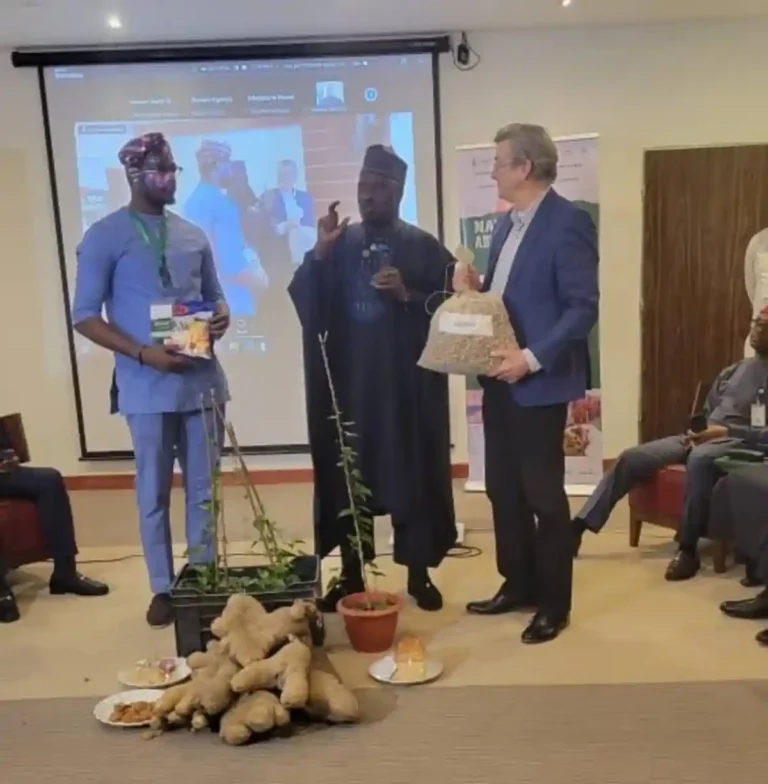
The Federal Government has announced the transformation of the former Root and Tuber Expansion Programme (RTEP) into the Root and Tuber Industry and Export Development (RTIED) Programme, as part of efforts to reposition yams and other root crops for stronger policy backing and export growth.

The Minister of State for Agriculture and Food Security, Aliyu Abdullahi, made this known in Abuja at the National Yam Advocacy Summit organised by the International Institute of Tropical Agriculture (IITA) in collaboration with the Federal Ministry of Agriculture and Food Security.

“Accordingly, I wish to inform this summit that the old Root and Tuber Expansion Programme has now been transformed into the Root and Tuber Industry and Export Development Programme under the Federal Department of Agriculture.

“Yam, along with the various root and tuber crops, are in the process of getting the desired policy attention and actions,” the minister said.

He explained that the reform aligns with the Renewed Hope Agenda of President Bola Tinubu, which prioritises food security and agricultural transformation across the country.

Abdullahi disclosed that Nigeria produces 67.2 million metric tonnes of yams annually, accounting for about 67 per cent of global output. However, he said the country still faces a domestic supply gap of over 50 million metric tonnes when compared with an estimated national demand of 120 million metric tonnes.

He described yams as a Tier-1 crop under the ministry’s “Ramping Up Staple Crops Production for Renewed Hope Food Security” programme. According to him, the government is targeting an increase in yields from 10 metric tonnes per hectare to 30 metric tonnes per hectare, while reducing post-harvest losses from 40 per cent to 25 per cent by 2027.

Also speaking at the summit, IITA’s Deputy Director General (DDG), Partnerships for Delivery and Scaling, Dr Tahirou Abdoulaye, said the Institute was proud to champion yam research and seed system innovations across Africa.

He described IITA as a non-profit institution that generates agricultural innovations to tackle hunger, malnutrition and poverty in sub-Saharan Africa.

“Yam is our crop and only we can work, defend it and ensure it is always available for our people. Yam is among IITA’s mandate crops, and the Institute has extensive research findings on the crop across the entire value chain, from breeding to agronomy and value addition,” he said.

Abdoulaye said that with support from the Bill & Melinda Gates Foundation, now the Gates Foundation, IITA had implemented major seed system improvement initiatives. These include the Yam Improvement for Income and Food Security in West Africa (YIIFSWA I and II) and the ongoing Programme for Seed System Innovation for Vegetatively Propagated Crops in Africa (PROSSIVA).

He noted that years of research had dispelled the myth of low multiplication rates in yam production. He cited innovations such as the Single-Node Cutting (SAH) and leaf-bud cutting technologies as breakthroughs that can rapidly multiply high-quality seed yams.

“These technologies are easy to implement, adaptable to various conditions, and require minimal input. They quickly multiply high-quality seed yams and are recommended for use by national agricultural research institutes and commercial seed companies. Producing yams for export and processing will further enhance its value. Just meeting the needs of our brothers and sisters in the diaspora will be a huge undertaking. Markets also exist in the Caribbean, with potential for demand growth,” he said.

The DDG added that IITA is collaborating closely with the Ministry to share technical expertise and expects the government to leverage research innovations to strengthen the yam value chain.

“The National Yam Advocacy Summit is a good example of collaboration aimed at utilising the seed system to promote development in the yam value chain,” he said.

On his part, Senior Program Officer at the Gates Foundation, Lawrence Kent, said the presence of top officials at the summit underscored the importance of yams to Nigeria and Africa.

“The fact that you are here really signifies the recognition of high-level officials of the importance of yams to this country, to Africa, to your farmers. We’re particularly excited about the use of new technologies as game changers to allow smallholder farmers to improve their productivity. What this team has done, IITA working with the government, has developed a new technology for the production of yam planting material that, for me, is almost a miracle,” he said.

Kent described the leaf-bud cutting system, derived from tissue culture, as “magical,” explaining that it produces disease-free, nematode-free seed yams capable of doubling farmers’ yields.

“Farmers who have the courage to buy them are seeing this doubling in yield, which is wonderful for them, but also wonderful for the nation. As yams’ productivity goes up, opportunities for processing and exports will come into place. We have an opportunity now to double yam productivity and do something wonderful for Nigeria,” he added.

Google Adds Lyria 3 AI Music Generation to Gemini App Beta

0

Google has introduced a new AI-powered music generation feature in its Gemini app, powered by DeepMind’s latest model, Lyria 3.

With this update, users can now ask Gemini to create original 30-second music tracks simply by typing a prompt that describes what they want. Users can also upload an image or video to help set the mood for the song. The tool interprets text descriptions such as genre, mood, or theme and then generates a complete track with instrumental sounds and lyrics.

In addition to the music, the feature creates custom cover art for each track using Google’s Nano Banana image model. It also embeds an AI watermark known as SynthID, allowing people to identify that the content was generated by artificial intelligence.

In a Google Workspace update blog titled “Create custom soundtracks with Lyria 3 in the Gemini app,” the company stated that users who already have access to the Gemini app will automatically receive access to Lyria 3. “To get started, select ‘Create music’ from the tools menu,” the blog noted.

The music generation feature is currently in beta and is available on the Gemini app for both desktop and mobile devices. It supports multiple languages, including English, German, Spanish, French, Hindi, Japanese, Korean, and Portuguese, and is available to users aged 18 and above. Subscribers to Google AI Plus, Pro, and Ultra plans are given higher usage limits.

Google is also integrating Lyria 3 into YouTube’s Dream Track tool, enabling creators to generate custom soundtracks for Shorts and other video content. The company said the feature is designed for fun and personal creative expression, not professional music production, and includes safeguards to avoid copying specific artists’ work.

FG begins National Single Window (NSW) Training

0

The federal government has commenced the National Single Window (NSW) Training, which is set to hold across major cities in Nigeria. Participants can attend at any of the approved venues listed below.

In Lagos, the training will take place at Rockview Hotel, Apapa; ANLCA HQ, Amuwo Odofin; NAGAFF Office, Apapa; Golf View Hotel, Ikeja; Elomaz Hotel, Maryland-Ikeja; and Mambillah Hotel, Ibeju-Lekki.

In Abuja, the venue is Barcelona Hotel, Abuja.

In Kano, the training will hold at BON Hotel, Kano.

In Port Harcourt, participants can attend at Limewood Hotel, Port Harcourt. In Onne, the venue is Kal Classic Hotel Ltd, Port Harcourt, Nigeria.

The training will run from 16th February to 13th March, 2026. Time is 10:00 a.m. prompt daily.

To book, select your preferred venue using the Event Location filter and confirm the event date (for example, the current month) before completing your reservation.

Register now at: https://booking.nsw.gov.ng/

NJFP 2.0 Opens Portal for Host Organization Applications

0

Organizations across Nigeria are being invited to become Host Organizations under NJFP 2.0, as the Nigeria Jubilee Fellows Programme (NJFP) rolls out a new digital system designed to simplify the entire fellowship process.

In today’s fast-changing job market, connecting talented young Nigerians with the right opportunities is more important than ever. That is why the Nigeria Jubilee Fellows Programme (NJFP), a Federal Government of Nigeria initiative funded by the European Union and implemented in partnership with the UNDP, has introduced NJFP 2.0. The upgraded platform is described as a smarter, faster, and more transparent digital system that powers the entire fellowship journey from application to alumni engagement.

According to the programme, the NJFP 2.0 portal makes the process seamless for both fellows and host organizations. Becoming a host organization is quick and fully digital. Interested organizations are required to visit the NJFP portal and click on “Apply as a Host Organization.” Applicants must provide their organization details, CAC number, tax identification number, business address, and contact information, ensuring that all entries match official company records. The programme warns that inaccurate information can delay approval.

The next step requires confirmation of the office’s current location. Applicants must turn on their device GPS and allow location access in their browser so that the system can match the exact location with the address provided. Once the GPS matches, the application is considered complete.

After submission, applications are reviewed by the NJFP team. Approved organizations receive access to a personalized host dashboard where they can add departments, upload focal person details, and manage fellowship activities in one place.

The platform also handles matching and selection. The system’s AI recommends eligible fellows based on discipline, skills, gender, or location. Host organizations can review profiles, invite candidates for interviews, and send offer letters directly through the dashboard. Once a fellow accepts an offer and resumes, the host validates the start date to activate the placement. Attendance tracking, performance monitoring, and monthly feedback submission are done online.

For support or replacements, hosts are advised to use the grievance redress mechanism, which is designed for quick and transparent issue resolution. Throughout the fellowship cycle, host organizations participate in quarterly surveys and submit a final evaluation at the end.

After completion, organizations remain connected through a talent hub that provides access to trained NJFP alumni for future roles or mentorship opportunities.

The programme states that “Host Organizations should contact NJFP directly if a Fellow fails to resume one week after the recommended date or if concerns arise.” It adds that issues must be handled strictly within established processes.

NJFP emphasizes that it “is built on integrity, fairness and professionalism,” warning that any Host Organization or Fellow found engaging in practices that undermine the programme will face disqualification and blacklisting.

FG begins payment of N22,500 TVET stipend to verified Trainees

0

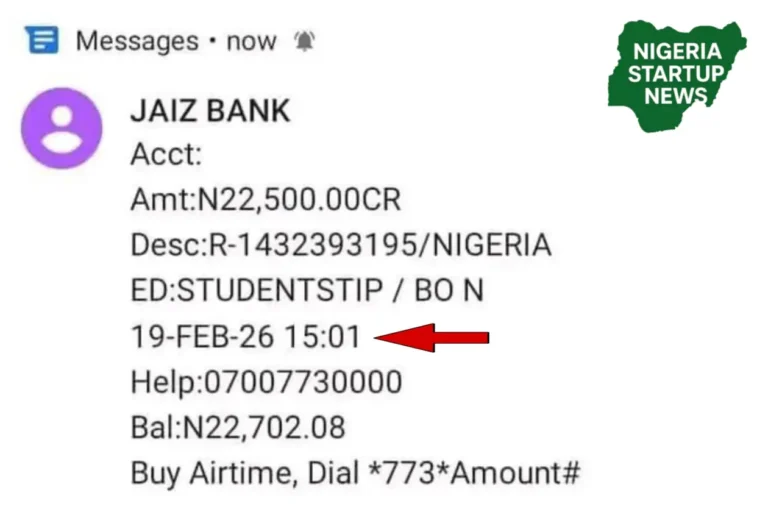
The Federal Government has commenced payment of the N22,500 December stipend for the Technical and Vocational Education and Training (TVET) programme to trainees. Only trainees who completed their biometric verification and have a good attendance percentage on the portal are eligible for payment.

Approved and registered trainees who have been participating at their training centres with a strong attendance record are now receiving credit alerts of N22,500.

One of the SMS notifications reads:

“Amt: NGN22,500.00
CR
Desc: VIA REMITTA
R-/NIGERIA
ED:STUDENTSTIPEN
DSTVETINITIATIVE:CBN:
Date: 2026-02-19
3:10:51 PM”

Payment of the December TVET stipend began on February 19, 2026, as gathered by Nigeria Startup News. Many eligible trainees have confirmed receiving the payment. Some reactions shared on social media include: “TVET initiative second payment for ₦22,500 is ongoing,” “TVET payment is currently going on now, but it’s one month stipend,” and “TVET has commenced payment. I just received mine now.”

The disbursement is being made to trainees who have consistently attended their various training centres and successfully completed their biometric verification.

This development follows an earlier email from the Federal Ministry of Education to training centres dated January 8, 2026, directing mandatory use of biometric attendance devices for all accredited TVET training centres.

Note that it is not mandatory to have 100% attendance to be paid your December stipend.

Trainees whose portal dashboard does not show their attendance record are advised to contact their coordinators promptly to resolve the issue and avoid missing payment.

NIRSAL debits spark complaints over COVID-19 loan repayments

0

From ₦200,000 to over ₦1 million, Nigerians have reported sudden debits from their bank accounts tied to NIRSAL Microfinance Bank. The deductions, marked as GSIRecovery, have reignited debate over COVID-19 loan repayments and consumer rights.

Across Facebook and other social media platforms, affected customers have shared screenshots of transaction alerts showing large withdrawals described as “GSIRecovery… by NIRSAL MICROFINANCE BANK.” Some claim the deductions happened without prior notice, while others say the amounts removed were higher than they expected.

The debits are linked to loans disbursed during the COVID-19 intervention programme introduced by the Central Bank of Nigeria through NIRSAL Microfinance Bank. At the time, thousands of individuals and small business owners received financial support to cushion the economic impact of the pandemic. However, years later, many beneficiaries are now discovering that the funds were structured as loans, not grants.

Under the Global Standing Instruction framework introduced by the Central Bank of Nigeria, banks are permitted to recover overdue loans directly from any bank account linked to a borrower’s BVN. This means that if a customer defaults on a loan, the creditor bank can trigger an automated deduction from other accounts held by the same individual across different banks.

NIRSAL Microfinance Bank has publicly explained that GSI is a regulatory-backed recovery mechanism used for unpaid loans. On its official platforms, the bank has advised customers who notice such debits to contact its customer care channels for clarification.

Despite this explanation, complaints continue to grow online. Some customers insist they were unaware that repayment was still outstanding. Others argue they did not receive sufficient reminders before the deductions were triggered. There are also claims from individuals who say they believed the COVID-19 funds were government grants rather than repayable loans.

News reports have highlighted the scale of the backlash, noting that multiple beneficiaries have accused the bank of carrying out “unexplained withdrawals.” In some cases, affected individuals have called for regulatory intervention, while others are exploring legal action.

Financial analysts note that the controversy reflects a wider issue of loan awareness and financial literacy. During the pandemic, many applicants rushed to access emergency funding. Years later, repayment enforcement has exposed misunderstandings about the loan terms, interest rates, and consequences of default.

Consumer protection advocates say that while GSI is legally recognised, banks must still follow due process. Borrowers have the right to request loan documentation, repayment history, and a clear breakdown of any deducted amount. If there is a dispute, customers can escalate complaints through their bank and, if unresolved, report the matter to the Central Bank of Nigeria’s Consumer Protection Department.

For affected individuals, the first step is to verify whether they indeed received a COVID-19 loan from NIRSAL Microfinance Bank. Checking old emails, loan agreements, and bank records can help confirm the original terms. Customers should also formally request a detailed account statement showing the outstanding balance and how the recovered amount was calculated.

The renewed attention around GSIRecovery deductions has sparked broader conversations about transparency in digital lending and automated debt recovery systems in Nigeria’s banking sector. While banks rely on regulatory tools to manage credit risk, customers are increasingly demanding clearer communication and better dispute resolution processes.

As online complaints continue to surface, the issue highlights the delicate balance between enforcing loan repayment and maintaining public trust in financial institutions. For many Nigerians, the sudden appearance of a GSIRecovery debit has become more than just a bank transaction alert — it has reopened unresolved questions about pandemic-era financial support and the long-term consequences attached to it.

FG, Armed Forces Partner on Large-Scale Livestock Production

0

The Federal Ministry of Livestock Development has pledged collaboration with the Nigerian Armed Forces to drive large-scale livestock production, strengthen food security, and support rural economic growth across Nigeria.

The Honourable Minister of Livestock Development, Idi Mukhtar Maiha, made this known on Wednesday, 18th February 2026, in Abuja while receiving a delegation from the Defence Holding Company Limited.

Maiha said the partnership will begin with joint technical assessments of military farm formations across the country. According to him, the aim is to evaluate existing livestock operations, identify capacity gaps, and deploy targeted government support to boost productivity and self-sufficiency within military establishments.

“We will visit your farm formations, assess what is on ground and work with you to close the gaps. Our goal is to ensure proper standards, align with national food security objectives, and enable the Armed Forces progressively produce their own food while contributing to national supply,” the Minister said.

He explained that the initiative aligns with the Federal Government’s priorities of food sovereignty, job creation, and community stabilisation.

Maiha also revealed that the Ministry has developed an integrated grazing reserve model, starting with Wase, Plateau State. He said the model features internal road networks, residential settlements, schools, veterinary clinics, dams, and dedicated crop and pasture production zones designed to support modern ranching systems.

Earlier, the Group Managing Director of Defence Holding Company Limited, Air Vice Marshal Anthony Ndace, said the organisation coordinates commercial and agricultural ventures of the Armed Forces. He noted that it is expanding non-kinetic interventions such as livestock farming to promote food security, reduce insecurity, and support community reintegration.

Ndace requested technical collaboration from the Ministry for the development of about 1,000 hectares of livestock and agricultural facilities in Wase, Plateau State.

The partnership is expected to create a replicable model integrating security institutions into national agricultural production and rural development frameworks.

Nigeria Customs AEO Programme Records ₦362.79bn Revenue Growth

0

The Nigeria Customs Service (NCS) has announced a major revenue and trade facilitation milestone under its Authorised Economic Operator (AEO) Programme, reporting a revenue increase of ₦362.79 billion among certified companies.

According to the Service, revenue generated by the 51 AEO-certified entities rose from ₦1.222 trillion before certification to ₦1.585 trillion after certification as at 27 October 2025. This represents a growth rate of 29.68 percent. The Programme also accounted for 21.77 percent of NCS’s total revenue collection of ₦7.281 trillion in 2025. In addition, customs duties paid increased by 85.66 percent, which the Service attributed to improved compliance and higher volumes of legitimate trade.

The AEO Monitoring and Evaluation (M&E) Report showed that the Programme achieved an average compliance rate of 85.45 percent, with the highest compliance at 100 percent and the lowest at 60 percent. The evaluation process applied rigorous methodologies to ensure objectivity and transparency. It also aligned with the World Customs Organisation (WCO) SAFE Framework of Standards and the provisions of the Nigeria Customs Service Act, 2023.

In terms of trade facilitation, participation in the AEO Programme reduced the average cargo clearance time from 168 hours to 41 hours. This represents a 75.60 percent time saving. Company operating costs declined by 57.2 percent, while demurrage payments dropped by 90 percent. The Service said this reduction helped limit capital flight to foreign-owned port service providers and strengthened foreign exchange retention. Overall trade efficiency improved by 77.11 percent through digitalisation, simplified procedures, and targeted risk management.

The Service commended Coleman Technical Industries Limited, WACOT Rice Limited, ROMSON Oil Field Services Ltd, WACOT Limited, Chi Farms Ltd, CORMART Nigeria Ltd, PZ Cussons Nigeria Plc, Nigerian Bottling Company Limited and MTN Nigeria Communications Plc for voluntarily remitting over a billion naira into the Federation Account. The companies carried out self-initiated transaction reviews and disclosures. The NCS stated that “these actions reflect the strengthening of post-clearance audit mechanisms and a growing culture of voluntary compliance within the trading community.”

However, the Service disclosed that it identified a compliance breach involving a recently certified AEO company that engaged in false declaration of consignments, contrary to programme obligations. As a result, the Comptroller-General of Customs, Bashir Adewale Adeniyi, PhD, MFR, directed the immediate suspension of the company’s AEO status in line with the AEO Guidelines, the WCO SAFE Framework of Standards, and Section 112 of the Nigeria Customs Service Act, 2023.

The NCS reiterated that “the AEO Programme is founded on trust, transparency, and continuous compliance,” adding that while compliant operators will continue to benefit from expedited clearance and reduced inspection, appropriate sanctions will be applied where violations are established.