


The Bauchi State Government has launched a new partnership with the United Nations Children’s Fund (UNICEF) and the UK Government to upgrade primary schools and healthcare centres across the state under the Climate Resilience Infrastructure for Basic Services (CRIBS) project.
The initiative, which is funded by the UK Government through the Foreign, Commonwealth and Development Office (FCDO), is expected to improve access to climate-resilient healthcare and education facilities in selected communities across Bauchi State.
The project was officially flagged off on Monday at the Government House Banquet Hall in Bauchi, where Governor Bala Mohammed said the programme aligns with his administration’s development agenda captured in the “My Bauchi Plan.”
Represented by the Deputy Governor, Rt. Hon. Auwal Jatau, the governor said the project will support ongoing efforts to strengthen the state’s health and education sectors while addressing the growing impact of climate change on public infrastructure.
According to him, the CRIBS project will focus on the renovation and upgrade of 15 primary healthcare centres and nine primary schools located in five local government areas of the state.
He explained that the intervention goes beyond infrastructure development, adding that it is designed to create safer learning environments for children and better healthcare conditions for mothers, newborns and frontline health workers.
“The renovation and upgrade of these facilities will go a long way in not just providing a conducive atmosphere for our children to learn and for our healthcare workers to provide quality healthcare service, but will mitigate the negative impact of climate change,” the governor said.
He described the project as part of a broader collaboration involving government agencies, development partners and non-state actors working together to improve basic services in Bauchi State.
Governor Bala Mohammed also used the occasion to reaffirm his administration’s commitment to the Abuja Declaration, promising that the state would continue allocating at least 15 per cent of its budget to the healthcare sector.
He said similar attention would also continue to be given to education funding, especially as the state works with international organisations and donor agencies on key development projects.
“UNICEF has continued to support the policies of government in areas of healthcare services delivery, primary education, adolescents and reproductive health, water and sanitation,” he said.
“I also wish to reiterate my commitment to fulfilling all government obligations and payment of counterparts, including primary health care memorandum of understanding contributions and non-MOU counterpart funds.”
The governor disclosed that within the last year, the partnership between Bauchi State, the United Nations system and other development organisations had attracted significant investments into the state’s healthcare sector.
According to him, more than N1.854 billion has been committed as counterpart funding and intervention support aimed at strengthening primary healthcare delivery across the state.
The Chief of Field Office, UNICEF Bauchi Field Office, Dr Nuzhat Rafique, said the CRIBS initiative is focused on protecting children and ensuring that schools and health facilities are better prepared to withstand the realities of climate change.
She noted that poor access to clean water, sanitation and safe infrastructure continues to affect children, mothers and healthcare delivery in many communities.
According to her, thousands of children are still out of school, while many health facilities across the country lack access to basic water and sanitation services.
“We all know that already there are thousands of people who cannot reach the health facility and cannot stay there. There are thousands and thousands of children who are out of school,” she said.
“And there are hundreds of health facilities and schools which don’t have water. Water is a must for children. Proper sanitation is even more important for their health.”
Dr Rafique explained that UNICEF’s goal through the CRIBS project is to ensure that schools and health centres are equipped with Water, Sanitation and Hygiene (WASH) facilities and designed to provide safe environments for children and mothers.
She added that climate change has increased the urgency for governments and development agencies to invest in resilient infrastructure that can withstand environmental challenges.
“So CRIBS is a dream for us that all our health facilities, all our schools have WASH, sanitation and structured in a way, they are built in a way that our children can stay safe,” she said.
“Our mothers can give birth to the children in a safe environment. Our newborns are safe in any space of climate change.”
The UNICEF official also called on traditional rulers, journalists and community leaders to support awareness and community mobilisation around the project, describing them as critical stakeholders in child protection and public health advocacy.
She praised the Bauchi State Government for what she described as strong leadership and commitment to the welfare of children and families in the state.
The Commissioner for Health and Social Welfare, Dr Sani Mohammed Dambam, said the CRIBS project is expected to improve maternal and child healthcare services through climate-smart infrastructure upgrades.
He said the intervention aligns with global best practices and supports the broader healthcare reform goals of the Bala Mohammed administration.
According to him, the state government remains committed to working closely with UNICEF and other development partners to reposition the healthcare sector and improve service delivery across Bauchi State.
“Your contributions have been instrumental in shaping the healthcare landscape, and we are proud of the progress we have made so far in repositioning Bauchi State healthcare,” the commissioner said while commending UNICEF for its continued support.
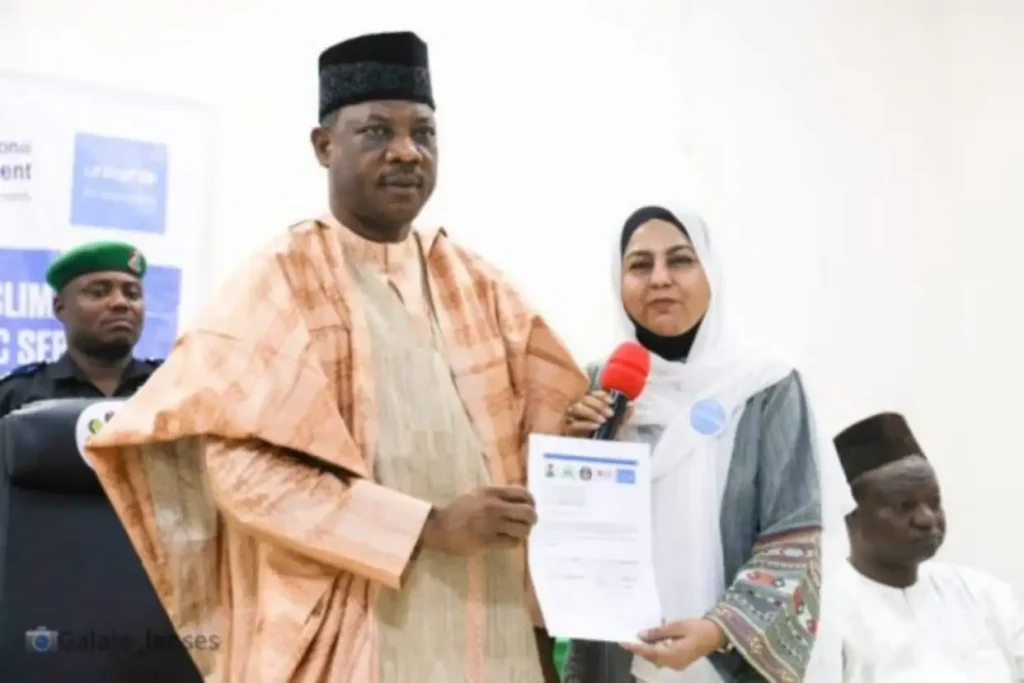
The event also featured the signing of contract agreements by contractors selected for the implementation of the project. Following the signing ceremony, project sites were formally handed over to the contractors for commencement of work.
The CRIBS project adds to a growing list of partnerships between the Bauchi State Government and international development organisations aimed at improving healthcare, education, sanitation and climate resilience across vulnerable communities in the state.