Home Blog Page 167

NCDMB launches electrification training for 6 graduates

0

The Nigerian Content Development and Monitoring Board (NCDMB), in partnership with Renaissance Africa Energy, Beam Energy, and Hamaston Limited, has launched a specialised training programme for six Nigerian graduates under the Community Electrification Interdependent Project.

According to a statement by NCDMB, the programme began on Tuesday at Hamaston Limited’s headquarters on Ogbatai Street, Woji, Port Harcourt, Rivers State, with a formal ceremony attended by representatives of all partner organisations.

Speaking on behalf of the Executive Secretary of NCDMB, Felix Ogbe, the Board’s Manager of Human Capacity Development, Mrs Tarilate Biribena, described the initiative as “a strategic intervention under NCDMB’s Project-Based Human Capital Development framework.”

Ogbe explained that the programme is designed to bridge critical skills gaps and strengthen local technical capacity in Nigeria’s oil and gas industry. He noted that the training is aimed at producing “confident, competent and industry-ready professionals” and aligns with the Board’s 10-Year Strategic Roadmap, where technical capability development remains a key pillar.

Addressing the trainees, Ogbe urged them to demonstrate “discipline, focus and resilience,” stressing that the knowledge and tools acquired during the programme are meant to drive value creation and excellence across the industry.

He also described the initiative as “a platform to nurture future industrialists, innovators, and change agents who will help close Nigeria’s skills gap locally.”

Representatives of Beam Energy and Renaissance Africa Energy reaffirmed their commitment to the programme, encouraging both trainees and facilitators to ensure high-quality engagement and outcomes.

According to the statement, the representatives assured the participants of continuous support throughout the training period and urged them to make the opportunity count by contributing tangible value to the country.


Advertisement

EAUE bans NeoLife activities, warns students of sanctions

0

The management of Emmanuel Alayande University of Education (EAUE) has issued a stern warning to its students, directing them to immediately disengage from all NeoLife-related activities over allegations of illegal recruitment, harassment, and academic disruption on campus.

The directive was contained in an internal memorandum released by the university’s Students’ Affairs Division and dated January 7, 2026. The memo, which was addressed to all students of the institution, was signed by the Dean of Students’ Affairs, Dr. Wole Akinlabi.

According to the memorandum, the university said it became aware of what it described as “illegal activities” being carried out by a group known as NeoLife, which was allegedly recruiting students into its business operations within the campus environment.

Management stated that the conduct of the organisation had been “humiliating to students” and had negatively affected their academic progress, prompting the university to step in to protect the integrity of learning and student welfare.

The memo further disclosed that several students who joined the group and later attempted to withdraw reportedly faced “harassment and torment,” a situation the university said it would not allow to continue under any circumstance.

As part of the directive, students were ordered to stop working with NeoLife immediately and to cease recruiting fellow students both on and off campus. The management warned that any student found working for or recruiting on behalf of the organisation after the notice would face “appropriate disciplinary measures.”

For students who are already members of the group, the university fixed January 30, 2026, as the deadline to formally quit and resign their membership. Affected students who require guidance or assistance in disengaging were advised to contact the office of the Dean of Students’ Affairs.

The university emphasized that it would not tolerate any further involvement in NeoLife-related activities, adding that mechanisms had been put in place to identify and sanction erring students.

The development has generated widespread reactions among students, with the memo circulating rapidly on social media and drawing attention to concerns over on-campus recruitment by external organisations.

University authorities reiterated their commitment to students’ safety, academic focus, and overall well-being, urging full compliance with the directive to avoid sanctions.

FG budgets ₦500m for hairdressing, grinding machines, vehicles in 2026

The federal government through the Federal Ministry of Works has proposed to spend over ₦500 million on the training of hairdressers and make-up artists, the supply of grinding machines, motorcycles, mini-vans, and anti-drug abuse sensitisation programmes across selected states of the federation.

Details of the proposed expenditures are contained in the 2026 Appropriation Bill uploaded on the Budget Office website and accessed on Thursday.

Findings from the budget document show that the items and services are spread across different locations in the country’s geopolitical zones, with allocations listed as constituency-based projects under the ministry.

Under a budget item with code ERGP 12234747, the ministry proposed to spend ₦35 million on the supply of an unspecified number of grinding machines to women in Ndokwa/Ukwani Federal Constituency in the South-South zone.

Similarly, another ₦35 million was earmarked for the training and empowerment of women in hairdressing, make-up, and soap making in Mikang/Shandam/Qua’an Pan Federal Constituency of Plateau State in the North-Central zone.

The budget document also includes a proposal to spend ₦70 million on the empowerment and training of youths, women, and seven retirees in different skills, alongside the provision of trade equipment in the Inyamaltu/Deba area of Gombe State in the North-East.

In addition, the ministry plans to spend ₦70 million on the supply of mini pick-up vans, mini shuttle buses, and motorcycles to constituents in Abakaliki Federal Constituency, Ebonyi State, in the South-East.

There is also a proposal for training, sensitisation, advocacy, and empowerment of North-Central youths against drug abuse in Zamfara State, which is geographically located in the North-West, among several similar projects listed in the budget.

The inclusion of these empowerment items has raised questions over their placement under the Federal Ministry of Works, whose core mandate centres on road construction, rehabilitation, and infrastructure delivery.

Separately, the ministry has launched the President Tinubu Engineering Mentorship Programme, a nationwide technical training initiative for unemployed graduate engineers and skilled artisans. According to information released on the programme, it offers “hands-on field training, structured mentorship, and project-based exposure” through direct participation in ongoing Federal Ministry of Works infrastructure projects across Nigeria.

NGX launches Net Zero Initiative to drive climate-aligned capital

0

The Nigerian Exchange Group (NGX) has launched its Net Zero Initiative, marking a major step toward integrating climate action and sustainability into Nigeria’s capital market. The initiative aims to align with global efforts to transition to a low-carbon economy while positioning Nigerian companies to attract climate-focused investments.

The Net Zero Initiative is designed to help Nigerian corporates meet stricter climate and sustainability standards required by global investors and open access to long-term, climate-aligned capital. The move follows President Bola Ahmed Tinubu’s recent signing of Nigeria’s Carbon Market Initiative, signaling growing policy support for climate finance and emissions reduction.

Speaking at a closing gong ceremony in Lagos to commemorate the launch, NGX Chairman, Temi Popoola, said the Net Zero Initiative represents the Exchange’s strategic response to global and local sustainability challenges. He explained that international development finance institutions such as DEG, Germany’s development finance institution and a subsidiary of KfW, now apply rigorous environmental, social, and governance (ESG) and climate standards before providing capital.

“For the Exchange, the key question is how we support Nigerian companies to align with this direction and how we attract climate-aligned capital. Our goal is to bridge the gap between opportunity and execution by building capacity across the ecosystem and helping corporates unlock funding,” Popoola said.

He highlighted that DEG’s contribution to Nigeria’s capital market has been significant, with many Nigerian banks, private equity firms, and pre-listing companies benefiting from DEG-backed financing. Popoola also acknowledged the contributions of DEG’s outgoing Country Director, Ben, whose seven-year tenure strengthened the private sector and deepened the capital market ecosystem.

NGX Chief Executive Officer, Jude, said the Exchange was determined to “lead by action” on the Net Zero agenda, which he described as a defining element of global capital markets. He explained that the initiative includes structured capacity-building components, extending beyond listed companies.

“At least 30 market participants will receive training in climate and sustainability. This is a shift from availability to sustainability. Corporations must now operate not only for profitability, but also for impact. ESG is no longer optional, and NGX takes this responsibility seriously,” Jude said.

For DEG, the launch of the initiative at the Nigerian Exchange underscores the vital role of capital markets in promoting private sector-led development. DEG’s Chief Investment Officer, Monika Beka, described the event as a “mini-Davos” for Nigeria and reaffirmed DEG’s focus on Africa, identifying Nigeria as a priority market.

“Profitability and sustainability are not contradictory. They reinforce each other. Working with leading corporates on climate and impact creates long-term value for shareholders,” she said.

Ben, DEG’s outgoing Country Director, expressed appreciation for his years in Nigeria and restated DEG’s confidence in the private sector’s potential to drive responsible economic growth. He added that DEG remains committed to supporting the development of Nigeria’s capital market.

Through the Net Zero Initiative, NGX is positioning Nigeria’s capital market to play a leading role in financing climate-aligned growth, boosting investor confidence, and preparing the market for a future where sustainability and capital formation go hand in hand.

ARM launches N200bn private debt fund to boost SME financing

0

ARM Investment Managers has launched a N200 billion Private Debt Fund aimed at providing long-term and affordable financing for Nigeria’s small and medium-sized enterprises at rates below the current market benchmark of about 27 percent. The initiative was unveiled in Lagos as part of the company’s broader SME financing strategy to expand access to non-bank credit for businesses struggling with high borrowing costs.

The announcement was made by the Chief Executive Officer of the ARM Private Debt Fund, Deji Opeola, during the launch of the SME financing initiatives. He said the programme has an initial Series 1 size of N25 billion, with an overall shelf target of N200 billion under applicable regulatory frameworks.

Opeola explained that the fund is designed to channel private capital to scalable SMEs that are often excluded from affordable credit by commercial banks due to risk considerations and regulatory limits. He noted that private credit remains an important but underdeveloped segment in Nigeria’s financial system.

“Private credit plays a vital role in modern financial systems. The Series I offering is targeting an initial raise of N25bn, forming part of a broader N200bn shelf programme registered under applicable regulatory frameworks,” he said.

According to him, the fund will deploy capital through senior secured term loans, revolving credit facilities, and selective subordinated debt to qualified SMEs operating across key sectors of the Nigerian and Sub-Saharan African economy.

Opeola said the launch is coming at a time when access to long-term credit remains a major challenge for SMEs, despite their importance to the economy. He stated that SMEs account for nearly half of Nigeria’s Gross Domestic Product and more than 80 percent of employment, yet continue to face funding constraints.

He added that the fund has been carefully structured to address this gap without compromising investor protection. “This fund has been deliberately structured to combine strong governance, rigorous credit underwriting, and active portfolio management. Our objective is to protect investor capital while supporting the growth of viable SMEs that create jobs, deepen local value chains, and contribute meaningfully to economic development,” Opeola said.

He further pointed to structural issues within the banking sector, noting that “regulatory constraints, rising interest rates, and balance-sheet pressures have curtailed the ability of traditional banks to meet the sector’s financing needs.”

Speaking on the wider credit gap, Opeola said Africa faces an SME financing shortfall of over $40 billion, compared to about $3.3 billion in private credit assets under management. He said Nigeria alone accounts for $32.2 billion of this gap, despite banks providing about 90 percent of all credit on the continent while remaining largely risk-averse to SMEs.

Also speaking at the event, the Chief Executive Officer of ARM Holding, Wale Odutola, said inclusive economic growth will require substantial investment in alternative asset classes over the coming years. He explained that these assets are not well represented in traditional stock or bond markets.

“By ‘alternative,’ I mean asset classes that are not well represented in the organised markets, such as stock or bond markets. These asset classes include infrastructure, solid minerals, agriculture, private debt, trade, and the creative sector,” Odutola said.

He added that significant capital is needed in these areas for Nigeria to grow at the desired pace and ensure that growth reaches broader segments of society. Odutola said the private debt fund aligns with this vision and has been in development for over 12 months.

“We believe that by organising ourselves in a way that allows private companies like ours to launch a fund capable of providing the required capital, private sector companies can tap into funding that helps them drive growth, expand operations, improve service quality, increase output, grow market share, and extend coverage across Nigeria and beyond,” he said.

YSJ Farms denies Ekiti youth fraud claims under agriculture scheme

0

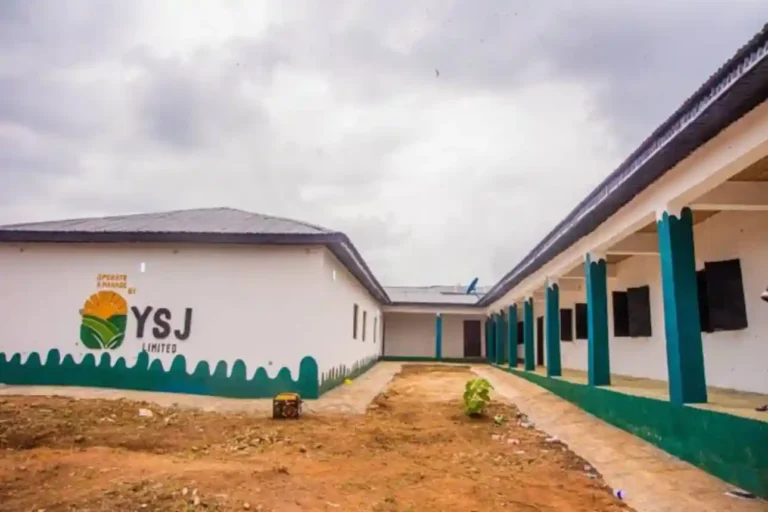
Management of YSJ Farms Limited, a private agricultural company, has denied allegations that it defrauded some youths in Ekiti State under the Bring Back the Youths to Agriculture initiative.

The General Manager of the firm, Rotimi Omole, described the allegations as misleading, false, and a distortion of the programme’s structure and operations.

Addressing journalists on Thursday in Ado-Ekiti, the state capital, Omole said that the programme was established to tackle youth unemployment and promote sustainable participation in agribusiness, not to exploit participants.

He clarified that the N100,000 paid last year by participants who pioneered the scheme during its take-off phase in 2024 was a commitment fee approved by the management of YSJ Farms. According to him, the fee was introduced to ensure seriousness and long-term commitment from the pioneer participants who voluntarily enrolled at the formative stage of the Bring Back the Youths in Agriculture initiative.

Omole added that new participants were never required to pay any commitment fee, maintaining that participation in the programme is now free of charge for new intakes. He noted that the commitment fee was limited to the pioneer participants alone and should not be misconstrued as a recurring charge or a means of exploitation.

Addressing claims of non-remuneration, the General Manager explained that all payments to participants are strictly performance-based. He said remuneration is determined by measurable outputs recorded at farm sites, regularity of attendance, and level of engagement.

Omole added that the scheme operates a results-driven model under which beneficiaries are compensated in direct proportion to their productivity and engagement. He clarified that disparities in payments among participants reflect differences in individual performance and participation levels, not favoritism or denial of entitlements.

He disclosed that some beneficiaries earned as high as N1.5 million, while others received lower payments that matched their measurable contributions to the programme.

Omole noted that the payment structure encourages accountability, hard work, and sustainability, adding that the initiative rewards effort and results rather than mere participation.

Read Also: BoA signs $100,000 climate finance deal with DalaHill

Armed Forces Remembrance: Ondo releases N50m loans for widows

Governor Lucky Aiyedatiwa of Ondo State has announced the approval and release of N50 million for the disbursement of interest-free microcredit loans to widows and dependants of fallen heroes in the state.

The governor made this known on Thursday in Akure during the grand finale of the 2026 Armed Forces Remembrance Day celebration, which featured a parade, laying of wreaths, and empowerment of widows of fallen heroes.

Aiyedatiwa said the financial support is a recurring part of the annual celebration aimed at improving the welfare of families left behind by those who served the nation. He explained that the loan amount had been raised from N200,000 to between N450,000 and N500,000 per beneficiary to accommodate more widows this year.

He also announced that the Emblem Appeal Fund had been launched with N5 million, alongside his personal donation of one month’s salary, as well as other contributions from individuals and institutions.

The governor appealed to beneficiaries to ensure prompt repayment of the loans to sustain the programme and allow more widows to benefit. “Let us remember not only those who have fallen but also the families and loved ones they left behind, particularly the widows whose resilience and strength inspire us,” he said.

Aiyedatiwa commended the collaboration between military and civilian stakeholders in ensuring the success of the 2026 Armed Forces Remembrance Day celebration.

“Today’s celebration, which is being simultaneously held across the 36 states of the Federation and the Federal Capital Territory, is highly symbolic as it is the highest way of showing our respect as a country to the fallen heroes who paid the supreme sacrifice in the line of duty,” he said.

The governor noted that the event was not just to honour the dead but also to appreciate living veterans and military personnel for their service. “Today’s event is equally a mark of honour to the living veterans and military personnel that have dedicated their lives to the defence of our territorial integrity. They deserve our praises and appreciation,” he said.

He added that in Ondo State, the remembrance celebration goes beyond honouring the dead to empowering widows of fallen heroes. “For us in Ondo State, this celebration will not be complete without taking responsibility for the welfare of widows of the fallen heroes. This ceremony is, therefore, not just about remembrance, it is also about empowerment,” he said.

Aiyedatiwa urged residents to remain vigilant and support security agencies with timely information, stressing that security remains a collective responsibility.

The Commissioner for Women Affairs, Mrs Seun Osamaye, appreciated the governor for his support to the Armed Forces and the families of fallen heroes.

Ogun acquires facility to add 1.3 million birds yearly

0

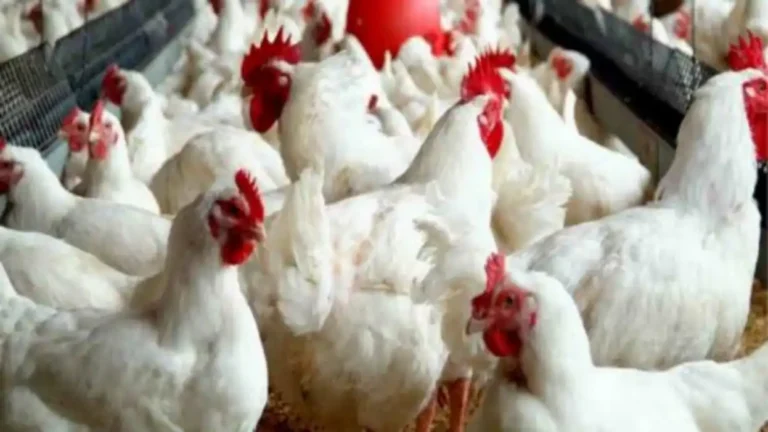
The Ogun State Government has announced the acquisition of a facility capable of producing an additional 1.3 million birds annually, following the construction of a 5,000-bird-per-day poultry processing plant at Ajegunle Farm Settlement in Odeda Local Government Area under the Ogun State Economic Transformation Project (OGSTEP).

The Commissioner for Agriculture and Food Security, Hon. Bolu Owotomo, disclosed this on Thursday during a visit to Ajegunle Farm Settlement, Eweje Farm Institute, and Odo Fufu in Odeda and Yewa South Local Government Areas, marking the first phase of his facility tour of ongoing and completed agricultural projects across the state.

Owotomo said the state government remains committed to supporting farmers and scaling up food production, explaining that Ajegunle Farm Settlement has been designated as a poultry hub and currently accommodates about 400 resident farmers engaged in different aspects of poultry production and related activities.

He said newly provided complementary facilities at the settlement, including blast freezers, cold rooms, waste processing facilities, a warehouse with fitted offices, and poultry pens with a combined capacity of 20,000 birds, have continued to attract private sector interest and investment.

According to the commissioner, a private investor has just completed the construction of a 13,000-capacity poultry pen at the settlement, a development he said further underscores the growing economic importance of the facility to Ogun State’s agricultural value chain.

Owotomo revealed that the state, through OGSTEP, has completed 28 agricultural projects across Ogun State in the last two years, adding that other intervention programmes such as the Value Chain Development Programme (VCDP), OG-CARES, and the Special Agro-Industrial Processing Zones (SAPZ) have also contributed to revitalising the sector.

“These projects are aimed at increasing food productivity, improving farmers’ livelihoods, and reducing post-harvest losses in Nigeria, which are currently estimated at N3.5 trillion annually,” he said.

The commissioner explained that Nigeria’s per capita chicken consumption ranges between 1.7kg and 2kg, compared to 13kg in Ghana, 36kg in South Africa, and 46kg in Brazil, stressing that despite importing about 70 per cent of its poultry needs, the country still lags significantly in overall consumption levels.

At the Eweje Farm Institute, where 10 poultry pens capable of producing 10,000 birds each and five four-bedroom residential buildings have been constructed, Owotomo assured that sustained investment in agricultural infrastructure would further strengthen Ogun State’s position as Nigeria’s leading poultry hub.

He also said that at Odo Fufu in Ilaro, where a cassava processing facility has been constructed to serve numerous farmers, the project would enhance value addition, reduce waste, and improve farmers’ incomes across the area.

“On sustainability, we are encouraging farmers to take ownership of these facilities. There will be strong monitoring and evaluation by the ministry, alongside Public-Private Partnerships, to ensure long-term viability,” he said.

In their separate remarks, the Special Adviser to the Governor on Agriculture and Food Security, Dr. Angel Adelaja, and the Permanent Secretary, Mrs. Kehinde Jokotoye, affirmed that the projects would significantly boost productivity and strengthen the state’s economy.

Also speaking, the Principal of Odeda Training Institute, Mr. Ademola Benco, and the Chairman of Ajegunle Farm Settlement, Mr. Rotimi Sogunle, described the projects as unprecedented and first of their kind, noting that full utilisation would further boost agricultural production in Ogun State and Nigeria at large.

The commissioner was accompanied on the tour by the Chairman, House Committee on Agriculture and Food Security, Hon. Waliu Owode, and directors from the ministry.

Nigeria inflation slows to 15.15% in December 2025 as food prices ease

0

Nigeria’s headline inflation rate eased to 15.15 percent year on year in December 2025, according to the latest Consumer Price Index report released by the National Bureau of Statistics, reflecting slower price increases compared to previous months and the same period last year.

The CPI report, dated January 2026, showed that the Consumer Price Index rose to 131.2 points in December 2025, up from 130.5 points recorded in November. While prices continued to rise, the pace of increase slowed, offering a signal of moderation after months of sharp inflationary pressure.

On a year-on-year basis, the 15.15 percent headline inflation rate was lower than the 17.33 percent recorded in November 2025. It also represented a significant decline from the 34.80 percent inflation rate recorded in December 2024. The statistical agency explained that the sharp difference was influenced by changes to the inflation base period.

According to the report, “the December 2025 year-on-year Headline inflation rate, including all other sub-indexes, were obtained through maximisation of the index reference period,” adding that the use of a 12-month average for 2024 helped avoid an artificial spike caused by base effects. The agency said the adjustment was “in line with international best practice.”

On a month-on-month basis, inflation stood at 0.54 percent in December, down from 1.22 percent in November. The report noted that “this means that in December 2025, the rate of increase in the average price level was lower than in November 2025,” indicating a slowdown in short-term price growth.

Food inflation provided the most visible relief during the month. The food inflation rate dropped to 10.84 percent year on year from 39.84 percent in December 2024. Month on month, food inflation declined by 0.36 percent. The agency attributed this to price reductions in items such as tomatoes, garri, eggs, onions, beans, vegetables, and grains, stating that the decline was driven by “a decrease in the average prices of selected food items.”

However, core inflation, which excludes farm produce and energy, remained elevated. Core inflation stood at 18.63 percent year on year in December 2025, compared to 29.28 percent in December 2024. On a monthly basis, core inflation was 0.58 percent, showing that pressure from services and non-food items remained persistent.

The report also highlighted differences between urban and rural areas. Urban inflation stood at 14.85 percent year on year, while rural inflation was slightly lower at 14.56 percent. On a month-on-month basis, urban inflation rose to 0.99 percent, while rural inflation declined to minus 0.55 percent. The agency noted that spending patterns differ across locations, affecting price movements.

At the state level, inflation trends varied widely. Abia, Ogun, and Katsina recorded the highest year-on-year headline inflation rates, while Sokoto, Plateau, and Kaduna recorded the lowest. For food inflation, Yobe, Ogun, and Abuja posted the highest year-on-year rates, while Akwa Ibom, Sokoto, and Plateau recorded the slowest increases.

Despite the moderation in December, the report showed that inflation pressures remained high over the year. The average inflation rate for the twelve months ending December 2025 stood at 23.01 percent, underscoring that households faced elevated prices for most of the year, even as the pace of increase slowed toward year end.

NSIPA to improve digital systems behind social programmes

0

The National Social Investment Programme Agency (NSIPA), which delivers social investment programmes aimed at reducing poverty, improving livelihoods and strengthening social protection across Nigeria, has taken a step to improve how the digital systems supporting these programmes are managed.

The agency on Thursday inaugurated an ICT Policy Framework Committee to strengthen its digital governance architecture and guide its ongoing digital transformation initiatives.

The inauguration, held at the ministry conference hall, brought together representatives from NSIPA’s departments and units. The committee is expected to develop a coherent policy framework to guide the agency’s ICT operations and cybersecurity efforts, while ensuring alignment with applicable laws, standards and best practices.

NSIPA said the initiative is intended to support secure, innovative and responsible digital service delivery, as digital platforms play a central role in administering social intervention programmes nationwide.

Assistant Director (ICT), Mr Emmanuei Nyihemba, welcomed members of the committee and described it as a strategic institutional investment, noting that its work would help produce high-quality policies to guide ICT operations and transformation programmes within the agency.

He said the committee would deliberate on critical areas of digital governance to strengthen internal systems that support programme delivery.

Deputy Director, Planning, Research and Statistics, Dr Binta Ibrahim, who formally inaugurated the committee, outlined its mandate to include developing ICT and cybersecurity policies and standards, guiding policy implementation and governance processes, and ensuring compliance with relevant laws, regulations and best practices.

She added that the committee would also support NSIPA’s digital transformation objectives and efforts to ensure secure service delivery.

The agency said a detailed terms of reference and workplan would be developed by the committee and communicated to staff and stakeholders in due course, as NSIPA continues to improve the systems that underpin its social investment programmes.