Home Blog Page 172

Kogi Govt Backs 2026 Spelling Bee Competition

0

The Kogi State Commissioner for Education, Hon. Wemi Jones, has assured Zion Global Educational Services Limited of the readiness of the Ministry of Education to collaborate for the successful hosting of the 2026 Spelling Bee Competition in the state.

Jones gave the assurance when the Director and Founder of Zion Global Educational Services Limited, Miss Ihiabe Glory Ojimaojo, paid him a courtesy visit on Tuesday in Lokoja.

The Commissioner said the state government, under the leadership of Governor Ahmed Usman Ododo, remains committed to improving the quality of education and expanding opportunities for young learners across the state.

According to him, the administration has continued to invest heavily in the education sector to ensure that children of school age have access to quality, accessible, and affordable education.

Jones explained that education policies in the state are driven by the Governor’s vision to reduce poverty, noting that “the 30 percent budgetary allocation to education, the free education policy, and the payment of all internal and external examination fees for pupils and students in public schools have drastically reduced the number of out of school children.”

He described the proposed spelling bee and quiz competition as a healthy academic initiative, saying it would encourage learning and intellectual growth among students in Kogi State, while assuring that the Ministry would fully key into the programme.

In her remarks, Ojimaojo informed the Commissioner that the first session of the spelling bee competition is scheduled to take place in April, while the grand finale is fixed for May 9, 2026.

She explained that the competition will involve students drawn from public schools across the state.

According to her, the initiative is designed to improve literacy, reward diligence, and protect the educational tapestry of Kogi State while promoting inclusiveness among learners in the overall development of public education standards statewide.

Advertisement

Explainer: What Nigeria–UAE CEPA means for trade, jobs, and investment

The Federal Republic of Nigeria and the United Arab Emirates formally signed a Comprehensive Economic Partnership Agreement CEPA aimed at transforming economic ties between both countries and delivering tangible benefits for Nigerian businesses, professionals, and workers.

The Agreement is the product of focused and determined negotiations led by the Federal Ministry of Industry, Trade and Investment under the direction of the Honourable Minister and Chief Negotiator for Nigeria, Dr Jumoke Oduwole MFR. It prioritises expanded market access for Nigerian goods and services, facilitates quality investment inflows, and advances Nigeria’s national economic diversification drive under the Renewed Hope Agenda of President Bola Ahmed Tinubu GCFR.

Speaking on the significance of the deal, Nigerian officials described the CEPA as a forward-looking trade framework that aligns with the country’s broader reform agenda and positions Nigerian enterprises to compete more effectively in global markets.

What This Agreement Delivers for Nigeria

For Nigerian exporters, the CEPA provides immediate and phased market access into the UAE. Under the Agreement, the UAE will eliminate tariffs on over 7,000 products originating from Nigeria. With immediate effect, Nigerian agricultural and industrial products including fish and seafood, oil seeds, cereals, cotton, pharmaceuticals, chemicals, and related goods will enter the UAE market duty-free. Over a three to five-year transition period, the UAE will also remove tariffs on Nigerian machinery, vehicles, electrical equipment, apparel, and furniture.

Officials said this creates “a clear and competitive pathway” for Nigerian industrial exports into one of the world’s most dynamic trading hubs. Beyond goods, Nigerian businesses will be able to establish operations in the UAE through new corporate entities, branches, and subsidiaries. Business visitors from Nigeria can enter the UAE for up to 90 days within a 12-month period to explore trade and investment opportunities. In addition, intra-corporate transferees including managers, executives, and specialists can relocate alongside their companies for renewable three-year periods.

For Nigeria’s investment climate, the Agreement addresses long-standing barriers to foreign direct investment. UAE investors are now provided with improved clarity and confidence to invest in Nigeria’s productive sectors. According to officials, this is expected to support Nigeria’s industrialisation agenda, strengthen transport and logistics connectivity, and contribute to the creation of quality jobs for the country’s youthful population.

Nigeria’s Commitments Under the Agreement

On its part, Nigeria will eliminate tariffs on around 6,000 products under the trade in goods component of the CEPA. Tariffs on approximately 60 percent of these products will be removed immediately, while the remaining lines will be phased out over a five-year period. These imports are largely focused on industrial inputs, capital goods, and machinery that are expected to enhance Nigeria’s productive capacity. Authorities emphasised that Nigeria’s Import Prohibition List remains fully in effect.

In trade in services, Nigeria’s commitments cover 99 specific services across 10 sectors. These include business services, communication, transport, financial services, construction, distribution, health, environment, recreational and sporting services, as well as tourism. Officials said the scope of commitments reflects Nigeria’s intention to open priority sectors while safeguarding national development objectives.

A Strategic Agreement for a Diversified Economy

The CEPA is being positioned as a strategic instrument for economic transformation. With expanded market access secured for value-added and industrial goods, the Agreement is expected to incentivise Nigerian manufacturers to scale up production for export markets. The framework also positions Nigeria as a gateway for international investors seeking access to the African Continental Free Trade Area and its estimated market of 1.4 billion people.

Nigeria has already recorded unprecedented participation from UAE institutional investors, including First Abu Dhabi Bank, particularly in infrastructure financing. Notably, this includes support for the construction of the Lagos–Calabar Coastal Road, which officials described as “a strong vote of confidence” in Nigeria’s macroeconomic trajectory and reform agenda. Sky Capital has also been instrumental in supporting the CEPA and in projecting Nigeria’s investor readiness. The signing of the Agreement is expected to accelerate deals across agriculture, real estate, digital banking, retail, and infrastructure financing.

The government stated that the CEPA is fully consistent with Nigeria’s obligations under the World Trade Organisation, the African Continental Free Trade Area, and ECOWAS.

Swift Implementation

The Federal Ministry of Industry, Trade and Investment, working with key MDAs such as the Nigeria Customs Service, alongside FMITI agencies including the Nigerian Export Promotion Council, the Nigerian Investment Promotion Commission, and the Standards Organization of Nigeria, will drive implementation. According to the Ministry, these institutions will ensure Nigerian businesses and hosted investors receive the information, support, and facilitation required to take full advantage of the Agreement in line with the President’s “Nigeria First” directive.

“I would like to appreciate the Nigerian negotiation team, including the Lead Technical Advisers, FMITI, the Nigerian Office for Trade Negotiation, the Nigerian Customs Service and the Ministry of Justice, among several other MDAs, who played a critical role in this milestone Agreement,” the statement said.

Collectively, the institutions are expected to equip Nigerian businesses with the tools needed to leverage the opportunities created by the CEPA.

“I would like to seize this opportunity to appreciate Dr Thani bin Ahmed Al Zeyoudi, Minister of Foreign Trade, and the UAE negotiation team for this strong collaborative effort,” the statement added.

Addressing the private sector directly, the government said, “This Agreement was negotiated for you. I urge you to identify your opportunities with enhanced market access and move with confidence into the UAE market with the protections we have secured for you.”

The statement concluded by affirming that Nigeria is open for business, noting that Nigerian businesses now have open access to the UAE, the Middle East, and global markets.

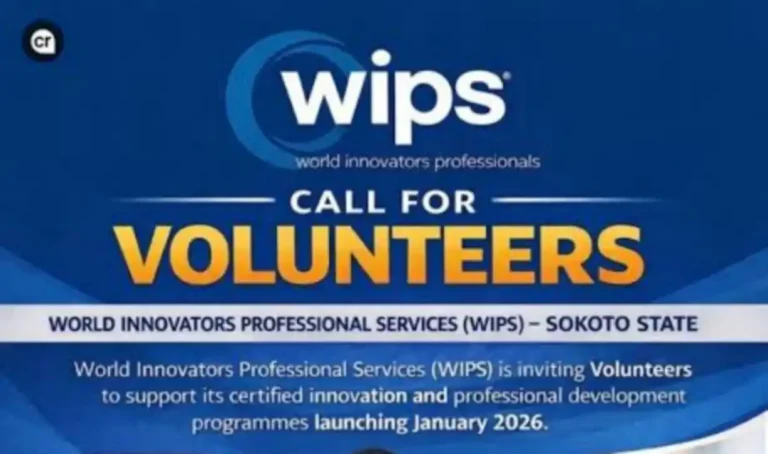
Apply: WIPS volunteer programme facilitators

World Innovators Professional Services (WIPS) hereby invites applications from qualified and motivated individuals to serve as Volunteer Programme Facilitators across Sokoto State. This public call is part of WIPS’ ongoing commitment to expanding access to innovation-driven capacity-building programmes at the grassroots level.

Organization: World Innovators Professional Services (WIPS)
Location: Sokoto State (All 23 Local Government Areas and LCDAs)
Program Commencement: January 2026
Category: Volunteerism / Professional Development

About World Innovators Professional Services (WIPS)

World Innovators Professional Services (WIPS) is a globally recognized professional organization dedicated to fostering innovation, leadership, entrepreneurship, and digital literacy. Our core focus is on building practical skills that help young people and professionals remain relevant in a fast-changing global economy. Through structured capacity-building programmes, mentorship, and community-focused initiatives, WIPS works to close existing skills gaps and promote inclusive development.

Following the successful establishment and onboarding of our operations in Sokoto State, WIPS is now embarking on a strategic expansion phase. This expansion is designed to strengthen grassroots engagement and ensure that our programmes reach communities across all Local Government Areas and Local Council Development Areas. To achieve this, we are seeking committed and energetic individuals to join our growing network as Volunteer Programme Facilitators.

This opportunity allows volunteers to directly contribute to the socio-economic advancement of Sokoto State while also gaining valuable professional experience. WIPS is an equal opportunity organization, and we encourage applications from individuals who are passionate about positive change and community development.

Role of the Volunteer

As a volunteer with WIPS, you will serve as a vital link between the organization and local communities across all LGAs and LCDAs. Volunteers will support programme delivery and help ensure smooth implementation at the grassroots level. Key responsibilities include:

• Programme & Event Coordination: Supporting the planning, organization, and execution of training sessions, workshops, seminars, and innovation summits organized by WIPS.

• Strategic Outreach & Mobilization: Creating awareness, engaging community stakeholders, and mobilizing participants to ensure strong participation from targeted groups.

• Participant Support: Providing guidance and mentorship to participants, helping them understand programme objectives and achieve meaningful learning outcomes.

• Documentation & Reporting: Gathering field data, maintaining accurate participant records, and preparing reports that reflect programme activities and results.

• Digital Integration: Assisting with virtual and hybrid training delivery through basic ICT support, online platforms, and digital engagement tools.

Who Can Apply

WIPS is looking for individuals who are passionate about education, ICT, entrepreneurship, and leadership training courses. This call for volunteers is open to:

• Recent graduates and final-year students from recognized tertiary institutions who are eager to gain hands-on experience.

• Currently serving National Youth Service Corps (NYSC) members seeking impactful community service opportunities.

• Young professionals and community activists with a strong interest in youth development and innovation.

• Individuals with good communication skills, teamwork abilities, and a willingness to learn and contribute.

Benefits of Joining WIPS

Although these positions are voluntary, facilitators will gain significant personal and professional benefits, including:

• Professional Exposure: Practical experience working with a global organization and participating in internationally aligned programmes.

• Capacity Building: Access to exclusive training, mentorship, and development sessions focused on leadership and digital skills.

• Official Recognition: Award of a Certificate of Volunteering at the end of the engagement, supporting future career opportunities.

• Networking: Opportunity to connect with innovators, professionals, and development-focused individuals across different sectors.

How to

Interested candidates should prepare a Cover Letter and a good Curriculum Vitae (CV) compiled into a single PDF document. The cover letter should briefly explain your motivation and preferred LGA or LCDA.

Subject Line: Volunteer Programme Facilitator – [Your LGA/LCDA]

Send to: sokoto@wiemoglobal.com

Bank account balances not taxable – NRS

0

The Executive Chairman of the , Dr Zacch Adedeji, has insisted that neither the old tax regime nor the new tax law gives any authority the power to tax money sitting in Nigerians’ bank accounts.

Adedeji made this clarification on Tuesday while speaking on Journalists’ Hangout, a programme aired on , amid rising public anxiety over recent tax reforms that took effect on January 1, 2026.

“Whether old tax law or new tax law has nothing to do with your personal bank account, whether you’re a company or you are an individual,” he said during the interview.

He explained that Nigeria’s tax system is based strictly on profits and returns, not on assets or cash balances held by individuals or businesses.

“Don’t forget that tax is a percentage of your profits. So if you have an asset, the asset is not to be taxed. We only tax the profits. We only tax the return,” Adedeji said.

His comments followed widespread rumours and concerns reported by Nigeria Startup News suggesting that the new tax framework could allow tax authorities to automatically deduct funds from bank accounts based on transfers, account narrations, or savings balances.

Adedeji dismissed those claims, describing them as the result of miscommunication and misunderstanding of the law.

“There is no law that allows anybody to go into your bank account and tax you because you transfer money or you keep money,” he said.

He further clarified that personal transfers, gifts, and movements of money between accounts do not automatically fall under the tax net.

“If you transfer money from your account to my brother, that is a personal transaction between both of you. It has nothing to do with tax authority, whether at the state level or at the federal level,” he said.

The revenue service boss also rejected suggestions that banks could be directed to debit customer accounts for tax purposes simply because funds exist in an account or because of the description attached to a transfer.

“There’s no such provision in any tax act. Whether you describe it or you don’t put any description, tax law, both the old law or even the new law that we have now has not given anybody any right to come into your personal account and tax you and instruct the bank to debit you,” he said.

Adedeji used the platform to explain that the transition from the Federal Inland Revenue Service to the Nigeria Revenue Service was more than a change in name, describing it as a full institutional overhaul.

According to him, the reform is aimed at simplifying tax compliance, modernising revenue collection, and improving efficiency across the system.

He said the transition provisions were clearly embedded in the law signed in June 2025, with implementation scheduled to begin on January 1, 2026.

He explained that the delayed commencement followed the national tax policy principle that major reforms should allow enough adjustment time for businesses, taxpayers, and administrators.

Adedeji said early market reactions showed that the direction of the reform was positive, although he did not provide specific figures.

He argued that beyond the circulating rumours, there were signs of improving sentiment reflected in market activity and general feedback from stakeholders.

He urged Nigerians to judge the new tax laws based on verified facts rather than speculation.

“You can see now that we are on the 13th of January, all those myths… You can see that those things were nowhere to be found,” he said.

Addressing one of the most debated elements of the reform, Adedeji clarified that the development levy introduced under the new law was not a new tax burden.

“Before now, we have what we call earmarked taxes. You have education tax, you have police trust fund… which makes it very difficult for businesses to plan,” he said.

He explained that the development levy is a consolidation of multiple earmarked taxes that already existed.

“But with this one item, which we call development tax, which is the summation of all these earmarked taxes… it is a consolidation of all the earmarked taxes that we are paying already today into one to simplify compliance,” he said.

According to him, the consolidation is designed to make tax planning easier for businesses while ensuring continued funding for key national priorities.

He added that proceeds from the levy would support education and other development needs, including security, which he described as new additions to the allocation structure.

Adedeji also maintained that the reform was structured to protect low-income Nigerians and reduce the tax burden on poorer households.

“If you look at the exemption list, 90 per cent of the disposable income of poor people is on food and transport,” he said.

He noted that the tax laws specifically exempt food and transportation from transactional taxes.

“If you look at the tax acts, all these are exempted from transactional taxes, food, and transportation,” he said.

He said workers on lower salary bands would notice reduced deductions under the new regime, with the impact expected to become visible in January salary payments.

“By the time the salary is being paid by this end of January, the salary earner in that lower cadre will confirm compared to what they’ve paid under the old law,” Adedeji said.

Responding to calls from some quarters to suspend the new tax laws, Adedeji rejected the idea, saying it had no place in a democratic system.

“The suspension of law has no place in a democratic setting. When law is passed, it becomes law,” he said.

He added that suspending the new framework would also create legal uncertainty, since the old tax laws had already been repealed.

On criticisms reportedly linked to , Adedeji said the government’s approach was based on engagement rather than confrontation.

He said he had met with the firm and acknowledged that misunderstandings were expected given the scale of the changes introduced.

“It is expected that people either don’t understand all, they don’t have the context, or they misinterpret what they read because it is new,” he said.

He added that the administration remained open to feedback that could help improve implementation.

Adedeji also addressed concerns surrounding tax clearance certificates during the transition period.

He said certificates already issued under the old regime remain valid and that taxpayers should not fear any disruption.

On withholding tax, he explained that it should not be seen as an additional burden but as a prepaid tax.

“When the tax is being withheld… it’s a prepaid tax of the taxpayer,” he said.

He explained that when taxpayers file correctly, withholding tax credits should reduce their final tax liabilities.

He warned businesses, service providers, and firms responsible for withholding obligations that non-compliance would attract strict consequences.

Adedeji also spoke briefly on the taxation of digital asset activities, stressing that the same principle applies.

“On losses, you don’t pay tax. Because tax is only on profits,” he said.

He added that the reforms removed minimum tax provisions that required businesses to pay tax even when they recorded losses.

According to him, those provisions effectively amounted to taxing capital rather than profit.

He said the broader goal of the reforms was to harmonise Nigeria’s tax rules, reduce manual processes, and rely more on technology and revenue intelligence to improve compliance and transparency.

Bayelsa to Pay N200m Monthly Grant to Farmers

Bayelsa State Governor, Senator Douye Diri, has approved a monthly grant of N200 million to support farmers across the state as part of efforts to boost agricultural production and ensure food security.

Speaking at the flag-off of the 2025/2026 dry farming season held at the state-owned rice farm in Otuasega community, Ogbia Local Government Area, the governor said the new monthly funding would help increase production capacity and promote the cultivation of made-in-Bayelsa rice.

Governor Diri said the initiative aligns with his administration’s drive to diversify the state’s economy through agriculture and reduce dependence on food supplies from other states. He directed the Commissioner for Agriculture and Natural Resources to ensure that, by the end of 2026, the state records significant progress in rice production.

“My directive to the Commissioner for Agriculture is that by the end of 2026, we should expect 300,000 kilogrammes of rice. I do not want to continue to buy rice from outside Bayelsa State for our people. Produce and government will buy from you,” he said.

He expressed dissatisfaction with the previous farming season’s rice harvest, noting that despite the government’s support for the ministry and the farmers, the state still purchased rice from outside during the Yuletide.

The governor challenged the Commissioner for Agriculture to ensure that the state achieved food security, adding that Bayelsa had a comparative advantage in many crop areas. He said the state’s fertile soil supports organic farming without the need for fertilizers.

While commending the ministry for organizing the dry season farming event, Diri urged that such initiatives should not be treated as mere yearly ceremonies but as serious steps toward improving the lives of Bayelsans. He added that agriculture remains a strong avenue for economic diversification, which his administration continues to prioritize through strategic investments.

He encouraged civil servants and all Bayelsans to take part in agriculture, explaining that it was not only an economic necessity but a culture that should be embraced by all.

According to him, the ongoing construction of roads and bridges across the state was directly linked to agricultural development, as such infrastructure enables farmers in rural areas to transport their produce easily to markets in the capital and other parts of the state.

“The linkage between roads, bridges, and agriculture is that we are connecting rural communities and providing valuable support to the agricultural sector. Transportation of produce from rural communities to the state capital is crucial, and that is why we are investing in these projects,” he stated.

Diri also announced that his government had approved a meeting with farmers to identify their specific needs and ensure that genuine farmers benefit from the new monthly grant. He disclosed that farming inputs such as seedlings, herbicides, and pesticides would be made available to support productivity.

“For our farmers, we will always support you. Honourable Commissioner, identify the true farmers in the state and what I was doing for MSMEs will also be done for farmers. So, N200 million monthly will now be set aside to support our farmers,” the governor added.

On the issue of herdsmen destroying farmlands, the governor warned traditional rulers against giving out land to herders in the forest, stressing that any community leader found guilty would be sanctioned.

He reminded residents that the state’s anti-grazing law remains in force and advised them to report any case of herdsmen encroachment to the security agencies rather than posting it on social media.

“Let it not be that we come here for a yearly ritual. This is something that affects us as a people, and so we must all take it seriously. Food security will continue to be a top priority of my administration,” he said.

He added, “On the issue of herdsmen, they do not live in our farms. What is correct is that they move and destroy crops. Let me state again that our anti-grazing law is still in force. Contact any security agency in cases of herdsmen destruction rather than going to social media. Let me warn our traditional rulers who give herdsmen land in our forests that anyone caught will be sanctioned. Bayelsa must be safe, and we must all contribute to the safety.”

In his remarks, the Commissioner for Agriculture and Natural Resources, Prof. Beke Sese, said the event reaffirmed the state government’s commitment to achieving food security. He commended the governor for his continuous investment in the agricultural sector, describing it as the key driver of progress and sustainability.

Representatives of the All Farmers Association of Nigeria, Bayelsa State chapter, Nigerian Women in Agriculture Business, the Nigeria Agricultural Insurance Corporation, and the Central Bank of Nigeria also commended Governor Diri’s efforts. They noted that his support and consistent investment in agriculture had strengthened food production and improved farmers’ livelihoods across the state.

NCDMB, Partners launch training programme for Nigerian graduates

0

The Nigerian Content Development and Monitoring Board (NCDMB), in collaboration with Renaissance Africa Energy Company Limited and Beam Energy, has launched a specialised training programme for six Nigerian graduates under the Community Electrification Interdependent Project. The initiative is being implemented in partnership with Hamaston Limited.

The training programme officially commenced at a kick-off ceremony held at Hamaston Limited’s headquarters on Ogbatai Street, Woji, Port Harcourt, Rivers State.

Speaking on behalf of the Executive Secretary of NCDMB, Engr. Felix Omatsola Ogbe (FNSE, FIPS), the Manager of Human Capacity Development, Mrs. Tarilate Teide Biribena, described the initiative as a strategic intervention under NCDMB’s Project-Based Human Capital Development framework. She said it is aimed at bridging critical skills gaps and strengthening local technical capacity in Nigeria’s oil and gas sector.

According to her, “The training is designed to produce confident, competent, and industry-ready professionals.” She explained that the programme aligns with the Board’s 10-Year Strategic Roadmap, noting that Technical Capability Development is one of its key pillars.

While addressing the trainees, Mrs. Biribena urged them to remain disciplined, focused, and resilient throughout the training period. She said the knowledge and tools gained will drive value creation and excellence across the energy industry. “This initiative provides a platform to nurture future industrialists, innovators, and change agents who will help close Nigeria’s skills gap locally,” she stated.

Representatives of Beam Energy and Renaissance Africa Energy also reaffirmed their commitment to the training. They encouraged the trainees and facilitators to ensure quality engagement and impactful outcomes, assuring participants of continuous support and urging them to make the investment count by adding tangible value to the nation.

Apply: JAMB 2026 UTME/DE Exam Registration (Full Guidelines)

0

Applications are invited from suitably qualified candidates for JAMB 2026 UTME/DE admission into Tertiary Institutions in Nigeria for the 2026/2027 Academic Session. Only candidates who will not be less than 16 years old by 30th September, 2026 are generally eligible to apply.

Eligibility

Candidates less than 16 years old by 30th September, 2026 will have to undergo an intensive evaluation to determine their eligibility for a waiver. Such candidates must have scored not less than 80% in each of UTME/A’LEVEL, PUTME, SSCE, and the exceptional candidates assessment.

The UTME results of underage candidates will be released only at the conclusion of the complete evaluation process.

Once a candidate completes 2026 registration with biodata supplied by NIMC, subsequent changes of biodata will not be effected by JAMB for the 2026 admission.

For 2026, changes in previous data by NIMC will only be updated on existing JAMB records if the affected candidates go through a process of re-query to retrieve the updated data through TEMPL 007 during 2026 registration.

JAMB Fees and Charges

JAMB registration for 2026 UTME/DE is cashless.

As a result, the centralized collection of all third-party fees will continue, with remittances made to the different parties on a weekly basis.

The registration fee is non-refundable.

There will be three categories of e-PINs:

  • Direct Entry (DE)
  • UTME only without Mock (₦7,200)
  • UTME with Mock (₦8,700)

The details are as follows:

  • UTME/DE JAMB Application Fee – ₦3,500
  • Reading Text – ₦1,000
  • CBT Centre Registration Service Charge – ₦700
  • CBT Centre UTME Service Charge – ₦1,500
  • Bank Charges – ₦500
  • CBT Mock-UTME Centre Service – ₦500

Candidates are to specify the type of e-PIN required at the point of purchase, as no refund would be made.

2.0 BIOMETRIC INTEGRITY, IMAGE CAPTURE AND ANTI-IMPERSONATION WARNING

2.1 Candidates are advised to ensure that only their own ten (10) fingers are captured individually and correctly at the CBT Centre.

MULTIPLE NIN USAGE AND DOUBLE REGISTRATION

The use of multiple National Identification Numbers (NINs) by a single candidate, or the purpose of double registration, impersonation, or any form of identity manipulation, is strictly prohibited and will be severely sanctioned.

3.0 REGISTRATION PERIODS

3.1 The period of registration for UTME candidates, including those from foreign countries, is from Monday, 26th January, 2026 to Saturday, 28th February, 2026. Candidates are to have valid, functioning, and accessible personal e-mail addresses before commencing the registration process.

E-PIN vending for UTME begins on Monday, 19th January, 2026 and ends on Thursday, 26th February, 2026, while registration closes on Saturday, 28th February, 2026.

Sale of 2026 Direct Entry (DE) application documents and e-PIN vending will commence from Monday, 2nd March, 2026 and end on Saturday, 25th April, 2026, and will only be at the Board’s State and Zonal Offices.

ELIGIBILITY CHECKER

Candidates should visit https://ibass.jamb.gov.ng/brochure to access IBASS for the e-BROCHURE/e-SYLLABUS.

GENERAL ENTRY REQUIREMENTS

MINIMUM REQUIREMENTS FOR 100 LEVEL DEGREE/ND/NCE (UTME)

  • Degree: Minimum of five (5) credit passes in English and other relevant subjects obtained in not more than two sittings. Mathematics is mandatory for Science, Technology, and Social Science programmes.
  • ND/NCE: Minimum of four (4) credit passes in relevant subjects, including English for non-science and Mathematics for science programmes.

DIRECT ENTRY REQUIREMENTS

A minimum of five (5) SSCE (O’level) credit passes at not more than two sittings, at least two of which must be at the Principal or Advanced level. Other acceptable qualifications in lieu of A’LEVELs are:

  • First Degree (Nigerian Universities)
  • University Diploma
  • National Diploma (henceforth the certificate to be accepted for up to only 2024 intake)
  • Nigeria Certificate in Education
  • Diploma in Nursing Education
  • Diploma in Midwifery
  • French Language
  • NBTE (ANTC)
  • First Degree (Other Countries’ Universities)
  • Cambridge A-level
  • International Baccalaureate (foreign certificates only)
  • Foreign GCE A-level
  • International Foundation Certificates

Awarding institutions are required to forward verification to JAMB before registration can be completed.

Candidates are advised to pre-verify their DE qualification before completing their DE registration.

At the point of registration, all DE candidates must provide the following information:

  • Registration/Matriculation Number of the previous school attended where the qualification was obtained
  • Subject(s) of qualification
  • Awarding Institution
  • Affiliated institution actually attended (where applicable)
  • Year of graduation

OTHER VITAL DE REGISTRATION AND ADMISSION RULES

  • a) DE candidates who are not awaiting results must have uploaded their A-level qualification, O-level results, and DE registration template at the point of registration. No candidate is allowed to register or upgrade to DE with awaiting results.
  • b) DE candidates will not be processed for admission until such claimed results are uploaded and verified by the awarding institutions on the JAMB DE facility platform.
  • c) A DE candidate who, at the point of registration, is awaiting A-level results of IJMB/JUPEB/NABTEB must have uploaded the Admission Letter and registration template at the time of registration.
  • d) Applicants with pre-2020 Cambridge certificates should visit Cambridge directly for verification. This verification exercise may take up to 28 days (as specified by the awarding body), after which the verification result will be forwarded to the Board. The verification will be reflected in the e-Facility profile of the candidate.
  • e) Statement of results (in lieu of certificates) is accepted for registration only within three (3) years of the date of award, except NCE, which is one year.
  • f) Upgrade from UTME to DE is available only to candidates whose A-level results have not been released at the point of UTME registration and who must have indicated at the point of registration that he/she is awaiting A-level results, the particulars of which must have been supplied and contained in the uploaded registration template.
  • g) Candidates are hereby advised to constantly check their A-level admission status in their e-Facility profiles, where it will show the status of verification by NIPEDS, indicating “CLEARED” or “NOT CLEARED,” with the reason(s) for non-clearance.

REGISTRATION RULES

Candidates are not permitted to register more than once. In the event of any error during the registration process, such candidates are to seek correction from the Board and not obtain a fresh application, as duplication of applications attracts cancellation of all the applications.

Registration can only be done at JAMB-approved centres across the country. Any candidate who registers outside the approved centres does so at his/her own risk. The list and addresses of approved CBT centres are on the official website of the Board (www.jamb.gov.ng).

Non-candidates, including parents/guardians or any proxy, are NOT allowed to transact any business on any candidate’s profile. Any candidate who makes his/her password, profile code, or other security codes available to another person (parents, friends, tutorial teachers, fraudsters, etc.) is liable for any alteration done by such other person(s).

Candidates are henceforth required to disclose their admission (matriculation) status by indicating their previous registration details with the year of UTME/DE at the point of registration. Any false or non-declaration of previous registration/matriculation will automatically invalidate the candidate’s registration/previous admission. Having been previously admitted (matriculated) and wishing to change or start afresh in another institution or programme is allowed; however, failure to disclose such prior admission is an offence.

Every candidate is to note that his/her first choice can be any of the institutions, that is, College of Education, University, Polytechnic/Monotechnic, Nigerian Defence Academy, or Police Academy.

How to Purchase 2026 UTME/DE Registration Documents

CREATE A PROFILE

  • A. Every candidate would require the use of a unique phone (mobile) number (SIM) for the registration process. The unique phone number can be used by one candidate only. (Note: This number (SIM) remains your unique identification for all your transactions with the Board for present and future transactions/applications.)
  • B. Candidates who procure SIMs only for registration with JAMB and are not in regular use are advised to take advantage of the Keep My Number (KMN) facility offered by the respective Telcos. This feature keeps the SIM active even if unused by ensuring that it is not reassigned to another customer. KMN will keep the SIM for an initial period of three (3) years, which is renewable afterwards.
  • C. A candidate will send his/her National Identification Number (NIN) by text (SMS) to either 55019 or 66019 from his/her personal GSM number. For instance, write the word “NIN,” then add a space and your 11-digit NIN number, and send to 55019 or 66019 in this format: (NIN 00123456789). The result will show a space between the word “NIN” and your 11-digit NIN. (Note that the number must not have been used by another person to register for UTME/DE in the past.) Do not use post-paid or special bundle package lines, as they do not work unless specially loaded with credit.
  • D. A Profile Code of ten (10) characters will be received by the candidate on the same telephone (SIM) number. Returning candidates from previous years will still receive the same profile code on the same number previously used. Note that the profile code remains the same for present and future applications with the Board.
  • E. Remember the e-mail address and phone (SIM) number used. This is of utmost importance for subsequent communication with the Board.
  • F. JAMB does not entertain any request for a change of SIM number after profile creation.
  • G. A candidate will present the Profile Code at the point of procurement of the application document (from Banks, MMOs, MFBs, Switches, USSD Partners). An e-PIN is then sent as a text message to the candidate’s phone.
  • H. A candidate will present the Profile Code and e-PIN at any JAMB-accredited CBT Centre for registration.
  • I. The application cannot be completed until the candidate’s biometrics (all ten fingers) are captured and a photograph is taken physically (no submission of passport photographs). Successful capture of biometrics and photograph will authorise a candidate to print his/her e-registration slip. (The candidate must use at least two fingers; any two can be used to print the registration slip. Fingerprint verification shall be required for any further transaction with JAMB on the candidate’s profile.)
  • J. Only candidates whose biometric verification is successful on the examination day will be permitted to sit the UTME or Mock.
  • K. Candidates with peculiar biometric challenges can only register at JAMB National and State Offices. Arrangements will be made for this through JAMB State Offices.

How to Retrieve JAMB Profile Code

  • a. To retrieve a lost Profile Code, send the word RESEND from the same mobile number to 55019 or 66019 as a text message.
  • b. Candidates can reset a lost or forgotten Profile Password on their registered e-mail address by sending the word PASSWORD, followed by a space and the e-mail address, from the same mobile number to 55019 or 66019.

Where to Buy JAMB e-PIN

The e-PIN outlets are:

  • NIPOST
  • Banks
  • MMOs
  • MFBs
  • Other participating financial institutions

Note that participating financial outlets are responsible for collecting the Profile Code directly from the candidates’ phones, collecting payment, and vending the e-PIN electronically via SMS (not copying the code), facilitating payment through the POS system, and providing evidence of payment.

How to Make Payment for JAMB Registration

  • a. Present the Profile Code and pay only ₦5,700 (DE), ₦7,200 (UTME with no Mock), or ₦8,700 (UTME with Mock).
  • b. The e-PIN is then delivered to the candidate’s unique telephone number.

How to Register for JAMB in a Foreign Country

JAMB allows registration at ten (10) foreign centres.

  • 1. Registration and UTME can be done in the following cities: Abidjan, Accra, Banjul, Beau, Cotonou, Jeddah, Johannesburg, London, Malabo, and Ouagadougou. The Nigerian Missions (Embassies) in each of these cities (countries) can be contacted for guidance on registration and examination.
  • 2. Pay the fee: Registration fee for candidates from the ten foreign countries is $30 in each country or its local equivalent.

How to Recover JAMB e-PIN After Payment

  • a. If the e-PIN is not received or is lost, send UTMEPIN from the unique number to 55019 or 66019 for UTME, respectively.
  • b. The e-PIN will then be retrieved and delivered to the candidate’s unique phone number.

REGISTRATION CENTRES

  • a. Registration is carried out only at accredited Computer-Based Test (CBT) Centres.
  • b. Each candidate should visit any accredited CBT centre (the list of accredited centres is on the Board’s website at https://www.jamb.gov.ng and JAMB offices) with his/her Profile Code and e-PIN.
  • A candidate must present his/her Profile Code and e-PIN at any JAMB-accredited CBT Centre for registration. A candidate’s photograph and biometrics (all ten fingerprints) would be captured at the CBT centre.

Candidates are to:

  • Note that centre and bank charges of ₦700/₦500 respectively have been included in the total fee paid for the e-PIN, which JAMB remits to the centres; therefore, no other fee should be paid at the centre.
  • Provide a valid and functional personal e-mail address that the candidate can always access.
  • Provide qualification with grades and dates (if not awaiting results).
  • Upload relevant certificates.
  • Provide choice of institutions, course of study (programme), UTME subjects, and choice of examination town(s) for the optional Mock examination and the Unified Tertiary Matriculation Examination (UTME) (actual examination).
  • Review entries and confirm correctness.
  • Print Registration Slip/BIOMETRIC AUTHENTICATION.

Candidates Awaiting Results

Candidates who are awaiting results should supply (upload) the results online on the JAMB portal as soon as they are available. No recommendation from any institution will be considered by JAMB if the candidate does not upload his/her result on the JAMB portal. No institution is allowed to take a new applicant’s photograph or biometrics by registering other uploaded results. All results are downloaded by institutions from the Board’s website, and the download is tracked to avoid abuse.

PERSONS WITH DISABILITIES (PWDs)

To ensure inclusivity, the following categories of candidates are to indicate their disability for special attention:

BLIND/MUTE/DEAF CANDIDATES

  • Candidates who are blind are to indicate this by selecting BLIND from the dropdown options and also pick the closest designated JAMB CBT centre and preferred mode of examination.
  • A special indicator for the deaf/mute has been created to identify them for special attention during the examination.
  • To promote inclusivity, the Board fully refunds registration fees to the blind, the deaf, and those on wheelchairs who possess the required five (5) credits at the point of registration.

OTHERS

Candidates with Albinism, Down Syndrome, Autism, Dyslexia, and Attention Deficit Hyperactivity Disorder (ADHD), Amputees, Lame, Paralysed, Cerebral Palsy disfigurements are to indicate this by clicking on the appropriate box to be identified and assigned to the JAMB Equal Opportunity Group (JEOG) for special attention.

JAMB Candidates with Biometric Challenges

  • a) No candidate will be allowed to enter the examination hall or sit for the examination if his/her biometrics are not verified.
  • b) Candidates with biometric abnormalities can only register and take the examination at the Abuja Headquarters of the Board. The Board will facilitate their travels.

Date and Venue for 2026 UTME Examination

The 2026 UTME will commence on Thursday, 16th April, 2026 and end on Saturday, 25th April, 2026. The venue of the examination will be at any centre in the candidate’s chosen examination town.

JAMB Mock UTME

Mock-UTME (optional) will hold on Saturday, 28th March, 2026.

JAMB UTME Exam

Candidates are to note that irrespective of their choice of programme, they will also be tested on the general text, “The Lekki Headmaster” by Kabir Alabi Garba. All candidates are also expected to read the text.

Candidates/officials are allowed to bring ONLY pencils into the examination hall.

All admissions offered by institutions must be from JAMB and only printed on e-Facility. Any offer of admission from any tertiary institution without a JAMB Admission Letter is illegal and is liable to be immediately null and void.

Any candidate who accepts admission outside CAPS does so at his/her own risk, as the Board would neither recognise such admission nor condone it.

Apply: Sweden and Nigeria at 65 Logo Competition

0

The Embassy of Sweden in Abuja and Nigeria invite artists and designers from both countries to join a Logo Design Competition under the theme: “Sweden and Nigeria at 65 – Building Tomorrow Today.” This open call is part of activities marking 65 years of diplomatic relations between Sweden and Nigeria. The winning logo will serve as the official visual identity of the anniversary celebrations and will be used throughout the year across official platforms, communication materials, and commemorative events.

About the Logo Competition

Sweden and Nigeria celebrate 65 years of diplomatic relations in 2026, reflecting a long-standing partnership built on friendship, trade, development cooperation, innovation, and shared values. Over the decades, both countries have worked together in areas such as economic growth, youth development, education, sustainability, and cultural exchange. To mark this important milestone, the Logo Competition is designed to encourage creativity and provide artists and designers with an opportunity to visually interpret the past, present, and future of Sweden–Nigeria relations. The selected logo will become a symbol of unity, cooperation, and forward-looking collaboration between the two nations.

What are we looking for?

The competition seeks a strong, original, and meaningful logo concept that clearly communicates the essence of the anniversary. Entries should meet the following criteria:

  • A design that reflects 65 years of Sweden–Nigeria relations, highlighting shared history while placing emphasis on the future.
  • A creative interpretation aligned with the theme Sweden and Nigeria at 65 – Building Tomorrow Today.
  • Clear inclusion of the number “65” as a central element of the design.
  • Inclusion of the phrase “Sweden–Nigeria” or “Sweden and Nigeria” in the logo text.
  • Submission of both colour and black-and-white versions of the logo.
  • Use of a scalable vector format suitable for print, digital platforms, branding materials, and large-format applications.

Winner announcement

The winner of the Logo Competition will be officially announced on the following date:

  • Date: 20 February 2026

The selected designer will be contacted directly ahead of the public announcement.

Selection process

All eligible entries will be reviewed through a structured selection process. A jury composed of representatives from the Embassy of Sweden in Abuja, the Business Sweden, the Office in Lagos, and Nigeria’s Federal Ministry of Youth Development will assess submissions based on creativity, relevance to the theme, originality, and usability across multiple platforms.

  • Only entries that fully comply with the submission guidelines will be considered.
  • The jury reserves the right not to select a winner if no entry meets the required standard.

Prize and recognition

The competition offers both financial reward and visibility for selected participants:

  • First prize: 650,000 NGN, payable by invoice or provided in kind.
  • Selected submissions may be showcased on the Embassies’ official social media platforms and communication channels.
  • Chosen designs may also be featured in a virtual or in-person exhibition or included in a commemorative publication marking the anniversary.

Eligibility

Participation in the competition is subject to the following conditions:

  • Open to all Nigerian and Swedish citizens.
  • Employees of the Embassy of Sweden in Nigeria, Swedish government agencies, and their immediate family members are not eligible.
  • Entries must be original works created specifically for this competition.
  • Designs must not infringe on existing trademarks, copyrights, or intellectual property rights.
  • Entries found to be copied, reused, or previously published will be automatically disqualified.
  • Decisions of the jury are final and binding.

Upon selection, the winning design and all associated rights will become the property of the Embassy of Sweden in Nigeria. The Embassy reserves the right to modify or adapt the logo for different applications or object branding while maintaining its core identity.

Consent and Copyright Agreement

Participants are required to copy and paste the consent text into a Word document, complete it with their personal details, sign it, and attach it as a PDF with their entry submission to event.abuja@gov.se. The declaration confirms originality, transfer of usage rights, and acceptance of the jury’s decision.

Your submission must include:

  • Logo files in PDF, PNG, or high-resolution JPEG format, named as:
    • FullName_Country (for example, AishaOkafor_Nigeria.pdf).
  • A signed Consent and Copyright Agreement.
  • A short bio of the creator or creators, with a maximum of 150 words, and an optional brief description of the design concept.

How and when to submit

  • Deadline: 31 January 2026
  • Email submissions to: event.abuja@gov.se
  • Subject line: “Logo Design Competition: Sweden-Nigeria at 65”

Katsina targets livestock-led growth through South Africa investment talks

0

Katsina State is taking major steps to modernise its livestock sector as Governor Malam Dikko Umaru Radda has concluded a series of high-level engagements with key institutions and investors in the Republic of South Africa. The visit focused on securing strategic partnerships that will help transform the livestock value chain, attract foreign direct investment, and drive economic growth and industrial development across the state.

During the engagements in South Africa, Governor Radda explained that the initiative is part of his administration’s broader plan to modernise agriculture, attract credible investors, create sustainable jobs, and adopt global best practices in livestock production, solid minerals development, and affordable housing technology.

Governor Radda highlighted that South Africa’s livestock industry offers valuable lessons for Katsina, noting that the country operates around 70 feedlots and 495 abattoirs. He pointed out that the beef industry alone employs more than 500,000 people and supports about 2.1 million dependants.

“The scale, organisation and efficiency we have witnessed here show what is achievable when the livestock value chain is properly structured and supported. It clearly demonstrates how agriculture, when run as a business, can drive massive job creation, food security and economic growth,” the Governor said.

The Katsina delegation toured Progeny Feedlot, a modern livestock facility that uses advanced systems for cattle sourcing, feeding and finishing to ensure healthy growth and high-quality meat yield. Governor Radda described the operation as a significant departure from traditional practices and said such innovations could help Katsina move from small-scale livestock rearing to commercial, large-scale production.

“What we are seeing here confirms that with the right technology, management and investment, our livestock sector can become a major engine of prosperity for our people,” he added.

The delegation also visited Karan Beef, the world’s largest beef producer operating a fully halal slaughter system. The company manages the largest feedlot globally in Heidelberg, covering about 2,330 hectares with integrated maize, soybean and hay farms, along with an abattoir that processes roughly 2,500 cattle daily.

“This fully integrated model shows how production, processing and marketing can be seamlessly linked to create value, reduce waste, ensure food security and generate thousands of jobs across the entire value chain,” the Governor observed.

Governor Radda also held talks with Mr. Abdullah Salem, Chief Executive Officer of International Meat Processing LLC, Pittsburgh, USA, a subsidiary of Salem’s Halal Food Group Corporation. The discussions centred on potential investments in Katsina’s halal meat processing industry and the state’s export opportunities.

The global halal meat company expressed strong interest in establishing operations in Katsina and is expected to visit the state soon to finalise partnership arrangements.

“This partnership will open Katsina to international markets, strengthen our halal meat industry and position the state as a major hub for livestock processing and export in West Africa,” Governor Radda stated.

Apart from livestock development, the Governor and his team also engaged Crystal Partners, an investment firm that presented a proposal targeting Katsina’s rich deposits of energy transition minerals such as nickel, lithium, copper, and manganese. These minerals are essential raw materials for electric vehicles, renewable energy systems and other clean energy technologies.

The proposed partnership will be implemented through the Katsina State Exploration, Mining and Investment Company (KEMCO) and aligns with the administration’s goal of economic diversification, industrial development and job creation.

Governor Radda also held discussions with Hydraform, a globally recognised company established in 1988 and operating in Nigeria since 1997. The company specialises in alternative building technologies that can reduce construction costs by 30 to 60 per cent. He said Hydraform’s innovative brick and block solutions could greatly support the state’s affordable housing and urban development programmes.

During the visit, the delegation met with Mrs. Erica, a prominent cattle breeder, who helped the team connect with major dairy farms, including South Africa’s largest Jersey cow farm, and the country’s biggest poultry farm, which produces about 3.5 million eggs monthly.

“These engagements will open new opportunities for technology transfer, improved breeding, enhanced productivity and fresh investment in our dairy and poultry subsectors,” the Governor said.

Governor Radda emphasised that the entire mission reflects his administration’s determination to learn from global best practices and build strong partnerships that can transform Katsina’s agriculture, solid minerals, housing and industrial base.

“Our goal is clear: to create jobs, raise incomes, strengthen food security, attract investment and drive inclusive, sustainable economic growth across all parts of Katsina State,” he added.

The delegation included the Honourable Commissioner for Livestock Development, Professor Ahmed Bakori Mohammed, and Dr. Usman Ma’azu Dan’asabe.

NASENI Roadshow takes innovation competition to federal MDAs

The Standing Committee on NASENI Inter-Agency Innovation Competition on Monday, January 12, 2026, held a roadshow at the Federal Secretariat, Abuja, to sensitise civil servants in Ministries, Departments and Agencies (MDAs) to participate in the competition.

The roadshow was organised by the National Agency for Science and Engineering Infrastructure (NASENI) and commenced at the Old Secretariat Complex, Area 1, Garki, Abuja, before concluding at the New Federal Secretariat Complex, Eagle Square.

Members of the committee, dressed in NASENI-branded sportswear, moved offices within the two complexes, engaging staff and distributing flyers containing key details about the innovation programme. The sensitisation exercise attracted thousands of civil servants who showed interest and asked questions about participation.

Speaking after the exercise, the Chairman of the Inter-Agency Innovation Competition Assessment and Award Committee and Director of Manufacturing Services at NASENI, Engr. Dr Olasupo Oladoye, said the initiative targets staff of Federal MDAs with innovative ideas that can be developed into practical solutions to address national challenges.

According to him, NASENI is committed to promoting indigenous technology and innovation as a way of reducing excessive importation and strengthening local content development. “There are lots of potentials in the federal government staff and NASENI will not like them to retire without their talents being harnessed,” he said.

While urging civil servants to participate actively, Oladoye disclosed that the application portal, https://naseni.gov.ng/innovation/, has been opened and is currently receiving entries. He added that qualified applicants stand to benefit from a ₦140 million grant earmarked for the initiative.

He appreciated the support of the Executive Vice Chairman and Chief Executive Officer of NASENI, Mr. Khalil Suleiman Halilu, and reaffirmed the agency’s resolve to intensify efforts in research, innovation, collaboration and commercialisation of technology to drive Nigeria’s industrialisation agenda.

Ministries and agencies visited during the advocacy exercise included the Federal Ministry of Industry, Trade and Investment, the Ministry of Interior, the National Information Technology Development Agency (NITDA), the Federal Ministry of Health, and the Federal Ministry of Education, among others.